Speed
0
Practice reps times watched

Create a free account to keep your watch history and review plan.

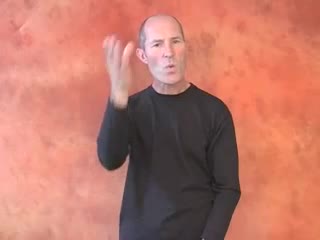
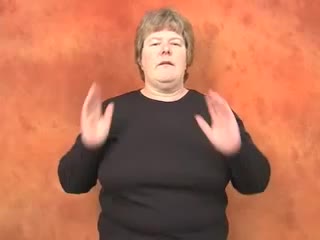
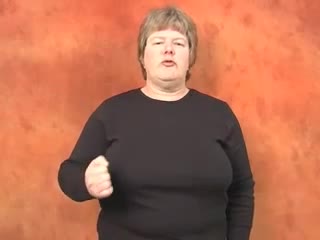
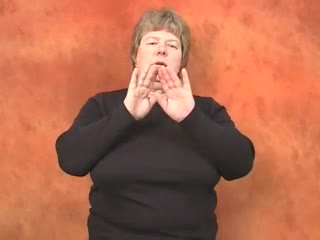
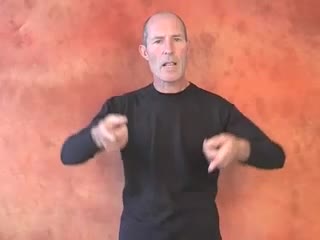
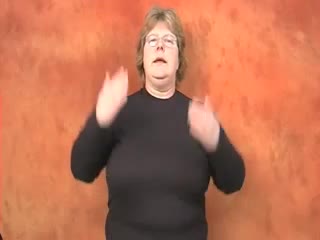
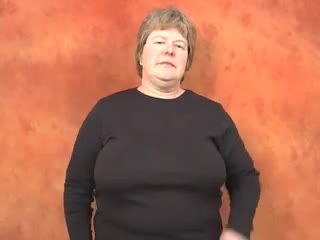
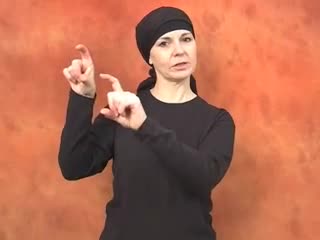
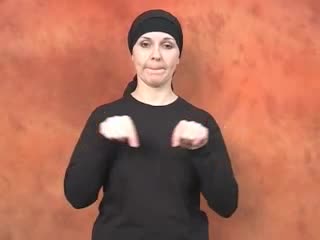
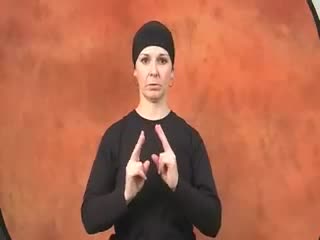
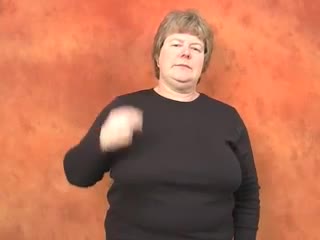
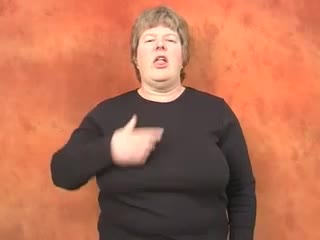
Best practice Use mirror mode, then watch the frame breakdown below to catch the start, movement, and finish cleanly.
Video via SpreadTheSign  - Free educational resource BSL
Updated April 21, 2026
British Sign Language (BSL) 🟢 Beginner 📊 B1 ⚡ Uncommon Noun

twist drill

A specific type of drill bit with a helical flute design for cutting holes

Source-linked video Step-by-step guide Context and safety notes
Synonyms
Drill bit
Antonyms
N/A
Difficulty
Not rated yet

Create a free account to save this sign, keep your watch history, and unlock a one-note journal preview.

How to sign it
Handshape
Dominant hand forms an S-hand (closed fist, thumb across fingers)
Location
Neutral space, slightly forward and to the dominant side of the body
Movement
Repeated twisting rotation of the wrist and forearm
Palm Orientation
Downwards or slightly forward
Facial Expression
Neutral facial expression; slight concentration
🔁 Spaced Review Try it free

How well do you know this sign?

TWIST DRILL
Your Progress Live
🌱
Level 1 · BSL Beginner +0 XP today
This sign Not learned yet
0 watches
Mastery 0%
Confidence
How well do you know this sign?
0 🔥 Streak
0 Signs seen
0 Learned
0 Watches
📖 Vocabulary health 🔒 Log in to see score
0 Mastered
0 Confident
0 Practicing
0 Just seen

Create a free account to keep your vocabulary score between sessions

7-day activity 0 of 7 active

Register free to sync activity across devices

Watch signs to see your history here

Tracking locally for now. Create a free account to save your progress and sync across devices.
Free gets you started. Paid adds the repeat-learning layer: review queues, deeper notes, compare mode, and better comeback tools.
My Sign Journal
Personal notes, saved to your account forever
Locked

Write memory tricks, usage examples, and cultural reminders beside each sign. Create a free account to unlock your first saved note preview on this page.

Create free account Already have an account? Log in

What This Sign Means in BSL

The BSL sign for twist drill is a wonderfully direct and iconic representation of the tool itself. It doesn't just name the object; it captures its very essence and primary function. When you see this sign, you're not just seeing a label; you're seeing the action a twist drill performs – boring into a surface with a steady, rotating motion.

This sign is a noun, specifically referring to the handheld tool with a helical cutting edge. It's distinct in its clarity, immediately bringing to mind those common metal or wood drill bits. It reflects the practical, tangible world of DIY, workshops, and construction, where precision in naming tools can be crucial for clear communication.

The sign’s form makes it particularly memorable. By mimicking the grip and rotational action, it provides a vivid mental picture that goes beyond a mere arbitrary gesture. This strong visual link helps learners grasp not only the sign's meaning but also its purpose and the type of conversations it naturally fits into.

When This Sign Feels Natural

You'll find yourself reaching for this sign most naturally in practical, descriptive contexts. Imagine you're in a shed, a workshop, or a hardware store, discussing specific tools needed for a task. If you're explaining a repair, giving instructions for assembling furniture, or even just pointing out a particular item in a toolbox, the sign for twist drill will be your go-to.

It's a sign for when specificity matters. While you might have a more general sign for "drill" as an action, this particular sign is for the *tool*. So, if you're talking about needing "the correct twist drill for metal" versus "drilling a hole," this sign clearly distinguishes the equipment from the activity. It's often used when discussing tool sets, inventory, or precise project requirements.

Consider your audience. If you’re conversing with fellow tradespeople, keen DIY enthusiasts, or anyone who regularly handles tools, this sign will be instantly understood and appreciated for its accuracy. It fits well into detailed conversations about projects, materials, and equipment, providing a clear, unambiguous reference point.

What Learners Usually Miss

One common pitfall for learners is the precision of the handshape. The dominant hand forms a firm, closed S-hand – a tight fist with the thumb crossing over the fingers. Sometimes learners relax this, allowing fingers to splay slightly or the thumb to sit loosely. The tightness is crucial; it conveys the grip on a tool handle, so focus on maintaining that solid, controlled fist throughout the sign.

Another subtlety often missed is the involvement of the forearm in the movement. While it’s described as a wrist rotation, it’s not just a flimsy flick of the wrist. Think about the physical effort of turning a drill; the rotation comes from the forearm, giving the movement substance and power. Practice involving your whole forearm in that repeated, controlled twist to make the sign look natural and purposeful, not weak or hesitant.

Finally, consistency in location and repetition is key. The sign is performed in neutral space, slightly forward and to your dominant side, as if you're holding the tool ready. Ensure your twisting motion is sustained and repeated, not just a single, quick turn. The *repeated* rotation is what signifies the continuous action of drilling and firmly establishes the tool in the mind of your audience. Avoid overusing it for the verb "to drill"; remember, this sign specifically names the noun, the *tool* itself.

A Simple Way to Remember It

To really lock in the BSL sign for twist drill, just picture yourself actually using one. The sign isn't an abstract symbol; it's a physical echo of the tool in action. Feel the imaginary handle in your hand and the twist as you bore into a surface.

  • The S-handshape perfectly mimics gripping the solid handle of a twist drill, giving you a firm, controlled hold.
  • The repeated twisting rotation of your wrist and forearm directly represents the drill bit turning and biting into material, continuously boring a hole.
  • Performing the sign in neutral space, slightly forward and to your dominant side, is like holding the tool out in front of you, ready to begin drilling.

Short Practice Situations

  • "I need to borrow a twist drill for this project, the one for metal."
  • "Do you know where the small twist drill set is kept in the workshop?"
  • "The instructions said to use a specific size twist drill before inserting the screw."
  • "He demonstrated how to safely change the bit on the cordless twist drill."
  • "Can you hand me that old twist drill? I think it might still work."

Signs to Learn Next

  • DRILL (verb, action): This sign is often made with an index finger circling, representing the action of drilling a hole. Learning it alongside "twist drill" (the noun) helps you differentiate between the tool and the activity.
  • SCREWDRIVER: Another common hand tool, the sign for screwdriver usually involves a similar twisting motion but with a different handshape (often a V-hand or a fist with an extended index finger for the blade), highlighting variations in tool function within the same rotational theme.
  • HAMMER: A fundamental tool in any kit, the sign for hammer (often a fist striking downwards) provides a stark contrast to the twisting action of a drill, expanding your vocabulary for basic workshop equipment.
  • TOOL: The overarching category, learning the sign for "tool" allows you to talk more broadly about equipment and place "twist drill" within a larger context. It's often signed with a dominant H-hand tapping the non-dominant palm.
  • MEASURE: Before using a twist drill, you often need to measure. The sign for "measure" (often with index fingers moving apart or indicating length) connects to the preparatory steps involved in practical tasks.

🤖 AI Learning Guide for "twist drill"

This sign iconically represents the rotational cutting action of a twist drill bit

🎯 Practice Challenge

Practice the S-hand shape and consistent wrist rotation

⚠️ Most Common Mistake

Ensure S-hand, clear, repeated twisting. Avoid general 'drill' sign

👐 How to Sign "twist drill" in British Sign Language (BSL) (Quick Answer)

Follow these steps to sign twist drill correctly in British Sign Language (BSL):

  1. 1 Form S-hand with dominant hand, thumb across fingers
  2. 2 Position hand in neutral space, slightly forward and to dominant side
  3. 3 Repeatedly twist wrist and forearm as if drilling

Tip: Watch the video above while following these steps for best results.

🤚 Sign Profile

🤚
Handshape
Dominant hand forms an S-hand (closed fist, thumb across fingers)
🔣
Handshape Code
S-hand
Dominant Hand
Either
🙌
Hand Count
One-handed
📍
Location
Neutral space, slightly forward and to the dominant side of the body
↗️
Movement
Repeated twisting rotation of the wrist and forearm
🔄
Movement Type
Repeated,Twist
👆
Contact
Air
👋
Palm Orientation
Downwards or slightly forward
⚖️
Symmetry
Asymmetric

😊 Non-Manual Features

Facial expressions and body language are grammatically essential in British Sign Language (BSL) - not optional!

😊
Facial Expression
Neutral facial expression; slight concentration
🙆
Eyebrows
Neutral
👁️
Eye Gaze
Forward
🙂
Head Movement
None
👄
Mouth Morpheme
None
🕴️
Body Shift
None

📖 Grammar & Linguistics

Part of Speech Noun
Inflection No
Classifier Usage N/A
Role Shift No

🎓 Learning Context

📌 When to Use: Discussing specific tools, DIY, construction, or repairs
⚠️ Common Mistake: Incorrect handshape, confusing with verb 'to drill'
🚫 When NOT to Use: Not for general 'drill' (verb) or the power tool itself
Context Tags
Tools hardware DIY construction

🧪 Practice Lab

Use these tiny checks right after watching the video. Fast feedback is what turns recognition into recall.

Meaning check

Which word matches the sign you just watched?

Usage check

Where would this sign fit most naturally?

Confidence check

How do you feel about twist drill right now?

Pick one so SignDeaf can shape the rest of your session around how this sign actually feels.

🧭 Scenario Drill

One sign gets remembered faster when you attach it to real situations. Try these quick scene prompts.

Work

Stretch practice

Use this sign in a short workplace sentence or meeting exchange.

Family

Stretch practice

Try signing this while talking about family life or something at home.

School

Stretch practice

Imagine teaching this sign to a classmate or using it in a lesson.

Doctor

Stretch practice

Practise it in a healthcare conversation where clarity matters.

Travel

Stretch practice

Use it in a travel scenario like asking for help or directions.

💬 Example Usage

1.[en] Get the twist drill. / BSL: GET TWIST-DRILL. | 2.[en] This is a twist drill. / BSL: THIS TWIST-DRILL. | 3.[en] Use the correct twist drill. / BSL: USE CORRECT TWIST-DRILL

1.[en] Get the twist drill. / BSL: GET TWIST-DRILL. | 2.[en] This is a twist drill. / BSL: THIS TWIST-DRILL. | 3.[en] Use the correct twist drill. / BSL: USE CORRECT TWIST-DRILL

When to use it

Discussing specific tools, DIY, construction, or repairs

When not to use it

Not for general 'drill' (verb) or the power tool itself

Register

Technical

🌍 Cultural Context

None specific to this tool sign

🗺️ Regional Variations

None known; sign is iconic and consistent

⚖️ Similar Signs - What's the Difference?

This sign twist drill
VS
Similar signs Look closely
**DRILL (verb/machine):** Often uses a different handshape (e.g., G-hand, 1-hand) and a more direct forward-and-back or circular motion, representing the action or machine. "Twist drill" specifically shows the *bit's* characteristic spiral rotation.

**SCREWDRIVER:** Typically involves an S-hand (or similar) but the twisting motion is often in a vertical plane (for a screw) or a less forceful, more controlled turn, often near the non-dominant hand acting as the "screw." "Twist drill" is a more vigorous, open-air, forward twisting

📝 Usage Notes

Mimics the action of the drill bit itself, not the power tool

🏷️ Tags

Handshape

Keywords

💡
Did you know?
BSL uses a two-handed manual alphabet - different from ASL which is one-handed.

📚 Explore More British Sign Language (BSL) Signs

Keep building your British Sign Language (BSL) vocabulary - explore signs by category or browse the full dictionary.