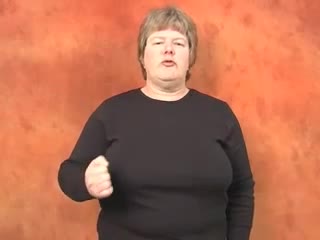
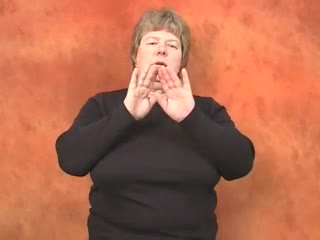
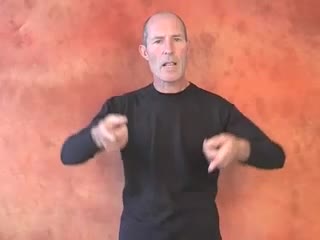
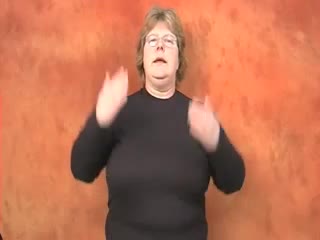
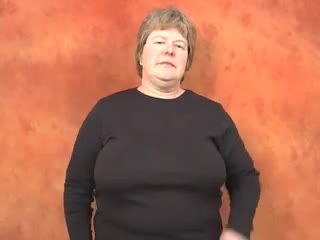
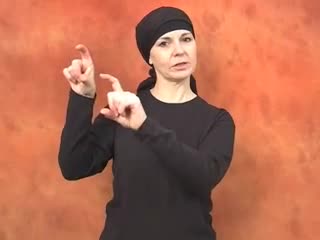
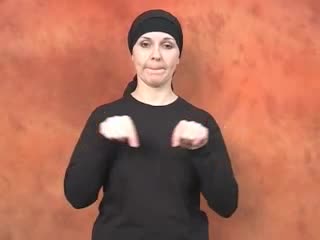
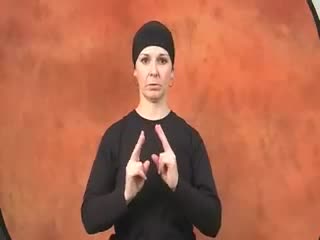
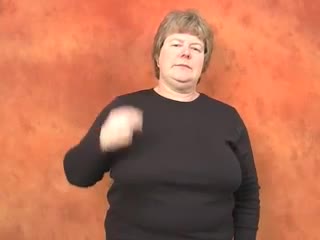
1.[en] Kicking plate. / BSL:[Sign] | 2.[en] Door plate. / BSL:[Sign] | 3.[en] Protect wall. / BSL:[Sign]
1.[en] Kicking plate. / BSL:[Sign] | 2.[en] Door plate. / BSL:[Sign] | 3.[en] Protect wall. / BSL:[Sign]
Create a free account to keep your watch history and review plan.
A protective plate fixed to the lower part of a door or wall, typically to prevent damage from kicks
Save this sign
Build your personal BSL dictionary - free account lets you save signs, track progress, and earn XP.
Create free account Already have an account? Log in →Create a free account to save this sign, keep your watch history, and write unlimited journal notes - everything on SignDeaf is free.
How well do you know this sign?
Keep your streak going
Create a free account for unlimited reviews and to save your progress. Everything on SignDeaf is free.
Create free account Already have an account? Log in →Write memory tricks, usage examples, and cultural reminders beside each sign. Create a free account to keep unlimited notes on every sign - completely free.
Create free account Already have an account? Log inThe BSL sign for kicking plate is wonderfully direct, embodying both the object and its intended function with clarity. When you see this sign, you’re not just seeing a generic plate or a random kick; you’re seeing the specific protective strip found at the bottom of doors or walls. It’s a literal visual representation, showing a sturdy surface receiving the impact of a foot, much like its real-world counterpart.
This sign communicates a functional piece of architecture. It tells you about something designed to withstand wear and tear, usually in high-traffic areas. The movement itself suggests repeated, perhaps light, contact, rather than an aggressive forceful kick, focusing on the scuffing and tapping that feet often inflict on lower surfaces. It’s a practical sign for a practical item.
What makes this sign particularly effective is its immediate recognisability once you understand the concept. It bridges the gap between the concrete object and its purpose. It's not an abstract sign, but one deeply rooted in the physical interaction people have with their environment, which is a common and powerful characteristic of many BSL signs.
You’ll find the BSL sign for kicking plate feels most natural in conversations revolving around building maintenance, interior design, accessibility features, or even discussing safety and wear in public spaces. Imagine talking with a builder about the specifications for a new entryway, or pointing out a detail to a facilities manager. It’s a precise term for a precise object.
This sign fits comfortably in both formal and informal contexts where the specific item is relevant. It’s a noun that describes a tangible part of a structure, so it’s perfectly at home when you're discussing renovations, repairs, or simply describing a particular feature of a door or wall. You might use it while explaining why a certain door looks worn at the bottom, or suggesting a protective addition.
However, it’s important to remember its specificity. If you’re talking about a general plate (like for food) or the action of kicking a ball, you’d use entirely different signs. This sign is solely for the architectural kicking plate. Choosing this sign correctly demonstrates a good understanding of both the object and the nuance of BSL vocabulary, ensuring you’re communicating precisely about this protective element.
One common oversight for learners is truly grasping the role of the non-dominant hand. It isn't just a flat hand making contact; it's specifically intended to represent a foot or shoe. If you don't visualise it as a foot, the sign's meaning can feel less intuitive. Focus on the idea that this hand is the "agent" of impact, making repetitive, lighter contact against the dominant hand which represents the "plate."
Another subtle point often missed is the rhythm and intensity of the movement. The non-dominant hand performs short, upward tapping motions, but it's not a heavy, forceful kick. Think of it more like the gentle scuffing or repeated brushing of shoes against a surface, rather than a powerful strike. Overly aggressive or slow, deliberate movements can alter the meaning, making it seem like a single forceful kick rather than the protective function of the plate.
The location of the sign is also critical. Placing the sign at hip or thigh height directly correlates to where a kicking plate would typically be found on a door or wall – at the lower, foot-level section. Signing it too high or too low can make it confusing. This precise placement reinforces the visual connection to the real object and helps prevent misinterpretation, ensuring you're clearly referring to the protective strip.
To easily recall the BSL sign for kicking plate, visualise its components as a direct representation of the object and its function. Imagine your dominant flat hand as the sturdy, protective plate on a door. Your non-dominant hand, shaped like a flat foot or a gentle fist, then makes small, repeated tapping motions against it, simulating the scuffs and light kicks that the plate is designed to endure.
The sign for "kicking plate" uses two hands. The dominant flat hand represents the plate, held stationary at hip height. The non-dominant hand, either a flat hand or fist (representing a foot), repeatedly taps upwards against the dominant hand. This visually depicts a foot kicking a protective plate
Practice holding the dominant hand steady. Focus on the tapping motion of the non-dominant hand, keeping it distinct
Ensure dominant hand is flat and stationary. Non-dominant hand taps upwards against it, not sweeping. Maintain hip/thigh height
Follow these steps to sign kicking plate correctly in British Sign Language (BSL):
Tip: Watch the video above while following these steps for best results.
Facial expressions and body language are grammatically essential in British Sign Language (BSL) - not optional!
Use these tiny checks right after watching the video. Fast feedback is what turns recognition into recall.
Pick one so SignDeaf can shape the rest of your session around how this sign actually feels.
One sign gets remembered faster when you attach it to real situations. Try these quick scene prompts.
Use this sign in a short workplace sentence or meeting exchange.
Try signing this while talking about family life or something at home.
Imagine teaching this sign to a classmate or using it in a lesson.
Practise it in a healthcare conversation where clarity matters.
Use it in a travel scenario like asking for help or directions.
1.[en] Kicking plate. / BSL:[Sign] | 2.[en] Door plate. / BSL:[Sign] | 3.[en] Protect wall. / BSL:[Sign]
Discussing building features, home improvements, or protective elements on doors
Do not use for the verb 'to kick' or unrelated protective coverings
Technical
Unlikely
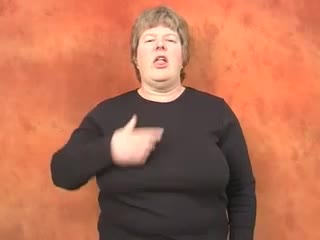
Feeling a need or desire to drink
Compare with thirst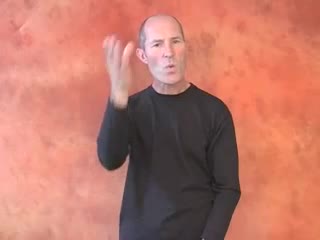
A period of instruction or learning
Compare with lesson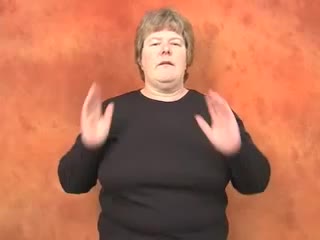
A team sport where players hit a ball over a net with their hands
Compare with volleyballSign depicts the action of a foot repeatedly hitting a protective surface
Keep building your British Sign Language (BSL) vocabulary - explore signs by category or browse the full dictionary.