Speed
0
Practice reps times watched

Create a free account to keep your watch history and review plan.

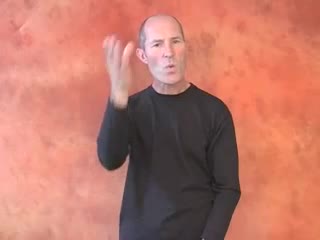
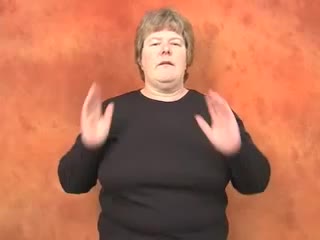
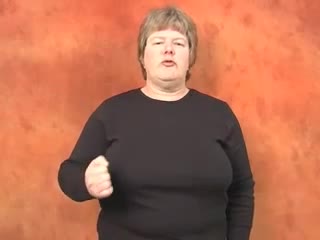
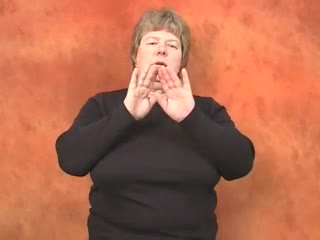
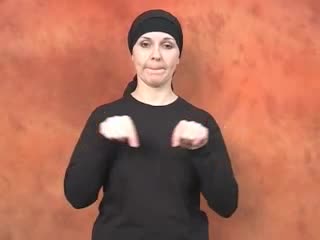
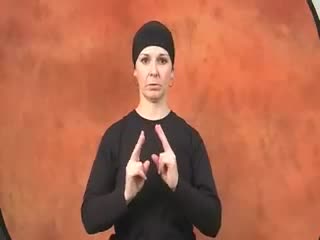
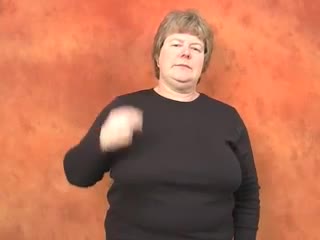
Best practice Use mirror mode, then watch the frame breakdown below to catch the start, movement, and finish cleanly.
Video via SpreadTheSign  - Free educational resource BSL
Updated April 20, 2026
British Sign Language (BSL) 🟢 Beginner 📊 B1 ⚡ Common Noun

tunnel

A sign representing a passage, typically underground or through an obstacle

Source-linked video Step-by-step guide Context and safety notes
Synonyms
underpass subway bore
Antonyms
bridge overpass open space
Difficulty
Not rated yet

Create a free account to save this sign, keep your watch history, and unlock a one-note journal preview.

How to sign it
Handshape
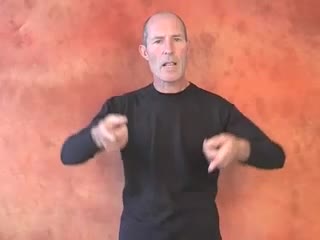
Both hands form open C-shapes, fingers curved, thumbs tucked
Location
Mid-chest to forward space, moving away from the body
Movement
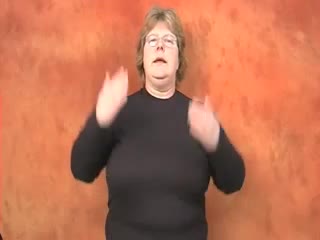
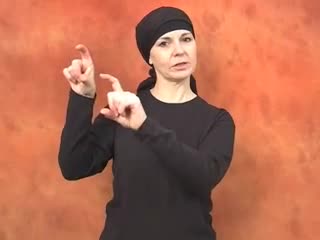
Hands pass through each other in a linear motion, one following the other
Palm Orientation
Palms face each other initially, then one faces forward, one faces back
Facial Expression
Slight forward lean
🔁 Spaced Review Try it free

How well do you know this sign?

TUNNEL
Your Progress Live
🌱
Level 1 · BSL Beginner +0 XP today
This sign Not learned yet
0 watches
Mastery 0%
Confidence
How well do you know this sign?
0 🔥 Streak
0 Signs seen
0 Learned
0 Watches
7-day activity 0 of 7 active

Register free to sync activity across devices

Watch signs to see your history here

Tracking locally for now. Create a free account to save your progress and sync across devices.
Free gets you started. Paid adds the repeat-learning layer: review queues, deeper notes, compare mode, and better comeback tools.
My Sign Journal
Personal notes, saved to your account forever
Locked

Write memory tricks, usage examples, and cultural reminders beside each sign. Create a free account to unlock your first saved note preview on this page.

Create free account Already have an account? Log in

What This Sign Means in BSL

The BSL sign for tunnel is wonderfully iconic, directly mirroring the concept it represents. It's a noun sign that visually constructs the very essence of a tunnel: an opening and a passage through it. You'll notice both hands form distinct open C-shapes. These aren't just any handshapes; they're carefully crafted to represent the circular or arched opening of a tunnel, facing forwards as if inviting entry.

What truly brings this sign to life is the dynamic movement. One C-shaped hand passes through the other in a clear, linear motion. This isn't a mere touch or a brief meeting; it's a definite trajectory, conveying the act of something moving from one side to the other, just as a train or car would pass through a real tunnel. The sign typically begins at mid-chest height and moves slightly forward, reinforcing the idea of progression and depth.

This sign is a prime example of how BSL often uses visual representation to make meanings clear and memorable. It’s a concrete sign for a concrete object, making it relatively straightforward for new learners to grasp its core meaning once they understand the handshapes and the deliberate through-movement. There's a certain efficiency in its design – it shows, rather than just tells.

When This Sign Feels Natural

The BSL sign for tunnel feels most natural when you're referring to a literal tunnel, whether it's for vehicles, pedestrians, or even a metaphorical tunnel in a descriptive context. Imagine pointing out a railway tunnel on a map, describing a scenic drive that included a long road tunnel, or explaining how a pedestrian underpass works. It’s a precise noun, so use it when you need to specifically identify this type of structure.

You'll find yourself using this sign in practical, everyday conversations. For instance, if you're giving directions and need to mention going through a particular underpass, or if you're sharing a story about a journey. Because of its visual clarity, it's easily understood across various registers, from casual chat with friends to more formal discussions about infrastructure or travel plans. It's a sign that leaves little room for ambiguity.

Consider the context: if you're talking about a train using a tunnel, you'd sign TRAIN, then TUNNEL, perhaps followed by a directional sign or movement indicating 'through'. This sign is rarely used in isolation but often pairs with other signs to build a complete sentence, giving it context and purpose within the flow of communication. It serves as a solid building block for describing environments and routes.

What Learners Usually Miss

One common pitfall learners encounter with the BSL sign for tunnel is not fully committing to the "through" movement. It's easy to let the hands just meet in the middle or stop short, making it look more like two separate C-shapes briefly touching, or perhaps an archway rather than a passage. Remember, one hand must distinctly pass completely through the space created by the other, emerging on the opposite side. This sustained movement is crucial for conveying the continuous nature of a tunnel.

Another subtle but important detail is the orientation of the C-shapes and the direction of the movement. Both C-hands should have their openings facing forward, towards the person you're communicating with, as if they are looking into the tunnel's entrance. The passing movement should also be generally forward-facing, not just side-to-side. Maintaining this forward plane ensures the sign remains clear and visually consistent with its real-world counterpart.

Finally, learners sometimes overlook the non-manual features that can enhance this sign. While "tunnel" itself doesn't demand a strong facial expression, a slight forward lean of the body or a focused gaze can subtly reinforce the idea of travelling into and through something. When describing a particularly long or dark tunnel, you might naturally incorporate a more sustained movement or a slightly narrowed eye expression to convey the experience, adding depth to your communication.

A Simple Way to Remember It

Imagine your hands literally creating a visual model of a tunnel. One hand forms the entrance, and the other then demonstrates the journey through it. It's a clear, mimetic representation that makes it very intuitive to recall.

  • Visual Entrance: Picture your non-dominant hand forming the arched entrance of a tunnel, with the opening inviting you in.
  • Passage Through: Your dominant hand then "drives" or "walks" through that opening, showing the continuous path.
  • Two Halves, One Whole: Remember that both hands are essential – one creates the structure, the other demonstrates the function, working together to complete the concept.

Short Practice Situations

  • We drove through a really long tunnel yesterday, it felt like it went on forever under the mountain.
  • The train sped into the tunnel, and everything went dark for a moment before we emerged on the other side.
  • There's a pedestrian tunnel that goes under the busy main road, making it much safer to cross.
  • Engineers are planning to build a new tunnel as part of the bypass to ease traffic congestion.

Signs to Learn Next

  • BRIDGE: This is a natural opposite to "tunnel." While a tunnel goes under or through, a bridge goes over. Learning both helps you describe different kinds of pathways and structures.
  • ROAD / PATH: Tunnels are usually part of a larger road or path network. Understanding these signs helps you place the tunnel in a broader travel context.
  • TRAIN / CAR / DRIVE: These are common modes of transport that often utilise tunnels. Combining "tunnel" with these signs allows you to talk about journeys and movement.
  • UNDER: The concept of "under" is inherent in many tunnels, especially those that pass beneath mountains, rivers, or other structures. This sign helps to reinforce that spatial relationship.
  • THROUGH: The core movement of the "tunnel" sign is literally "through." Learning the dedicated sign for 'through' can help you understand the directional nuance and apply it to other contexts.

🤖 AI Learning Guide for "tunnel"

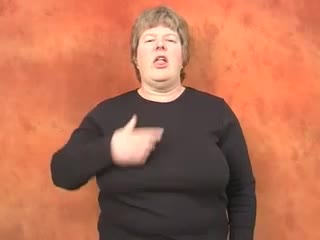
The BSL sign for 'tunnel' uses two C-hands to mime a passage. One hand acts as the entrance, the other moves through it, illustrating the act of passing through a confined space

🎯 Practice Challenge

Sign 'train tunnel'

⚠️ Most Common Mistake

Ensure clear C-handshapes and a distinct 'through' movement

👐 How to Sign "tunnel" in British Sign Language (BSL) (Quick Answer)

Follow these steps to sign tunnel correctly in British Sign Language (BSL):

  1. 1 Form C-shapes with both hands
  2. 2 Position one C-hand near your chest, palm facing forward slightly
  3. 3 Position the other C-hand in front, palm facing back slightly, aligning with the first
  4. 4 Move the back hand through the front hand in a linear motion
  5. 5 Continue moving the hand forward, representing passage

Tip: Watch the video above while following these steps for best results.

🤚 Sign Profile

🤚
Handshape
Both hands form open C-shapes, fingers curved, thumbs tucked
🔣
Handshape Code
C-hand
Dominant Hand
Either
🙌
Hand Count
Two-handed
📍
Location
Mid-chest to forward space, moving away from the body
↗️
Movement
Hands pass through each other in a linear motion, one following the other
🔄
Movement Type
Linear
👆
Contact
Air
👋
Palm Orientation
Palms face each other initially, then one faces forward, one faces back
⚖️
Symmetry
Symmetric

😊 Non-Manual Features

Facial expressions and body language are grammatically essential in British Sign Language (BSL) - not optional!

😊
Facial Expression
Slight forward lean
🙆
Eyebrows
Neutral
👁️
Eye Gaze
Forward
🙂
Head Movement
None
👄
Mouth Morpheme
'Ooh' (lips rounded)
🕴️
Body Shift
None

📖 Grammar & Linguistics

Part of Speech Noun
Inflection No
Classifier Usage CL:C (for cylindrical object or opening)
Role Shift No

🎓 Learning Context

📌 When to Use: Describing infrastructure, travel routes, or confined passages
⚠️ Common Mistake: Not clearly forming the C-shapes or making the 'through' movement ambiguous
🚫 When NOT to Use: When referring to a natural cave opening without an artificial passage
Context Tags
Infrastructure travel construction confined space

🧪 Practice Lab

Use these tiny checks right after watching the video. Fast feedback is what turns recognition into recall.

Meaning check

Which word matches the sign you just watched?

Usage check

Where would this sign fit most naturally?

Confidence check

How do you feel about tunnel right now?

Pick one so SignDeaf can shape the rest of your session around how this sign actually feels.

🧭 Scenario Drill

One sign gets remembered faster when you attach it to real situations. Try these quick scene prompts.

Work

Stretch practice

Use this sign in a short workplace sentence or meeting exchange.

Family

Stretch practice

Try signing this while talking about family life or something at home.

School

Stretch practice

Imagine teaching this sign to a classmate or using it in a lesson.

Doctor

Stretch practice

Practise it in a healthcare conversation where clarity matters.

Travel

Strong fit

Use it in a travel scenario like asking for help or directions.

💬 Example Usage

1.[en] The train entered the tunnel. / BSL:[train enter tunnel] | 2.[en] We drove through a long tunnel. / BSL:[car drive long tunnel] | 3.[en] Is there a tunnel here? / BSL:[tunnel here question]

1.[en] The train entered the tunnel. / BSL:[train enter tunnel] | 2.[en] We drove through a long tunnel. / BSL:[car drive long tunnel] | 3.[en] Is there a tunnel here? / BSL:[tunnel here question]

When to use it

Describing infrastructure, travel routes, or confined passages

When not to use it

When referring to a natural cave opening without an artificial passage

Register

Neutral

🌍 Cultural Context

N/A

🗺️ Regional Variations

Generally consistent across UK

⚖️ Similar Signs - What's the Difference?

This sign tunnel
VS
Similar signs Look closely
The sign for 'tunnel' (two C-hands passing through) depicts an enclosed, usually horizontal, passage. It differs from 'pipe' which uses smaller, often tighter C-shapes or a single hand to show a narrower tube. It also differs from 'doorway' (B-hands forming a vertical opening) which emphasizes an entrance/exit, not necessarily a long passage through an obstacle

📝 Usage Notes

Emphasizes the passage *through* an enclosed space

Frequently Asked Questions

Common questions about the British Sign Language (BSL) sign for "tunnel".

🏷️ Tags

Handshape

Keywords

💡
Did you know?
BSL is a full, natural language with its own grammar - not just English signed word by word.

📚 Explore More British Sign Language (BSL) Signs

Keep building your British Sign Language (BSL) vocabulary - explore signs by category or browse the full dictionary.