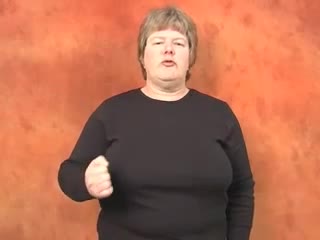
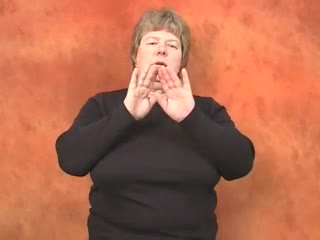
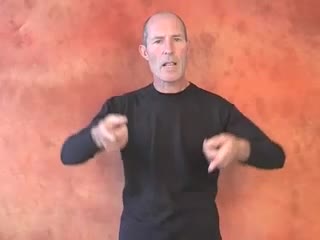
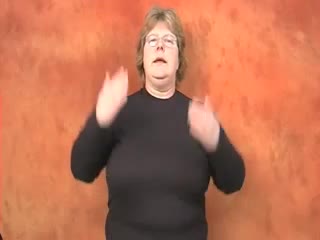
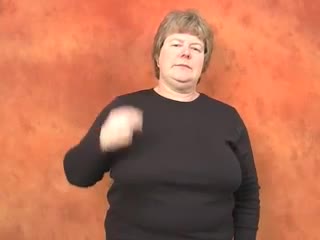
1.Pain threshold / BSL:PAIN THRESHOLD | 2.Entry threshold / BSL:ENTER THRESHOLD | 3.New threshold / BSL:NEW THRESHOLD
1.Pain threshold / BSL:PAIN THRESHOLD | 2.Entry threshold / BSL:ENTER THRESHOLD | 3.New threshold / BSL:NEW THRESHOLD
Create a free account to keep your watch history and review plan.
A point of beginning; a limit or boundary
Save this sign
Build your personal BSL dictionary - free account lets you save signs, track progress, and earn XP.
Create free account Already have an account? Log in →Create a free account to save this sign, keep your watch history, and write unlimited journal notes - everything on SignDeaf is free.
How well do you know this sign?
Keep your streak going
Create a free account for unlimited reviews and to save your progress. Everything on SignDeaf is free.
Create free account Already have an account? Log in →Write memory tricks, usage examples, and cultural reminders beside each sign. Create a free account to keep unlimited notes on every sign - completely free.
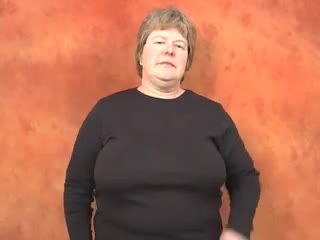
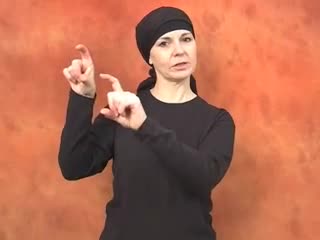
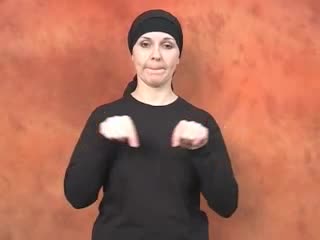
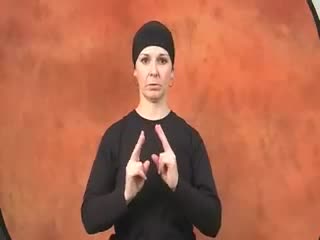
Create free account Already have an account? Log inThe BSL sign for "threshold" beautifully captures both its physical and metaphorical meanings. At its heart, it represents a boundary, a line that you cross to move from one space or state to another. Imagine the entrance to a building – that's a literal threshold. The sign uses a flat non-dominant hand to create this 'line' or 'plane', and your dominant hand, with its index finger extended, acts like a point or a person just reaching that critical edge.
Beyond a physical doorway, this sign readily extends to abstract concepts. Think about being on the "threshold of a new era," or reaching the "threshold of adulthood." In these contexts, the sign conveys a significant point of transition, a critical juncture where something new is about to begin or where a major change is imminent. It's not just any beginning; it's a profound or important one that implies a crossing over.
This versatility makes "threshold" a powerful sign in BSL. It allows you to express nuanced ideas about beginnings, limits, and significant changes without needing to string together multiple simpler signs. Mastering its use will really enrich your ability to discuss complex topics, whether you're talking about architecture, personal growth, or global events.
You'll find yourself reaching for the BSL sign for "threshold" in situations where you want to describe a physical entrance with a sense of significance. For example, when you're talking about stepping into a new home for the first time, or describing the main entrance of a historic building. It provides a clear, visual representation of that specific line you cross to enter a space, more so than simply signing "door" or "enter."
Metaphorically, this sign feels incredibly natural when discussing major life transitions or critical points in a process. If you're talking about a student graduating and being "on the threshold of their career," or a scientific breakthrough being "on the threshold of revolutionising medicine," this sign conveys that sense of being at a pivotal point. It carries a weight that a simple sign for "start" or "begin" might not, implying a moment of consequence.
However, it's worth considering your audience and the specific context. If you simply mean "start a task" or "begin a meeting," a more direct sign like BEGIN or START would likely be clearer and more appropriate. "Threshold" implies a significant boundary or a critical point of entry or transition, not just any commencement. Use it when that precise nuance of a 'point of no return' or a 'significant border' is truly what you want to convey.
One common oversight for learners is the precision of the handshapes. Your non-dominant hand must be a truly flat B-hand – palm facing up or slightly towards your dominant side – creating a clear, horizontal plane. Avoid cupping it or letting it relax too much, as this changes the 'boundary' you're trying to establish. Similarly, the dominant hand is a clear G-hand with the index finger extended, not a bent finger or a loose handshape. That precision is what makes the sign clear.
The movement of the dominant G-hand is also crucial. It's a precise, linear movement that travels towards and touches the very edge of the non-dominant B-hand. Learners sometimes swipe past it, tap it casually, or even move it through the non-dominant hand. The key is that the G-hand meets the edge – it doesn't cross over it or go under it, which would imply passing through or beyond, rather than just reaching the boundary. This 'touch' signifies the moment of reaching the threshold itself.
Finally, remember the metaphorical weight of the sign. Learners sometimes overuse "threshold" when they simply mean "beginning." This sign carries a specific connotation of a significant boundary, a critical point of entry, or a moment of transition that is often irreversible or highly impactful. It's not just any starting point. Consider the gravity of the situation you're describing; if it's momentous, "threshold" fits perfectly. If it's a simple start, other signs are more fitting. Facial expression is typically neutral or thoughtful, reflecting the serious or contemplative nature of a threshold.
Visualise the sign as literally marking a line you're about to cross. Your flat non-dominant hand is the solid ground, the 'line in the sand' or the actual doorstep. Your dominant index finger is like you, or your idea, precisely stepping up to that line, just on the brink of moving forward. The touch signifies the exact moment of reaching that significant boundary.
The sign for 'threshold' involves two hands representing a boundary or limit
Practice signing 'threshold' in sentences, varying the context
Ensure dominant hand touches the non-dominant edge, not just brushes
Follow these steps to sign threshold correctly in British Sign Language (BSL):
Tip: Watch the video above while following these steps for best results.
Facial expressions and body language are grammatically essential in British Sign Language (BSL) - not optional!
Use these tiny checks right after watching the video. Fast feedback is what turns recognition into recall.
Pick one so SignDeaf can shape the rest of your session around how this sign actually feels.
One sign gets remembered faster when you attach it to real situations. Try these quick scene prompts.
Use this sign in a short workplace sentence or meeting exchange.
Try signing this while talking about family life or something at home.
Imagine teaching this sign to a classmate or using it in a lesson.
Practise it in a healthcare conversation where clarity matters.
Use it in a travel scenario like asking for help or directions.
1.Pain threshold / BSL:PAIN THRESHOLD | 2.Entry threshold / BSL:ENTER THRESHOLD | 3.New threshold / BSL:NEW THRESHOLD
Refers to a boundary, limit, or starting point
Not for a literal door frame (use DOOR)
Neutral
N/A
Minor variations in location or angle may exist
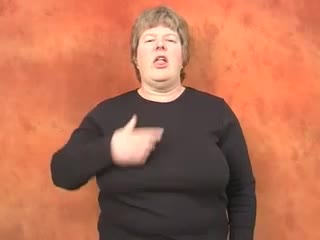
Feeling a need or desire to drink
Compare with thirst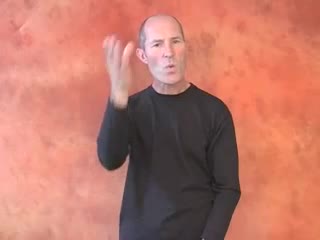
A period of instruction or learning
Compare with lesson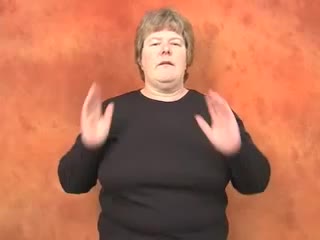
A team sport where players hit a ball over a net with their hands
Compare with volleyballUsed literally (door threshold) or metaphorically (pain threshold)
Keep building your British Sign Language (BSL) vocabulary - explore signs by category or browse the full dictionary.