Speed
0
Practice reps times watched

Create a free account to keep your watch history and review plan.

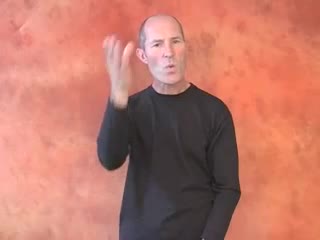
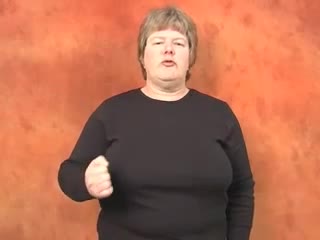
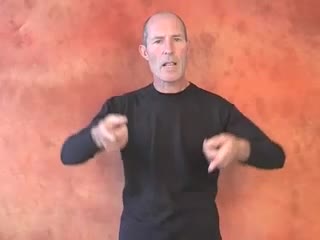
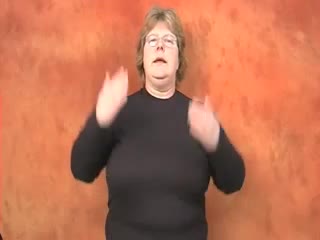
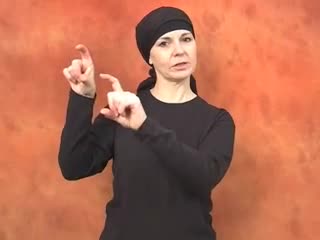
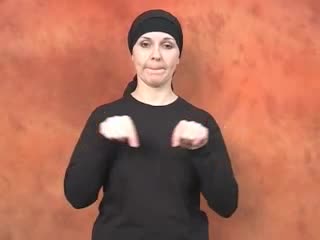
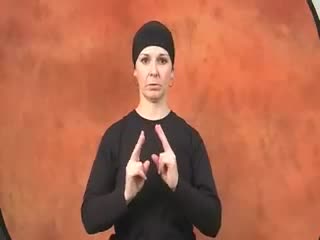
Best practice Use mirror mode, then watch the frame breakdown below to catch the start, movement, and finish cleanly.
Video via SpreadTheSign  - Free educational resource BSL
Updated April 20, 2026
British Sign Language (BSL) 🟢 Beginner 📊 B1 ⚡ Common Noun

extension

The act or result of making something longer, larger, or adding to it

Source-linked video Step-by-step guide Context and safety notes
Synonyms
addition lengthening prolongation increase
Antonyms
reduction shortening contraction decrease
Difficulty
Not rated yet

Create a free account to save this sign, keep your watch history, and unlock a one-note journal preview.

How to sign it
Handshape
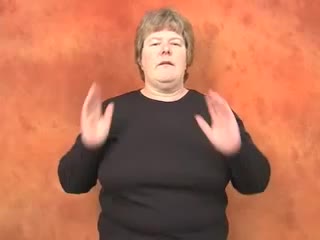
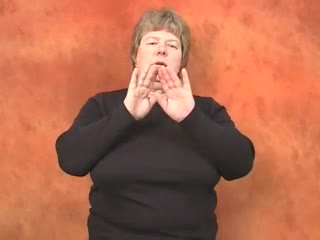
Both hands are flat, fingers together and thumb alongside
Location
Mid-chest level, in front of the body
Movement
Hands move horizontally outwards, away from each other
Palm Orientation
Palms face each other throughout the movement
Facial Expression
Usually neutral, can be accompanied by 'poh' mouth for emphasis
🔁 Spaced Review Try it free

How well do you know this sign?

EXTENSION
Your Progress Live
🌱
Level 1 · BSL Beginner +0 XP today
This sign Not learned yet
0 watches
Mastery 0%
Confidence
How well do you know this sign?
0 🔥 Streak
0 Signs seen
0 Learned
0 Watches
7-day activity 0 of 7 active

Register free to sync activity across devices

Watch signs to see your history here

Tracking locally for now. Create a free account to save your progress and sync across devices.
Free gets you started. Paid adds the repeat-learning layer: review queues, deeper notes, compare mode, and better comeback tools.
My Sign Journal
Personal notes, saved to your account forever
Locked

Write memory tricks, usage examples, and cultural reminders beside each sign. Create a free account to unlock your first saved note preview on this page.

Create free account Already have an account? Log in

What This Sign Means in BSL

The BSL sign for extension isn't simply about making something longer; it profoundly captures the concept of adding on or stretching out from an existing point. As a noun, it refers to the added part itself or the allowance of extra time, rather than the act of extending something. It's a remarkably versatile sign, applicable whether you're talking about a physical addition to a building, a crucial deadline extension for a project, or even the cord that gives your appliance extra reach. Understanding its core meaning allows you to see how it bridges these seemingly disparate ideas under one coherent visual concept.

At its heart, this sign communicates the idea of something continuing beyond its original boundary or duration. Think of it as pushing past a perceived limit. The movement inherent in the sign typically embodies this outward momentum, suggesting growth, expansion, or a deliberate increase. It’s less about a static object and more about the dynamic process that led to it being larger or longer.

What makes this particular BSL sign for extension worth noticing is its directness. There's no ambiguity in its intent once you grasp the foundational principle of "more from here." Pay close attention to the starting and ending points of the sign's movement; these often anchor the 'extension' to the original item or timeframe you're discussing, providing crucial context without needing extra signs. It’s a beautifully efficient piece of BSL vocabulary.

When This Sign Feels Natural

You'll find the BSL sign for extension feels most natural when you're referring to tangible additions. Imagine discussing a new conservatory added to a house, or perhaps an extra section built onto a school. In these scenarios, the sign directly mirrors the physical act of expanding something. It’s also perfectly suited for talking about things like hair extensions, where material is literally added to an existing structure.

Beyond the purely physical, this sign comfortably steps into the realm of abstract concepts, particularly concerning time. If you need to request or announce an extension for a deadline, a library book loan, or even a period of leave, this is the sign you'd naturally reach for. The underlying principle of "more time added" aligns perfectly with the sign's core meaning of 'adding on', making it intuitively correct in these situations. It’s a standard, neutral sign, fitting for most conversations without being overly formal or informal.

However, there are times when another sign might serve you better. If your intention is simply to describe something as being "long" or "tall" without the implication of an addition, you’d opt for the specific signs for those adjectives. Similarly, if you're talking about "stretching" an elastic material or "prolonging" a sound, there are more precise signs that convey those actions. The sign for extension is specifically for the result of extending, or the permission for more, rather than the general state or act of stretching in every context.

What Learners Usually Miss

A common pitfall for new learners is overlooking the subtle yet crucial element of directionality. The BSL sign for extension isn't just a generic forward motion; it typically moves away from a clear starting point, often the non-dominant hand or a specific location in your signing space that represents the original item. Learners sometimes execute the sign too vaguely, without this anchoring point, which can make it appear disconnected or ambiguous. Always ensure your dominant hand is clearly 'extending' from a defined 'base'.

Another area where learners often stumble is in the rhythm and emphasis. The movement should convey a sense of purposeful addition or growth, not just a casual flick. There's often a slight, deliberate push or stretch in the dominant hand's movement, conveying that something is being *added on* or *made longer*. Without this subtle emphasis, the sign can lose its impact and might not clearly communicate the noun form of "extension." Think of it as the visual equivalent of stressing the word "ex-TEN-sion" in speech.

Finally, learners occasionally over-generalise this sign. While versatile, it's not a catch-all for every instance of "more" or "longer." It's specifically for an extension – an added part or an increase in duration. Trying to use it for abstract concepts like "expanding your mind" or for simply saying something is "very long" can lead to confusion. If you mean "more" in a general sense, or "longer" as an adjective, dedicate time to learning those distinct signs to ensure your communication is precise and natural.

A Simple Way to Remember It

Picture the act of physically making something longer or adding a piece to it. The dominant hand’s movement in the sign literally mimics this action, as if you’re pulling something out or attaching an extra segment. It’s a very visual and intuitive sign once you connect it to the idea of a continuous flow or an added section.

  • The "Adding On" Feeling: Imagine connecting an extra piece of track to a toy train set, or adding a new room to a building. The sign embodies this physical act of joining and extending.
  • The "Stretching Time" Visual: When thinking about a deadline extension, visualise stretching a rubber band. The movement represents that extra 'give' or 'length' you've been granted.
  • The "Outward Growth": Consider a plant sending out a new shoot. The sign moves outwards, symbolising growth and reaching further from the original point.

Short Practice Situations

  • I need an extension for my college essay; I haven't finished the research yet.
  • Our neighbours are planning a large extension on the back of their semi-detached house.
  • Could you pass me the electrical extension lead? The plug isn't reaching the socket.
  • The architect submitted a proposal for an extension of the library's children's section.
  • I was granted an extension on my visa, so I can stay in the UK for another six months.

Signs to Learn Next

  • ADD: This sign is a natural companion. An extension is often something that has been added. Learning ADD helps you distinguish the verb "to add" from the noun "an extension."
  • LONG / LENGTH: Since extensions often relate to increasing length, these signs provide essential vocabulary for describing the resulting size or duration.
  • INCREASE / GROW: These concepts are closely linked to extension, particularly when thinking about abstract expansions or growth in scope. They help broaden your understanding of "more."
  • BUILD / CONSTRUCT: If you're frequently discussing house extensions, knowing signs like BUILD or CONSTRUCT will allow you to talk about the entire process more fluidly.
  • TIME: Crucial for discussing time extensions. Understanding how to sign TIME allows you to place the extension within its relevant temporal context.

🤖 AI Learning Guide for "extension"

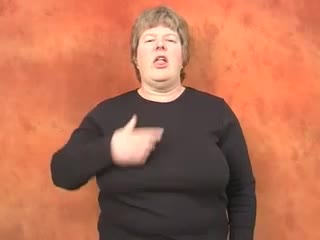
The BSL sign for "extension" typically uses two flat hands (B-hands) starting together at the chest, then moving horizontally outwards. This motion visually represents the act of making something longer, larger, or adding an extra part to it

🎯 Practice Challenge

Sign "extension" to describe adding a room to a house

⚠️ Most Common Mistake

Ensure both hands are flat (B-hand) and move symmetrically outwards, palms facing each other

👐 How to Sign "extension" in British Sign Language (BSL) (Quick Answer)

Follow these steps to sign extension correctly in British Sign Language (BSL):

  1. 1 Form B-hands with palms facing each other
  2. 2 Place hands together at chest height
  3. 3 Move both hands horizontally outwards
  4. 4 End with hands apart, showing length

Tip: Watch the video above while following these steps for best results.

🤚 Sign Profile

🤚
Handshape
Both hands are flat, fingers together and thumb alongside
🔣
Handshape Code
B
Dominant Hand
N/A
🙌
Hand Count
Two-handed
📍
Location
Mid-chest level, in front of the body
↗️
Movement
Hands move horizontally outwards, away from each other
🔄
Movement Type
Linear
👆
Contact
Air
👋
Palm Orientation
Palms face each other throughout the movement
⚖️
Symmetry
Symmetric

😊 Non-Manual Features

Facial expressions and body language are grammatically essential in British Sign Language (BSL) - not optional!

😊
Facial Expression
Usually neutral, can be accompanied by 'poh' mouth for emphasis
🙆
Eyebrows
Neutral
👁️
Eye Gaze
Forward
🙂
Head Movement
None
👄
Mouth Morpheme
'poh' (for 'long' or 'extended')
🕴️
Body Shift
None

📖 Grammar & Linguistics

Part of Speech N/A
Inflection Yes
Classifier Usage Flat hand (CL:B) for surfaces or objects being extended
Role Shift No

🎓 Learning Context

📌 When to Use: Referring to a physical addition (e.g., house extension), a time extension, or hair extensions
⚠️ Common Mistake: Not moving hands far enough apart, using wrong handshape
🚫 When NOT to Use: When referring to a phone extension
Context Tags
Time building hair adding growth

🧪 Practice Lab

Use these tiny checks right after watching the video. Fast feedback is what turns recognition into recall.

Meaning check

Which word matches the sign you just watched?

Usage check

Where would this sign fit most naturally?

Confidence check

How do you feel about extension right now?

Pick one so SignDeaf can shape the rest of your session around how this sign actually feels.

🧭 Scenario Drill

One sign gets remembered faster when you attach it to real situations. Try these quick scene prompts.

Work

Stretch practice

Use this sign in a short workplace sentence or meeting exchange.

Family

Stretch practice

Try signing this while talking about family life or something at home.

School

Stretch practice

Imagine teaching this sign to a classmate or using it in a lesson.

Doctor

Stretch practice

Practise it in a healthcare conversation where clarity matters.

Travel

Stretch practice

Use it in a travel scenario like asking for help or directions.

💬 Example Usage

1.[en] We need an extension. / BSL:[hands move outwards from chest] | 2.[en] House extension. / BSL:[sign for house then extension] | 3.[en] Time extension granted. / BSL:[sign for time then extension]

1.[en] We need an extension. / BSL:[hands move outwards from chest] | 2.[en] House extension. / BSL:[sign for house then extension] | 3.[en] Time extension granted. / BSL:[sign for time then extension]

When to use it

Referring to a physical addition (e.g., house extension), a time extension, or hair extensions

When not to use it

When referring to a phone extension

Register

Neutral

🌍 Cultural Context

N/A

🗺️ Regional Variations

Minor variations in starting point or exact handshape

⚖️ Similar Signs - What's the Difference?

This sign extension
VS
Similar signs Look closely
**LONG (duration/length)**: Uses two B-hands, often with one hand stationary and the other moving over it, or both hands moving linearly. 'Extension' implies an *added part* or *prolongation*, while 'long' describes inherent length or duration. **ADD**: Typically uses one or two F-hands or O-hands, often bringing them together or placing one on top of the other. 'Extension' focuses on increasing length/size, 'add' is a more general concept of combining or increasing quantity. **GROW**: Often uses an open B-hand or 5-hand moving upwards or outwards from a starting point, sometimes with a squeezing motion. 'Extension' is about deliberate lengthening/adding, 'grow' implies natural development or increase in size

📝 Usage Notes

The sign can be modified to show the extent of the extension

🏷️ Tags

Handshape

Keywords

💡
Did you know?
In BSL, non-manual features (facial expressions, mouthing) are as important as the hand movements.

📚 Explore More British Sign Language (BSL) Signs

Keep building your British Sign Language (BSL) vocabulary - explore signs by category or browse the full dictionary.