Speed
0
Practice reps times watched

Create a free account to keep your watch history and review plan.

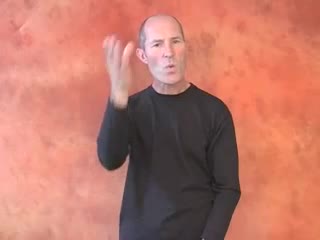
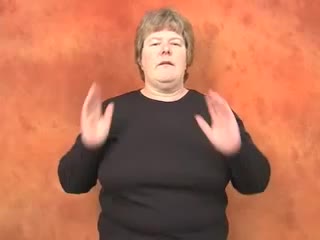
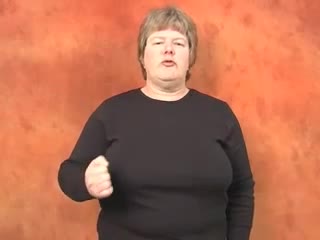
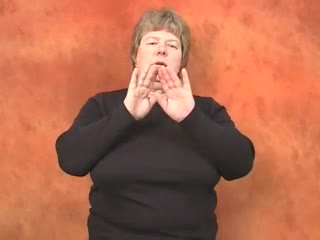
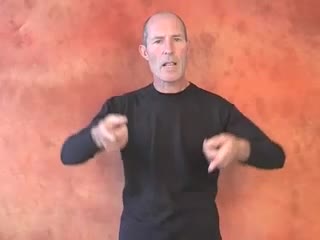
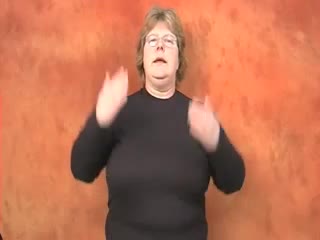
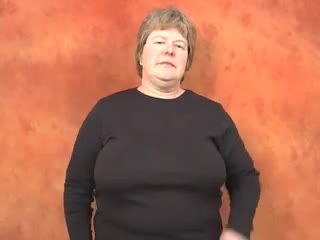
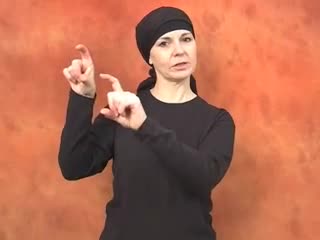
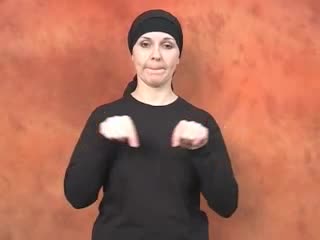
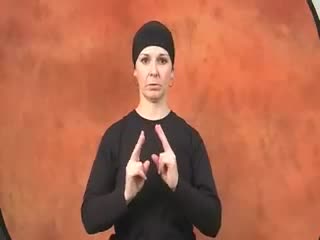
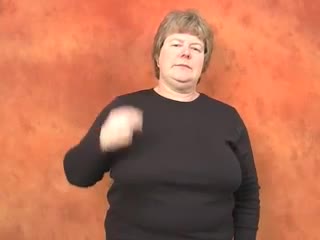
Best practice Use mirror mode, then watch the frame breakdown below to catch the start, movement, and finish cleanly.
Video via SpreadTheSign  - Free educational resource BSL
Updated April 20, 2026
British Sign Language (BSL) 🟢 Beginner 📊 B2 ⚡ Rare Noun

cornice

A decorative molding that crowns a building or wall

Source-linked video Step-by-step guide Context and safety notes
Synonyms
Molding coving frieze
Antonyms
None
Difficulty
Not rated yet

Create a free account to save this sign, keep your watch history, and unlock a one-note journal preview.

How to sign it
Handshape
Index finger extended, thumb extended, other fingers curled
Location
High, near head or shoulder height, indicating the top edge
Movement
Traces a horizontal line along the top of an imaginary wall or surface
Palm Orientation
Palm inward or slightly down
Facial Expression
Neutral facial expression
🔁 Spaced Review Try it free

How well do you know this sign?

CORNICE
Your Progress Live
🌱
Level 1 · BSL Beginner +0 XP today
This sign Not learned yet
0 watches
Mastery 0%
Confidence
How well do you know this sign?
0 🔥 Streak
0 Signs seen
0 Learned
0 Watches
7-day activity 0 of 7 active

Register free to sync activity across devices

Watch signs to see your history here

Tracking locally for now. Create a free account to save your progress and sync across devices.
Free gets you started. Paid adds the repeat-learning layer: review queues, deeper notes, compare mode, and better comeback tools.
My Sign Journal
Personal notes, saved to your account forever
Locked

Write memory tricks, usage examples, and cultural reminders beside each sign. Create a free account to unlock your first saved note preview on this page.

Create free account Already have an account? Log in

What This Sign Means in BSL

The BSL sign for cornice is wonderfully descriptive, directly mirroring the architectural feature it represents. At its heart, this sign is about depicting a specific, usually decorative, moulding that crowns a wall or building, often where the wall meets the ceiling. It's a sign that requires precision in its execution, immediately conveying the idea of a long, horizontal edge that projects slightly.

What makes this sign particularly noticeable is its direct visual correlation. You’re not just signing a word; you're sketching the *essence* of a cornice in the air. The deliberate movement traces the upper boundary of an imaginary structure, giving your audience a clear mental image. This isn't a vague gesture for "top" or "edge"; it's specifically about that architectural detail.

The tone of this sign is generally neutral and informative. It’s used to describe or identify rather than to express emotion. Its clarity makes it a strong choice when discussing building features, interior design, or even art history, ensuring that the specific element of a cornice is accurately understood without needing further explanation.

When This Sign Feels Natural

This sign feels most natural and effective in contexts where architectural details are being discussed or pointed out. Imagine you're describing a beautiful old house, discussing renovation plans with a builder, or even admiring the intricate plasterwork in a grand room. In these situations, using the specific sign for cornice adds a layer of precision and professionalism to your communication, ensuring everyone understands the exact feature you're referring to.

You'll find yourself reaching for this sign when the exact decorative or structural top edge of a wall is important to the conversation. For instance, if you're explaining that an ornate cornice needs repair, or if you're comparing different styles of cornices – perhaps a simple modern one versus a highly decorative Victorian example. It’s the go-to sign when the feature itself is the subject.

While this sign is very specific, you wouldn't typically use it for a generic "top edge" of something non-architectural, or simply for "above." If you're talking about the top of a table or the edge of a book, you'd use different, more general signs. The BSL sign for cornice carries the weight of its architectural meaning, so reserve it for when that specific detail is truly relevant to your message.

What Learners Usually Miss

One common oversight for learners is the exact handshape and its sustained form throughout the movement. Remember, it's the index finger and thumb extended, with the other fingers curled. Some learners might relax the curled fingers too much or let the thumb droop, losing the crisp, defined shape that suggests the projection of a cornice. Keep those non-extended fingers firmly curled to maintain the correct visual integrity.

Another subtle point that often gets missed is the consistent height and direction of the trace. The sign needs to be executed high, around head or shoulder height, to truly represent the upper edge of a wall. Crucially, the movement is a clear, deliberate *horizontal* line. Learners sometimes make the movement too short, or slightly angled, or even wavy. Think of it as drawing a perfectly straight, long line along the top of an invisible wall – steady, horizontal, and consistent in its elevation.

Finally, the nuance of the "imaginary wall" is key. It's not just a gesture in the air; you're tracing *along* something. Ensure your movement implies a surface, rather than just a floating line. This means maintaining a slight, consistent distance from your body (as if your body is the wall or your signing space represents the room) and a smooth, deliberate sweep. This intentionality helps distinguish it from more generic signs for "line" or "edge," reinforcing its specific architectural meaning.

A Simple Way to Remember It

To really embed the BSL sign for cornice in your memory, focus on its literal representation of the architectural feature. Imagine you're tracing the physical line of a cornice with your finger, highlighting its distinctive shape and placement:

  • The "Shelf" Handshape: Think of your extended index finger and thumb as forming a small, projecting "shelf." This directly mimics how a cornice juts out from the wall.
  • Tracing the Top Edge: Picture yourself running your finger along a very long, straight line at the very top of a wall. The horizontal movement at a high level perfectly illustrates where a cornice sits.
  • High and Proud: Remember that cornices are decorative elements often placed high up to draw the eye. Signing it high up reinforces its placement and importance in a room's design.

Short Practice Situations

  • When describing a historical building, you might sign, "The palace had incredibly ornate cornices in every room."
  • Imagine you're discussing home improvements and sign, "We're planning to install simple, modern cornices in the living area."
  • If you're pointing out a detail in a picture, you could sign, "Look closely at the top of the wall; you can see the intricate cornice there."
  • During a conversation about restoration, you might explain, "The original plaster cornice was badly damaged and needed extensive repair work."

Signs to Learn Next

  • WALL: Cornices are fundamentally part of a wall's structure or decoration. Learning 'wall' provides the essential context for where a cornice exists.
  • CEILING: Often, a cornice is found at the junction where a wall meets the ceiling. Understanding 'ceiling' helps to define the exact location and relationship.
  • BUILDING/HOUSE: Cornices are features of these larger structures, so linking it to the broader context of 'building' or 'house' makes sense for architectural discussions.
  • DECORATE/DECORATION: Many cornices are primarily decorative elements. Learning this sign helps to discuss the aesthetic purpose of cornices.
  • LINE/EDGE: While 'cornice' is very specific, understanding the more general signs for 'line' or 'edge' can help you appreciate the precision of the cornice sign and use it appropriately.

🤖 AI Learning Guide for "cornice"

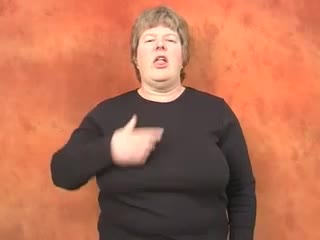
The BSL sign for 'cornice' visually depicts its architectural function, tracing the object's position and form

🎯 Practice Challenge

Imagine a wall; sign the top edge

⚠️ Most Common Mistake

Ensure the handshape is precise and the movement indicates the top edge, not just any line

👐 How to Sign "cornice" in British Sign Language (BSL) (Quick Answer)

Follow these steps to sign cornice correctly in British Sign Language (BSL):

  1. 1 Form G-hand (index finger extended, thumb extended, others curled)
  2. 2 Position hand high, near head/shoulder height, palm facing inward/down
  3. 3 Move hand horizontally from dominant side to non-dominant side
  4. 4 The movement traces the top edge of an imaginary wall

Tip: Watch the video above while following these steps for best results.

🤚 Sign Profile

🤚
Handshape
Index finger extended, thumb extended, other fingers curled
🔣
Handshape Code
1
Dominant Hand
Right
🙌
Hand Count
One-handed
📍
Location
High, near head or shoulder height, indicating the top edge
↗️
Movement
Traces a horizontal line along the top of an imaginary wall or surface
🔄
Movement Type
Linear
👆
Contact
Air
👋
Palm Orientation
Palm inward or slightly down

😊 Non-Manual Features

Facial expressions and body language are grammatically essential in British Sign Language (BSL) - not optional!

😊
Facial Expression
Neutral facial expression
🙆
Eyebrows
Neutral
👁️
Eye Gaze
Forward
🙂
Head Movement
None
👄
Mouth Morpheme
None
🕴️
Body Shift
None

📖 Grammar & Linguistics

Part of Speech Noun
Inflection No
Classifier Usage Classifier for a thin horizontal line/structure
Role Shift No

🎓 Learning Context

📌 When to Use: Discussing architecture, design, or building features
⚠️ Common Mistake: Confusing with 'shelf' or 'border' due to similar tracing
🚫 When NOT to Use: For general 'edge' or 'line' unless specifically referring to a cornice
Context Tags
Architecture building design interior

🧪 Practice Lab

Use these tiny checks right after watching the video. Fast feedback is what turns recognition into recall.

Meaning check

Which word matches the sign you just watched?

Usage check

Where would this sign fit most naturally?

Confidence check

How do you feel about cornice right now?

Pick one so SignDeaf can shape the rest of your session around how this sign actually feels.

🧭 Scenario Drill

One sign gets remembered faster when you attach it to real situations. Try these quick scene prompts.

Work

Stretch practice

Use this sign in a short workplace sentence or meeting exchange.

Family

Stretch practice

Try signing this while talking about family life or something at home.

School

Stretch practice

Imagine teaching this sign to a classmate or using it in a lesson.

Doctor

Stretch practice

Practise it in a healthcare conversation where clarity matters.

Travel

Stretch practice

Use it in a travel scenario like asking for help or directions.

💬 Example Usage

1.[en] The old house has a beautiful cornice. / BSL:[Sign CORNICE then describe beautiful old house.] | 2.[en] We need to repair the damaged cornice. / BSL:[Sign WE NEED REPAIR CORNICE DAMAGED.] | 3.[en] Look at the detailed design on the cornice. / BSL:[Sign LOOK CORNICE DESIGN DETAIL.]

1.[en] The old house has a beautiful cornice. / BSL:[Sign CORNICE then describe beautiful old house.] | 2.[en] We need to repair the damaged cornice. / BSL:[Sign WE NEED REPAIR CORNICE DAMAGED.] | 3.[en] Look at the detailed design on the cornice. / BSL:[Sign LOOK CORNICE DESIGN DETAIL.]

When to use it

Discussing architecture, design, or building features

When not to use it

For general 'edge' or 'line' unless specifically referring to a cornice

Register

Technical

🌍 Cultural Context

Architectural terms are often signed descriptively using classifiers

🗺️ Regional Variations

None widely documented for this specific sign

⚖️ Similar Signs - What's the Difference?

This sign cornice
VS
Similar signs Look closely
SHELF: Often uses a flat B-hand, palm down, moving horizontally, typically at chest or waist height, indicating a flat surface for holding objects. Cornice uses G-hand, higher, for a decorative architectural element. WALL: Can involve two flat hands outlining a vertical surface. Cornice is specific to the top edge of a wall, not the entire vertical plane. BORDER/EDGE: More general, can be signed with various handshapes outlining an area or line. Cornice is specific to a decorative, high, horizontal molding

📝 Usage Notes

Sign emphasizes the horizontal, decorative top edge of a structure

🏷️ Tags

Handshape

Keywords

💡
Did you know?
Watching Deaf signers on YouTube or BSL content online is one of the best ways to improve fluency.

📚 Explore More British Sign Language (BSL) Signs

Keep building your British Sign Language (BSL) vocabulary - explore signs by category or browse the full dictionary.