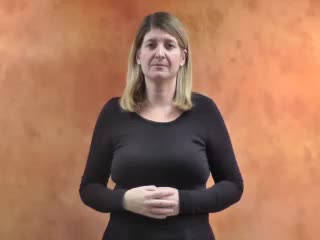
What This Sign Means in BSL
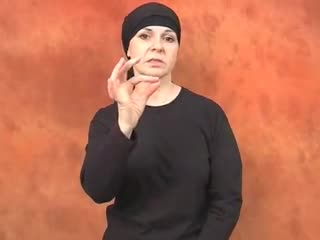
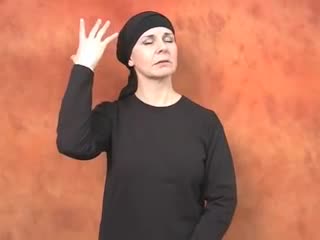
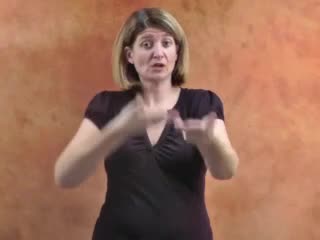
The BSL sign for wonder captures a beautiful, internal state of contemplation or curiosity. It's not merely about asking a question, but about the feeling of being intrigued, pondering possibilities, or reflecting deeply on something. Think of it as the quiet, reflective "I'm mulling this over" or "I'm curious about the 'how' or 'why'" rather than an active "I need to know now." When you use this sign, you're conveying a sense of thoughtful inquiry, a gentle speculation that comes from within.
This sign often carries a nuanced tone. It can express mild surprise, a hint of awe, or even a touch of puzzlement, all tinged with an underlying desire for understanding. It's frequently seen when someone is observing something new, listening to an idea, or considering a future event. The sign's placement near the head immediately tells your audience that this is a thought process, a mental activity, and not a physical action.
What makes this sign particularly valuable is its ability to convey an emotional layer to your thoughts. You're not just thinking; you're thinking with a sense of wonder. It adds depth to your communication, showing that your mind is engaged in a more profound or imaginative way than a simple "think" sign might convey. Mastering it allows you to express a rich spectrum of intellectual curiosity and reflective thought.
When This Sign Feels Natural
You'll find the BSL sign for wonder feels most natural in situations where you're genuinely curious about an outcome, speculating about possibilities, or expressing a quiet marvel. Imagine watching a documentary about space and signing, "I wonder how vast the universe truly is." Or perhaps a friend tells you about a new job, and you sign, "I wonder what it'll be like for them." It fits perfectly when you're musing aloud, either to yourself or to others in a conversational setting, without necessarily expecting an immediate answer.
This sign is quite versatile and can be used in both informal chats with friends and more considered discussions. It generally signals a reflective, rather than urgent, state of mind. You might use it when sharing a thought, expressing a slight uncertainty, or even showing a touch of mild intrigue. It's your go-to when you're processing information or observing something and a question forms in your mind that isn't pressing but is deeply interesting.
However, it's worth noting when to choose a different sign. If you're actively asking a direct question, the signs for "ask" or specific interrogatives (who, what, when, where, why) would be more appropriate. If you're simply stating that you're "thinking about" something without the added layer of curiosity or speculation, the sign for "think" is a better fit. "Wonder" has that distinct flavour of pondering an unknown, a gentle inquiry into the nature of things, rather than a straightforward mental process or information retrieval.
What Learners Usually Miss
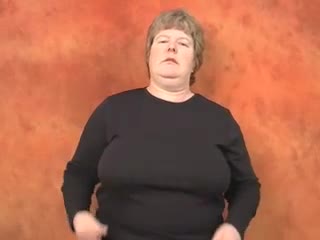
A common pitfall for learners with the sign for wonder is underplaying the facial expression. The handshape and movement are important, but without the right face, the sign can look somewhat flat or even generic, sometimes resembling a simple "think" or "brain." To truly convey wonder, your facial expression is key: a slight furrowing of the brow, a subtle lift of the eyebrows, or a contemplative gaze can transform the sign, selling the internal state of curiosity and reflection. It's the visual equivalent of a thoughtful "hmm..." or an intrigued "oh?"
Another subtle confusion arises when learners use "wonder" as a direct translation for every instance of "I wonder" in English. While often a good fit, sometimes English phrases like "I wonder if you could help me" are just polite ways of asking a favour. In BSL, a direct "Can you help me?" or "Please help" would be more natural. "Wonder" in BSL specifically implies that internal, reflective state, not just a polite softening of a request. It's about genuine curiosity or speculation, not a conversational filler.
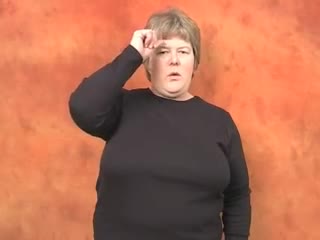
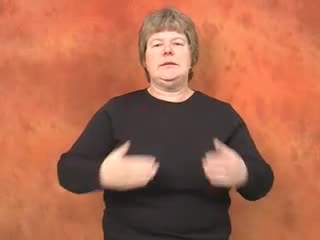
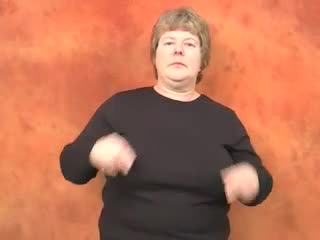
Also, pay attention to the exact location and movement. The small circular or twisting motion is quite specific and happens near the temple or side of the head. Some learners might make the movement too large, too fast, or too far away from the head, which can alter its meaning or make it harder to read. The movement is subtle, reflecting the quiet, internal nature of the thought. Ensure your wrist is doing the gentle twist, not your whole arm, and keep it close to your head, as if you're gently stirring a thought in your mind's pot.
A Simple Way to Remember It
To really cement the sign for wonder in your memory, connect its physical form to its meaning. Imagine your hand not just moving, but actively engaging with the concept of thought and inquiry. This sign is all about what goes on inside your head, so let the sign itself tell that story.
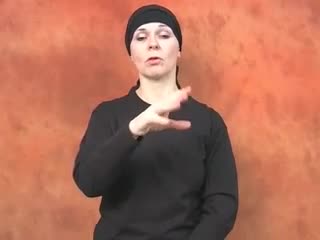
- Handshape as "Grasping a Thought": Think of the bent 5-hand or claw as if your hand is gently trying to "grasp" or "cup" a fleeting idea or question in your mind. It's not a firm grip, but a soft, open gesture of inquiry.
- Location as "Headquarters of Thought": The sign happens near your temple or the side of your head. This immediately connects it to your brain, making it clear that this is a mental process, a deep contemplation. Your head is where you think, and wonder is a form of thinking.
- Movement as "Turning Over an Idea": The small circular or twisting motion with the wrist can represent "turning an idea over" in your mind, exploring different angles, or watching thoughts swirl and settle. It's not a firm decision, but an ongoing process of mental exploration.
Short Practice Situations
- Imagine you're watching a complex magic trick: "I wonder how they did that! It's truly amazing."
- You're planning a trip and looking at different options: "I wonder if it'll be busy there during peak season."
- A friend shares a surprising piece of news about someone you both know: "Oh, I wonder what led to that decision."
- You're observing a child deeply engrossed in play: "I wonder what fascinating world they're creating in their imagination."
- Looking at an old photograph: "I wonder what life was like for my grandparents back then."
Signs to Learn Next
- THINK: This is a natural companion. While "think" is a general mental process, "wonder" adds the layer of curiosity or contemplation. Learning "think" helps differentiate the specific nuance of "wonder."
- CURIOUS: Often confused with "wonder," "curious" can imply a more active desire to discover information or a nosy interest. Understanding "curious" will highlight the more reflective, internal nature of "wonder."
- MAYBE / POSSIBLY: When you wonder about something, there's often an element of uncertainty. Signs like "maybe" or "possibly" often follow or accompany "wonder" to express that open-ended speculation.
- PUZZLE / CONFUSED: If your wondering stems from a lack of understanding, "puzzle" or "confused" might be relevant. "Wonder" is often the state you're in before you resolve the "puzzle" or confusion.
- IMAGINE: While "wonder" is about pondering what is or could be, "imagine" is about creating scenarios in your mind. They share a connection in their reliance on mental activity and exploring possibilities.