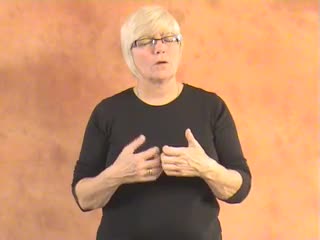
Speed
0
Practice reps times watched

Create a free account to keep your watch history and review plan.

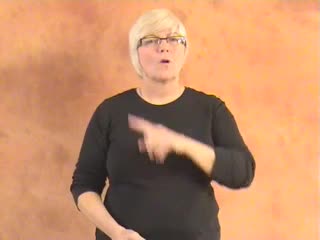
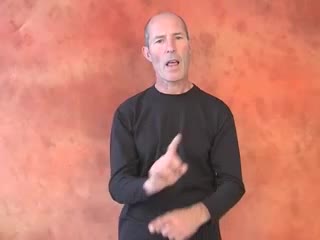
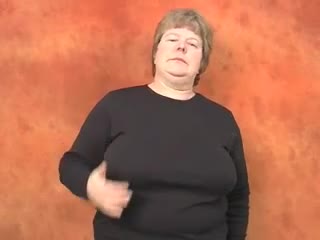
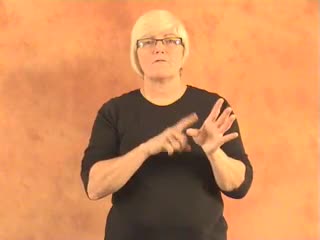
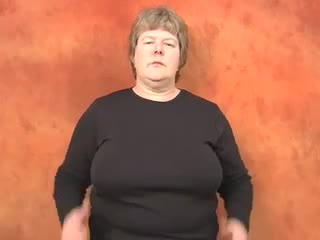
Best practice Use mirror mode, then watch the frame breakdown below to catch the start, movement, and finish cleanly.
Video via SpreadTheSign  - Free educational resource BSL
Updated April 25, 2026
British Sign Language (BSL) 🟢 Beginner 📊 A1 ⚡ Very Common Adverb

when

Interrogative adverb asking for the time or occasion of an event

Source-linked video Step-by-step guide Context and safety notes
Synonyms
At what time On what occasion
Antonyms
Never
Difficulty
Not rated yet

Create a free account to save this sign, keep your watch history, and unlock a one-note journal preview.

How to sign it
Handshape
Index finger extended straight up, other fingers curled into palm, thumb tucked
Location
Side of the head, specifically near the temple or ear
Movement
Index finger taps or circles gently near the temple repeatedly
Palm Orientation
Palm usually faces inward towards the head, or slightly back
Facial Expression
Raised eyebrows and slight head tilt forward
🔁 Spaced Review Try it free

How well do you know this sign?

WHEN
Your Progress Live
🌱
Level 1 · BSL Beginner +0 XP today
This sign Not learned yet
0 watches
Mastery 0%
Confidence
How well do you know this sign?
0 🔥 Streak
0 Signs seen
0 Learned
0 Watches
📖 Vocabulary health 🔒 Log in to see score
0 Mastered
0 Confident
0 Practicing
0 Just seen

Create a free account to keep your vocabulary score between sessions

7-day activity 0 of 7 active

Register free to sync activity across devices

Watch signs to see your history here

Tracking locally for now. Create a free account to save your progress and sync across devices.
Free gets you started. Paid adds the repeat-learning layer: review queues, deeper notes, compare mode, and better comeback tools.
My Sign Journal
Personal notes, saved to your account forever
Locked

Write memory tricks, usage examples, and cultural reminders beside each sign. Create a free account to unlock your first saved note preview on this page.

Create free account Already have an account? Log in

What This Sign Means in BSL

The BSL sign for when serves as your primary way to ask about a specific point in time or event duration. It's a foundational interrogative adverb, much like its spoken English counterpart, but with a crucial grammatical difference you'll quickly notice in BSL. This sign is direct, unambiguous, and forms the cornerstone of countless conversations about scheduling, past events, and future plans.

In BSL, question signs like "when" typically appear towards the end of a signed sentence. This is a key feature of BSL grammar that often surprises new learners, as it differs significantly from English word order. So, instead of "When is the meeting?", you'd often sign something like "MEETING START WHEN?" This placement helps to clearly mark the sentence as a question and maintains the flow of BSL communication.

The sign itself is quite neutral in tone. It doesn't inherently carry urgency, excitement, or frustration; those emotions would be conveyed through your facial expression and body language, which are vital non-manual features in BSL. Its versatility means you can use it for anything from asking about a simple appointment to inquiring about a significant historical event, making it an indispensable part of your BSL vocabulary.

When This Sign Feels Natural

You'll find yourself naturally reaching for the BSL sign for "when" in any situation where you're seeking to pinpoint a moment in time. Think about scheduling. If you're arranging to meet a friend, asking "COFFEE MEET WHEN?" feels perfectly natural. It's ideal for clarifying event times, understanding deadlines, or simply getting a sense of someone's personal routine, such as "WORK FINISH WHEN?"

This sign fits comfortably across a wide range of social registers. Whether you're having a casual chat with family, engaging in a professional discussion at work, or participating in a formal presentation, the sign for "when" remains consistent. It's a universal inquiry that doesn't need to be adapted for different audiences, which simplifies its usage for learners.

However, it’s important to distinguish when to use "when" versus other temporal signs. If you're talking about a conditional situation, like "When I get home, I'll call you," you wouldn't use this sign. Instead, you'd likely sign "HOME ARRIVE, PHONE I WILL." Similarly, if you're referring to a general period or a past event without directly asking, such as "When I was young...", you'd use signs like "PAST" and "YOUNG" or simply let the sentence flow indicate the time frame. "When" is specifically for asking about time.

What Learners Usually Miss

One of the most common pitfalls for new learners of the BSL sign for "when" is its grammatical placement. Influenced by spoken English, many instinctively place it at the beginning of their signed question. In BSL, however, question signs like "when" generally appear at the end of the sentence. Practising this grammatical structure from the outset will make your BSL much more natural and understandable to native signers. For example, instead of "WHEN MEETING START?", aim for "MEETING START WHEN?"

Another subtle point learners sometimes overlook is the precision and movement of the sign. The index finger taps or circles near the temple should be light and contained, not a large, sweeping gesture. It’s a precise, focused movement, echoing the precision of asking for a specific point in time. Avoid making the movement too broad or too aggressive; a gentle, concise action is what you’re aiming for.

While BSL questions almost always involve some non-manual features (like a slight furrowing of the brow or raised eyebrows), the facial expression for "when" is typically a neutral inquiry. Avoid using the more intense or inquisitive facial expressions that might accompany signs like "WHY" or "HOW," unless the context specifically demands that emotion. For "when," a calm, questioning look is usually most appropriate, allowing the sign itself to do the heavy lifting of the temporal inquiry.

A Simple Way to Remember It

To help solidify the sign for "when" in your memory, think about its location and movement. The temple is often associated with thought, memory, and your brain's internal clock. Tapping or circling there with your index finger can be visualised as trying to access or pinpoint a specific moment from your mental timeline.

  • Tapping for a Time: Imagine your finger gently tapping your head, trying to recall or pinpoint a specific moment or event on your internal timeline.
  • The "Clock" on Your Head: Visualise your temple as a personal clock or calendar. Asking "when" is like checking that internal clock for a date or time.
  • One Finger, One Point: Your extended index finger is a precise pointer, directing attention to a single, specific point in time, emphasised by the exact location on your head.

Short Practice Situations

  • Imagine you're trying to make plans with a friend: "Are you free tomorrow? When do you finish work?"
  • You're at a BSL event and want to know about the next session: "This is great! When is the next BSL class?"
  • A new person joins your signing group, and you're curious about their journey: "Your signing is really good. When did you start learning?"
  • You've organised a social gathering and need to confirm details: "The restaurant is booked for 7 pm. When are you planning to arrive?"
  • You're waiting for public transport and want an update: "It's late. When will the bus arrive?"

Signs to Learn Next

  • WHAT TIME? (often used for more specific time queries): This sign hones in on the exact hour, making it a natural follow-up once you've established 'when' something is happening. You might ask 'When is the meeting?' and then 'What time?' for precision.
  • WHERE? (another fundamental interrogative, often paired with WHEN): Just as you ask 'when' to understand the time of an event, you'll frequently need to ask 'where' to get a complete picture of its location.
  • HOW LONG? (asks about duration, contrasting with a specific point in time): While 'when' asks for a point in time, 'how long' asks about the duration. Understanding both helps you express full temporal concepts in BSL.
  • PAST / BEFORE (provides context for events that have already occurred): These signs help set the historical context, often answering questions like 'When did that happen?' or 'When was the last time?' by referring to previous periods.
  • FUTURE / LATER (provides context for events yet to happen): Similarly, these signs help you discuss upcoming events and plans, providing the future context for your 'when' questions and anticipations.

🤖 AI Learning Guide for "when"

The BSL sign for 'when' is a one-handed G-hand sign performed near the temple, used to ask about time

🎯 Practice Challenge

AI can provide feedback on handshape, movement, location, and crucial non-manuals like raised eyebrows

⚠️ Most Common Mistake

AI can highlight if eyebrows are neutral instead of raised, or if the handshape isn't a clear G-hand

👐 How to Sign "when" in British Sign Language (BSL) (Quick Answer)

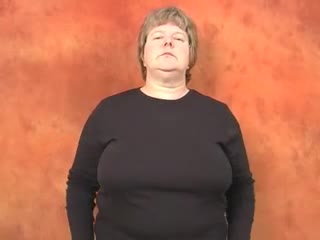
Follow these steps to sign when correctly in British Sign Language (BSL):

  1. 1 Form a G-hand with dominant hand
  2. 2 Place index finger near temple
  3. 3 Palm facing head, slight backward angle
  4. 4 Tap or circle index finger repeatedly
  5. 5 Ensure eyebrows are raised

Tip: Watch the video above while following these steps for best results.

🤚 Sign Profile

🤚
Handshape
Index finger extended straight up, other fingers curled into palm, thumb tucked
🔣
Handshape Code
G-hand
Dominant Hand
Right
🙌
Hand Count
One-handed
📍
Location
Side of the head, specifically near the temple or ear
↗️
Movement
Index finger taps or circles gently near the temple repeatedly
🔄
Movement Type
Repeated
👆
Contact
Near
👋
Palm Orientation
Palm usually faces inward towards the head, or slightly back
⚖️
Symmetry
Asymmetric

😊 Non-Manual Features

Facial expressions and body language are grammatically essential in British Sign Language (BSL) - not optional!

😊
Facial Expression
Raised eyebrows and slight head tilt forward
🙆
Eyebrows
Raised
👁️
Eye Gaze
At referent
🙂
Head Movement
Forward
👄
Mouth Morpheme
Often 'POW' or 'Pah' mouth pattern for questions
🕴️
Body Shift
None

📖 Grammar & Linguistics

Part of Speech Adverb
Inflection Yes
Classifier Usage N/A
Role Shift No

🎓 Learning Context

📌 When to Use: Asking about time, occasion, or timing of events
⚠️ Common Mistake: Confusing with 'where' or using incorrect non-manuals
🚫 When NOT to Use: When the question is about 'if' or 'whether', not time
Context Tags
Question Time Interrogative Temporal

🧪 Practice Lab

Use these tiny checks right after watching the video. Fast feedback is what turns recognition into recall.

Meaning check

Which word matches the sign you just watched?

Usage check

Where would this sign fit most naturally?

Confidence check

How do you feel about when right now?

Pick one so SignDeaf can shape the rest of your session around how this sign actually feels.

🧭 Scenario Drill

One sign gets remembered faster when you attach it to real situations. Try these quick scene prompts.

Work

Stretch practice

Use this sign in a short workplace sentence or meeting exchange.

Family

Stretch practice

Try signing this while talking about family life or something at home.

School

Stretch practice

Imagine teaching this sign to a classmate or using it in a lesson.

Doctor

Stretch practice

Practise it in a healthcare conversation where clarity matters.

Travel

Stretch practice

Use it in a travel scenario like asking for help or directions.

💬 Example Usage

1.[en] When are you free? / BSL:[Sign WHEN, then YOU FREE] | 2.[en] When did it happen? / BSL:[IT HAPPEN, then WHEN] | 3.[en] When will you go? / BSL:[YOU GO, then WHEN]

1.[en] When are you free? / BSL:[Sign WHEN, then YOU FREE] | 2.[en] When did it happen? / BSL:[IT HAPPEN, then WHEN] | 3.[en] When will you go? / BSL:[YOU GO, then WHEN]

When to use it

Asking about time, occasion, or timing of events

When not to use it

When the question is about 'if' or 'whether', not time

Register

Neutral

🌍 Cultural Context

Important for clear communication in BSL, often initiating a time-related topic

🗺️ Regional Variations

Minor variations exist, but core handshape and location are consistent

⚖️ Similar Signs - What's the Difference?

This sign when
VS
Similar signs Look closely
The sign for WHEN (G-hand, near temple, repeated) is often confused with WHERE (G-hand, forward, twisting movement) and HOW (two B-hands, knuckles together, twist). The key difference for WHEN is its specific location at the temple and the circular/tapping movement, combined with raised eyebrows, distinguishing it clearly from other interrogatives

📝 Usage Notes

Always use with raised eyebrows and a forward head tilt for questions

Frequently Asked Questions

Common questions about the British Sign Language (BSL) sign for "when".

🏷️ Tags

Handshape

Keywords

💡
Did you know?
BSL uses a two-handed manual alphabet - different from ASL which is one-handed.

📚 Explore More British Sign Language (BSL) Signs

Keep building your British Sign Language (BSL) vocabulary - explore signs by category or browse the full dictionary.