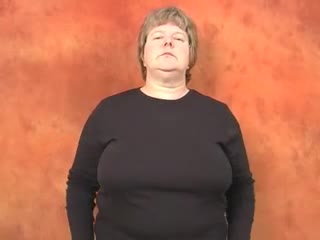
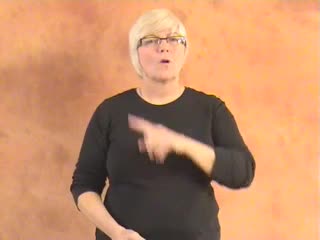
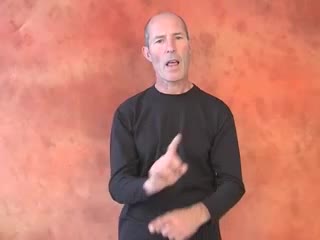
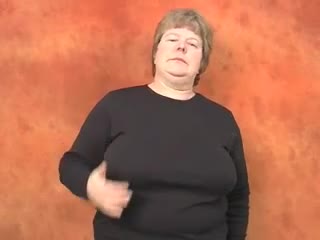
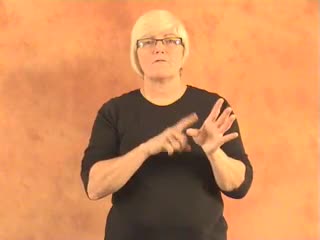
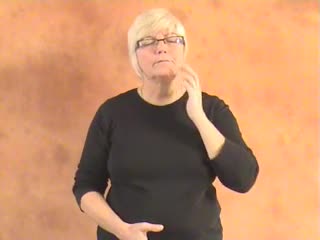
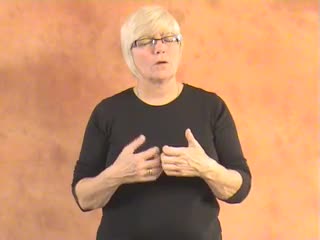
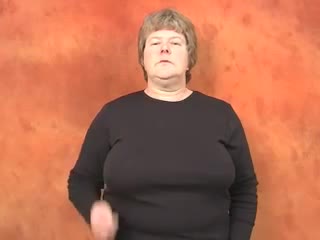
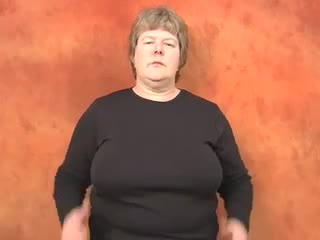
What This Sign Means in BSL
The BSL sign for no is a fundamental building block of British Sign Language, representing direct negation or refusal. It's a concise and unambiguous sign, making it incredibly versatile in conversation. Unlike spoken language where "no" can carry many shades of meaning just through intonation, in BSL, the core meaning of this sign is simply "not" or "nay," and its precise nuance is often shaped by your facial expression and body language.
What's striking about this sign is its directness and economy of motion. With your index finger extended, mimicking a subtle push or a decisive flick, you're physically stating a rejection. This isn't a passive "no"; it's an active declaration, whether you're declining an offer, stating a negative fact, or expressing disagreement. It’s a sign that embodies clarity and a certain self-assurance, cutting straight to the point without fuss.
This sign is much more than just a literal translation of the spoken word "no." It embodies the concept of negation in a clear, visible way, making it a powerful and independent communication tool. It can stand alone as a complete response or work as part of a larger sentence structure to negate verbs, nouns, or entire concepts. Mastering its core form and understanding its directness is key to unlocking many conversational possibilities in BSL.
When This Sign Feels Natural
You’ll find yourself reaching for this sign in countless everyday situations. It feels most natural when you need to give a direct, unambiguous negative answer. Imagine someone offers you a biscuit, and you're full – a simple, clear "no" is perfect. Or perhaps you're asked if you've seen a particular person; if you haven't, this sign communicates that fact efficiently and without hesitation.
It’s also your go-to when you need to refuse a request or decline an invitation. If a friend asks if you can meet up on Tuesday, and you’re unavailable, using this sign immediately clarifies your position. It's a functional, straightforward negation that cuts to the chase, making it an essential part of quick back-and-forth conversations where clarity is paramount. Think of it as your primary tool for expressing "not so" or "I decline."
While highly versatile, there are times when a more specific sign might feel more natural than a general "no." For instance, if you want to express "I can't" rather than just "no," you'd use the sign for CAN'T. Similarly, if you mean "not yet," a different sign or phrase would convey that nuance more accurately. The BSL sign for no is about a definitive negative, so save it for when you truly mean "absolutely not" or "it is not the case."
What Learners Usually Miss
One common pitfall for new learners is failing to make the movement of this sign sharp and decisive enough. It’s not a gentle wave or a slow push; it’s a quick, almost flicking motion away from your body. A weak or drawn-out movement can make your "no" seem hesitant or unclear, leaving your conversational partner wondering if you're actually saying "maybe" or "I'm not sure." Really commit to that crisp, short arc – it’s the key to its authority.
Another crucial element often overlooked is the accompanying facial expression. A neutral "no" with a neutral face is perfectly fine for stating a fact, like "No, it's not raining." But if you're politely declining an offer, a slight smile or a softer gaze will convey that nuance. Conversely, a firm "no" might require a more determined or even slightly furrowed brow. Your face does much of the emotional heavy lifting in BSL, so remember it's an integral part of signing "no" effectively and appropriately for the situation.
Finally, learners sometimes place the sign in a sentence awkwardly or overuse it when a simpler construction would suffice. While "no" can stand alone, in a longer sentence, it often precedes or follows the verb or concept being negated. For example, rather than "I NO WANT," it's more natural to sign "WANT NO" or "I WANT NO." Pay attention to the natural flow you observe in fluent signers, as BSL grammar can sometimes surprise you with its elegant efficiency; less can often be more.
A Simple Way to Remember It
Think of this sign as a physical representation of pushing something away or drawing a line in the sand. Your hand is saying, "Away with you!" or "That's a definite halt." The memory hooks below tie into this idea of definitive rejection or absence.
- The "Push Away" Reflex: Imagine you're gently pushing something you don't want away from you. Your extended index finger is like a little barrier, flicking the idea of "yes" or "that thing" away from your personal space.
- The "Stop" Signal: The sharp, short movement away from your body is similar to a quick "stop" or "halt" signal. It’s abrupt and clear, leaving no room for negotiation, much like a traffic warden's decisive hand.
- The "Point of Refusal": Your extended index finger is often used to point, but here it's pointing out a rejection. It’s a precise, focused digit delivering a definitive "not that" or "not so."
Short Practice Situations
- Someone offers you a cup of tea, but you'd prefer water: "NO, thank you. WATER, please."
- Your friend asks if you're going to the party tonight: "NO, I'm staying home tonight."
- You're asked if you've ever visited Scotland: "NO, I haven't been there yet, but I'd like to."
- A child asks for another sweet, but they've already had too many: "NO, you've had enough for today."
- You're confirming a negative fact about an event: "NO, the concert isn't happening until next month."
Signs to Learn Next
- YES: This is the natural opposite! Learning "yes" right after "no" helps you practice the full range of basic affirmation and negation, often using similar directness and clarity in their execution.
- DON'T KNOW: While "no" is a definite negation, "don't know" introduces uncertainty or a lack of information. You'll often find yourself needing to distinguish between "I don't know" and "no, it's not the case."
- CAN'T: This sign is about inability or impossibility, representing a specific type of negation. It's important to differentiate it from a general "no" or a simple refusal based on preference.
- STOP: The movement for "no" has a similar sharp, decisive quality to "stop." Understanding "stop" will help reinforce the crispness and definitive nature needed for an effective "no."
- NONE / NOTHING: These signs convey a complete absence or zero quantity, a more absolute form of negation than "no" alone. They extend your ability to express lack or non-existence in BSL.