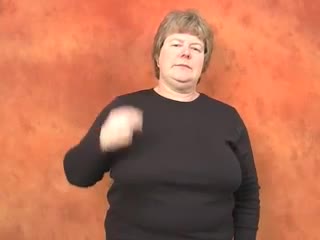
What This Sign Means in BSL
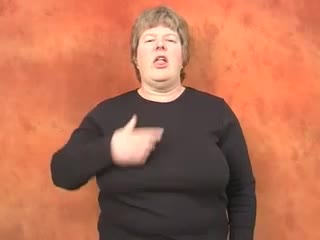
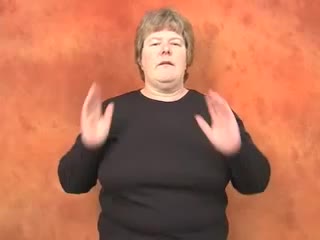
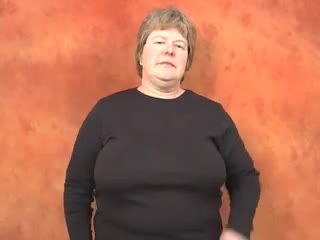
The BSL sign for notebook is wonderfully clear and instantly recognisable, making it a true asset for learners. It's a literal representation, almost like a mini-mime, of the very act of writing in a book. This sign doesn't just name an object; it vividly evokes its primary function and purpose, which helps to cement its meaning for new learners.
You'll find this sign is used to refer specifically to a physical notebook or notepad – something you physically hold and write in, whether it’s a spiral-bound pad, a jotter, or a hardback journal. It carries a straightforward, descriptive tone, focusing on the common, everyday item we use for jotting down thoughts, lists, or important notes.
What's particularly effective about this sign is its immediate visual connection to the action of writing. This directness makes it incredibly intuitive. It’s a foundational noun in BSL, meaning you’ll encounter it frequently in various contexts, from a classroom to a professional meeting, or simply when discussing daily tasks and reminders. Its clarity makes it a reliable and unambiguous sign in conversation across the UK.
When This Sign Feels Natural
This sign feels most natural when you're talking about the tangible item itself: a physical notebook you might carry, open, or fill with writing. Imagine you're asking a friend to lend you theirs, or telling someone you've just completed filling up your last one – those are precisely the moments when this sign fits perfectly. It's an essential, everyday sign for an extremely common, everyday object.
It slots seamlessly into a wide range of conversations, whether you're in a formal setting like a lecture hall, engaging in a casual chat with family or friends, or even when you're making a shopping list for stationery supplies. The register is generally neutral, making it appropriate for almost any audience, from children learning to express themselves to professionals exchanging information.
While it's incredibly versatile, always consider the specific context. If you're referring to a very particular type of book, such as a highly personal diary, a large ledger, or a specific type of academic journal, there might be other signs or ways to adapt this one with additional context to be more precise. However, for the general concept of 'a notebook' for note-taking, this sign is your immediate and most appropriate choice.
What Learners Usually Miss
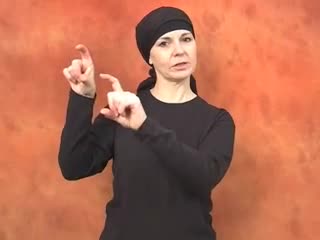
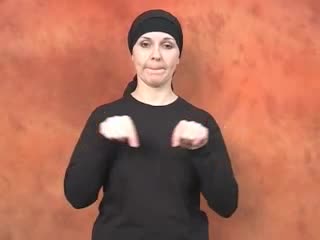
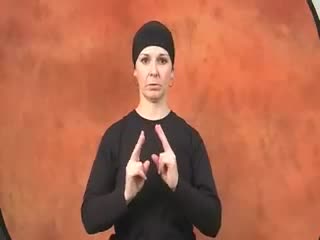
One common point learners sometimes miss is the quality and rhythm of the movement. It's not just a single, quick swipe; your dominant G-hand should move across your non-dominant B-hand with a light, repetitive motion, truly mimicking the action of writing several words or lines across a page. Think of it as 'sketching' or 'scribbling' on the page, rather than just a single, broad brush past it. This rhythmic movement adds authenticity.
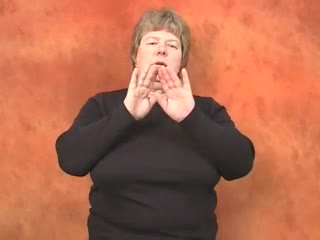
Another subtle yet crucial aspect is the stability and orientation of your non-dominant hand. It acts as the stationary 'page' or 'surface' for writing. Ensure it remains steady and flat, with the palm clearly facing upwards, providing a consistent and unambiguous base for your dominant hand's movement. If this base hand wobbles, moves around, or changes its flat B-hand shape, the clarity and meaning of the sign can unfortunately be diminished or lost.
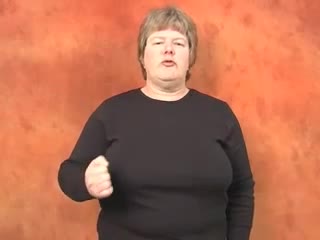
Finally, pay close attention to the precision of both handshapes. Your dominant hand must maintain a clear G-hand (index finger extended straight, thumb tucked in), not a slightly crooked finger or a loose fist. Similarly, the non-dominant hand needs to be a distinct B-hand (all fingers together and straight, palm flat). These precise and correct handshapes contribute significantly to the sign's immediate recognition and prevent it from being confused with other signs that might have superficially similar movements or locations.
A Simple Way to Remember It
Remembering the BSL sign for notebook is often straightforward because it so vividly paints a picture. Just imagine you're holding a blank notebook in one hand and writing in it with the other. This visual connection is incredibly strong and makes the sign highly intuitive.
- Your non-dominant hand, held flat and palm-up, is the open page of your notebook.
- Your dominant G-hand, with its extended index finger, is the pen or pencil, ready to write.
- The gentle, sweeping motion of your dominant hand across the non-dominant hand is the act of filling those pages with notes.
Short Practice Situations
- Could you please pass me my notebook? I need to jot down some ideas for the project.
- I always carry a small notebook with me, just in case inspiration strikes or I need to make a quick list.
- Remember to bring your notebook to class tomorrow; we'll be taking important notes.
- My notebook is almost full, so I'll need to buy a new one very soon.
- She showed me her beautiful new notebook, which had a lovely cover design.
Signs to Learn Next
- BOOK: This sign is closely related as a notebook is a type of book. Understanding 'book' allows you to distinguish between a general book and a specific notebook for writing.
- WRITE: The action of writing is intrinsically linked to a notebook. Learning 'write' will help you express what you do with a notebook.
- PEN / PENCIL: These are the tools you use in conjunction with a notebook. Knowing them together helps build practical sentences about stationery.
- PAPER: Notebooks are made of paper. This sign broadens your vocabulary for stationery items and materials, connecting naturally to the components of a notebook.
- LESSON / STUDY: Notebooks are frequently used in educational settings. Learning these context signs will help you place 'notebook' into common scenarios, expanding your conversational range.