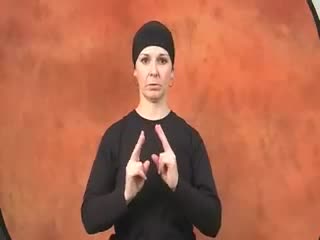
What This Sign Means in BSL
The BSL sign for subject is a direct and clear way to refer to an academic discipline, a field of study, or a specific area of learning. Think of it as the sign you'd use when discussing school timetables, university courses, or any defined branch of knowledge. It doesn't typically refer to a general "topic" of conversation, nor does it mean the "subject" of a sentence in grammar. Its specificity is key; it immediately signals that you're talking about structured learning.
This sign is incredibly versatile within educational contexts, from primary school discussions about "what's your favourite subject?" to university-level conversations about "which subjects are you specialising in?" It's a foundational sign for anyone navigating learning environments, whether as a student, teacher, or parent. The sign’s neutral tone allows it to be used in a wide range of inquiries or statements about education without carrying additional emotional weight, unless paired with specific facial expressions to convey enthusiasm or difficulty.
Visually, the sign's handshape and location around the temple subtly connect it to the idea of mental engagement and specific knowledge areas stored within the mind. It’s like designating a particular compartment in your brain for a specific domain of study. This makes it quite intuitive once you grasp its core meaning as an academic discipline, rather than a more abstract or broad concept like "topic" or "matter."
When This Sign Feels Natural
You'll find yourself using the BSL sign for subject most naturally in situations directly related to education and learning. For example, asking a friend about their school timetable, discussing career paths that require certain qualifications, or comparing different areas of academic interest. It's the go-to sign when planning curricula, reviewing course options, or simply chatting about what someone enjoys learning.
The register for this sign is quite flexible, fitting seamlessly into both formal discussions and casual chats. You could use it with a teacher to discuss a student's progress in various subjects, or with a peer to ask what they're studying for an upcoming exam. Its clarity means it's understood across diverse audiences, from young learners to experienced academics, as long as the context points to educational fields.
However, it's crucial to understand when to choose a different sign. If you're talking about the "topic" of a conversation, "the matter at hand," or the grammatical "subject" of a sentence, this sign would be incorrect. For those situations, BSL has other specific signs that convey those meanings more accurately. Remember, the BSL sign for subject is primarily reserved for the defined areas of academic study or knowledge, making its usage precise and context-dependent.
What Learners Usually Miss
One common pitfall for learners is confusing the precision of the handshape and movement. The dominant hand forms a distinct C-shape, not a flat hand or a loose curve, and the movement is a small, controlled circular or arc motion, not a single tap or a large sweep. Many learners might simplify the C-shape or make the circular motion too expansive. Maintaining the exact C-shape and the contained, deliberate circle is vital for clarity and distinguishing it from other signs near the temple.
Another subtle but important detail is the exact location. The sign is performed near the temple or side of the head, not directly on the forehead or moving across a broader area. This specific locus helps differentiate it from other "head" signs like "think," "remember," or "understand." Pay close attention to the non-dominant hand remaining passive and the overall neatness of the sign. Also, while context often helps, a neutral or slightly inquisitive facial expression is usually appropriate, unless you're explicitly conveying strong feelings about a particular subject.
Over-generalisation is also a frequent mistake. Because the English word "subject" has multiple meanings, learners sometimes try to apply the BSL sign too broadly. Using it for a general "topic of discussion" or "the main point" will sound unnatural and might confuse a native BSL user. Always remember that this sign is specifically for academic disciplines or established fields of study. Practicing the sign strictly within these learning contexts will help solidify its correct usage and prevent miscommunication.
A Simple Way to Remember It
To help this sign stick in your memory, try connecting its form to its meaning through these easy visual and conceptual hooks. It’s all about associating the physical action with the idea of focused learning.
- The C-shape: Think of the C-shape hand as "cupping" or "containing" a specific Course or Curriculum. It's like you're holding a specific category of knowledge in your mind.
- Near the temple: This location directly links the sign to what's "in your head"-your thoughts, your studies, and the knowledge you're acquiring. It’s where mental subjects reside.
- Small circular motion: Imagine your mind "circling" or "focusing deeply" on a particular area of study, exploring its facets and consolidating that specific field of understanding.
Short Practice Situations
- At school, which subjects did you find most challenging to learn, and which ones did you enjoy the most?
- My younger brother is really good at Maths; it's definitely his best subject and he excels in it.
- Are there any new subjects you're hoping to study at university next year, or are you continuing with your current field?
- We need to decide on the core subjects for the new adult education programme to ensure a comprehensive curriculum.
- BSL is a fascinating subject, offering a wonderful window into Deaf culture and a powerful means of communication.
Signs to Learn Next
- STUDY: (BSL sign for "study"). Learning "study" alongside "subject" makes perfect sense, as you inherently *study* a particular *subject*. This pairing reinforces the link between the action and the academic field.
- LEARN: (BSL sign for "learn"). Similar to study, "learn" directly relates to acquiring knowledge within a "subject." It clarifies the process of gaining understanding in a specific area.
- TEACH: (BSL sign for "teach"). Teachers *teach* subjects. This sign completes an essential educational triangle: learn, study, teach-all revolving around a "subject," demonstrating the full cycle of knowledge transfer.
- SCHOOL / UNIVERSITY: (BSL signs for "school" and "university"). These are the primary environments where "subjects" are encountered, taught, and pursued. Practicing them together grounds the sign in practical, real-world settings.
- KNOWLEDGE: (BSL sign for "knowledge"). A "subject" is fundamentally a domain of knowledge. Understanding this broader concept helps contextualise individual subjects as distinct, yet interconnected, parts of a larger body of understanding.