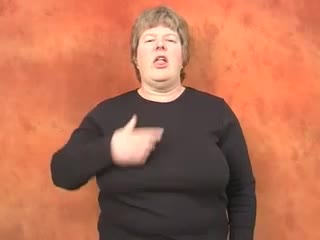
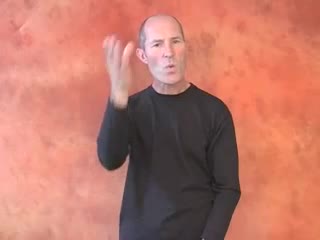
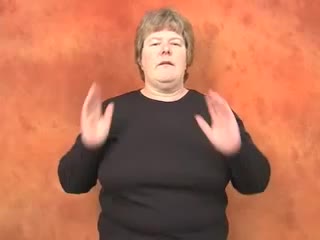
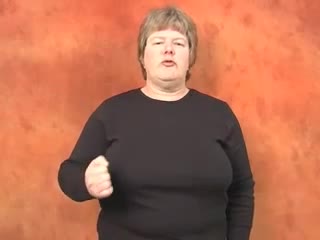
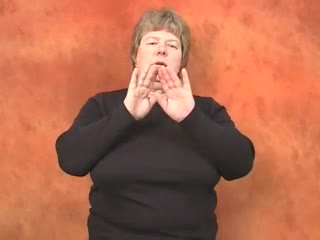
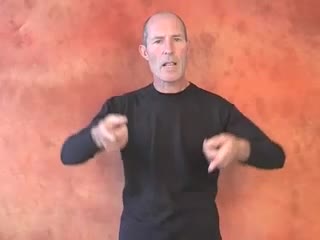
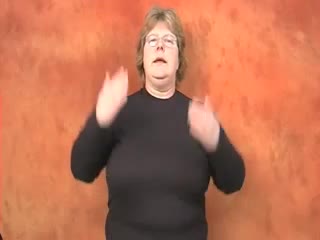
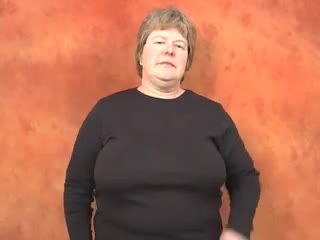
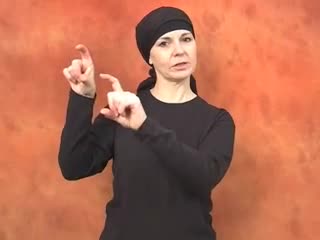
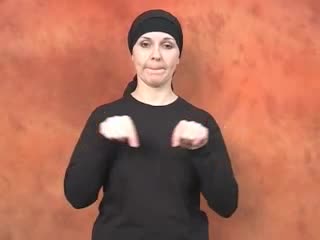
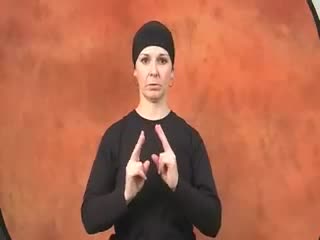
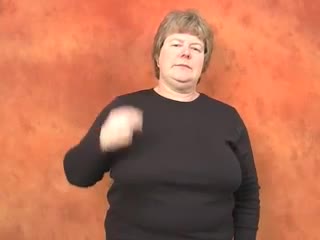
What Is the BSL Sign for "hoist"?
Picture a heavy load needing to be lifted, perhaps by a crane or a pulley system; that's exactly the kind of powerful action the BSL sign for "hoist" conveys. This particular sign beautifully captures the essence of raising something substantial, often with mechanical assistance or considerable effort. When you learn hoist BSL, you’re not just memorising a movement; you're connecting with a visual representation of lifting and elevation, which is so fundamental to British Sign Language hoist vocabulary. Understanding how to sign hoist in BSL gives you a practical tool for discussing construction, engineering, or even just moving large items around the house.
How to Sign "hoist" in British Sign Language - Step-by-Step
Let's break down this dynamic sign so you can master the action of lifting with precision.
Step 1: Handshape
For the BSL sign for "hoist," you'll begin with your dominant hand forming a 'C' handshape. Imagine your thumb and index finger are almost touching, creating an open curve, while your middle, ring, and little fingers are curled in towards your palm. It's a slightly rounded, grasping shape, ready to engage with an unseen object.
Step 2: Hand Placement and Location
You'll position your dominant hand, maintaining that 'C' shape, below your non-dominant hand. Your non-dominant hand should be held flat, palm down, fingers pointing forward, forming a stable surface or a platform. This setup places your dominant hand in the 'lifting' position, ready to move upwards from beneath.
Step 3: Movement
Now, here's the action: your dominant hand, still in the 'C' handshape, moves upwards in a steady, controlled motion, passing just under and then beyond your non-dominant hand. It’s a single, deliberate upward sweep, mimicking the act of lifting or raising something heavy. The movement isn't quick or jerky; it’s a strong, ascending motion, reflecting the effort involved in a hoist.
Step 4: Facial Expression and Mouthing
Facial expression is incredibly important in BSL, and for "hoist," a neutral or slightly strained expression can accompany the sign, depending on context. If you're talking about a particularly heavy hoist, a slight furrow of the brow might be appropriate; otherwise, a calm, focused look is perfectly fine. You'll also mouth the English word "hoist" as you perform the sign; this mouthing provides crucial phonetic information, ensuring clarity within the conversation.
Step 5: Palm Orientation
Throughout the initial stages of this sign, your dominant hand's palm will face upwards, as if scooping something. As your hand moves upwards, the palm orientation naturally shifts to face more forward or slightly towards your non-dominant hand, maintaining the visual impression of lifting an object. This orientation is key because it visually conveys the upward force and engagement with what's being lifted.
"hoist" in BSL - Quick Reference Snapshot
- Handshape: Dominant hand forms a 'C' shape, non-dominant hand is flat, palm down.
- Location: Dominant hand starts below non-dominant hand, moving upwards.
- Movement: Dominant hand sweeps upwards past the non-dominant hand.
- Facial Expression: Neutral or slightly strained, depending on context.
- Dominant Hand: Performs the upward lifting motion.
- Palm Orientation: Starts palm up, shifting forward during the upward movement.
5 Memorisation Tricks for the BSL Sign "hoist"
Here are some clever ways to really make this sign stick in your memory.
- Visualize a heavy bucket: Picture your dominant 'C' handshape as the handle of a bucket or a hook, and your non-dominant hand as the edge of a well or a platform it's being lifted from. This visual mnemonic ties directly to the action of the hoist sign language.
- Practice the 'power lift' drill: Stand tall and practice the upward sweeping motion with intention, feeling the 'power' in the movement as if you're genuinely hoisting something. Engaging your arm muscles slightly will build muscle memory, making the BSL hoist sign feel natural.
- Connect to the word's meaning: "Hoist" means to raise or lift, often with effort. Think of the sign as your hand literally enacting that upward motion, reinforcing the link between the sign's form and its semantic content. You'll find this direct connection incredibly helpful for learning hoist BSL.
- Distinguish from 'lift': While similar, "hoist" often implies a more mechanical or strenuous lift than a simple "lift." Remember the two-handed setup for "hoist" as a key differentiator, helping you avoid common confusion with other 'upward movement' signs.
- Integrate it into your daily observations: Whenever you see a crane, a pulley, or anything being lifted in real life, perform the sign mentally or physically. This daily-life practice reinforces the sign in context, making the British Sign Language hoist part of your everyday understanding.
Real-Life Situations to Use the BSL Sign for "hoist"
You'll discover many practical moments where the BSL sign for "hoist" comes in handy.
- Imagine discussing a building project: "They need to hoist the steel beam into place today." You'd sign HOIST (beam) PLACE-THERE.
- Perhaps you're at a theatre: "Can you hoist that backdrop higher?" The question might involve signing BACKDROP HOIST HIGHER? with an interrogative facial expression.
- Describing a problem with machinery: "The engine won't hoist up." Here, the sign HOIST would be followed by a negative headshake or the sign for NOT.
- Talking about moving heavy furniture: "We'll have to hoist the sofa over the balcony." This involves showing the spatial movement, SOFA HOIST OVER BALCONY.
Top 3 Mistakes Learners Make Signing "hoist" in BSL
It's common to stumble a little when learning new signs, but recognizing these pitfalls will help you master "hoist."
- Incorrect Handshape: Beginners often use a flat 'B' handshape or a fist instead of the specific 'C' handshape. This changes the visual meaning entirely; the 'C' implies grasping or hooking. The precise correction involves consciously forming that open 'C' with your dominant hand, ensuring your thumb and index finger create a clear, curved opening.
- Failing to Use the Non-Dominant Hand: Some learners perform the lifting motion with only one hand, omitting the non-dominant hand as the 'base' or 'platform.' This loses a significant part of the sign's iconic representation. To correct this, always remember to position your flat, palm-down non-dominant hand as the stable reference point from which the dominant hand's upward movement begins.
- Insufficient or Jerky Movement: Instead of a smooth, deliberate hoist, some might use a quick, small flick or an overly aggressive, uncontrolled movement. This can make the sign unclear or imply a different action. The precise correction is to focus on a steady, controlled upward sweep, embodying the effort and precision of lifting something heavy with a sustained motion.
Fascinating Facts About the BSL Sign for "hoist"
Let's delve into some intriguing aspects of this particular sign within BSL.
- The iconic motivation behind "hoist" is very strong; its form directly mimics the action of lifting something upwards, often suggesting a mechanical aid. This visual transparency makes the what is the sign for hoist quite intuitive for new learners.
- While the core movement for "hoist" is widely understood across the UK, slight regional variations in hand placement or the exact 'C' handshape might exist. These minor differences highlight the rich linguistic diversity within the BSL-using community.
- This sign is a great example of a two-handed sign where one hand (the non-dominant) acts as a passive articulator, providing a stable reference point, while the dominant hand performs the active movement. This dynamic interaction between hands is a common feature in BSL.
- "Hoist" is not initialised, meaning its handshape does not derive from the first letter of the English word in the manual alphabet. Instead, its form is purely iconic, directly representing the action it describes.
- The sign can be modified to show *how* something is hoisted; for instance, a slower, more strenuous movement could imply a very heavy item, or a repeated movement might suggest multiple hoisting actions. This adaptability demonstrates BSL's grammatical richness.
"hoist" in Deaf Culture - Community and Identity
While "hoist" might seem like a purely functional word, its presence in BSL reflects the Deaf community's engagement with the practicalities of the world, just like any other group. Deaf individuals work in all fields, including construction, engineering, and logistics, where concepts of lifting and moving heavy objects are commonplace. The ability to clearly communicate "hoist" allows for precise instructions and discussions in these contexts, fostering safety and efficiency. Shared vocabulary around such practical tasks strengthens community bonds, allowing for clearer communication in everyday life, whether it's moving furniture or collaborating on a large-scale project. It's about empowering effective interaction and ensuring everyone can participate fully.
Example Conversations Using "hoist" in BSL
Let's see "hoist" in action within some practical BSL sentence structures.
English: We need to hoist the flag. - BSL structure: FLAG WE NEED HOIST.
English: Can they hoist the car out of the ditch? - BSL structure: CAR DITCH HOIST CAN THEY? (with interrogative face)
English: The crane will hoist the heavy machinery. - BSL structure: CRANE HEAVY MACHINERY HOIST WILL.
English: Don't forget to hoist the anchor. - BSL structure: ANCHOR HOIST DON'T FORGET.
English: I watched them hoist the new statue into place. - BSL structure: NEW STATUE THEM HOIST PLACE-THERE I WATCHED.
Frequently Asked Questions: The BSL Sign for "hoist"
Is there a common regional variation for the BSL sign for hoist?
While the core concept of an upward lifting motion remains consistent for the BSL sign for hoist, you might observe slight regional differences in the exact handshape or the precision of the non-dominant hand's role. These variations are typically minor and wouldn't impede understanding across different areas of the UK. The fundamental iconic movement is almost universally recognised.
Are there similar signs I should avoid confusing with British Sign Language hoist?
Yes, learners sometimes confuse "hoist" with "lift" or "raise" because they all involve upward movement. The key differentiator for "hoist" is its specific 'C' handshape and the two-handed setup, often implying a more mechanical or strenuous lift. "Lift" might be a simpler upward movement without the 'C' hand, so pay close attention to the handshape and the context of the sign.
Is the BSL hoist sign suitable for beginners?
Absolutely, the BSL hoist sign is quite accessible for beginners because of its strong iconic nature; it looks like what it means. The handshape is relatively straightforward, and the movement is direct, making it a good sign to learn early on as you build your vocabulary in British Sign Language.
Can children easily learn how to sign hoist in BSL?
Children typically pick up the BSL sign for hoist quite readily, especially when it's taught through play or in contexts like building blocks or toy cranes. Its visual and active nature makes it engaging for younger learners, helping them connect the action to the sign in a memorable way. It's a very child-friendly sign.
How does the British Sign Language hoist compare to the ASL sign for "hoist"?
The BSL sign for hoist is distinct from the American Sign Language (ASL) equivalent. In ASL, a common sign for "hoist" might involve a similar upward movement, but often with a different handshape, perhaps two 'F' handshapes or 'S' handshapes moving upwards. This highlights how different sign languages develop their own unique linguistic forms, even for similar concepts.
Signs That Pair Naturally with "hoist" in BSL
Expanding your vocabulary around "hoist" will significantly enhance your communication about related concepts.
- CRANE: This sign naturally pairs with "hoist" as cranes are primary tools for hoisting, linking the action to the equipment.
- LIFT: While distinct, "lift" is conceptually related, representing a more general upward movement, making it a good contrasting sign to learn alongside "hoist."
- HEAVY: When you're talking about hoisting, you're often referring to something heavy, so this sign provides crucial descriptive context.
- MACHINERY: Hoisting often involves machinery, so understanding this sign helps place "hoist" in a broader industrial or mechanical context.
- PULLEY: This specific piece of equipment is directly involved in many hoisting operations, making it a natural companion sign.
- CONSTRUCTION: Hoisting is a fundamental action in construction, so learning this sign helps frame discussions about building and development.
Building Fluency: How to Practise "hoist" in BSL
To truly embed the BSL sign for "hoist" into your signing repertoire, consistent and varied practice is key. Start by using a mirror; observe your handshape and movement, ensuring your dominant hand forms that precise 'C' and executes the smooth, upward sweep past your non-dominant hand. Next, integrate "hoist" into simple BSL sentences throughout your day, even if you're just talking to yourself about hypothetical scenarios, like "I need to hoist this box" (imagining the box). Try filming yourself signing the word in different contexts; this allows you to critically review your technique and spot any areas for improvement, like refining your palm orientation or ensuring the correct facial expression. The ultimate step involves finding a Deaf conversation partner; they can provide invaluable feedback, helping you refine your sign and use it naturally within a genuine dialogue. Remember, consistent repetition spaced over several days, rather than intense cramming, will help solidify this powerful sign in your muscle memory and your linguistic understanding.