What Is the BSL Sign for "crane"?
Picture a towering structure, reaching skyward, diligently moving massive loads across a construction site. That powerful image perfectly captures the essence of the BSL sign for crane, representing the heavy-lifting machinery we see in urban landscapes. Understanding this sign isn't just about learning a word; it's about connecting with the visual language that describes industry, development, and progress within British Sign Language communication. Here at SignDeaf.com, we want you to confidently express these concepts, mastering the specific movements that bring the idea of a British Sign Language crane to life. You'll find this particular sign an incredibly useful addition to your vocabulary, especially if you're discussing building projects or engineering marvels.
How to Sign "crane" in British Sign Language - Step-by-Step
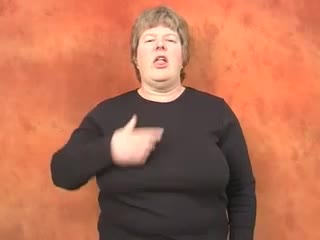
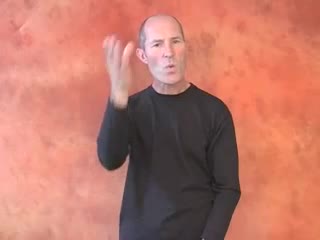
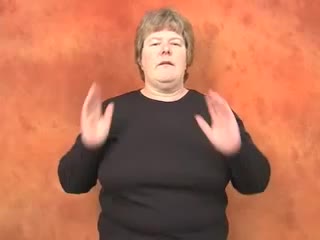
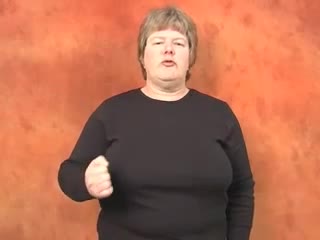
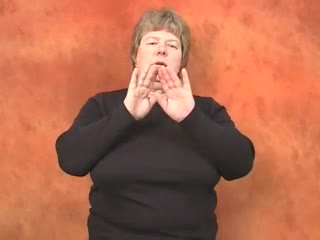
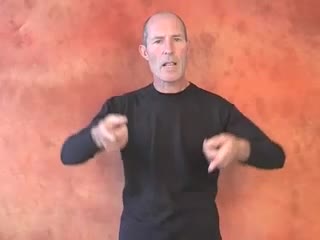
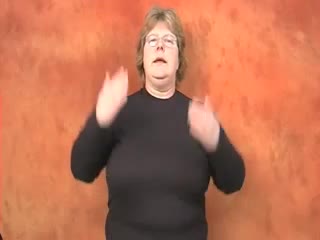
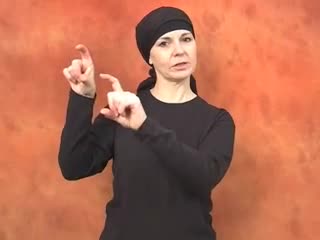
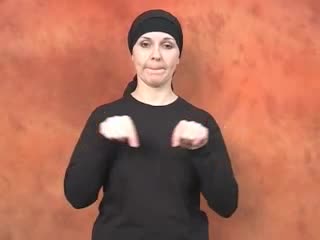
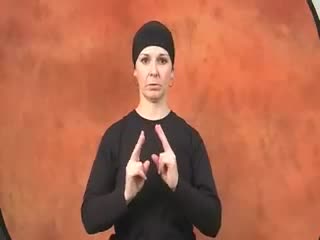
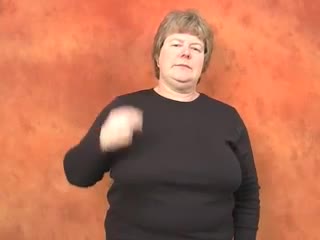
Let's unravel the dynamic actions involved in forming the sign for "crane" in BSL; it's a wonderfully descriptive gesture that clearly mimics its real-world counterpart.
Step 1: Handshape
You'll begin with your dominant hand, shaping it into a 'C' formation. To achieve this, curl your index finger, middle finger, ring finger, and pinky finger inward slightly, while your thumb presses against the side of your index finger, forming a rounded, open shape. Imagine holding a small, delicate sphere or the curve of a cup; that's the precise handshape we're aiming for here. Ensure your fingers aren't tightly clenched but maintain a relaxed, natural curve, creating a clear 'C'.
Step 2: Hand Placement and Location
Position your dominant 'C' hand to the side of your body, usually on your dominant side, at about chest height. You're not touching your body at this point; instead, hold your hand out in the neutral signing space in front of you. Think of it as preparing the 'arm' of the crane, ready to extend and move. Your non-dominant hand typically remains relaxed at your side or in a neutral position, as this particular sign is primarily single-handed.
Step 3: Movement
This is where the sign truly comes alive, depicting the functionality of the machinery. From your initial chest-height position, move your 'C' hand upwards in a smooth, arcing motion, extending it diagonally away from your body and slightly upward. Then, gracefully lower your hand back down, completing a downward arc that suggests the lifting and lowering action of a crane's arm. This full movement should be performed once, with a controlled, deliberate pace, embodying the powerful yet measured action of a construction crane. The arc isn't a sharp angle but a fluid, sweeping curve.
Step 4: Facial Expression and Mouthing
For the BSL sign for "crane," a neutral facial expression is perfectly suitable; you're simply conveying information, not emotion, with this particular term. Alongside the hand movements, you should mouth the English word "crane" silently or very subtly. Mouthing is an integral non-manual feature in BSL, providing crucial grammatical and lexical information that complements the manual signs, making your communication clearer and more contextually rich. It helps differentiate homonyms and reinforces the specific meaning you intend to convey.
Step 5: Palm Orientation
Throughout the movement, your palm will generally face inwards towards your body, or slightly towards the side. As your hand arcs upwards and then descends, the opening of your 'C' handshape will remain oriented somewhat towards the front. This consistent palm orientation reinforces the idea of the crane's arm extending and retracting, with the 'hook' or lifting mechanism implied by the 'C' shape facing the direction it would engage with objects. Maintaining this orientation prevents confusion with other 'C' handshape signs that might have different meanings based purely on palm direction.
"crane" in BSL - Quick Reference Snapshot
Here's a concise overview to help you quickly recall the key elements of this BSL sign:
- Handshape: Dominant hand in a 'C' shape.
- Location: In front of the dominant side of your chest.
- Movement: Upward diagonal arc, then downward arc, performed once.
- Facial Expression: Neutral.
- Mouthing: Mouth "crane" silently.
- Dominant Hand: The hand you write with.
- Palm Orientation: Mostly inwards or slightly forward, 'C' opening facing forward.
5 Memorisation Tricks for the BSL Sign "crane"
Mastering new signs means finding clever ways to make them stick. Here are some tailored memory aids for learning the BSL sign for "crane."
-
Visual Mnemonic: The Crane's Mighty Arm: Picture the 'C' handshape literally as the curved arm or boom of a large construction crane. As your hand arcs upwards and then down, imagine the crane lifting a heavy load, then gently setting it back down. This direct visual link to the object's function makes the sign’s movement incredibly intuitive.
-
Muscle-Memory Drill: Repetitive Arc Practice: Spend a minute each day performing the upward and downward arc of the 'C' handshape, focusing on the fluidity and control of the movement. Don't just do it once; repeat the motion several times, consciously feeling the muscles in your arm and wrist, until the motion becomes second nature and feels natural.
-
Connection to Meaning: What Does a Crane DO?: Think about the core purpose of a crane: to LIFT and MOVE heavy objects. The arcing motion of the sign perfectly encapsulates this essential function. Connecting the physical action of your hand to the real-world operation of the machinery solidifies the sign's meaning in your mind.
-
Common-Confusion Tip: Not the Bird!: Many new learners might initially wonder if this sign refers to the elegant bird. Remember, the BSL sign for the *bird* crane is entirely different, typically involving a more delicate, beak-like handshape near the nose. This sign, with its strong, arcing 'C' hand, is exclusively for the construction vehicle; mentally note this distinction to avoid mixing them up.
-
Daily-Life Practice: Spotting and Signing: Whenever you see a real crane, whether on a building site or in a picture, take a moment to perform the BSL sign for crane. You'll be surprised how often these majestic machines appear, providing perfect opportunities for spontaneous, contextual practice that reinforces your learning outside of dedicated study time.
Real-Life Situations to Use the BSL Sign for "crane"
Knowing a sign is one thing; using it naturally in conversation is another entirely. Here are some scenarios where you'll find yourself reaching for the BSL sign for "crane."
-
Imagine you're driving past a new construction site with a Deaf friend. You could sign, "LOOK, NEW BUILDING CRANE!" (BSL structure often places the topic first, so 'LOOK' and 'NEW BUILDING' would precede 'CRANE'). This is a great way to point out something visually interesting in your environment.
-
Perhaps you're discussing a logistics problem at work, needing to move heavy equipment. You might ask, "WE NEED CRANE? HOW HEAVY?" (BSL grammar uses facial expressions for questions, and adjectives like 'HEAVY' often follow the noun). This demonstrates its practical application in problem-solving dialogues.
-
You could be explaining a story to a child about building a tall tower. You'd describe, "HOUSE TALL, CRANE LIFT ROOF." (BSL frequently uses topic-comment structure, so 'HOUSE TALL' sets the scene, then 'CRANE LIFT ROOF' describes the action). This makes storytelling vibrant and accessible.
-
Discussing a news report about a large infrastructure project, you might comment, "THEY USE THREE CRANE THERE." (BSL numbers can precede or follow nouns depending on context, and 'THERE' uses spatial referencing to indicate location). This showcases the sign's utility in broader discussions.
Top 3 Mistakes Learners Make Signing "crane" in BSL
Every learner encounters hurdles, and the sign for "crane" has a few common pitfalls. Let's make sure you sidestep them gracefully.
-
Incorrect Handshape (The Flat Hand Trap): A frequent error involves using a flat hand or a slightly bent hand instead of the distinct 'C' shape. This happens because learners might focus too much on the arm movement and less on the precise finger configuration. To correct this, consciously ensure your fingers form a clear, open curve, with your thumb supporting the side of your index finger, exactly like you're cradling a small round object.
-
Lack of Arc or Jerky Movement: Some beginners might sign with a straight up-and-down motion or a series of short, abrupt movements, rather than the smooth, arcing action. This often stems from not fully understanding the iconic representation of the crane's arm. To rectify this, practice making the movement fluid and continuous, visualizing the graceful sweep of a crane's boom as it extends and retracts, ensuring a single, unbroken arc.
-
Forgetting Mouthing or Inconsistent Non-Manual Features: Overlooking the importance of mouthing "crane" or maintaining a neutral facial expression is a common oversight. New signers sometimes focus solely on manual signs and forget that non-manual features are linguistic components in BSL. The solution is simple: make a conscious effort to mouth "crane" every single time you perform the sign, and remind yourself that a neutral expression is correct for this specific lexical item, integrating these features into your muscle memory.
Fascinating Facts About the BSL Sign for "crane"
Let's delve into some intriguing aspects of this powerful sign, revealing its linguistic depth and cultural connections within the BSL community.
-
This sign is beautifully iconic; its movement directly mimics the action of a construction crane's arm, making it highly intuitive for new learners and visually descriptive for all signers. You don't need a lot of explanation to grasp its meaning once you see it.
-
While the core concept remains, you might encounter subtle regional variations in BSL for different types of heavy lifting equipment, sometimes involving slight modifications to the handshape or a more specific classifier to denote a particular machine. These variations reflect local conventions and specific needs within Deaf communities.
-
It's crucial to remember this sign exclusively refers to the mechanical device. BSL has an entirely distinct sign for the majestic bird known as a crane, which typically involves a different handshape and location, often near the face to represent a beak.
-
The 'C' handshape used here is a fundamental building block in BSL, appearing in many other signs. Learning this sign helps solidify your understanding of this common hand configuration and its potential for varied meanings based on movement and context.
-
The clear, unambiguous nature of this sign means it's frequently used in educational settings, especially when teaching about engineering, construction, or even simply describing urban environments to children and adults alike. It's a foundational sign for discussing the built world around us.
"crane" in Deaf Culture - Community and Identity
The presence of a crane signifies progress, growth, and the ongoing development of our physical environment. Within Deaf culture, discussions around infrastructure and community building are just as vital as in the hearing world. When Deaf people use the sign for "crane," they're not merely describing a piece of machinery; they're engaging in conversations about housing, accessibility, economic development, and the changing landscape of their towns and cities. This sign becomes part of a shared visual vocabulary for discussing the places where Deaf community centres might be built, where new homes are created, or where infrastructure projects impact daily life. It represents shared observations and a collective interest in the world's evolution, fostering connection through a common language that powerfully conveys complex ideas.
Example Conversations Using "crane" in BSL
Let's see how the sign for "crane" fits naturally into different BSL conversational contexts.
English: Look at that enormous crane lifting the steel beams! - BSL structure: VISUAL-ATTENTION-GETTER, ADJECTIVE-SIZE, CRANE, LIFT, STEEL, BEAM (BSL often reorders for emphasis and clarity, with visual details prominent).
English: Do you think they'll need a crane to move the old bridge? - BSL structure: OLD, BRIDGE, MOVE, CRANE, NEED, YOU THINK? (Question indicated by eyebrow raise and body lean; 'NEED' can be a facial expression or sign).
English: The crane broke down, so construction has stopped. - BSL structure: CRANE, BROKE-DOWN, SO, CONSTRUCTION, STOP (BSL uses clear sequential events; 'BROKE-DOWN' often shows physical collapse or failure).
English: We saw several cranes working on the new hospital project. - BSL structure: WE, SEE, MANY, CRANE, WORK, NEW, HOSPITAL, PROJECT (Numbers and quantifiers often precede or follow the noun; spatial reference for 'PROJECT' can be used).
English: That specific type of crane is used for very tall buildings. - BSL structure: CRANE, THAT-SPECIFIC-ONE, USED-FOR, BUILDING, VERY, TALL (BSL allows for specific classifiers and emphatic modifiers, with 'VERY TALL' often shown with an exaggerated upward movement).
Frequently Asked Questions: The BSL Sign for "crane"
Learning a new sign often sparks questions. Here are answers to some common inquiries about the BSL sign for "crane."
Are there regional variations for the BSL sign for "crane"?
You'll generally find the core handshape and movement for the construction crane to be quite consistent across the UK. However, within some regional Deaf communities, there might be slight nuances or additional signs to differentiate between specific *types* of cranes or heavy lifting equipment, reflecting local industries or preferred visual distinctions. Always pay attention to how local signers use it.
How is this sign different from the BSL sign for "lift"?
The BSL sign for "crane" specifically refers to the *machine* itself, with its characteristic arcing movement. Conversely, the BSL sign for "lift" (as in to raise something) often involves two hands, with the non-dominant hand acting as the base and the dominant hand raising upwards from it, or a classifier showing the item being lifted. The key difference lies in whether you're signing the *object* (crane) or the *action* (lift) in a general sense.
Is "crane" considered a beginner-friendly sign in BSL?
Absolutely, this sign is quite beginner-friendly! Its iconic nature, directly mimicking the object it represents, makes it relatively easy to learn and remember. The handshape is common, and the movement is straightforward, making it an excellent sign for those just starting their BSL journey to build confidence.
Can children learn the BSL sign for "crane" easily?
Children typically pick up the sign for "crane" very quickly due to its highly visual and tangible representation. Kids love watching big machines, and the sign’s action-oriented nature resonates well with their natural curiosity and ability to imitate movements. It's a fantastic sign for expanding their descriptive vocabulary when talking about the world around them.
Does the BSL sign for 'crane' ever refer to the bird?
No, the BSL sign for the construction vehicle "crane" is distinct and never refers to the bird. As mentioned earlier, the BSL sign for the bird crane has a completely different form, often using a handshape near the nose to represent a beak and a different movement. It's essential to keep these two separate in your mind to avoid any confusion during conversations.
Signs That Pair Naturally with "crane" in BSL
Building your vocabulary is like constructing a house, one sign at a time, but it's even better when you learn related signs together. Here are some natural partners for "crane."
- BUILD/CONSTRUCT: This sign shows the process of erecting structures, making it a perfect companion to "crane," which is instrumental in construction. They logically belong in the same cluster.
- LIFT: While distinct from the "crane" sign, "lift" (the action of raising something) is intrinsically linked. A crane's primary function is to lift, so discussing one naturally leads to the other.
- DIG: Often, before a crane arrives on site, excavators are used to dig foundations. This sign, depicting digging, naturally precedes or accompanies conversations about building projects involving cranes.
- DEMOLISH: Sometimes, cranes are used in the controlled demolition of old structures. "Demolish" (the action of tearing down) connects to the full lifecycle of building and unbuilding, where cranes play a role.
- HEAVY: This descriptive sign is almost always relevant when discussing cranes, as their purpose is to move incredibly heavy objects. It’s an essential adjective to pair with your "crane" vocabulary.
- FACTORY: Cranes aren't just for construction sites; they're often found in factories, moving large components or finished products. Connecting "crane" to "factory" expands its usage context significantly.
Building Fluency: How to Practise "crane" in BSL
You've learned the steps, now let's make that sign truly yours and integrate it into your natural BSL flow. Here's how to build fluency with the sign for "crane."
Start by practicing in front of a mirror, paying close attention to your 'C' handshape and ensuring the arc of your movement is smooth and deliberate, just like a real crane's boom. Focus on making the motion effortless, observing how your palm orientation remains consistent throughout the sign. Next, try incorporating the sign into your daily BSL conversations; for instance, if you spot a crane while out and about, practice signing about it, either to yourself or to a signing buddy. Don't hesitate to film yourself signing; watching your own performance back can highlight areas for subtle refinement, helping you perfect the rhythm and clarity of the sign. Actively seek opportunities to connect with Deaf individuals or attend BSL practice groups, as interacting with experienced signers offers invaluable feedback and exposure to the sign's usage in authentic contexts. Finally, remember the power of spaced repetition: don't just practice "crane" once and forget it; revisit the sign over several days, integrating it into various sentence structures to solidify its place in your active vocabulary. You're doing great, keep going!