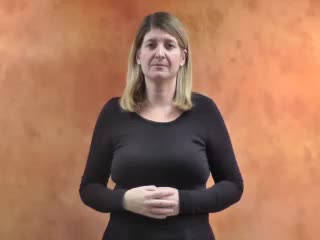
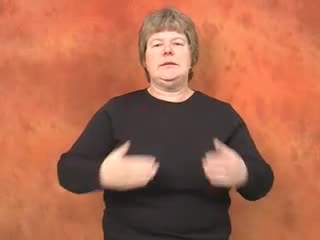
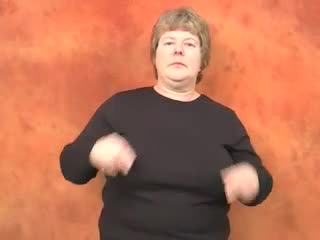
Speed
0
Practice reps times watched

Create a free account to keep your watch history and review plan.

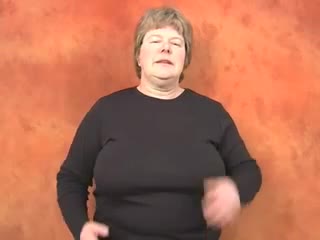
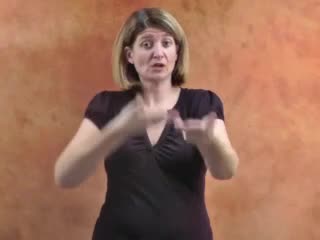
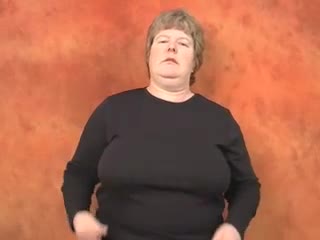
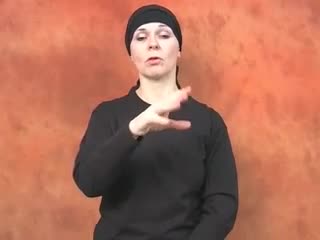
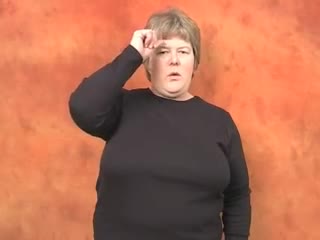
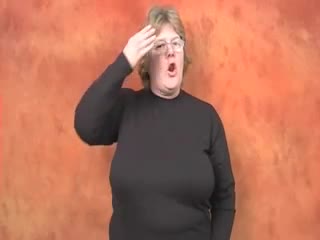
Best practice Use mirror mode, then watch the frame breakdown below to catch the start, movement, and finish cleanly.
Video via SpreadTheSign  - Free educational resource BSL
Updated April 25, 2026
British Sign Language (BSL) 🟢 Beginner 📊 A1 ⚡ Very Common Verb

check

To verify, inspect, or confirm something

Source-linked video Step-by-step guide Context and safety notes
Synonyms
Verify confirm inspect examine
Antonyms
Ignore overlook
Difficulty
Not rated yet

Create a free account to save this sign, keep your watch history, and unlock a one-note journal preview.

How to sign it
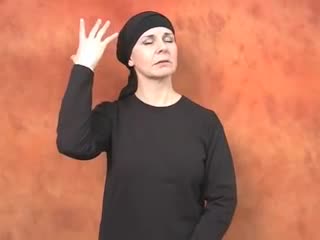
Handshape
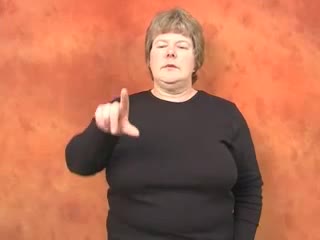
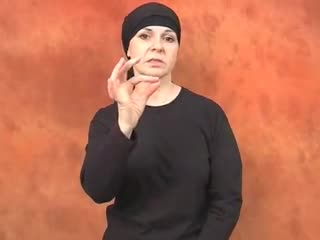
Index finger extended, thumb tip touching middle finger tip, other fingers curled
Location
Side of head, near temple or eye
Movement
Small, repeated forward/downward flick of the index finger
Palm Orientation
Slightly forward/down
Facial Expression
Slight furrowed brow, focused eyes
🔁 Spaced Review Try it free

How well do you know this sign?

CHECK
Your Progress Live
🌱
Level 1 · BSL Beginner +0 XP today
This sign Not learned yet
0 watches
Mastery 0%
Confidence
How well do you know this sign?
0 🔥 Streak
0 Signs seen
0 Learned
0 Watches
📖 Vocabulary health 🔒 Log in to see score
0 Mastered
0 Confident
0 Practicing
0 Just seen

Create a free account to keep your vocabulary score between sessions

7-day activity 0 of 7 active

Register free to sync activity across devices

Watch signs to see your history here

Tracking locally for now. Create a free account to save your progress and sync across devices.
Free gets you started. Paid adds the repeat-learning layer: review queues, deeper notes, compare mode, and better comeback tools.
My Sign Journal
Personal notes, saved to your account forever
Locked

Write memory tricks, usage examples, and cultural reminders beside each sign. Create a free account to unlock your first saved note preview on this page.

Create free account Already have an account? Log in

What This Sign Means in BSL

The BSL sign for "check" is a wonderfully versatile verb, essential for everyday communication. At its heart, it conveys the idea of verifying, inspecting briefly, or confirming something. Think of it as a quick mental or visual scan to ensure accuracy, safety, or presence.

Unlike a deep academic "examination," this sign implies a more practical, often swift, assessment. It's the sign you'd use for "Are you okay?", "Did you remember your keys?", or "Let me just see if that's correct." It's about a quick confirmation rather than a thorough investigation.

Its placement near the temple or eye, combined with the focused index finger, subtly hints at a mental process – using one's mind or sight to confirm. It’s a sign that demands attentiveness, even if the action itself is brief and everyday.

When This Sign Feels Natural

You'll find yourself reaching for this sign in countless real-life scenarios. Imagine you're confirming an appointment time, asking a friend if they’ve remembered their bag, or quickly reviewing a shopping list. It's perfectly natural for questions like "Have you checked the oven?" or statements such as "I need to check my email."

This sign maintains a neutral to slightly informal register, making it suitable across most social interactions. It’s universally understood and doesn't carry any particular formality or slang, so you can use it confidently whether you're chatting with a peer or communicating with someone in a service setting. It’s a truly foundational sign for BSL users.

However, be mindful that "check" isn't a one-size-fits-all solution for all forms of inspection. If you're referring to a thorough medical examination, or a detailed investigation into a complex matter, BSL offers more specific signs. The BSL sign for check is typically for more immediate, practical verification rather than deep scrutiny.

What Learners Usually Miss

A common pitfall for learners is the precise movement and rhythm of the sign. The movement isn't a large, sweeping gesture, nor is it a rigid, static hold. It's a small, repeated, forward/downward flick of the index finger. Think of it as a quick, repetitive tap of an imaginary button or a rapid mental tick. Many learners either make the movement too big or too slow, losing the sign's inherent immediacy.

Another crucial element often overlooked is the subtle but impactful role of facial expression. If you're checking on someone's well-being, your expression might convey concern or empathy. If you're simply confirming a detail, it might be neutral and focused. A blank face can sometimes make the sign feel less natural or even convey a lack of engagement. Practice mirroring the emotional context with your face to add a layer of naturalness.

Finally, pay attention to the duration of the repetition. "Check" can be a single, sharp flick for a quick confirmation ("Is it checked?"), or a slightly more sustained, repeated flick if you're actively "checking over" something or doing a quick review ("I'm checking the list"). The number and speed of the flicks convey this nuance, so observe native signers closely in different contexts to master this subtlety.

A Simple Way to Remember It

Think of the BSL sign for "check" as a visual representation of a quick mental verification. The focused handshape and location make it intuitive once you connect them to the concept of confirming something with your mind or eyes.

  • The Pointing Finger: Imagine your index finger is a pointer, quickly "checking off" an item on a mental list or pointing to a detail you need to verify. It’s a precise, focused action.
  • The Temple Location: Placing the sign near your temple or eye links it directly to thought, observation, and mental processing – the core actions involved in checking. It's where you process information.
  • The Quick Flick: The small, repeated flick mirrors the swift, iterative nature of verification – a rapid glance, a brief mental scan, or a quick confirmation. It’s a short, decisive action.

Short Practice Situations

  • You've just sent an important email. Sign: "I need to check if it sent properly."
  • Your friend asks you a question about a date. Sign: "Let me check my calendar for that."
  • You're about to leave the house. Sign: "Did you check that the door is locked?"
  • Someone looks unwell. Sign: "Are you okay? I just wanted to check on you."
  • You're completing a task. Sign: "I need to double-check the details before I finish."

Signs to Learn Next

  • EXAMINE / INSPECT: While "check" is a quick verification, the sign for "examine" or "inspect" implies a more thorough, detailed, and often systematic review, like a doctor examining a patient or an engineer inspecting a machine.
  • LOOK / SEE: These are fundamental visual input signs. "Check" builds on "look" by adding the intent of verification, rather than just passively seeing something. You "look" at something, then you "check" it to confirm.
  • CONFIRM: This sign explicitly states that something is true or agreed upon. "Check" is the action of verifying, while "confirm" is the declaration of the result of that verification. They often follow each other.
  • REVIEW: When you "review" something, you're going over it again, often with the intent to critique or improve. "Check" can be part of a review process, but "review" suggests a broader, more evaluative process.
  • VERIFY: Similar to "confirm" but often with a stronger emphasis on proving truth or accuracy, especially when dealing with facts or claims. You might "check" information, then "verify" its source.

🤖 AI Learning Guide for "check"

The sign 'check' involves a specific handshape and a repeated flicking motion near the temple, signifying mental verification or inspection

🎯 Practice Challenge

Practice the handshape and repeated flick near the temple. Focus on a clear, focused facial expression

⚠️ Most Common Mistake

Ensure thumb touches middle finger tip, not index. Keep flick small and repeated, not a single large movement

👐 How to Sign "check" in British Sign Language (BSL) (Quick Answer)

Follow these steps to sign check correctly in British Sign Language (BSL):

  1. 1 Form specific handshape (thumb to middle finger tip)
  2. 2 Place hand near temple/eye
  3. 3 Flick index finger forward/downward repeatedly
  4. 4 Maintain focused facial expression

Tip: Watch the video above while following these steps for best results.

🤚 Sign Profile

🤚
Handshape
Index finger extended, thumb tip touching middle finger tip, other fingers curled
🔣
Handshape Code
Index-thumb-middle-tip
Dominant Hand
Either
🙌
Hand Count
One-handed
📍
Location
Side of head, near temple or eye
↗️
Movement
Small, repeated forward/downward flick of the index finger
🔄
Movement Type
Repeated
👆
Contact
Air
👋
Palm Orientation
Slightly forward/down
⚖️
Symmetry
Asymmetric

😊 Non-Manual Features

Facial expressions and body language are grammatically essential in British Sign Language (BSL) - not optional!

😊
Facial Expression
Slight furrowed brow, focused eyes
🙆
Eyebrows
Furrowed
👁️
Eye Gaze
Forward
🙂
Head Movement
None
👄
Mouth Morpheme
Small 'phew' shape
🕴️
Body Shift
None

📖 Grammar & Linguistics

Part of Speech Verb
Transitivity Transitive
Inflection No
Classifier Usage None
Role Shift No

🎓 Learning Context

📌 When to Use: Used for verifying information, confirming tasks, or inspecting objects
⚠️ Common Mistake: Confusing with 'think' or 'remember' due to location
🚫 When NOT to Use: Avoid for 'bank check' or 'chess check.'
Context Tags
Verification inspection confirmation

🧪 Practice Lab

Use these tiny checks right after watching the video. Fast feedback is what turns recognition into recall.

Meaning check

Which word matches the sign you just watched?

Usage check

Where would this sign fit most naturally?

Confidence check

How do you feel about check right now?

Pick one so SignDeaf can shape the rest of your session around how this sign actually feels.

🧭 Scenario Drill

One sign gets remembered faster when you attach it to real situations. Try these quick scene prompts.

Work

Stretch practice

Use this sign in a short workplace sentence or meeting exchange.

Family

Stretch practice

Try signing this while talking about family life or something at home.

School

Stretch practice

Imagine teaching this sign to a classmate or using it in a lesson.

Doctor

Stretch practice

Practise it in a healthcare conversation where clarity matters.

Travel

Stretch practice

Use it in a travel scenario like asking for help or directions.

💬 Example Usage

1.[en] I will check. / BSL:[me will check] | 2.[en] Please check that. / BSL:[you please check that] | 3.[en] Have you checked? / BSL:[you check finish?]

1.[en] I will check. / BSL:[me will check] | 2.[en] Please check that. / BSL:[you please check that] | 3.[en] Have you checked? / BSL:[you check finish?]

When to use it

Used for verifying information, confirming tasks, or inspecting objects

When not to use it

Avoid for 'bank check' or 'chess check.'

Register

Neutral

🌍 Cultural Context

N/A

🗺️ Regional Variations

Minor variations in flick intensity, but core sign is consistent

⚖️ Similar Signs - What's the Difference?

This sign check
VS
Similar signs Look closely
**Check** (this sign): Index finger extended, thumb to middle finger tip, small repeated flick at temple. Signifies verification or inspection.
**Think**: Index finger extended (G-hand), tip touches temple once or twice, sometimes moving forward slightly. Signifies mental process or opinion.
**Remember**: Varies, but often a G-hand or R-handshape touching the temple and flicking outwards once or twice. Signifies recalling information

📝 Usage Notes

Often accompanied by a focused facial expression

🏷️ Tags

Handshape

Keywords

💡
Did you know?
SpreadTheSign has 600,000+ sign language videos across 40+ sign languages - all free to view.

📚 Explore More British Sign Language (BSL) Signs

Keep building your British Sign Language (BSL) vocabulary - explore signs by category or browse the full dictionary.