
Daily focus
Archive Replay
Tuesday, March 31, 2026
Sign of the Day
timber boarded house
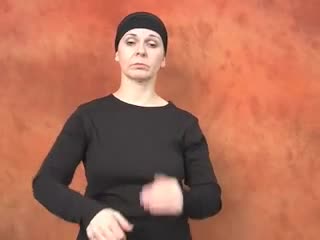
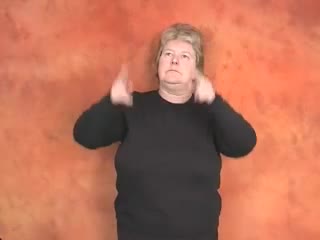
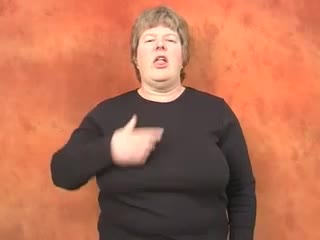
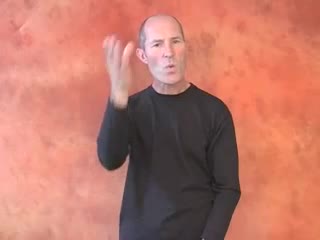
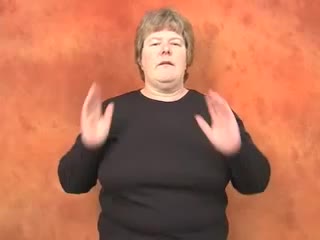
The sign for 'timber boarded house' in BSL typically combines the concept of 'boards/planks' with the sign for 'house'. It emphasizes the material and construction method
B1 Uncommon Noun British Sign Language (BSL) Neutral
Today’s Snapshot
The meta fields are doing real work here
This page turns your sign metadata into a fast, readable fingerprint of how the sign looks, feels, and fits into real conversation.
Starts with two flat hands (B-hands) for 'boards', then maintains two flat hands for 'house'
Brushing downwards repeatedly, then forming a roof shape, then moving downwards for walls
Describing specific building types, architectural discussions, or rural settings
Break It Down
Watch, build, and feel the movement
Use the numbered steps first, then check the sign anatomy cards to clean up the small details that make the sign look fluent instead of approximate.
How to form the sign
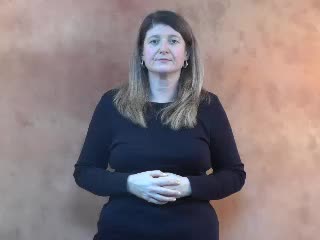
- Form two B-hands, palms facing each other, non-dominant slightly forward
- Dominant B-hand brushes downwards along the non-dominant B-hand's side repeatedly (3-4 times)
- Move both B-hands upwards and inwards, fingertips touching to form a roof shape
- Move both B-hands downwards and slightly outwards, forming the walls of the house
Coach prompt
Practice signing 'timber boarded house' in context. Focus on the sequence of motions
Signature details
Handshape
Starts with two flat hands (B-hands) for 'boards', then maintains two flat hands for 'house' · Code B
Dominant hand
Either
Symmetry
Asymmetric
Contact
Brush
Palm orientation
Varies, palms face each other, then angled upwards, then inwards
Eyebrows
Neutral
Eye gaze
Forward
Head movement
None
Mouth morpheme
cha
Body shift
None
Use It Today
Move from recognition to real-life use
Everything below is designed to make the sign sticky: where it feels natural, what learners miss, and how to use it without sounding robotic.
We saw a beautiful timber boarded house
This is a compound sign, combining a representation of 'boards/timber' with the sign for 'house'
Best fit: Describing specific building types, architectural discussions, or rural settings
Mirror focus
Practice signing 'timber boarded house' in context. Focus on the sequence of motions
Catch the slip
Ensure the initial 'boards' motion is clear before transitioning to the 'house' sign. Maintain B-hand shape
Use it today
We saw a beautiful timber boarded house
Common mistakes: Confusing with generic 'house' or 'wooden'. Not clearly showing the 'boarded' aspect
When not to use it: When referring to houses made of brick, stone, or other materials
Regional note: Core 'house' sign is stable; 'timber' part might vary slightly
Cultural note: Less common in UK urban areas, more associated with specific architectural styles or rural dwellings
1.[en] It was a small timber boarded house. / BSL:[small] [timber boarded house]
2.[en] They built a new timber boarded house. / BSL:[They] [build] [new] [timber boarded house]
3.[en] I want a timber boarded house. / BSL:[I] [want] [timber boarded house]
What is the BSL sign for timber boarded house?
It's a compound sign: first, dominant B-hand brushes repeatedly down the non-dominant B-hand (for 'boards/timber'), then both B-hands form a roof shape, then move down for walls (for 'house').
How do you sign timber boarded house in BSL?
Start with two B-hands. Dominant hand brushes the side of the non-dominant hand for 'boards'. Then, bring both B-hands up to form a roof, then down for the walls of a house.
Is timber boarded house one-handed or two-handed in BSL?
It is a two-handed sign, as both hands are actively involved in showing the 'boards' and constructing the 'house' shape.
What handshape is used for timber boarded house in BSL?
The primary handshape used throughout the sign is the B-hand (a flat hand with fingers together and thumb alongside).
How does timber boarded house differ from similar signs in BSL?
It differs from generic 'house' by adding the initial 'boards/timber' motion. It differs from 'wooden' by then adding the 'house' structure. 'Log cabin' might use C-hands for logs before forming a house.
Connect the Dots
Turn one sign into a small learning cluster
These links use your relationship fields, related vocabulary, and category context so the daily page becomes a launchpad instead of a dead end.
Word web
wooden house
log cabin
brick house
stone house
wood
house
building
cabin
plank
house
wood
building
material
cabin
plank
HOUSE: Uses two B-hands, forms roof, then walls. No initial 'material' component. WOODEN: Often dominant B-hand brushes non-dominant B-hand or index finger, or an X-hand twists at the chin. Doesn't include the 'house' structure. BRICK HOUSE: Combines the sign for 'brick' (dominant F-hand taps side of non-dominant B-hand) with the 'house' sign. Similar compound structure but different material sign
Architecture
dwelling
building
material
BSL timber house
BSL wooden house
BSL plank house
BSL log house
Come Back Tomorrow
Build a rhythm around one sign a day
The archive rail lets people revisit recent daily picks, while the teaser card gives a reason to return instead of drifting away after one lesson.
Video credit: The demonstration video on this page is credited to SpreadTheSign. The video remains the property of the original rightholder.
All written explanations, learning notes, examples, comparisons, and page design on this page are SignDeaf educational material.