
Daily focus
Archive Replay
Sunday, March 29, 2026
Sign of the Day
mesh reinforced mat
The BSL sign for 'mesh reinforced mat' is a compound, depictive sign that sequentially shows the object's key attributes: its flatness as a 'mat', its 'mesh' or grid-like structure, and its 'reinforced' or strengthened quality. It combines distinct handshapes and movements for…
B2 Technical Noun British Sign Language (BSL) Technical
Today’s Snapshot
The meta fields are doing real work here
This page turns your sign metadata into a fast, readable fingerprint of how the sign looks, feels, and fits into real conversation.
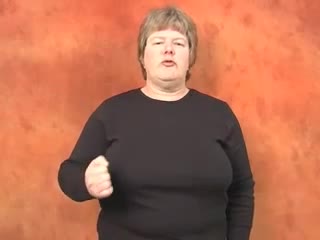
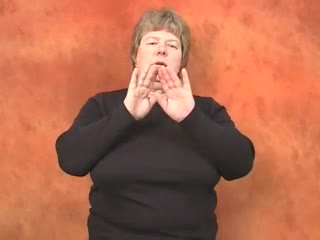
Starts with flat hands (B-hands) for 'mat', transitions to G-hands (index fingers extended) for 'mesh', finishes with S-hands (fists) for 'reinforced'
Depict a flat surface moving downwards, then trace a grid pattern, then show firmness/strength
Construction, gardening, landscaping, civil engineering contexts
Break It Down
Watch, build, and feel the movement
Use the numbered steps first, then check the sign anatomy cards to clean up the small details that make the sign look fluent instead of approximate.
How to form the sign
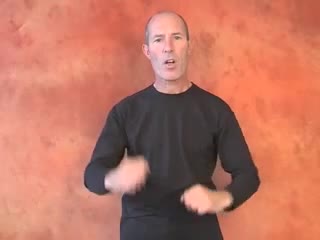
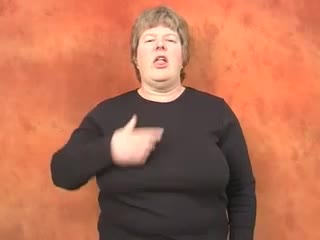
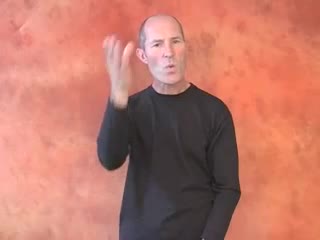
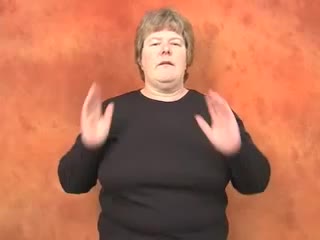
- Form B-hands, palms down, in neutral space
- Move hands slightly apart and down to depict a flat mat
- Transition to G-hands (index fingers extended), cross them to form a grid pattern
- Form S-hands (fists), move them forward with a firm, strong action to indicate reinforcement
Coach prompt
Sign 'mesh reinforced mat' while describing its use in construction. Focus on distinct handshape transitions
Signature details
Handshape
Starts with flat hands (B-hands) for 'mat', transitions to G-hands (index fingers extended) for 'mesh', finishes with S-hands (fists) for 'reinforced' · Code B, G, S
Dominant hand
Either
Symmetry
Asymmetric
Contact
Air
Palm orientation
Palms down for 'mat', fingers forward/towards each other for 'mesh', knuckles forward for 'reinforced'
Eyebrows
Neutral
Eye gaze
Forward
Head movement
None
Mouth morpheme
Puh (for mat flatness), 'mesh' (mouth pattern), 'stiff' (mouth pattern)
Body shift
None
Use It Today
Move from recognition to real-life use
Everything below is designed to make the sign sticky: where it feels natural, what learners miss, and how to use it without sounding robotic.
We need to lay the mesh reinforced mat here. / BSL: LAY (B-hands) MESH-REINFORCED-MAT HERE
This is a compound, descriptive sign. Ensure each component (mat, mesh, reinforced) is clearly depicted in sequence
Best fit: Construction, gardening, landscaping, civil engineering contexts
Mirror focus
Sign 'mesh reinforced mat' while describing its use in construction. Focus on distinct handshape transitions
Catch the slip
Ensure clear transitions between B-hands (mat), G-hands (mesh), and S-hands (reinforced). Articulate each part distinctly. Don't rush
Use it today
We need to lay the mesh reinforced mat here. / BSL: LAY (B-hands) MESH-REINFORCED-MAT HERE
Common mistakes: Omitting parts (mesh or reinforced), confusing with general 'mat' or 'net', not clearly showing the sequence
When not to use it: When referring to a simple, unreinforced mat or a decorative rug
Regional note: Minimal, as it's a technical, descriptive sign
Cultural note: None specific to the sign itself, but construction safety is a key aspect of British culture
1.[en] The builders laid the mesh reinforced mat. / BSL: BUILDERS LAY MESH-REINFORCED-MAT.
2.[en] We need a strong mesh reinforced mat. / BSL: NEED STRONG MESH-REINFORCED-MAT.
3.[en] This mat prevents soil erosion. / BSL: THIS MAT-MESH-REINFORCED PREVENT SOIL ERODE
When would a learner use the BSL sign for mesh reinforced mat?
A learner would use this sign in contexts related to construction, landscaping, gardening, or engineering when specifically discussing materials that are flat, provide ground cover, and have an integrated strengthening mesh or grid. It's a specific technical term.
What do beginners often get wrong when signing mesh reinforced mat in BSL?
Beginners often rush the sign, failing to clearly distinguish the three sequential parts: the flat mat, the grid-like mesh, and the reinforced strength. They might also confuse the handshapes or omit one of the components, making the meaning unclear.
Does the BSL sign for mesh reinforced mat change by region or context?
Due to its technical and descriptive nature, this sign is fairly consistent across BSL regions. While minor stylistic differences might occur, the core sequence of depicting mat, mesh, and reinforcement remains standard, as there's less room for arbitrary variation.
Is the BSL sign for mesh reinforced mat suitable for beginners or children?
It is generally not suitable for beginners or young children as it's a specific technical term. Its compound nature requires a good grasp of sequential signing and specific handshapes. It's more appropriate for intermediate to advanced learners in technical discussions.
Which sign is most often confused with mesh reinforced mat in BSL?
Learners might confuse it with simpler signs like 'MAT' (just the B-hands movement), 'NET' (G-hands forming a grid without the mat or reinforcement), or 'STRONG' (S-hands indicating strength without the other components). The key is the sequential combination.
Connect the Dots
Turn one sign into a small learning cluster
These links use your relationship fields, related vocabulary, and category context so the daily page becomes a launchpad instead of a dead end.
Word web
Reinforced ground mat
grid matting
Weak mat
unreinforced mat
Concrete
rebar
netting
ground cover
foundation
Concrete
Rebar
Netting
Ground
Foundation
Compared to 'MAT' (BSL: B-hands, palms down, moving outwards to show flatness), 'mesh reinforced mat' adds the 'mesh' (G-hands forming a grid) and 'reinforced' (S-hands showing strength). 'NET' (BSL: G-hands crossing to form a grid) focuses solely on the mesh structure without implying a mat or reinforcement. 'STRONG' (BSL: S-hands, often pulling hands apart or flexing) only conveys strength, lacking the mat or mesh depiction. The key is the full compound sequence for 'mesh reinforced mat'
Construction
gardening
materials
engineering
Mat
reinforced
mesh
grid
strength
construction
ground cover
material
Gardening
Come Back Tomorrow
Build a rhythm around one sign a day
The archive rail lets people revisit recent daily picks, while the teaser card gives a reason to return instead of drifting away after one lesson.
Video credit: The demonstration video on this page is credited to SpreadTheSign. The video remains the property of the original rightholder.
All written explanations, learning notes, examples, comparisons, and page design on this page are SignDeaf educational material.