
Daily focus
Archive Replay
Tuesday, March 3, 2026
Sign of the Day
circular saw blade
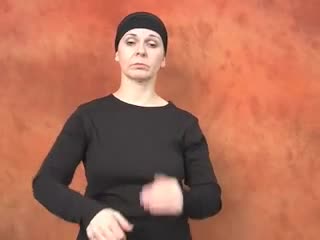
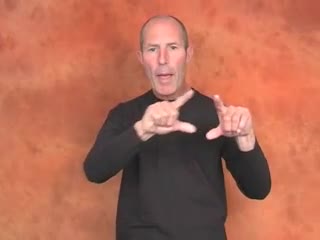
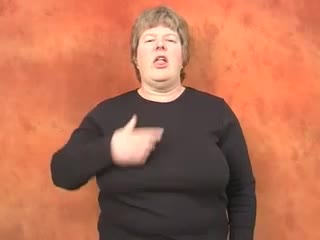
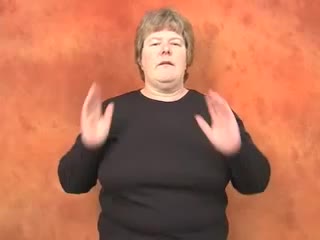
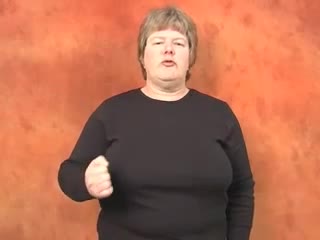
The BSL sign for 'circular saw blade' visually represents the spinning action of the blade. The dominant hand forms a flat shape (B-hand) to depict the blade, while the non-dominant hand forms a fist (S-hand) to act as the saw's body or…
B2 Technical Noun British Sign Language (BSL) Technical
Today’s Snapshot
The meta fields are doing real work here
This page turns your sign metadata into a fast, readable fingerprint of how the sign looks, feels, and fits into real conversation.
Dominant B-hand (flat) for the blade, non-dominant S-hand (fist) as the saw's body/handle
Dominant B-hand rotates repeatedly in small circles
Used when discussing specific tools, construction, or DIY contexts
Break It Down
Watch, build, and feel the movement
Use the numbered steps first, then check the sign anatomy cards to clean up the small details that make the sign look fluent instead of approximate.
How to form the sign
- Form a flat B-hand with your dominant hand, fingers together
- Form an S-hand (fist) with your non-dominant hand
- Position dominant B-hand flat, palm facing non-dominant S-hand, held as a handle
- Rotate dominant B-hand repeatedly in small circles, mimicking a spinning blade
Coach prompt
Practice holding the non-dominant S-hand steady while rotating the dominant B-hand smoothly. Focus on the repeated, small circular movement
Signature details
Handshape
Dominant B-hand (flat) for the blade, non-dominant S-hand (fist) as the saw's body/handle · Code Dominant: B, Non-dominant: S
Dominant hand
Either
Symmetry
Asymmetric
Contact
Near
Palm orientation
Dominant B-hand palm typically faces the non-dominant S-hand. Non-dominant S-hand palm upward or towards body
Eyebrows
Neutral
Eye gaze
Forward
Head movement
None
Mouth morpheme
None
Body shift
None
Use It Today
Move from recognition to real-life use
Everything below is designed to make the sign sticky: where it feels natural, what learners miss, and how to use it without sounding robotic.
1.[en] The circular saw blade needs replacing. / BSL:[Need replace saw-blade (circular)] | 2.[en] Be careful with the saw blade. / BSL:[Careful saw-blade] | 3.[en] What kind of blade is this? / BSL:[What type blade (circular) this?]
This sign specifically denotes the blade itself, distinct from the entire saw tool
Best fit: Used when discussing specific tools, construction, or DIY contexts
Mirror focus
Practice holding the non-dominant S-hand steady while rotating the dominant B-hand smoothly. Focus on the repeated, small circular movement
Catch the slip
Ensure your dominant hand is a flat B-hand and not a curved C-hand. The rotation should be tight and repeated, not a large arc
Use it today
1.[en] The circular saw blade needs replacing. / BSL:[Need replace saw-blade (circular)] | 2.[en] Be careful with the saw blade. / BSL:[Careful saw-blade] | 3.[en] What kind of blade is this? / BSL:[What type blade (circular) this?]
Common mistakes: Confusing with general 'saw' sign or 'wheel' due to circular motion
When not to use it: Not applicable, used for its literal meaning
Regional note: Generally consistent across UK BSL
Cultural note: No specific cultural notes related to this sign
1.[en] We need a new circular saw blade. / BSL:[NEW CIRCULAR-SAW-BLADE NEED]
2.[en] The blade is very sharp. / BSL:[BLADE VERY SHARP]
3.[en] He changed the circular saw blade. / BSL:[HE CHANGE CIRCULAR-SAW-BLADE]
What is the BSL sign for circular saw blade?
The BSL sign involves a dominant B-hand rotating in small circles near a non-dominant S-hand, which represents the saw's body or handle.
How do you sign circular saw blade in BSL?
Hold a non-dominant S-hand as a base. With your dominant B-hand, palm facing the S-hand, rotate it repeatedly in small circles to show the blade's action.
Is circular saw blade one-handed or two-handed in BSL?
It is a two-handed sign. The dominant hand represents the blade, and the non-dominant hand represents the saw's body or handle.
What handshape is used for circular saw blade in BSL?
The dominant hand uses a B-hand (flat hand, fingers together) for the blade. The non-dominant hand uses an S-hand (fist) as a grip or base.
How does circular saw blade differ from similar signs in BSL?
It differs from 'saw' (general), which uses a back-and-forth sawing motion, and 'wheel', which often involves two hands rotating symmetrically or a larger single rotation, lacking the specific 'holding' non-dominant hand.
Connect the Dots
Turn one sign into a small learning cluster
These links use your relationship fields, related vocabulary, and category context so the daily page becomes a launchpad instead of a dead end.
Word web
Saw blade
circular blade
Saw
power tool
cutting
wood
Saw
Blade
Power tool
Cutting
Workshop
Machinery
The sign for CIRCULAR SAW BLADE uses a dominant B-hand rotating repeatedly near a non-dominant S-hand. This differs from the general sign for SAW, which typically uses a C-hand or V-hand moving back-and-forth like manual sawing. It also differs from WHEEL, which often involves two B-hands rotating in opposite directions, or a larger single B-hand rotation, without the specific 'tool grip' non-dominant hand. The distinct two-handed configuration and specific rotation distinguish it
Tools
machinery
construction
workshop
DIY
circular saw blade
saw blade
BSL tool
cutting tool sign
Construction

Come Back Tomorrow
Build a rhythm around one sign a day
The archive rail lets people revisit recent daily picks, while the teaser card gives a reason to return instead of drifting away after one lesson.
Video credit: The demonstration video on this page is credited to SpreadTheSign. The video remains the property of the original rightholder.
All written explanations, learning notes, examples, comparisons, and page design on this page are SignDeaf educational material.