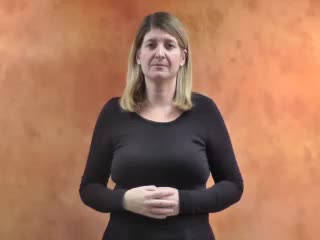
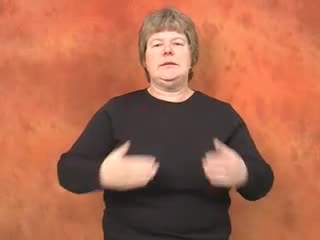
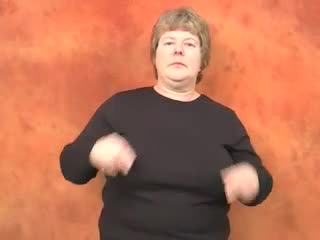
Speed
0
Practice reps times watched

Create a free account to keep your watch history and review plan.

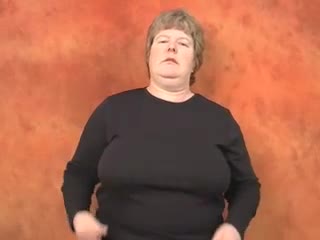
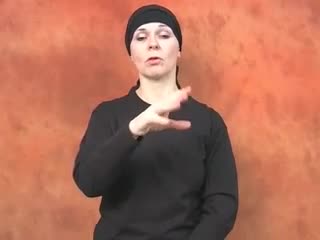
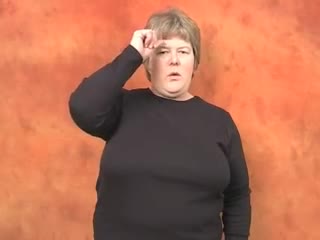
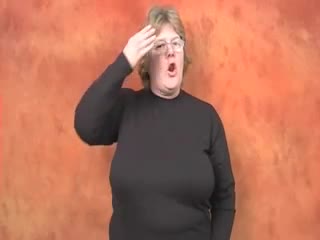
Best practice Use mirror mode, then watch the frame breakdown below to catch the start, movement, and finish cleanly.
Video via SpreadTheSign  - Free educational resource BSL
Updated April 26, 2026
British Sign Language (BSL) 🟢 Beginner 📊 A1 ⚡ Very Common Verb

smile

To show pleasure by turning up mouth corners

Source-linked video Step-by-step guide Context and safety notes
Synonyms
Grin beam smirk
Antonyms
Frown scowl
Difficulty
Not rated yet

Create a free account to save this sign, keep your watch history, and unlock a one-note journal preview.

How to sign it
Handshape
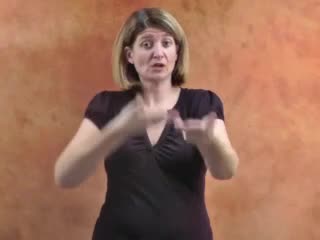
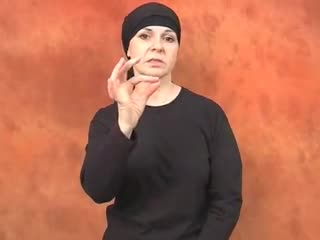
Both hands form F-hands (index finger and thumb touching, other fingers curled)
Location
Corners of the mouth
Movement
Hands move outwards and slightly upwards from mouth corners
Palm Orientation
Palms face inwards, then slightly forward
Facial Expression
Positive facial expression: lifted cheeks, crinkled eyes
🔁 Spaced Review Try it free

How well do you know this sign?

SMILE
Your Progress Live
🌱
Level 1 · BSL Beginner +0 XP today
This sign Not learned yet
0 watches
Mastery 0%
Confidence
How well do you know this sign?
0 🔥 Streak
0 Signs seen
0 Learned
0 Watches
📖 Vocabulary health 🔒 Log in to see score
0 Mastered
0 Confident
0 Practicing
0 Just seen

Create a free account to keep your vocabulary score between sessions

7-day activity 0 of 7 active

Register free to sync activity across devices

Watch signs to see your history here

Tracking locally for now. Create a free account to save your progress and sync across devices.
Free gets you started. Paid adds the repeat-learning layer: review queues, deeper notes, compare mode, and better comeback tools.
My Sign Journal
Personal notes, saved to your account forever
Locked

Write memory tricks, usage examples, and cultural reminders beside each sign. Create a free account to unlock your first saved note preview on this page.

Create free account Already have an account? Log in

What This Sign Means in BSL

The BSL sign for smile is more than just a movement; it’s a direct visual echo of a fundamental human expression of warmth and pleasure. When you use this sign, you’re not just conveying the action of curving the lips upwards, but often the positive feeling that accompanies it. It's a sign that instantly brightens a conversation, signaling friendliness, encouragement, or simple contentment.

Unlike some signs that are more abstract, "smile" in BSL is wonderfully iconic. Its placement and movement right at the mouth make it immediately understandable, even to someone unfamiliar with BSL, which is a testament to its clarity. This directness helps both the signer and the receiver connect with the underlying emotion, making it a powerful tool for building rapport.

It’s important to remember that while the sign denotes the physical act, it often carries the weight of the emotion. So, you might use it when someone genuinely beams with happiness, or even when you're simply asking someone to put on a polite grin for a photo. The context and your own accompanying facial expression will always add the layer of nuance needed to distinguish between a hearty laugh and a gentle, reassuring smile.

When This Sign Feels Natural

You'll find the BSL sign for smile feels most natural in everyday, positive social interactions. It's perfect for greetings, especially when you want to convey a welcoming or friendly disposition. Imagine meeting an old friend; signing "It's good to see your smile again!" adds a beautiful layer of personal connection that transcends just saying the words.

This sign is also incredibly useful in situations where you want to offer encouragement or comfort. If someone is feeling a little down, signing "Come on, give us a smile!" can be a gentle way to prompt a positive shift in mood. It’s a versatile sign that fits comfortably into both informal chats among friends and more formal exchanges where politeness and a pleasant demeanor are appreciated.

While often used to describe someone else's facial expression ("He smiled when he heard the news"), it’s equally natural when used reflexively to describe your own actions or feelings. However, be mindful that often, your own genuine smile *is* the message. You wouldn't necessarily sign "I smile" every time you do it, but rather when you want to draw specific attention to the act of smiling, perhaps as a request, an observation, or a specific instruction.

What Learners Usually Miss

One common oversight for learners with the BSL sign for smile is failing to incorporate their own natural facial expression. While your hands are busy signing "smile," your face should ideally *be* smiling too! The sign isn't just a physical action; it's an emphasis on the facial expression itself. Without a genuine, accompanying smile on your face, the sign can appear somewhat flat or detached, losing its warmth and authenticity. Always remember that BSL is a visual language that uses the whole body, especially the face.

Another subtle point learners sometimes miss is the slight upward trajectory of the hands as they move outwards. It's not just a straight horizontal pull; there's a gentle lift that mirrors the natural upward curve of a genuine smile. Practicing this nuance helps make your sign look more fluid and organic, truly reflecting the natural movement of the mouth. Pay attention to the natural rhythm – it’s usually a smooth, single movement rather than a choppy or segmented action.

Lastly, some learners might be tempted to overuse the sign. As mentioned, often your own facial expression is enough. The sign "smile" is typically used when you are *referring* to the act of smiling, requesting someone to smile, or describing someone else's smile. If you're simply happy, you might sign "HAPPY" or show a joyful facial expression. The BSL sign for smile serves a specific communicative purpose, so think about whether you truly need to explicitly sign the word, or if the context and your natural expression convey the message perfectly well.

A Simple Way to Remember It

To easily recall the BSL sign for smile, think of your F-hands as gently "drawing" or "pulling" the corners of a smile directly onto your face. It's a very intuitive sign that perfectly mimics the action it describes.

  • "Smile-Makers": Imagine your F-hands are little smile-makers, starting at the corners of your mouth and gently stretching them outwards and upwards.
  • Widening Warmth: The outward movement directly represents the widening of a smile, symbolising openness and warmth spreading across your face.
  • Uplifting Curve: The subtle upward lift of the hands reflects the natural, positive curve of a happy smile, conveying a sense of uplift and good cheer.

Short Practice Situations

  • You meet a friend you haven't seen in ages: "It's so good to see you, please smile!"
  • Someone is feeling a bit shy about a photo: "Don't be nervous, just try to smile for the camera."
  • You're describing a funny moment: "Everyone started to smile when they heard the joke."
  • You want to encourage someone to cheer up: "It's a lovely day, go on, smile a little!"
  • Observing someone's reaction: "I saw her smile when she read the good news."

Signs to Learn Next

  • LAUGH: Building on "smile," learning "laugh" helps you express a stronger, more boisterous form of happiness. It shows the progression from a gentle smile to outright amusement.
  • HAPPY: While "smile" is the action, "happy" is the underlying emotion. Learning this sign helps you connect the physical expression to the internal feeling, giving you a fuller range of emotional communication.
  • SAD / UPSET: Understanding the opposite emotion provides crucial contrast. Practicing "smile" alongside "sad" or "upset" helps you grasp the full spectrum of facial expressions and how they are conveyed in BSL.
  • FACE / EXPRESSION: These broader signs help contextualise "smile" as one of many ways we use our facial muscles to communicate. It enhances your understanding of how the face plays a vital role in BSL.
  • FRIENDLY: A smile often conveys friendliness. Learning this sign allows you to describe the quality that a smile frequently communicates, connecting the action to its social impact.

🤖 AI Learning Guide for "smile"

Sign shows mouth corners turning up using F-handshapes

🎯 Practice Challenge

Practice F-handshape, outward movement, and pleasant facial expression

⚠️ Most Common Mistake

Ensure correct F-shape and hands move outwards from mouth, not touching

👐 How to Sign "smile" in British Sign Language (BSL) (Quick Answer)

Follow these steps to sign smile correctly in British Sign Language (BSL):

  1. 1 Form F-hands with both hands
  2. 2 Place fingertips near mouth corners
  3. 3 Move hands outwards and slightly upwards
  4. 4 Maintain a pleasant facial expression

Tip: Watch the video above while following these steps for best results.

🤚 Sign Profile

🤚
Handshape
Both hands form F-hands (index finger and thumb touching, other fingers curled)
🔣
Handshape Code
F
Dominant Hand
Either
🙌
Hand Count
Two-handed
📍
Location
Corners of the mouth
↗️
Movement
Hands move outwards and slightly upwards from mouth corners
🔄
Movement Type
Arc
👆
Contact
Near
👋
Palm Orientation
Palms face inwards, then slightly forward
⚖️
Symmetry
Symmetric

😊 Non-Manual Features

Facial expressions and body language are grammatically essential in British Sign Language (BSL) - not optional!

😊
Facial Expression
Positive facial expression: lifted cheeks, crinkled eyes
🙆
Eyebrows
Neutral
👁️
Eye Gaze
Forward
🙂
Head Movement
None
👄
Mouth Morpheme
Slight smile or neutral mouth shape
🕴️
Body Shift
None

📖 Grammar & Linguistics

Part of Speech Verb (Intransitive)
Transitivity Intransitive
Inflection Yes
Classifier Usage N/A
Role Shift No

🎓 Learning Context

📌 When to Use: Greeting, expressing happiness or friendliness socially
⚠️ Common Mistake: Touching mouth, incorrect F-handshape, missing non-manuals
🚫 When NOT to Use: When expressing negative emotions like sadness or anger
Context Tags
Emotion positive social facial expression

🧪 Practice Lab

Use these tiny checks right after watching the video. Fast feedback is what turns recognition into recall.

Meaning check

Which word matches the sign you just watched?

Usage check

Where would this sign fit most naturally?

Confidence check

How do you feel about smile right now?

Pick one so SignDeaf can shape the rest of your session around how this sign actually feels.

🧭 Scenario Drill

One sign gets remembered faster when you attach it to real situations. Try these quick scene prompts.

Work

Stretch practice

Use this sign in a short workplace sentence or meeting exchange.

Family

Stretch practice

Try signing this while talking about family life or something at home.

School

Stretch practice

Imagine teaching this sign to a classmate or using it in a lesson.

Doctor

Stretch practice

Practise it in a healthcare conversation where clarity matters.

Travel

Stretch practice

Use it in a travel scenario like asking for help or directions.

💬 Example Usage

1.[en] She gave a beautiful smile. / BSL:[SMILE BEAUTIFUL] | 2.[en] I like to smile often. / BSL:[I LIKE SMILE OFTEN] | 3.[en] He smiled at his friend. / BSL:[HE SMILE AT FRIEND]

1.[en] She gave a beautiful smile. / BSL:[SMILE BEAUTIFUL] | 2.[en] I like to smile often. / BSL:[I LIKE SMILE OFTEN] | 3.[en] He smiled at his friend. / BSL:[HE SMILE AT FRIEND]

When to use it

Greeting, expressing happiness or friendliness socially

When not to use it

When expressing negative emotions like sadness or anger

Register

Neutral

🌍 Cultural Context

Smiling is universally understood as a positive social cue

🗺️ Regional Variations

Minimal

⚖️ Similar Signs - What's the Difference?

This sign smile
VS
Similar signs Look closely
Compared to LAUGH: LAUGH uses C-hands or 5-hands at chest/mouth with repeated upward movement; SMILE uses F-hands near mouth, single outward arc. Compared to HAPPY: HAPPY uses open B-hands tapping chest; SMILE uses F-hands at mouth, outward arc. Focus on handshape and location differences

📝 Usage Notes

Facial expression is crucial for conveying sincerity and nuance

Frequently Asked Questions

Common questions about the British Sign Language (BSL) sign for "smile".

🏷️ Tags

Handshape

Keywords

💡
Did you know?
Watching Deaf signers on YouTube or BSL content online is one of the best ways to improve fluency.

📚 Explore More British Sign Language (BSL) Signs

Keep building your British Sign Language (BSL) vocabulary - explore signs by category or browse the full dictionary.