Speed
0
Practice reps times watched

Create a free account to keep your watch history and review plan.

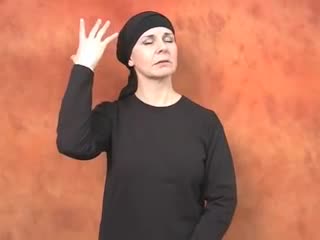
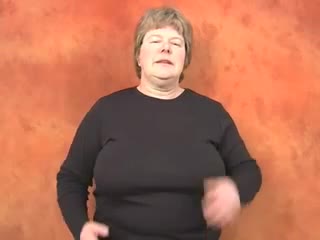
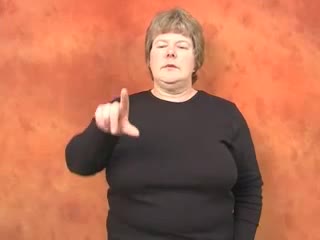
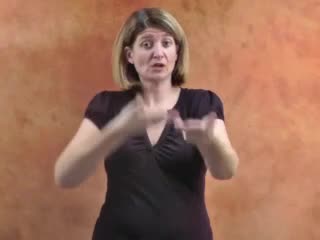
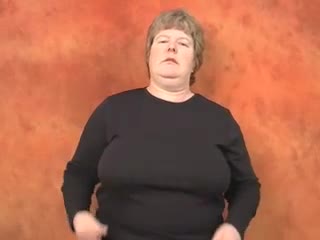
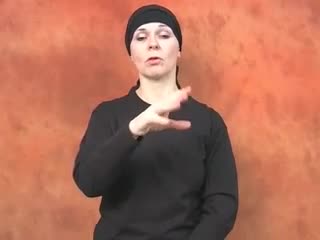
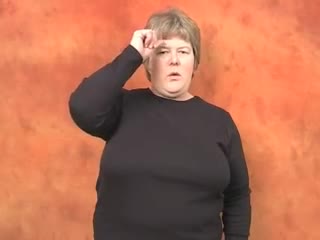
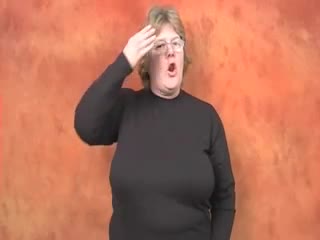
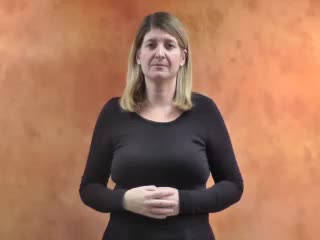
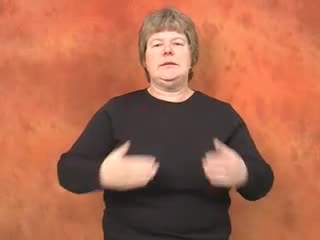
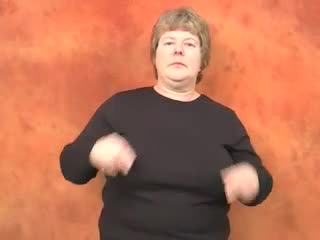
Best practice Use mirror mode, then watch the frame breakdown below to catch the start, movement, and finish cleanly.
Video via SpreadTheSign  - Free educational resource BSL
Updated April 26, 2026
British Sign Language (BSL) 🟢 Beginner 📊 A2 ⚡ Common Verb

lend

To give something to someone temporarily, expecting its return

Source-linked video Step-by-step guide Context and safety notes
Synonyms
Loan provide temporarily
Antonyms
Borrow take keep
Difficulty
Not rated yet

Create a free account to save this sign, keep your watch history, and unlock a one-note journal preview.

How to sign it
Handshape
Fingers and thumb curled into a flat 'O' shape, opening to an open '5-hand'
Location
Near dominant shoulder/chest, moving forward
Movement
Linear outward movement, hand opens
Palm Orientation
Palm starts facing signer, rotates to face forward/down
Facial Expression
Slight head nod, direct eye gaze
🔁 Spaced Review Try it free

How well do you know this sign?

LEND
Your Progress Live
🌱
Level 1 · BSL Beginner +0 XP today
This sign Not learned yet
0 watches
Mastery 0%
Confidence
How well do you know this sign?
0 🔥 Streak
0 Signs seen
0 Learned
0 Watches
📖 Vocabulary health 🔒 Log in to see score
0 Mastered
0 Confident
0 Practicing
0 Just seen

Create a free account to keep your vocabulary score between sessions

7-day activity 0 of 7 active

Register free to sync activity across devices

Watch signs to see your history here

Tracking locally for now. Create a free account to save your progress and sync across devices.
Free gets you started. Paid adds the repeat-learning layer: review queues, deeper notes, compare mode, and better comeback tools.
My Sign Journal
Personal notes, saved to your account forever
Locked

Write memory tricks, usage examples, and cultural reminders beside each sign. Create a free account to unlock your first saved note preview on this page.

Create free account Already have an account? Log in

What This Sign Means in BSL

The BSL sign for lend captures the essence of a temporary transfer, an offering of something with the clear expectation that it will return. It's not about permanent ownership, but rather a brief stewardship. When you use this sign, you’re communicating a willingness to let someone use something of yours for a period, whether it's an object, money, or even your time and effort. The movement itself, starting contained and then opening outwards, beautifully illustrates this concept of releasing something into another's care. What makes this sign particularly expressive is its inherent generosity, yet with a boundary. You’re extending trust, indicating that you expect the item back. This nuance is crucial; it sets "lend" apart from simply "giving" something away. It reflects a transactional relationship, even if an informal one, where an item changes hands with the understanding of its eventual return. Pay attention to the natural, unforced quality of this sign. It should feel like a simple, open gesture of assistance or cooperation. The sign embodies a helpful spirit, making it a common and valuable part of everyday BSL conversations, whether you’re offering a pen, a book, or even a sympathetic ear.

When This Sign Feels Natural

You’ll find the BSL sign for lend feels most natural in everyday, practical situations where you're offering something for temporary use. Imagine a colleague asking for a stapler, or a friend needing a fiver for a coffee. This is the sign you'd reach for. It’s a very common sign in informal settings, but it’s also perfectly appropriate in more formal contexts when discussing loans or temporary provisions, like lending equipment for a project. Consider your audience and the specific item. If you’re offering something small and easily replaceable, like a pen, the sign is straightforward. For larger or more valuable items, the sign remains the same, but your facial expression might add a touch more emphasis on the expectation of return, or a slightly more formal tone. It's a versatile sign that adapts well to the context. However, be mindful of when to use this versus other related signs. If you’re receiving something from someone else temporarily, you’d use the sign for borrow. If you’re giving something with no expectation of return, you’d use give. The key differentiator for "lend" is that *you* are the one initiating the temporary transfer *from* yourself, *to* someone else, with an understanding of eventual reciprocity.

What Learners Usually Miss

One common subtlety learners often miss with the BSL sign for lend is the precise combination of the handshape *opening* as it moves forward. Many might correctly start with the 'flat O' handshape near the dominant shoulder/chest and move it forward, but they sometimes neglect the crucial transition to an open '5-hand'. Without this opening, the sign can look more like a generic pushing motion or, more confusingly, resemble the sign for "give" if the hand remains somewhat closed. The rhythmic quality of the sign is also important. It's a smooth, confident, linear outward movement, not jerky or hesitant. The hand opens naturally and fully as it extends, signifying the release of the item. If the movement is too short, or the hand doesn't fully open, the clarity of the temporary nature can be lost, potentially leading to misunderstandings. Practise making sure the movement is clear and the hand completely transitions from holding to open. Finally, while facial expression for "lend" is often neutral, ensure it doesn't convey reluctance or confusion. A slight, open expression, perhaps with an encouraging nod, can reinforce the helpful intention of lending. Avoid a furrowed brow or a tight mouth, as these can contradict the generous nature of the sign. Remember, BSL isn't just about hand movements; it's a full-body language.

A Simple Way to Remember It

Think of the BSL sign for lend as literally opening your hand to pass something on, but not letting it go completely from your thoughts. The hand starts as if holding something precious, then opens as you extend it, like you're saying, "Here, you can use this, but I'll need it back." * The initial 'flat O' handshape symbolises holding onto something, like a possession. * The hand *opening* into a '5-hand' as it moves outwards represents the release and temporary transfer. * The forward, linear movement from your body signifies the act of sending something *away* from you, but the full opening implies it’s still connected to you through expectation.

Short Practice Situations

  • Your friend needs a pen: "Can I lend you my pen for the meeting?"
  • Someone forgot their wallet: "Don't worry, I can lend you some money for lunch."
  • A neighbour wants to borrow a tool: "Of course, I’ll lend you my drill this afternoon."
  • You're offering support: "I'm here to lend an ear if you need to talk."
  • Discussing books: "I enjoyed that book; I can lend it to you next week."

Signs to Learn Next

  • Borrow: This is the direct opposite of "lend." Learning it alongside "lend" helps solidify the concept of temporary exchange and clarifies who initiates the transfer.
  • Give: While similar in some aspects of movement, "give" signifies a permanent transfer without expectation of return. Understanding the subtle handshape and movement differences between "lend" and "give" is key to accurate communication.
  • Receive: This sign naturally completes the transaction implied by "lend" or "borrow." Knowing how to sign "receive" allows you to fully express the exchange of items.
  • Share: "Share" often involves a more communal or joint use of something, sometimes without a strict expectation of individual return, offering a different nuance to the concept of temporary access.
  • Help: Frequently, when we "lend" something, we are also "helping" someone. Learning "help" expands your ability to express support and assistance in various contexts.

🤖 AI Learning Guide for "lend"

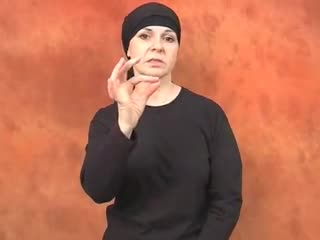
The BSL sign for 'lend' is directional, originating near the body and moving outwards, signifying an item being given away temporarily, expecting return

🎯 Practice Challenge

Practice signing 'lend' while thinking of different objects

⚠️ Most Common Mistake

Ensure hand opens fully and movement is outward from body

👐 How to Sign "lend" in British Sign Language (BSL) (Quick Answer)

Follow these steps to sign lend correctly in British Sign Language (BSL):

  1. 1 Form flat 'O' handshape near dominant shoulder/chest
  2. 2 Palm faces signer
  3. 3 Move hand forward linearly, opening to a '5-hand'
  4. 4 Palm rotates to face forward/down

Tip: Watch the video above while following these steps for best results.

🤚 Sign Profile

🤚
Handshape
Fingers and thumb curled into a flat 'O' shape, opening to an open '5-hand'
🔣
Handshape Code
Flat-O to 5-hand
Dominant Hand
Right
🙌
Hand Count
One-handed
📍
Location
Near dominant shoulder/chest, moving forward
↗️
Movement
Linear outward movement, hand opens
🔄
Movement Type
Linear
👆
Contact
Air
👋
Palm Orientation
Palm starts facing signer, rotates to face forward/down

😊 Non-Manual Features

Facial expressions and body language are grammatically essential in British Sign Language (BSL) - not optional!

😊
Facial Expression
Slight head nod, direct eye gaze
🙆
Eyebrows
Neutral
👁️
Eye Gaze
At referent
🙂
Head Movement
Nod (yes)
👄
Mouth Morpheme
Pah
🕴️
Body Shift
Slight forward lean

📖 Grammar & Linguistics

Part of Speech Verb
Transitivity Transitive
Inflection Yes
Classifier Usage Handle, flat object, money
Role Shift Yes

🎓 Learning Context

📌 When to Use: Giving items temporarily, sharing resources
⚠️ Common Mistake: Confusing with 'give' or 'borrow'
🚫 When NOT to Use: When the item is not expected back
Context Tags
Transaction sharing temporary

🧪 Practice Lab

Use these tiny checks right after watching the video. Fast feedback is what turns recognition into recall.

Meaning check

Which word matches the sign you just watched?

Usage check

Where would this sign fit most naturally?

Confidence check

How do you feel about lend right now?

Pick one so SignDeaf can shape the rest of your session around how this sign actually feels.

🧭 Scenario Drill

One sign gets remembered faster when you attach it to real situations. Try these quick scene prompts.

Work

Stretch practice

Use this sign in a short workplace sentence or meeting exchange.

Family

Stretch practice

Try signing this while talking about family life or something at home.

School

Stretch practice

Imagine teaching this sign to a classmate or using it in a lesson.

Doctor

Stretch practice

Practise it in a healthcare conversation where clarity matters.

Travel

Stretch practice

Use it in a travel scenario like asking for help or directions.

💬 Example Usage

1.[en] Can you lend me your book? / BSL:[Sign LEND, then BOOK, pointing to self] | 2.[en] I will lend you money. / BSL:[Sign ME LEND YOU MONEY] | 3.[en] He lent her his car. / BSL:[Sign HE LEND HER CAR]

1.[en] Can you lend me your book? / BSL:[Sign LEND, then BOOK, pointing to self] | 2.[en] I will lend you money. / BSL:[Sign ME LEND YOU MONEY] | 3.[en] He lent her his car. / BSL:[Sign HE LEND HER CAR]

When to use it

Giving items temporarily, sharing resources

When not to use it

When the item is not expected back

Register

Neutral

🌍 Cultural Context

Emphasises reciprocal action and trust

🗺️ Regional Variations

Minor variations in hand opening

⚖️ Similar Signs - What's the Difference?

This sign lend
VS
Similar signs Look closely
**GIVE**: 'Give' uses a similar outward movement but typically starts with a flattened 'B' or '5-hand' and doesn't always imply return. 'Lend' specifically means temporary giving with expectation of return, starting with a more closed hand.
**BORROW**: 'Borrow' is the opposite; it uses a similar handshape but the movement is inwards towards the body, signifying taking something temporarily from someone.
**OFFER**: 'Offer' also moves outwards but often uses a 'flat O' handshape opening to a 'flat B' or '5-hand' with palm up, presenting something. 'Lend' is more about the temporary transaction

📝 Usage Notes

Directional sign, can show who lends to whom

Frequently Asked Questions

Common questions about the British Sign Language (BSL) sign for "lend".

🏷️ Tags

Handshape

Keywords

💡
Did you know?
BSL uses a two-handed manual alphabet - different from ASL which is one-handed.

📚 Explore More British Sign Language (BSL) Signs

Keep building your British Sign Language (BSL) vocabulary - explore signs by category or browse the full dictionary.