Speed
0
Practice reps times watched

Create a free account to keep your watch history and review plan.

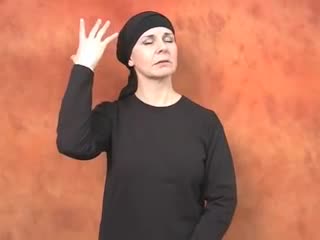
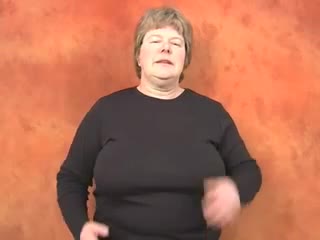
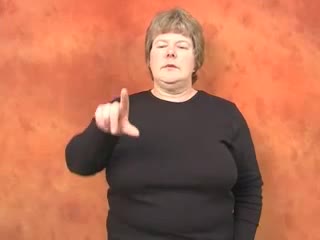
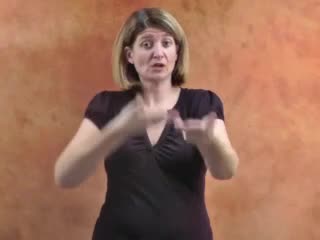
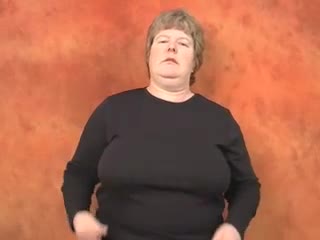
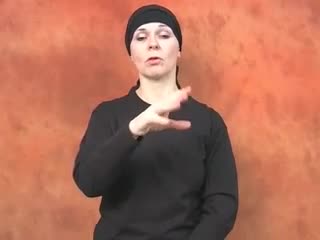
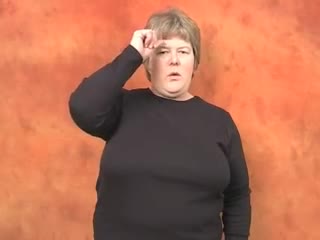
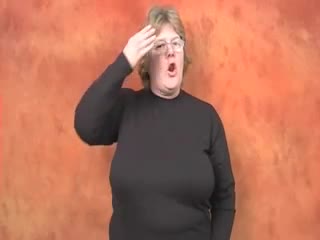
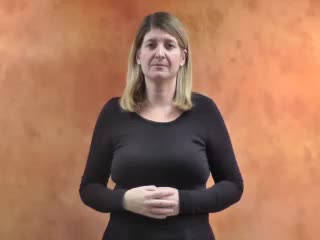
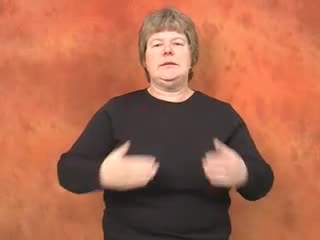
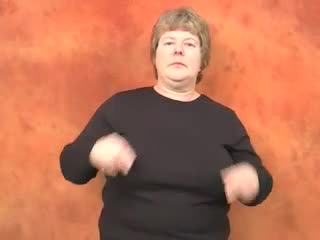
Best practice Use mirror mode, then watch the frame breakdown below to catch the start, movement, and finish cleanly.
Video via SpreadTheSign  - Free educational resource BSL
Updated April 26, 2026
British Sign Language (BSL) 🟢 Beginner 📊 A1 ⚡ Very Common Verb

break

To separate into pieces, rupture, or cease functioning

Source-linked video Step-by-step guide Context and safety notes
Synonyms
snap fracture shatter split destroy
Antonyms
fix repair mend join unite
Difficulty
Not rated yet

Create a free account to save this sign, keep your watch history, and unlock a one-note journal preview.

How to sign it
Handshape
Both hands form S-hands, closed fists
Location
Mid-chest to waist height, neutral space
Movement
Hands start together, then snap apart forcefully
Palm Orientation
Initial palms face each other
Facial Expression
Often none; can convey intensity
🔁 Spaced Review Try it free

How well do you know this sign?

BREAK
Your Progress Live
🌱
Level 1 · BSL Beginner +0 XP today
This sign Not learned yet
0 watches
Mastery 0%
Confidence
How well do you know this sign?
0 🔥 Streak
0 Signs seen
0 Learned
0 Watches
📖 Vocabulary health 🔒 Log in to see score
0 Mastered
0 Confident
0 Practicing
0 Just seen

Create a free account to keep your vocabulary score between sessions

7-day activity 0 of 7 active

Register free to sync activity across devices

Watch signs to see your history here

Tracking locally for now. Create a free account to save your progress and sync across devices.
Free gets you started. Paid adds the repeat-learning layer: review queues, deeper notes, compare mode, and better comeback tools.
My Sign Journal
Personal notes, saved to your account forever
Locked

Write memory tricks, usage examples, and cultural reminders beside each sign. Create a free account to unlock your first saved note preview on this page.

Create free account Already have an account? Log in

What This Sign Means in BSL

The BSL sign for break is beautifully direct and incredibly iconic. When you see someone perform it, you immediately grasp its core meaning: a forceful, often abrupt, physical separation or fracture. It’s a sign that truly embodies its action, making it one of those fundamental verbs you'll want to master early on, as it forms a basis for many descriptive conversations.

Think of it as the go-to sign when something literally comes apart. Whether it’s a twig snapping, a plate smashing, or a bone fracturing, this sign captures that moment of integrity being lost. The energy in the movement is key – it's not a gentle separation, but a decisive, often violent, act of breaking. The movement itself dictates the impact of the break.

What's particularly striking about the BSL sign for break is its versatility within its literal scope. While its core is physical breakage, it doesn't just refer to objects. It can describe a relationship "breaking" in the sense of a definitive split, or even a weather pattern "breaking" from one state to another. The underlying theme is always a significant, often irreversible, change or division, marked by a clear separation.

When This Sign Feels Natural

This sign feels most natural when you're describing an event where something physically gives way or separates. Imagine recounting an accident where a mug dropped and broke, or explaining how a branch snapped during a storm. It’s perfect for those straightforward, tangible situations where an object's structure is compromised and its original form is lost.

You’ll find yourself using it frequently in narratives, when describing repairs, or even in instructions. For instance, if you're telling someone how to disassemble something, you might sign "break" for taking a component apart. The register is generally neutral and direct, fitting into most everyday conversations without sounding overly formal or informal, making it broadly applicable.

It’s important to remember that this specific sign for break almost exclusively refers to a physical breakage. If you mean to "take a break" from work, or to "break a rule," you’ll use entirely different signs and conceptualisations in BSL. This sign is about the physical act, the rupture, not a pause or a transgression. Keeping that distinction clear will prevent a lot of common misunderstandings as you navigate BSL conversations.

What Learners Usually Miss

One common pitfall for new learners is failing to capture the force and simultaneity of the sign. The movement isn’t a slow, deliberate pulling apart; it’s a quick, sharp snap. Both hands move apart at precisely the same moment, reflecting the instantaneous nature of something breaking. Practise making that movement really decisive and impactful, almost as if you're demonstrating the sound of a break with your hands.

Another area where learners often stumble is with the accompanying non-manual features, particularly facial expression. While a neutral expression is fine, to truly convey the impact or unexpectedness of a break, you might subtly furrow your brows, widen your eyes slightly, or even use a quick intake of breath – a very brief puff of the cheeks might also accompany a very sudden, sharp break. These small facial cues add a layer of meaning, indicating whether the break was accidental, severe, or deliberate.

Many learners also tend to overuse this sign by applying it metaphorically where it doesn't fit in BSL. For example, trying to use it for "breaking news" or "breaking a record" would be incorrect. BSL often uses different conceptual signs or phrases for these abstract ideas. This sign is anchored firmly in the physical realm, so always check if what you're trying to convey is a literal fracture or separation before defaulting to it in your signing.

A Simple Way to Remember It

To help this sign stick in your memory, focus on its inherent physicality. It's one of those signs that truly "shows" what it means, making it incredibly intuitive once you connect the movement to the action. Think about the feeling of breaking something with your own hands, and let that guide your signing, ensuring the movement feels natural and expressive.

  • Visual Impact: Imagine holding a stick or a piece of material and snapping it in half. Your hands, initially together, represent the intact object, and their forceful separation mimics the moment it breaks.
  • Kinesthetic Feedback: Pay attention to the tension you build just before the snap, and the sudden release of that tension as your hands move apart. This physical sensation will reinforce the idea of an object's integrity being suddenly compromised.
  • 'S' for Solid: The S-handshape (fists) can be thought of as representing the solid, unyielding nature of the object before it breaks. The movement then shows that solidity giving way under force.

Short Practice Situations

  • You dropped the glass, and it BREAK on the floor.
  • Be careful with that old toy; it's fragile and might BREAK easily.
  • The car engine BREAK down on the motorway, so we called for help.
  • I saw the branch BREAK off the tree during the strong winds.
  • The doctor said my arm might BREAK if I put too much weight on it.

Signs to Learn Next

  • FIX/REPAIR: Once something breaks, the natural next step is often to fix it. Learning this sign will allow you to complete the narrative of damage and restoration, offering a full story arc.
  • CRACK: Similar to breaking, but often implies a partial or less severe fracture. Understanding the distinction helps you describe the extent of damage with greater precision, adding nuance to your descriptions.
  • FALL: Many things break because they fall. Connecting these two signs allows you to describe the cause-and-effect of accidents more comprehensively, providing crucial context for events.
  • SMASH: This sign often implies a more violent, complete, or noisy breakage, often into many pieces. It’s a great way to add intensity and specific detail to your description of a break, enhancing your storytelling.
  • SEPARATE: While "break" implies an unwanted or forceful split, "separate" can be more neutral or deliberate. Learning it helps distinguish between different kinds of divisions, giving you a broader vocabulary for partitions.

🤖 AI Learning Guide for "break"

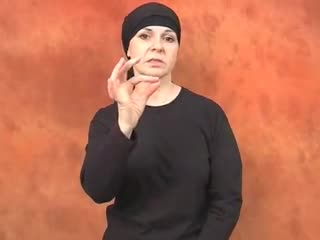
BSL sign for "break" uses two S-hands starting together, then snapping apart forcefully. It represents physical damage or cessation of function

🎯 Practice Challenge

Practice signing "break" with varying force

⚠️ Most Common Mistake

Ensure both hands are S-shape, movement is forceful and outwards

👐 How to Sign "break" in British Sign Language (BSL) (Quick Answer)

Follow these steps to sign break correctly in British Sign Language (BSL):

  1. 1 Form S-hands (fists) with both hands.
  2. 2 Place hands together at mid-chest height, palms facing.
  3. 3 Snap hands apart forcefully and quickly.
  4. 4 Maintain S-handshape throughout the movement

Tip: Watch the video above while following these steps for best results.

🤚 Sign Profile

🤚
Handshape
Both hands form S-hands, closed fists
🔣
Handshape Code
S
Dominant Hand
Either
🙌
Hand Count
Two-handed
📍
Location
Mid-chest to waist height, neutral space
↗️
Movement
Hands start together, then snap apart forcefully
🔄
Movement Type
Linear
👆
Contact
Air
👋
Palm Orientation
Initial palms face each other
⚖️
Symmetry
Symmetric

😊 Non-Manual Features

Facial expressions and body language are grammatically essential in British Sign Language (BSL) - not optional!

😊
Facial Expression
Often none; can convey intensity
🙆
Eyebrows
Neutral
👁️
Eye Gaze
Forward
🙂
Head Movement
None
👄
Mouth Morpheme
Often "pah" or "pooh" for emphasis
🕴️
Body Shift
None

📖 Grammar & Linguistics

Part of Speech Verb
Transitivity Both
Inflection Partially
Classifier Usage N/A
Role Shift No

🎓 Learning Context

📌 When to Use: General use for physical breaking, malfunctioning, or ending
⚠️ Common Mistake: Not enough force; incorrect handshape
🚫 When NOT to Use: For "take a break" or "break a rule."
Context Tags
Physical action damage malfunction end

🧪 Practice Lab

Use these tiny checks right after watching the video. Fast feedback is what turns recognition into recall.

Meaning check

Which word matches the sign you just watched?

Usage check

Where would this sign fit most naturally?

Confidence check

How do you feel about break right now?

Pick one so SignDeaf can shape the rest of your session around how this sign actually feels.

🧭 Scenario Drill

One sign gets remembered faster when you attach it to real situations. Try these quick scene prompts.

Work

Stretch practice

Use this sign in a short workplace sentence or meeting exchange.

Family

Stretch practice

Try signing this while talking about family life or something at home.

School

Stretch practice

Imagine teaching this sign to a classmate or using it in a lesson.

Doctor

Stretch practice

Practise it in a healthcare conversation where clarity matters.

Travel

Stretch practice

Use it in a travel scenario like asking for help or directions.

💬 Example Usage

1.[en] The window broke. / BSL:[sign BREAK for the window] | 2.[en] My phone is broken. / BSL:[sign BREAK for the phone] | 3.[en] Don't break it! / BSL:[sign DON'T BREAK IT]

1.[en] The window broke. / BSL:[sign BREAK for the window] | 2.[en] My phone is broken. / BSL:[sign BREAK for the phone] | 3.[en] Don't break it! / BSL:[sign DON'T BREAK IT]

When to use it

General use for physical breaking, malfunctioning, or ending

When not to use it

For "take a break" or "break a rule."

Register

Neutral

🌍 Cultural Context

N/A

🗺️ Regional Variations

Minor variations in starting height or force

⚖️ Similar Signs - What's the Difference?

This sign break
VS
Similar signs Look closely
BREAK vs. TORN/TEAR: While "break" implies snapping or shattering, "TORN" uses B-hands moving apart with a twisting or ripping motion, often near the mouth or chest. BREAK vs. SNAP (e.g., twig): "SNAP" can be very similar, often using a single hand. "Break" implies a more significant or complete separation. BREAK vs. HOLIDAY/TAKE A BREAK: This sign is for physical damage; "take a break" from work uses a different sign

📝 Usage Notes

Force of movement indicates severity of break

🏷️ Tags

Handshape

Keywords

💡
Did you know?
BSL uses a two-handed manual alphabet - different from ASL which is one-handed.

📚 Explore More British Sign Language (BSL) Signs

Keep building your British Sign Language (BSL) vocabulary - explore signs by category or browse the full dictionary.