What Is the BSL Sign for "repair"?
Ever found yourself needing to describe fixing something, mending a tear, or getting a broken item back in working order? You're in luck, because the British Sign Language repair sign perfectly captures that essence of restoration. This isn't just a simple verb; it's a dynamic action that brings something whole again, a vital concept in daily communication. Learning this particular BSL sign for repair will open up many conversations about maintenance, problem-solving, and making things right. It truly represents the act of mending or bringing something back to its proper state within British Sign Language.
How to Sign "repair" in British Sign Language - Step-by-Step
Let's walk through the actions for this sign, focusing on the precise movements that make it so clear in BSL.
Step 1: Handshape
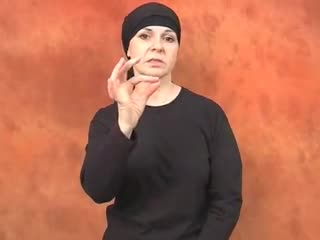
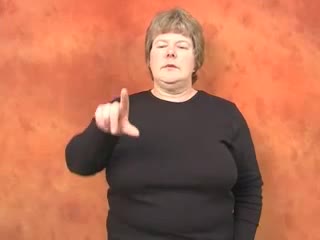
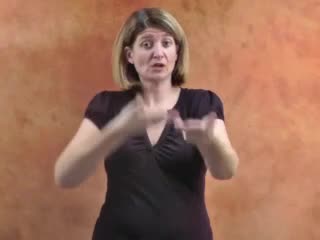
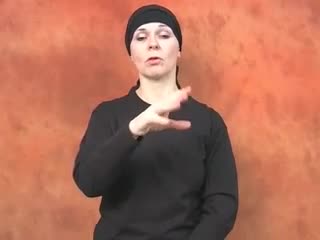
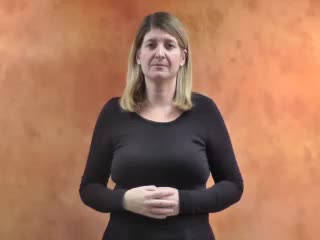
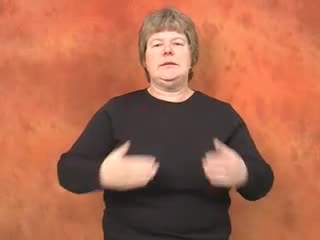
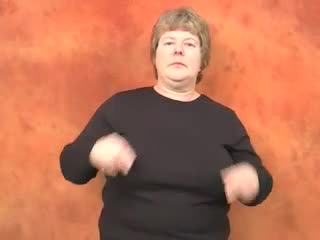
For this sign, you'll need both hands. Your dominant hand forms a tight fist, specifically an "S" handshape where your fingers curl down into your palm and your thumb rests across your fingertips. Your non-dominant hand also takes on an "S" handshape, mirroring your dominant hand: fingers curled into a fist with the thumb resting over them. Both fists should be firm and compact.
Step 2: Hand Placement and Location
You'll begin with both hands positioned in your neutral signing space, which is typically just in front of your chest or stomach. Place your non-dominant hand's fist so its palm faces upwards, or slightly angled towards your dominant side. Your dominant hand's fist should then rest on top of your non-dominant fist, with its knuckles making contact with the knuckles of your non-dominant hand.
Step 3: Movement
Now, for the action! With your dominant hand's knuckles resting on your non-dominant hand's knuckles, perform a series of short, firm, back-and-forth rubbing motions. Imagine you're vigorously scrubbing or grinding something together. This movement should happen two to three times, feeling like a steady, purposeful effort. The motion is horizontal, moving your dominant hand forward and back over the top of your non-dominant hand.
Step 4: Facial Expression and Mouthing
Non-manual features are absolutely crucial here. As you sign "repair," you'll naturally mouth the word "repair." This isn't just for clarity; it often carries grammatical weight and helps distinguish signs. Your facial expression should reflect the context: typically, a neutral or slightly focused look conveys the act of fixing. If it's a difficult repair, you might show a furrowed brow, but generally, a straightforward mouthing of the word will suffice.
Step 5: Palm Orientation
Throughout the sign, both your dominant and non-dominant hands maintain their "S" handshapes with their knuckles facing generally forward or slightly upwards. The palms of both hands are essentially facing each other, but due to the fist formation, it's the back of the hands and knuckles that are primarily visible and interacting. This consistent orientation helps to reinforce the concept of hands working together on a task.
"repair" in BSL - Quick Reference Snapshot
- Handshape: Both hands form a tight "S" handshape (fist with thumb over fingers).
- Location: Neutral signing space, in front of the chest or stomach.
- Movement: Dominant hand's knuckles rub back and forth against non-dominant hand's knuckles (2-3 times).
- Facial Expression: Neutral or focused; mouth the word "repair."
- Dominant Hand: Performs the rubbing motion on top.
- Palm Orientation: Knuckles generally face forward or slightly upwards, palms face each other.
5 Memorisation Tricks for the BSL Sign "repair"
- Visual Mnemonic: Picture two gears grinding together, or two hands vigorously scrubbing a stubborn stain. This image of hard work and friction perfectly matches the two rubbing fists, helping you recall the action instantly.
- Muscle-Memory Drill: Try closing your eyes and feeling the precise contact points of your knuckles. Slowly perform the rubbing motion, paying attention to the tension in your fists and the smooth back-and-forth action. Then, speed it up to the natural pace, repeating it ten times in a row to really embed the movement into your motor memory.
- Meaning Connection: Think about what "repair" truly means: it's often a process of vigorous effort, of working on something to make it functional again. The sign's rubbing motion visually represents this effort, as if you're buffing out a flaw or physically mending a break.
- Common-Confusion Tip: Don't confuse this sign with "work," which often involves tapping the wrist or rubbing hands together in a different manner. The key distinction for "repair" is the specific knuckle-on-knuckle rubbing, signifying a more focused, constructive effort on an object.
- Daily-Life Practice: Every time you see something being fixed in your home or out and about, whether it's a leaky tap or a car in a garage, sign "repair" silently to yourself. Connect the action you observe with the BSL sign, making it a natural part of your visual vocabulary.
Real-Life Situations to Use the BSL Sign for "repair"
You'll discover this sign incredibly versatile in everyday communication. It's not just about physical objects, but also concepts of mending.
- Imagine your car breaks down; you could sign, "MY CAR BROKEN. NEED REPAIR." The BSL structure places the topic first, then the action needed.
- Perhaps a friend mentions a household appliance is faulty. You might ask, "YOUR WASHER REPAIR FINISH?" using your eyebrows raised for the question and the sign for "finish" to complete the thought.
- If you're explaining a problem at work, you could state, "COMPUTER NOT WORK. TECHNICIAN COME REPAIR." Here, you're clearly indicating the object and the specific action required.
- When discussing clothing, you could sign, "MY SHIRT TORN. I CAN REPAIR IT." This shows agency and the ability to perform the action yourself.
Top 3 Mistakes Learners Make Signing "repair" in BSL
- Incorrect Handshape: Many beginners might use open palms or loose fingers instead of the firm "S" handshape. This changes the entire meaning and can make the sign unintelligible. The correction is to ensure both hands are tightly fisted, thumbs resting over the fingers, throughout the entire motion.
- Lack of Repetitive Movement: Some learners might perform just one single rub or a vague circular motion. This loses the iconic representation of persistent effort. The precise correction involves two to three distinct, horizontal, back-and-forth rubbing movements with the knuckles, conveying the repeated action of fixing.
- Missing Non-Manual Features: A common oversight is failing to mouth "repair" or keeping a completely blank facial expression. BSL is a full language, and non-manuals are integral. The correct approach is to mouth the word "repair" clearly and allow a natural, focused expression to accompany the sign, adding to its meaning and grammatical completeness.
Fascinating Facts About the BSL Sign for "repair"
- The sign for "repair" is highly iconic, meaning it visually resembles the action it represents. The rubbing fists directly evoke the idea of working on something, grinding away, or applying effort to mend an item.
- While the core concept remains consistent, some regional variations within the BSL-using community might subtly alter the speed or intensity of the rubbing motion, reflecting local nuances in signing style.
- Linguistically, "repair" in BSL functions as a transitive verb, meaning it typically requires an object that is being repaired. You'd sign "REPAIR CAR" or "REPAIR CLOCK," rather than just "REPAIR" in isolation.
- This sign builds beautifully on other fundamental concepts. Its vigorous motion naturally links it to ideas of "work" or "effort," forming a cohesive cluster of related actions in a signer's vocabulary.
- The strength and determination conveyed by the tight fists and firm rubbing can sometimes be extended metaphorically in conversation to signify 'fixing a problem' or 'resolving an issue' in a more abstract sense.
"repair" in Deaf Culture - Community and Identity
The concept of "repair" carries a subtle but significant weight within Deaf culture, reflecting a community renowned for its resourcefulness and resilience. In a world often not designed for them, Deaf individuals and communities frequently adapt, innovate, and find ways to "repair" or overcome barriers. This might involve mending communication breakdowns, advocating for accessibility, or physically maintaining their spaces and tools with ingenuity. It’s a testament to a spirit of making things work, of perseverance, and of self-sufficiency. The sign itself, with its strong, purposeful action, embodies this collective strength and commitment to ensuring continuity and functionality, whether it's an object or a system.
Example Conversations Using "repair" in BSL
English: My phone needs repairing. - BSL structure: MY PHONE BROKEN, REPAIR NEED.
English: Can you repair this old chair? - BSL structure: THIS OLD CHAIR, YOU REPAIR CAN?
English: They didn't repair the roof properly. - BSL structure: ROOF, THEY REPAIR NOT PROPER.
English: The mechanic will repair the engine tomorrow. - BSL structure: ENGINE, MECHANIC TOMORROW REPAIR.
English: I need to repair my bicycle chain. - BSL structure: MY BICYCLE CHAIN, I NEED REPAIR.
Frequently Asked Questions: The BSL Sign for "repair"
Is there a specific regional variation for the BSL sign for repair?
While the core handshapes and movement for "repair" are widely recognised across the UK, you might encounter subtle regional differences in the vigour or the exact angle of the rubbing motion. These variations are part of BSL's rich diversity and reflect local signing styles, but the meaning remains universally understood.
Are there any similar signs to "repair" that beginners often confuse?
Yes, beginners sometimes confuse "repair" with "work" or "mend." The sign for "work" often involves tapping the wrist or a different hand motion, while "mend" might use a sewing-like gesture or a simpler joining action. The distinct knuckle-on-knuckle rubbing of "repair" is key to differentiating it from these related concepts.
Is "repair" a good sign for BSL beginners to learn early on?
Absolutely, "repair" is an excellent sign for beginners! It’s highly iconic, meaning its movement logically represents the action, making it easier to remember. Plus, it's a very practical sign that you'll use often when discussing objects, problems, and solutions in everyday life.
Can children easily learn and use the BSL sign for "repair"?
Children pick up the sign for "repair" quite readily because of its clear, action-oriented movement. It's a sign that makes sense visually and is often used in games or when talking about toys that get broken, making it very accessible for young learners.
How does the BSL sign for repair compare to the equivalent in other sign languages?
Sign languages around the world develop independently, so the sign for "repair" will look different in other sign languages. While the *concept* of fixing something is universal, the specific handshapes, placement, and movements used to convey "repair" are unique to BSL's linguistic structure and cultural context.
Signs That Pair Naturally with "repair" in BSL
- BROKEN: Often, you'll sign BROKEN before REPAIR, establishing the problem that needs fixing. They form a natural cause-and-effect pair.
- MEND: While similar, MEND can imply a gentler, more delicate fix, especially for fabric. Learning both helps you express nuance in BSL.
- FIX: FIX can be a more general term for resolving a situation, not always a physical repair. Understanding its distinction from REPAIR enriches your vocabulary.
- PROBLEM: When something needs REPAIR, there's usually a PROBLEM. Learning these together helps you articulate challenges and their solutions.
- TOOL: To REPAIR something, you often need a TOOL. This connection helps build vocabulary around practical tasks and actions.
- BUILD: While REPAIR is about restoration, BUILD is about creation. Knowing both allows you to discuss the full spectrum of making and unmaking.
Building Fluency: How to Practise "repair" in BSL
To truly master the sign for "repair," consistent practice is key. Start by standing in front of a mirror, carefully watching your dominant and non-dominant handshapes and ensuring the rubbing motion is clean and repetitive. Really feel the contact between your knuckles. Try integrating "repair" into simple daily BSL conversations you might have with yourself or others. For example, sign about a broken cup or a mended piece of clothing. A fantastic strategy is to film yourself signing; this allows you to critically review your handshapes, movement, and vital facial expression, helping you spot areas for improvement. As you grow more confident, seek out opportunities to practise with a Deaf conversation partner. Their feedback will be invaluable. Remember, spaced repetition over several days will embed the sign deeply into your memory, making "repair" feel completely natural in your BSL repertoire. You've got this!