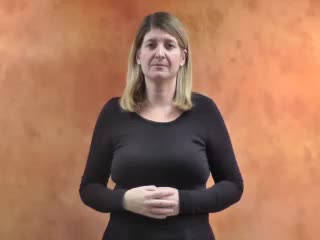
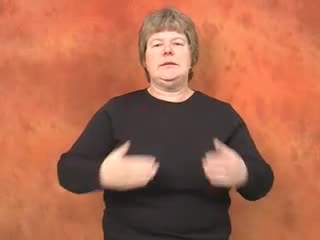
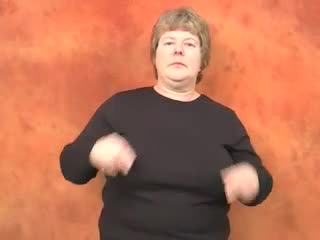
Speed
0
Practice reps times watched

Create a free account to keep your watch history and review plan.

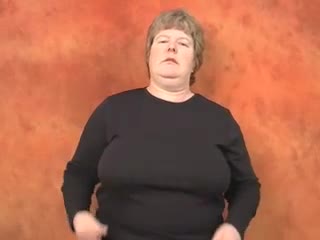
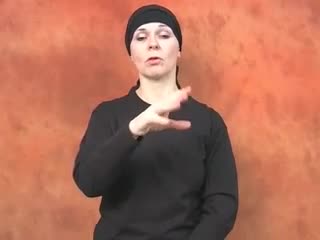
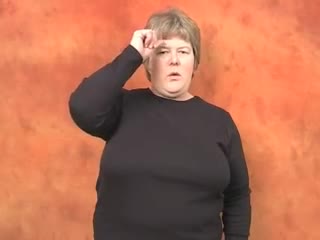
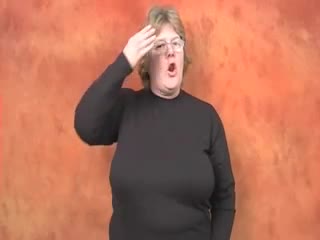
Best practice Use mirror mode, then watch the frame breakdown below to catch the start, movement, and finish cleanly.
Video via SpreadTheSign  - Free educational resource BSL
Updated April 26, 2026
British Sign Language (BSL) 🟢 Beginner 📊 A1 ⚡ Very Common Verb

need

To express necessity, requirement, or obligation

Source-linked video Step-by-step guide Context and safety notes
Synonyms
Want Must Require Essential
Antonyms
Don't need Unnecessary Optional
Difficulty
Not rated yet

Create a free account to save this sign, keep your watch history, and unlock a one-note journal preview.

How to sign it
Handshape
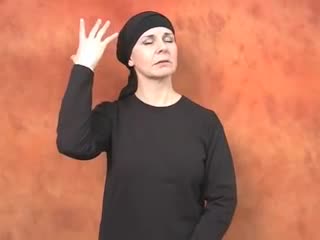
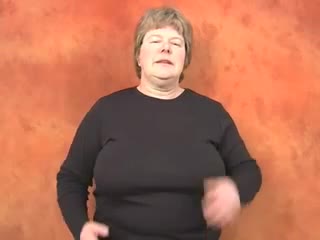
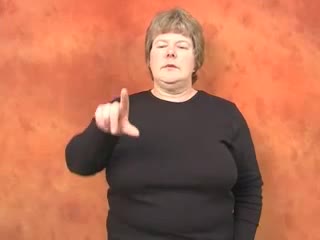
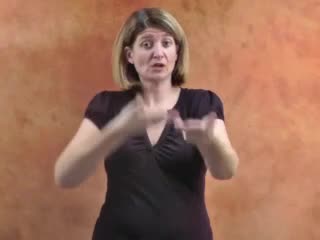
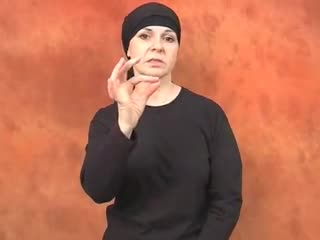
Dominant hand forms X-handshape, index finger bent at knuckle, thumb rests on middle finger
Location
Dominant hand near chest/shoulder, pointing towards body
Movement
Short, sharp downward or inward movement
Palm Orientation
Inward/Towards body
Facial Expression
Usually neutral, can show intensity or urgency
🔁 Spaced Review Try it free

How well do you know this sign?

NEED
Your Progress Live
🌱
Level 1 · BSL Beginner +0 XP today
This sign Not learned yet
0 watches
Mastery 0%
Confidence
How well do you know this sign?
0 🔥 Streak
0 Signs seen
0 Learned
0 Watches
📖 Vocabulary health 🔒 Log in to see score
0 Mastered
0 Confident
0 Practicing
0 Just seen

Create a free account to keep your vocabulary score between sessions

7-day activity 0 of 7 active

Register free to sync activity across devices

Watch signs to see your history here

Tracking locally for now. Create a free account to save your progress and sync across devices.
Free gets you started. Paid adds the repeat-learning layer: review queues, deeper notes, compare mode, and better comeback tools.
My Sign Journal
Personal notes, saved to your account forever
Locked

Write memory tricks, usage examples, and cultural reminders beside each sign. Create a free account to unlock your first saved note preview on this page.

Create free account Already have an account? Log in

What This Sign Means in BSL

The BSL sign for need is a fundamental and incredibly versatile sign that expresses a requirement, a necessity, or a strong desire for something. At its core, it communicates a sense of internal compulsion or an external demand that you must address. Unlike a gentle "want," this sign carries a clear implication that something is missing, essential, or has become a priority.

The distinctive X-handshape, with your index finger bent sharply at the knuckle and your thumb resting on your middle finger, combines with a precise movement to convey this meaning. This isn't a casual gesture; the short, sharp downward or inward motion is deliberate, echoing the directness of a true necessity. It’s a sign that demands attention, reflecting the weight of the "need" itself.

Positioning your dominant hand near your chest or shoulder, pointing towards your body, reinforces the personal nature of the need. It's often something felt deeply, originating from within, whether it's a physical need like hunger, an emotional need for comfort, or a practical need for a tool. This internal anchor makes the sign feel very authentic and immediate in conversation.

When This Sign Feels Natural

You'll find yourself using the BSL sign for need constantly in everyday conversation. It feels natural whenever you're expressing a genuine requirement, whether it’s a personal necessity ("I need to rest") or a shared one ("We need to decide soon"). It's equally appropriate for practical requests ("I need that pen") and more abstract concepts ("They need more time"). This sign fits comfortably into most social registers, from casual chats with friends to more formal discussions.

Consider situations where there's a clear gap or an unfulfilled condition. If you're cold, you "need" a jacket. If you're lost, you "need" directions. The sign conveys that something is essential for comfort, completion, or progress. It's not about a preference, but about a prerequisite. Learners often gravitate towards it because of its clear, unambiguous message, making it a reliable tool in your BSL vocabulary.

While "need" is broad, there are times you might opt for a different sign. If the requirement is less urgent and more of a preference, "WANT" might be more suitable. If it's an absolute obligation or a strong imperative, "MUST" or "HAVE TO" could convey a greater degree of force. The beauty of "need" lies in its directness for expressing a genuine, personal requirement without necessarily implying an inescapable duty.

What Learners Usually Miss

A common pitfall for new learners is getting the handshape just right. The X-handshape isn't a loose fist or a simple pointed finger. It requires a distinct bend at the index finger's knuckle, with the thumb precisely positioned on the middle finger. If your handshape is too relaxed or too stiff, it can obscure the sign's clarity or even be confused with other signs. Practice forming that exact "bent index finger" shape until it feels natural and effortless.

Another subtlety often overlooked is the quality of the movement. The description "short, sharp downward or inward movement" is key. It's not a big, sweeping motion, nor is it a weak, hesitant one. The movement should be decisive and contained, like a firm tap or a quick, focused pull towards your body. Over-exaggerating the movement can make it seem overly dramatic, while under-emphasising it might make the sign appear unclear or lacking conviction.

Finally, remember that the sign for "need" doesn't carry all the emotional weight by itself. The nuances of urgency, frustration, desperation, or simple routine necessity are primarily conveyed through your facial expression and body language. A neutral face for a simple need ("I need a cup of tea") contrasts sharply with a furrowed brow and intense gaze for a more pressing need ("I really need help!"). Mastering this combination of precise hand movement and expressive facial context is what truly brings the sign to life.

A Simple Way to Remember It

To help solidify the sign for "need" in your memory, try connecting its form and location to its meaning. Think of how deeply a need is felt, and how this is reflected in the sign's structure.

  • The "Bent Finger Pull": Visualise your bent index finger and thumb as if you're trying to pull something essential towards you, something you urgently require. The sharp inward movement reinforces this idea of drawing a necessity closer.
  • The "Internal Urge": The sign's location near your chest or shoulder points to where many needs are felt – deep within your body or mind. It's a personal, felt necessity, coming from your core.
  • The "Decisive Tap": The short, sharp movement can be remembered as a decisive "tap" on the door of necessity. It's not a gentle knock, but a firm signal that something is truly required and can't be ignored.

Short Practice Situations

  • "I need to leave in about ten minutes, so I should finish up this work now."
  • "Do you need any assistance getting those heavy boxes up the stairs later today?"
  • "We really need to buy some fresh vegetables and fruit for the week's meals."
  • "If you need anything at all while I'm out, please don't hesitate to text me."
  • "The team will need a clear plan of action before we start the project next month."

Signs to Learn Next

  • WANT: This is a natural progression from "need." While "need" is about essential requirements, "WANT" expresses a desire or preference that isn't necessarily critical. Understanding the subtle difference between these two will greatly enhance your expressive range.
  • MUST / HAVE TO: These signs convey a stronger sense of obligation or imperative than "need." Things you "must" do are often non-negotiable duties, whereas "need" can sometimes be fulfilled in different ways.
  • HELP: Often, when you "need" something, it's "help." Learning this sign allows you to complete common phrases like "I need help" or "Do you need any help?" very naturally.
  • IMPORTANT: What we "need" is usually "important." Connecting these two signs helps to reinforce the weight and significance of the requirements you're expressing in BSL.
  • FINISH / DONE: If you "need" to complete a task, you'll often follow up with "FINISH" or "DONE." This pair is useful for describing the completion of a necessary action.

🤖 AI Learning Guide for "need"

The BSL sign for "need" uses an X-handshape near the chest with a sharp downward movement, expressing necessity or a strong requirement

🎯 Practice Challenge

Practice signing "need" when you want to express a requirement or obligation. Focus on the X-handshape and sharp movement

⚠️ Most Common Mistake

Ensure your index finger is bent at the knuckle for the X-handshape. The movement should be distinct and downward/inward, not just a static hold

👐 How to Sign "need" in British Sign Language (BSL) (Quick Answer)

Follow these steps to sign need correctly in British Sign Language (BSL):

  1. 1 Form X-handshape with dominant hand
  2. 2 Place hand near chest/shoulder, palm inward
  3. 3 Execute short, sharp downward/inward movement
  4. 4 Can repeat for emphasis

Tip: Watch the video above while following these steps for best results.

🤚 Sign Profile

🤚
Handshape
Dominant hand forms X-handshape, index finger bent at knuckle, thumb rests on middle finger
🔣
Handshape Code
X-hand
Dominant Hand
Either
🙌
Hand Count
One-handed
📍
Location
Dominant hand near chest/shoulder, pointing towards body
↗️
Movement
Short, sharp downward or inward movement
🔄
Movement Type
Linear
👆
Contact
Near
👋
Palm Orientation
Inward/Towards body
⚖️
Symmetry
Asymmetric

😊 Non-Manual Features

Facial expressions and body language are grammatically essential in British Sign Language (BSL) - not optional!

😊
Facial Expression
Usually neutral, can show intensity or urgency
🙆
Eyebrows
Neutral
👁️
Eye Gaze
Forward
🙂
Head Movement
None
👄
Mouth Morpheme
Can be 'needing' or 'must', often none
🕴️
Body Shift
None

📖 Grammar & Linguistics

Part of Speech Verb
Transitivity Both
Inflection Yes
Classifier Usage N/A
Role Shift No

🎓 Learning Context

📌 When to Use: Expressing requirements, desires, or obligation
⚠️ Common Mistake: Confusing with 'want' or incorrect X-handshape
🚫 When NOT to Use: When expressing simple desire without necessity
Context Tags
Obligation Requirement Desire Necessity

🧪 Practice Lab

Use these tiny checks right after watching the video. Fast feedback is what turns recognition into recall.

Meaning check

Which word matches the sign you just watched?

Usage check

Where would this sign fit most naturally?

Confidence check

How do you feel about need right now?

Pick one so SignDeaf can shape the rest of your session around how this sign actually feels.

🧭 Scenario Drill

One sign gets remembered faster when you attach it to real situations. Try these quick scene prompts.

Work

Stretch practice

Use this sign in a short workplace sentence or meeting exchange.

Family

Stretch practice

Try signing this while talking about family life or something at home.

School

Stretch practice

Imagine teaching this sign to a classmate or using it in a lesson.

Doctor

Stretch practice

Practise it in a healthcare conversation where clarity matters.

Travel

Stretch practice

Use it in a travel scenario like asking for help or directions.

💬 Example Usage

1.[en] I need to go. / BSL:[Sign I, NEED, GO] | 2.[en] Do you need help? / BSL:[Sign YOU, NEED, HELP?] | 3.[en] He needs coffee. / BSL:[Sign HE, NEED, COFFEE]

1.[en] I need to go. / BSL:[Sign I, NEED, GO] | 2.[en] Do you need help? / BSL:[Sign YOU, NEED, HELP?] | 3.[en] He needs coffee. / BSL:[Sign HE, NEED, COFFEE]

When to use it

Expressing requirements, desires, or obligation

When not to use it

When expressing simple desire without necessity

Register

Neutral

🌍 Cultural Context

Direct expression of need is common in conversation

🗺️ Regional Variations

Minimal variation for the core meaning

⚖️ Similar Signs - What's the Difference?

This sign need
VS
Similar signs Look closely
The sign for "need" (X-hand, sharp inward movement) is distinct from "want" (B-hand, flat, inward sweep) and "must" (dominant G-hand tapping non-dominant fist). "Need" expresses requirement, "want" expresses desire, and "must" implies strong obligation or command

📝 Usage Notes

Can be used for strong desire or necessity. Intensity varies with non-manual features

🏷️ Tags

Handshape

Keywords

💡
Did you know?
BSL uses a two-handed manual alphabet - different from ASL which is one-handed.

📚 Explore More British Sign Language (BSL) Signs

Keep building your British Sign Language (BSL) vocabulary - explore signs by category or browse the full dictionary.