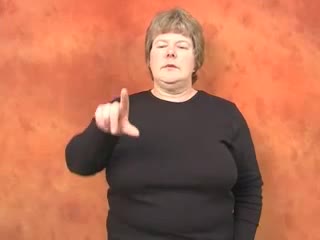
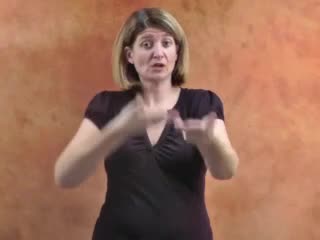
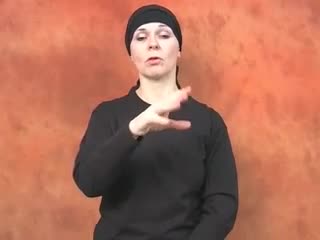
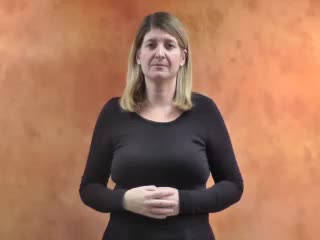
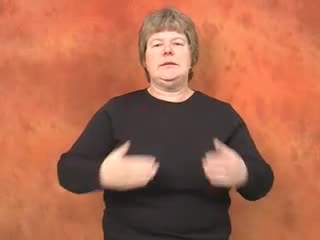
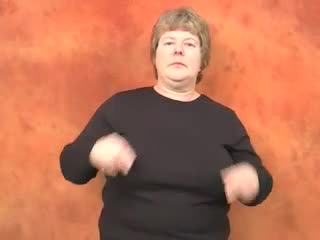
1.[en] You must go. / BSL:YOU MUST GO | 2.[en] I must study. / BSL:I MUST STUDY | 3.[en] We must try. / BSL:WE MUST TRY
1.[en] You must go. / BSL:YOU MUST GO | 2.[en] I must study. / BSL:I MUST STUDY | 3.[en] We must try. / BSL:WE MUST TRY
Create a free account to keep your watch history and review plan.
Expresses obligation, necessity, or strong recommendation
Save this sign
Build your personal BSL dictionary - free account lets you save signs, track progress, and earn XP.
Create free account Already have an account? Log in →Create a free account to save this sign, keep your watch history, and write unlimited journal notes - everything on SignDeaf is free.
How well do you know this sign?
Keep your streak going
Create a free account for unlimited reviews and to save your progress. Everything on SignDeaf is free.
Create free account Already have an account? Log in →Write memory tricks, usage examples, and cultural reminders beside each sign. Create a free account to keep unlimited notes on every sign - completely free.
Create free account Already have an account? Log inThe BSL sign for must carries a clear, unequivocal weight. At its core, it expresses strong obligation, necessity, or an urgent requirement. When you see or use this sign, think of something that isn't optional – it’s a directive, a rule, or a deep personal conviction that something simply has to happen. It’s not a gentle suggestion; it’s a firm statement of what is indispensable.
The tone of the sign is generally direct and often serious. It's the sign you’d use when laying down a rule, giving an essential instruction, or emphasising a critical point. While it can appear in less formal contexts, such as a strong recommendation among friends ("You must try this cake!"), even then it retains a sense of definitive emphasis. It’s designed to leave no room for doubt about the importance of the action.
What makes this sign particularly noticeable is the combination of its precise handshape and the decisive movement. The bent B-hand, with fingers curled towards the palm, feels inherently purposeful, almost like a fist ready to make a point. When this hand moves sharply and directly downwards at the mid-chest, it visually reinforces the idea of something being driven home, leaving a strong, undeniable impression. It’s a sign that truly embodies its meaning through its execution.
This sign feels most natural in situations where there's genuine necessity or a non-negotiable requirement. Imagine a manager giving crucial instructions to their team, a teacher explaining a safety rule, or someone expressing an urgent personal need. For instance, "You must wear a helmet on the building site" or "I must leave now, my train is departing." In these contexts, the sign conveys the absolute nature of the statement, leaving little room for misinterpretation.
While often used in more formal or instructional settings, the sign for must isn't exclusively reserved for serious declarations. It can be used informally to express a powerful personal conviction or an insistent recommendation. For example, telling a friend, "You simply must see that new film!" In such cases, it adds a layer of emphatic enthusiasm, urging the other person to take action due to the speaker's strong belief in its value. The context and accompanying facial expression often clarify the specific nuance.
Learners should carefully consider when to use "must" versus softer alternatives like "should" or "need." If the action is merely advisable, a good idea, or a matter of preference, then "must" would likely feel too strong and unnatural. This sign is reserved for those moments when the obligation is clear, the requirement is firm, or the conviction is absolute. Choosing the right sign ensures your communication is both accurate and appropriately nuanced for the situation.
One common oversight among learners is failing to capture the full dynamism of the movement. The sign for must isn't a gentle push or a casual drop; it demands a sharp, decisive downward movement. Think of it as a hammer striking a nail – precise and impactful. If your movement is too soft, hesitant, or lacks that definitive snap, the sign loses much of its inherent authority and clarity. Practising with a firm, energetic motion is crucial to convey the true weight of the obligation.
Another element often missed is the accompanying facial expression. Because "must" conveys strong obligation or urgency, a neutral or overly relaxed face can actually dilute the sign's impact. A determined, serious, or even slightly urgent facial expression works in harmony with the physical sign, reinforcing the message. For example, if you're signing "You must be quiet," your face should reflect the seriousness of that command. Pay attention to how native signers use their whole body and face to imbue signs with meaning, not just their hands.
Finally, learners sometimes overuse "must" when a less absolute sign would be more appropriate. In English, "must" can sometimes be softened, but in BSL, the sign for must typically carries a very strong sense of compulsion. If you mean "should," "ought to," or even "need to," it's often better to use those specific BSL signs if they exist or to rephrase your thought. Using "must" too frequently or for less critical situations can make your signing sound overly demanding or even abrupt. Practice discerning the true level of obligation before choosing this powerful sign.
To help solidify the sign for must in your memory, try connecting its physical form to its powerful meaning. Think about how the elements of the sign visually represent obligation and firmness.
The BSL sign for "must" conveys obligation or necessity. It uses a bent B-hand at the chest, moving sharply downwards
Practice the sharp downward movement with a firm facial expression
Ensure the handshape is a bent B and the movement is decisive
Follow these steps to sign must correctly in British Sign Language (BSL):
Tip: Watch the video above while following these steps for best results.
Facial expressions and body language are grammatically essential in British Sign Language (BSL) - not optional!
Use these tiny checks right after watching the video. Fast feedback is what turns recognition into recall.
Pick one so SignDeaf can shape the rest of your session around how this sign actually feels.
One sign gets remembered faster when you attach it to real situations. Try these quick scene prompts.
Use this sign in a short workplace sentence or meeting exchange.
Try signing this while talking about family life or something at home.
Imagine teaching this sign to a classmate or using it in a lesson.
Practise it in a healthcare conversation where clarity matters.
Use it in a travel scenario like asking for help or directions.
1.[en] You must go. / BSL:YOU MUST GO | 2.[en] I must study. / BSL:I MUST STUDY | 3.[en] We must try. / BSL:WE MUST TRY
Expressing strong obligation, requirement, or command
For polite requests or weak suggestions
Neutral
Directness in BSL often translates as politeness, not rudeness
Minor variations in hand position or movement sharpness exist
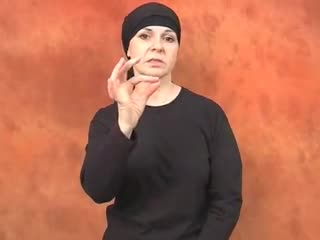
To request information, permission, or clarification
Compare with ask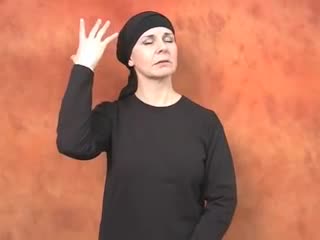
To lose memory of something; fail to recall
Compare with forget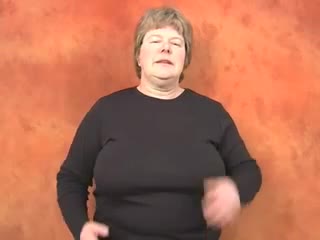
To attract or hold attention; to engage curiosity
Compare with interestOften accompanied by a serious facial expression for emphasis
Keep building your British Sign Language (BSL) vocabulary - explore signs by category or browse the full dictionary.