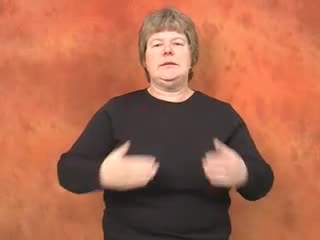
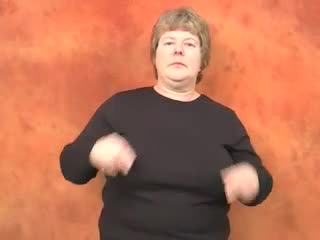
What This Sign Means in BSL
The BSL sign for finish is a fundamental and incredibly versatile verb in British Sign Language. At its heart, this sign means completion – the definite ending of an action, event, or task. Think of it as drawing a clear line under something, signalling that it’s over, done, or brought to a close. It’s a very direct sign, leaving little room for ambiguity about whether something is still ongoing.
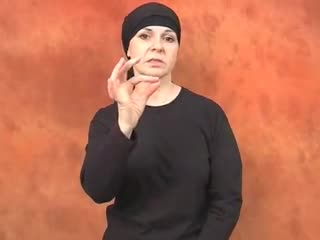
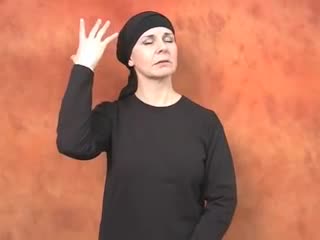
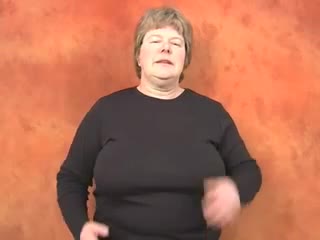
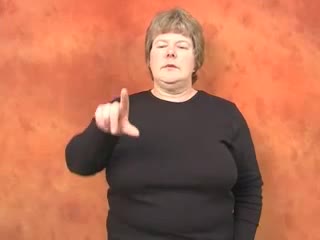
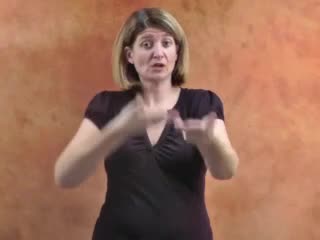
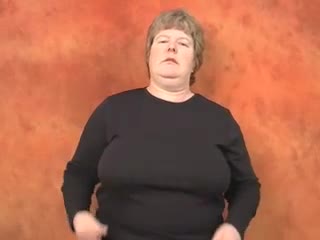
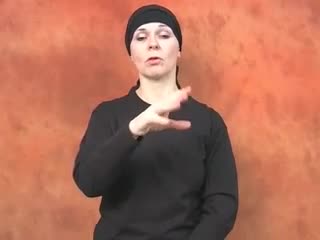
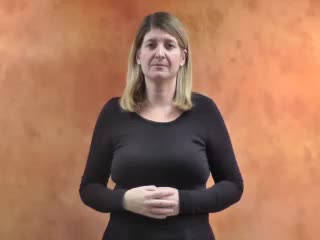
You’ll notice its definitive tone comes from the strong, sweeping movement. Both hands begin open and flat, palms facing each other, then arc downwards and inwards, often meeting or even crossing slightly at the end. This motion visually conveys the idea of gathering everything together and bringing it to a conclusive point. It's not about stopping something mid-way, but truly completing it.
This sign is worth noticing because it’s one of the core verbs you’ll use constantly. It’s active and expressive, often accompanied by a subtle shift in facial expression that matches the context – perhaps relief if a difficult task is finished, or simple neutrality if it’s just the end of a conversation. Mastering its movement and appropriate use will significantly boost your fluency.
When This Sign Feels Natural
This sign feels most natural when you're referring to the conclusion of a specific action, a project, a meal, a conversation, or even a period of time. For example, if you’ve just completed your homework, eaten the last bite of food, or concluded a meeting, this is the sign you'd typically reach for. It indicates a clear state of being done with something that had a defined beginning and end.
You can use it in various registers, from casual chats with friends ("I'm finished with work now") to more formal settings ("The presentation is finished"). Its universality makes it a go-to sign. However, it's important to differentiate it from signs like STOP, which implies halting an ongoing action, or OVER, which might refer to something being entirely past or concluded in a more abstract sense, like "the war is over."
Consider the audience and context carefully. While "finish" is broadly applicable, if you want to convey that something is thoroughly completed or ready, you might combine it with other signs or use a different sign entirely. For instance, if you've finished cooking and the food is now ready to eat, you might sign "cook FINISH, FOOD READY". The core BSL sign for finish always points to that moment of culmination.
What Learners Usually Miss
A common subtlety learners miss with the BSL sign for finish is the exact nature of the hand movement and its endpoint. It’s not just a casual wave downwards; it’s a deliberate sweep. The hands should start relatively open and distinct, then arc downwards and inwards with a fluid motion, often making contact or crossing over each other at the mid-chest to stomach level. Some learners stop short, or their hands don't quite meet, which can make the sign look incomplete or less definitive.
Another point often overlooked is the rhythm and emphasis. The sign should be a single, smooth, conclusive movement, not broken or hesitant. It often carries a certain finality. Think of it as a decisive gesture. If you're signing about finishing something long or difficult, you might naturally hold the sign for a fraction longer or add a slight sigh of relief to your facial expression, but the movement itself remains clean and decisive.
Learners also sometimes overuse "finish" in contexts where a more specific sign might be better. For example, if you mean "stop doing that," the sign STOP (a chop with one hand into the palm of the other) is more appropriate. "Finish" specifically implies completion. Pay attention to the subtle difference in intent. Is it ceasing an action, or concluding it entirely? This distinction is crucial for clear communication in BSL.
A Simple Way to Remember It
Visualise the sign for finish as a way of sweeping everything together and drawing it to a tidy close. Imagine you're gathering all the loose ends of a project or task into a central point, neatly concluding it. The downward and inward motion really emphasises that sense of completion, as if you're tidying things away or bringing them to rest.
- Sweeping Away: Imagine your hands are sweeping away the last remnants of a task, leaving a clean slate.
- Bringing Together: The hands coming together visually represent bringing all aspects of something to a unified conclusion.
- Final Descent: The downward motion can be linked to a curtain falling at the end of a show, signalling the finale.
Short Practice Situations
- I need to finish my report before lunch today.
- Have you finished eating your breakfast yet?
- We can’t leave until this discussion is finished.
- I finally finished painting the fence, it took ages!
- Let me know when you’ve finished reading that book.
Signs to Learn Next
- STOP: This sign is often confused with finish. While "finish" means completion, "stop" means to halt an ongoing action. For example, "STOP running!" versus "I've FINISHED my run."
- COMPLETE/DONE: Similar in meaning but often carries the nuance of being thorough or ready. While you might "finish" a task, "complete" might imply checking all boxes. "Done" can often mean "ready" or "no more."
- START/BEGIN: The natural opposite of finish. Learning these together helps you frame entire processes in BSL, from inception to conclusion.
- OVER: This sign often refers to something being entirely in the past or beyond a certain point, such as "the party is over." While related, it carries a slightly different temporal or abstract nuance than the active completion of "finish."
- ALREADY: Often used in conjunction with finish to convey that something has already been completed, adding a temporal layer to the completion.