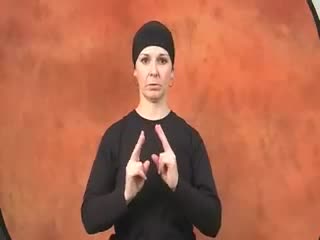
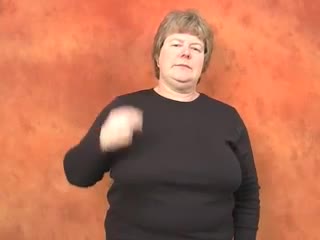
What This Sign Means in BSL
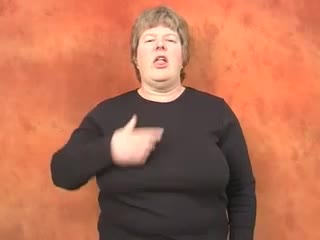
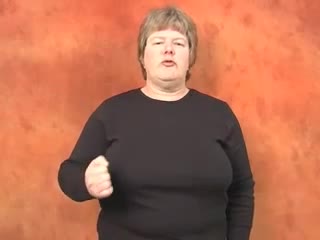
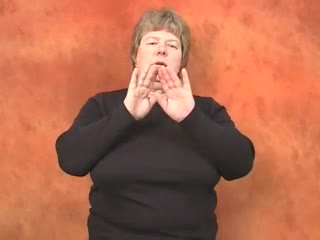
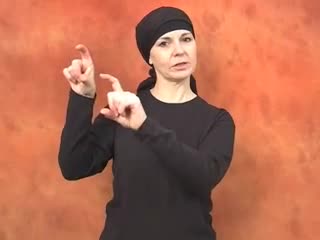
The BSL sign for bus is wonderfully intuitive, immediately bringing to mind the action of steering a large vehicle. It’s a core vocabulary sign within British Sign Language, essential for discussing everyday travel and transport. When you see this sign, you’re not just seeing the word "bus" – you’re seeing the very act of driving one, a visual metaphor that makes it highly accessible and memorable for learners.
This sign focuses on the vehicle itself, the large public transport carrying many people. Its meaning is generally straightforward and unambiguous, rarely requiring much contextual clarification beyond the surrounding sentence structure. It's a foundational noun, a building block for conversations about commuting, journeys, and urban life within the UK BSL community.
What makes this sign particularly effective is its strong iconic connection to the real world. It bypasses abstract representation, directly mimicking the steering wheel of a large vehicle. This visual link helps cement its meaning, making it one of those signs that often "clicks" quickly for new learners, paving the way for more complex transport-related vocabulary.
When This Sign Feels Natural
You’ll find yourself using the BSL sign for bus very naturally in a wide range of everyday scenarios. It’s perfect when you’re making travel plans with friends, perhaps discussing how to get to a specific location: "How about we take the bus to the city centre?" or "Does the bus go past your house?" It fits seamlessly into conversations about daily routines, like your commute to work or school.
This sign holds a neutral register, meaning it’s appropriate in almost any social context, from casual chats with family to more formal discussions about public transport schedules. It’s a workhorse sign that doesn’t carry specific emotional weight on its own, though your facial expression and body language will naturally add nuance when you express, say, frustration about a delayed bus or excitement for a bus trip.
While there isn't really a "different" sign for 'bus' in BSL, you might combine it with other signs to convey specific ideas. For instance, `GO-BY` or `TRAVEL` could precede it to specify *how* you're travelling, or `STOP` could follow to talk about a "bus stop". It’s a sign that stands strongly on its own but also integrates beautifully into larger descriptive sentences, allowing you to articulate precise transport details.
What Learners Usually Miss
New learners often encounter a couple of subtle pitfalls with the BSL sign for bus, primarily around the precision of the handshape and the nuances of the movement. The most common mistake is allowing the "C" handshape to become too tight or rigid, almost like gripping a small car steering wheel. Remember, for `bus`, we're aiming for a looser, more open "C", as if you're gently guiding a larger, heavier wheel. This slight adjustment helps convey the scale of the vehicle.
Another point of confusion can arise with the movement itself. While it's a circular or semicircular motion, it's crucial that this movement has a clear *forward* momentum, not just spinning in place. Imagine the bus actually moving down the road as you steer. Some learners might make the circles too small and jerky, or too large and encompassing, potentially blurring the distinction with the more general sign for `DRIVE`. Keep the circles small, controlled, and distinctly propelling *forward* from the chest area.
Also, pay attention to the location. The sign is performed in front of the chest, mirroring where a steering wheel would be. Occasionally, learners might drop their hands too low or bring them too high, losing that immediate iconic link. Maintaining the hands at chest height reinforces the image of operating a large vehicle. Practising in front of a mirror can be incredibly helpful to check these subtle points and ensure your sign for bus is clear, accurate, and easily understood by other BSL users.
A Simple Way to Remember It
The BSL sign for bus is one of those fantastic signs that practically teaches itself due to its strong visual connection to the real world. To make it stick firmly in your memory, simply imagine yourself at the helm of a big double-decker!
- Steering Wheel Image: Picture yourself holding onto a large steering wheel. The sign directly mimics this action, making it incredibly intuitive.
- Loose Grip: Remember the loose "C" handshape as if you’re guiding a substantial wheel with a relaxed but firm grip, unlike the tighter hold you might have on a smaller car's steering wheel.
- Forward Motion: Visualise the bus actually moving forward along its route. The small, forward-propelling circular movement of your hands directly represents this journey.
Short Practice Situations
Here are a few quick scenarios to help you integrate the BSL sign for bus into your signing practice:
- "My bus is usually very busy in the mornings, so I often leave a bit earlier."
- "Could you tell me which bus I need to catch to get to the nearest library?"
- "I prefer to travel by bus when I’m going into the city centre; it’s much less stressful than driving."
- "The last bus leaves at midnight, so we’ll need to make sure we don’t miss it."
- "Do you think taking the bus would be a good option for our trip to the coast next month?"
Signs to Learn Next
Once you’re comfortable with the BSL sign for bus, expanding your vocabulary with related transport signs will really boost your communication:
- `CAR`: This is another common vehicle sign, often using a similar steering motion but with tighter hands and sometimes a slightly different location or movement to distinguish it from the larger `bus`. It's a great opportunity to compare and contrast.
- `TRAIN`: While `bus` uses an iconic steering motion, `train` often involves a different kind of visual representation, perhaps mimicking the wheels or the movement along tracks, helping you explore various types of iconic signs.
- `TAXI`: This sign is frequently fingerspelled T-A-X-I, or it might involve a specific sign that references hailing a cab or the meter. Learning this helps you understand when fingerspelling is the primary method for a vehicle.
- `TRAVEL`: This general sign for movement or journey is excellent to pair with `bus` to form phrases like "I travel by bus" or "How do you travel?"
- `STOP`: Essential for discussing bus stops or when a bus needs to halt. Combining `bus` with `stop` allows you to talk about waiting for public transport.