Speed
0
Practice reps times watched

Create a free account to keep your watch history and review plan.

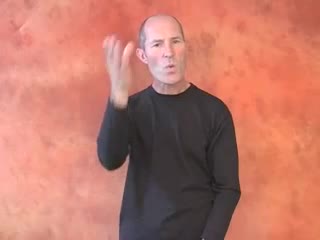
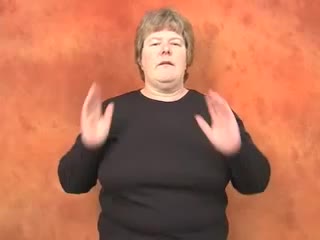
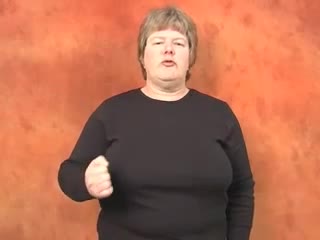
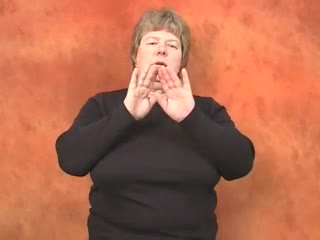
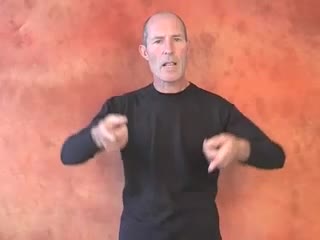
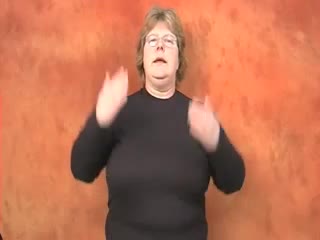
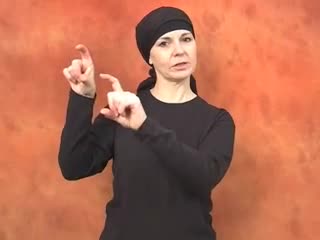
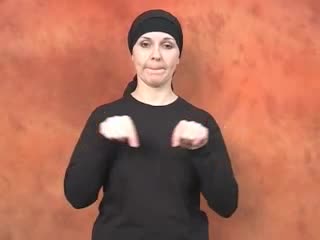
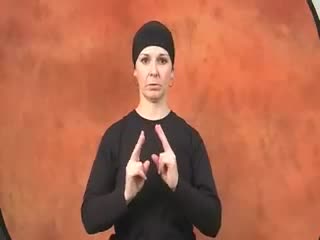
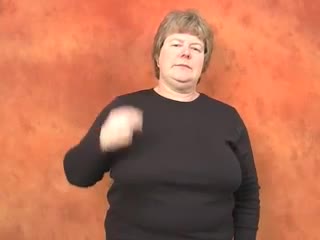
Best practice Use mirror mode, then watch the frame breakdown below to catch the start, movement, and finish cleanly.
Video via SpreadTheSign  - Free educational resource BSL
Updated April 23, 2026
British Sign Language (BSL) 🟢 Beginner 📊 A1 ⚡ Very Common Noun

Thursday

Fourth day of the week, following Wednesday and preceding Friday

Source-linked video Step-by-step guide Context and safety notes
Synonyms
Fourth day
Difficulty
Not rated yet

Create a free account to save this sign, keep your watch history, and unlock a one-note journal preview.

How to sign it
Handshape
Dominant hand forms a 'T' shape, thumb tucked between index and middle fingers
Location
Near the non-dominant shoulder or upper chest
Movement
Downward arc or tap
Palm Orientation
Palm generally faces non-dominant side
Facial Expression
Neutral facial expression
🔁 Spaced Review Try it free

How well do you know this sign?

THURSDAY
Your Progress Live
🌱
Level 1 · BSL Beginner +0 XP today
This sign Not learned yet
0 watches
Mastery 0%
Confidence
How well do you know this sign?
0 🔥 Streak
0 Signs seen
0 Learned
0 Watches
📖 Vocabulary health 🔒 Log in to see score
0 Mastered
0 Confident
0 Practicing
0 Just seen

Create a free account to keep your vocabulary score between sessions

7-day activity 0 of 7 active

Register free to sync activity across devices

Watch signs to see your history here

Tracking locally for now. Create a free account to save your progress and sync across devices.
Free gets you started. Paid adds the repeat-learning layer: review queues, deeper notes, compare mode, and better comeback tools.
My Sign Journal
Personal notes, saved to your account forever
Locked

Write memory tricks, usage examples, and cultural reminders beside each sign. Create a free account to unlock your first saved note preview on this page.

Create free account Already have an account? Log in

What This Sign Means in BSL

The BSL sign for Thursday is wonderfully direct and efficient, making it a staple in everyday communication. It clearly represents the fourth day of the working week, serving as a functional cornerstone for scheduling, planning, and reminiscing. Once you’ve mastered this sign, you’ll find it slots effortlessly into a wide range of conversations, from casual chats about weekend plans to more formal discussions about project deadlines.

What makes this sign particularly easy to grasp is its direct link to the English word. Many days of the week in BSL cleverly incorporate the initial letter of their English counterpart, and Thursday is a prime example. You’re forming a clear 'T' handshape, which acts as an immediate visual cue for the day, making it highly recognisable and straightforward for learners. This iconic connection is a great foundation for understanding other day signs too.

It’s a clear, unambiguous sign that doesn't carry a lot of hidden layers of meaning. Its primary purpose is to identify the day. This clarity is a real asset in BSL, where precise communication is key. When you use this sign, you’re not just conveying "Thursday"; you're also demonstrating a confident command of fundamental BSL vocabulary, which is essential for building fluency.

When This Sign Feels Natural

You’ll find yourself using the BSL sign for Thursday in countless real-life scenarios. It’s perfect for making plans with friends, setting up a weekly catch-up, or confirming appointments. Imagine saying, "Shall we meet next Thursday for lunch?" or "The report is due on Thursday morning." It's incredibly versatile and fits naturally into both casual and more formal settings without needing modification.

The sign maintains a neutral register, meaning it's appropriate for almost any audience – whether you're chatting with a close Deaf friend, interacting with a colleague, or communicating with a service provider. There's no need to adjust its size, speed, or facial expression unless the context of what's happening on Thursday demands it (e.g., "I'm dreading Thursday!" might come with a worried expression, but the sign itself remains the same).

While the sign for Thursday is always your go-to for the day itself, remember how it integrates into a wider conversation. You might sign "SEE YOU NEXT THURSDAY" or "LAST THURSDAY, I WENT SHOPPING." It's rarely a standalone sign, but rather a vital component of larger sentences, anchoring your timelines and events. Knowing when and how to weave it into a sentence is just as important as knowing the sign itself.

What Learners Usually Miss

One of the most common subtleties learners miss with the BSL sign for Thursday is the precise formation of the 'T' handshape. It’s not just any closed fist; your thumb should be tucked specifically between your index and middle fingers. Often, learners might just tuck their thumb under their index finger or make a looser fist, which can obscure the intended 'T' and potentially be confused with other signs that use similar handshapes. Focus on that precise thumb placement – it makes all the difference.

Another area where learners can waver is in the execution of the movement and its exact location. The movement is a clear, single downward arc or tap, near your non-dominant shoulder or upper chest. It shouldn’t be too large or sweeping; it’s a contained, confident action. We sometimes see learners making multiple taps, a hesitant wiggle, or signing it too low near the waist, or too far out from the body. Remember, precision in location and movement helps keep the sign clear and efficient within natural signing space.

The rhythm and confidence of the sign are also crucial. Thursday is a common day, and its sign should be delivered with a singular, decisive motion. Avoid any hesitation or slow, drawn-out movements. Think of it as ticking off a day on a mental calendar – a quick, definite mark. Practising it with this confident, crisp rhythm will ensure your signing feels natural and fluent to native BSL users.

A Simple Way to Remember It

To help this sign stick in your mind, let's tie its form to a few memorable hooks. These associations can make recall much quicker and embed the sign more deeply than rote memorisation alone.

  • The 'T' Connection: This is the most straightforward. The handshape you form is literally the letter 'T', the first letter of "Thursday". Visualise that direct link whenever you practice the sign.
  • Ticking Off the Week: The downward arc or tap can feel like you're 'ticking off' another day from your weekly schedule, moving closer to the weekend. It’s a definite, purposeful action, just like marking a day on a calendar.
  • Close to the Heart: Imagine the location near your non-dominant shoulder or upper chest as signifying a day that’s "close to your heart" – perhaps because it’s almost Friday, or a day you often have important plans.

Short Practice Situations

  • "Are you free to chat next Thursday afternoon about the upcoming project?"
  • "I always look forward to Thursday evenings because that’s when my favourite show airs."
  • "My dentist appointment has been rescheduled for this coming Thursday at ten o’clock."
  • "What did you get up to last Thursday? I heard you had a busy day."
  • "Remember, the deadline for submitting the application forms is strictly this Thursday."

Signs to Learn Next

  • Days of the Week (e.g., Tuesday, Friday): Learning other days like Tuesday (an ‘T’ handshape with a different movement/location) and Friday (an ‘F’ handshape) will strengthen your understanding of how BSL constructs days, often using initial letters.
  • WEEK: Once you know "Thursday," it’s natural to learn the sign for "WEEK" to place days into a broader temporal context and discuss periods of time.
  • TODAY / TOMORROW / YESTERDAY: These essential temporal signs are frequently used in conjunction with specific days, allowing you to indicate whether you're referring to past, present, or future Thursdays.
  • APPOINTMENT / MEET: These signs are often the very reason we need to specify a day like Thursday. Learning them together will help you construct practical sentences for planning and scheduling.
  • CALENDAR / PLAN: Expanding your vocabulary to include "CALENDAR" or "PLAN" allows you to talk about how you organise your Thursdays and the rest of your week, creating a more comprehensive communication toolkit.

🤖 AI Learning Guide for "Thursday"

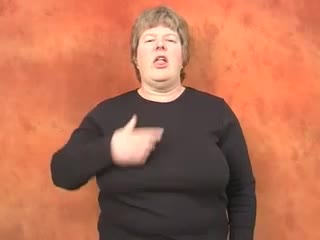
The BSL sign for Thursday uses a 'T' handshape, representing the letter, and performs a downward arcing movement

🎯 Practice Challenge

Practice forming the 'T' handshape accurately. Focus on the downward arcing motion

⚠️ Most Common Mistake

Ensure your thumb is clearly tucked between index and middle fingers for 'T'. Verify the arc is distinct

👐 How to Sign "Thursday" in British Sign Language (BSL) (Quick Answer)

Follow these steps to sign Thursday correctly in British Sign Language (BSL):

  1. 1 Form a 'T' handshape with your dominant hand
  2. 2 Position hand near your non-dominant shoulder or upper chest, palm generally inward
  3. 3 Move hand downward in a short arc
  4. 4 Repeat the arc once or twice for emphasis

Tip: Watch the video above while following these steps for best results.

🤚 Sign Profile

🤚
Handshape
Dominant hand forms a 'T' shape, thumb tucked between index and middle fingers
🔣
Handshape Code
T
Dominant Hand
Either
🙌
Hand Count
One-handed
📍
Location
Near the non-dominant shoulder or upper chest
↗️
Movement
Downward arc or tap
🔄
Movement Type
Arc
👆
Contact
Air
👋
Palm Orientation
Palm generally faces non-dominant side
⚖️
Symmetry
Asymmetric

😊 Non-Manual Features

Facial expressions and body language are grammatically essential in British Sign Language (BSL) - not optional!

😊
Facial Expression
Neutral facial expression
🙆
Eyebrows
Neutral
👁️
Eye Gaze
Forward
🙂
Head Movement
None
👄
Mouth Morpheme
'Thur' or 'Thursday'
🕴️
Body Shift
None

📖 Grammar & Linguistics

Part of Speech Noun
Inflection No
Classifier Usage N/A
Role Shift No

🎓 Learning Context

📌 When to Use: Discussing schedules, appointments, or events on that specific day
⚠️ Common Mistake: Confusing the 'T' handshape; incorrect movement or location
🚫 When NOT to Use: Not applicable, always appropriate
Context Tags
Calendar Time Weekdays Schedule

🧪 Practice Lab

Use these tiny checks right after watching the video. Fast feedback is what turns recognition into recall.

Meaning check

Which word matches the sign you just watched?

Usage check

Where would this sign fit most naturally?

Confidence check

How do you feel about Thursday right now?

Pick one so SignDeaf can shape the rest of your session around how this sign actually feels.

🧭 Scenario Drill

One sign gets remembered faster when you attach it to real situations. Try these quick scene prompts.

Work

Stretch practice

Use this sign in a short workplace sentence or meeting exchange.

Family

Stretch practice

Try signing this while talking about family life or something at home.

School

Stretch practice

Imagine teaching this sign to a classmate or using it in a lesson.

Doctor

Possible fit

Practise it in a healthcare conversation where clarity matters.

Travel

Stretch practice

Use it in a travel scenario like asking for help or directions.

💬 Example Usage

1.[en] See you Thursday. / BSL:[Sign THURSDAY] | 2.[en] Thursday is busy. / BSL:[Sign THURSDAY, then BUSY] | 3.[en] Every Thursday. / BSL:[Sign EVERY, then THURSDAY]

1.[en] See you Thursday. / BSL:[Sign THURSDAY] | 2.[en] Thursday is busy. / BSL:[Sign THURSDAY, then BUSY] | 3.[en] Every Thursday. / BSL:[Sign EVERY, then THURSDAY]

When to use it

Discussing schedules, appointments, or events on that specific day

When not to use it

Not applicable, always appropriate

Register

Neutral

🌍 Cultural Context

Days of the week are fundamental for daily communication in BSL

🗺️ Regional Variations

Minor variations in movement or exact location may occur

⚖️ Similar Signs - What's the Difference?

This sign Thursday
VS
Similar signs Look closely
**Tuesday**: Uses a 'T' handshape but is typically two-handed, tapping the dominant index finger onto the non-dominant palm. Thursday is one-handed, near the shoulder. **Monday**: Uses an 'M' handshape with a downward movement. Thursday uses a 'T' handshape. **Time**: Uses a dominant 'T' handshape (index up, thumb across palm) tapping the non-dominant wrist. Thursday uses a distinct 'T' handshape and location
basketball sign thumbnail

basketball

Beginner

Sign representing the sport of basketball, mimicking the action of dribbling a ball

Compare with basketball

📝 Usage Notes

Often accompanied by mouthing 'Thursday' or 'Thur'

Frequently Asked Questions

Common questions about the British Sign Language (BSL) sign for "Thursday".

🏷️ Tags

Handshape

Keywords

💡
Did you know?
Practising in front of a mirror helps you check your handshape and movement.

📚 Explore More British Sign Language (BSL) Signs

Keep building your British Sign Language (BSL) vocabulary - explore signs by category or browse the full dictionary.