What This Sign Means in BSL
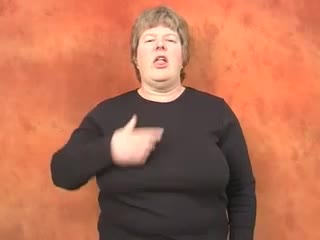
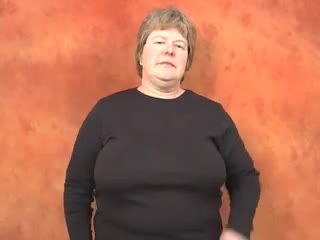
The BSL sign for clinker refers specifically to the hard, stony, often dark waste material left over after burning coal or coke in a furnace or fire. It’s not just any old piece of rubbish; it’s distinctly the vitrified residue of intense heat. When you see this sign, you’re looking at something dense, tough, and usually quite unyielding, often with sharp edges.
This sign carries a practical, almost industrial tone. It’s precise for a specific type of byproduct, so you wouldn't typically use it for general dirt or debris. The action itself, a firm tap, subtly communicates the solidity and compact nature of the material. It’s a sign that grounds you in the tangible, physical reality of this particular kind of waste.
Understanding "clinker" isn't just about the waste itself, but often about its context: the processes that create it, like intense heat and combustion. So, while it's a noun for a specific object, it often implicitly points towards industries, old heating systems, or even geological formations where such material might be found.
When This Sign Feels Natural
You’ll find the BSL sign for clinker feels most natural in conversations revolving around specific industrial processes, historical contexts, or traditional heating methods. Imagine discussing old coal-fired power stations, blacksmithing workshops, or even domestic open fires from a bygone era. If someone is talking about cleaning out an old boiler or clearing remnants from a very hot furnace, this sign would fit perfectly.
It’s a sign for a specific audience too – those who understand what a clinker is and why it's distinct from ash or soot. If you’re discussing general refuse or common household waste, you’d opt for a broader sign like RUBBISH or WASTE. Using "clinker" when a more general term is appropriate might confuse your audience, as it implies a much more specific material than what you intend.
Think of it as a specialist vocabulary sign. While everyone might understand what "rubbish" means, "clinker" is reserved for contexts where the exact nature of the material matters. If you’re describing the specific, hard, often fused residue, then this sign is your go-to. It signals precision in your description, showing you know the material well.
What Learners Usually Miss
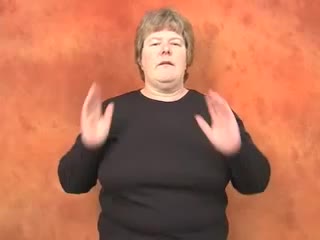
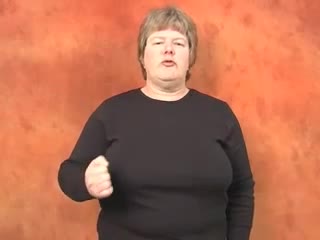
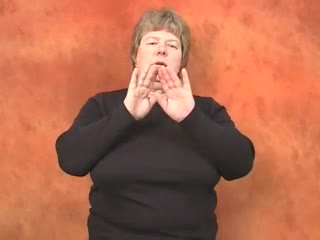
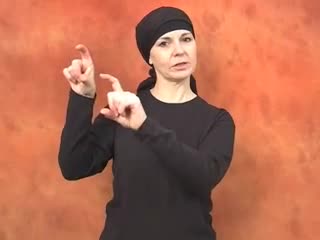
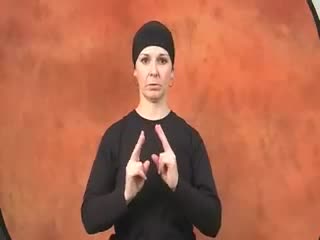
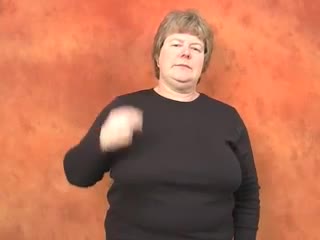
Many learners, when first attempting the BSL sign for clinker, might miss the crucial element of firmness in the tap. The dominant S-hand (fist) isn't just touching the non-dominant open palm; it's making a deliberate, solid contact. A gentle brush or a weak tap won't convey the hard, dense quality of a clinker. It needs to feel grounded, much like how a clinker itself is a solid, unyielding piece.
Another common oversight is the exact handshape and tension. Your dominant hand should form a firm S-hand, like you're holding something very compact and heavy. The non-dominant hand must be a truly flat B-hand, a stable surface. If the S-hand is too relaxed or the B-hand is slightly cupped, the integrity of the sign can be lost. It won't look like a solid object hitting a flat surface; it might appear softer or less defined.
Lastly, pay attention to the location. The tap should occur in neutral space, but quite close to your non-dominant palm, making the connection clear. Don't let your dominant hand drift too far away before or after the tap. Maintain that tight, contained movement. While facial expression for a noun like this is often neutral or informative, ensuring your hands convey the precision and solidity of the material is paramount for accurate communication.
A Simple Way to Remember It
To easily recall the BSL sign for clinker, visualise the physical act of handling such a material. The dominant S-hand is like your fist, tightly gripping a small, hard, irregularly shaped lump – exactly what a clinker feels like. The non-dominant flat B-hand serves as a stable surface, perhaps a shovel or a tray, onto which this hard material might be dropped or tapped. The firm, distinct tap then evokes the sound or sensation of a solid clinker making contact, highlighting its density and hardness.
- The S-hand represents the compact, stony nature of a clinker, like a solid, clenched fist.
- The flat B-hand acts as a surface or a container, underscoring the clinker's tangible, physical presence.
- The firm tapping motion perfectly mimics the feel of something hard and dense being struck or dropped, conveying its unyielding quality.
Short Practice Situations
- "My grandad always had to remove the clinkers from the bottom of his coal fire."
- "They discovered a large amount of industrial clinker material during the excavation of the old factory site."
- "Be careful when handling the waste from that furnace; the clinkers are often hot and sharp."
- "The antique boiler was full of hard, fused clinkers that needed to be chipped out."
Signs to Learn Next
- RUBBISH: Understanding general waste signs helps you differentiate "clinker" as a specific type of refuse from everyday rubbish.
- COAL: Clinkers are often a direct byproduct of burning coal, making this a natural contextual pairing in many discussions.
- HARD: This adjective sign is excellent for describing the tactile quality of a clinker, reinforcing its key characteristic of solidity.
- ASH: While distinct from clinker, ash is another common byproduct of combustion, and knowing both helps describe the full range of fire residue.
- FURNACE: As clinkers are typically formed in high-heat environments like furnaces, learning this sign provides crucial context for their origin.