What This Sign Means in BSL
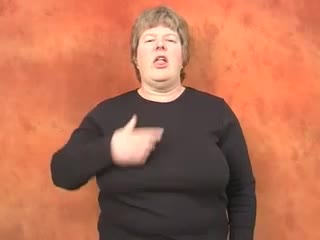
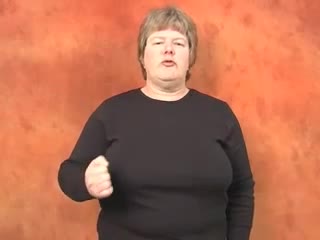
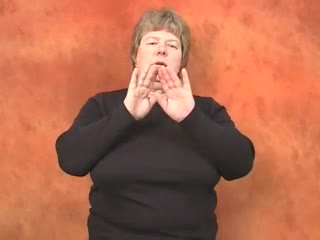
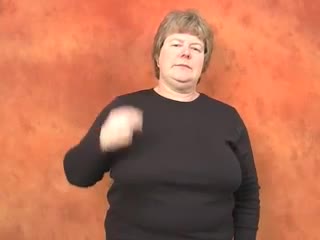
The BSL sign for joist is beautifully descriptive, immediately bringing to mind the long, flat structural elements it represents. When you form the sign, your hands become the joists themselves – flat, extended, and moving with a sense of purpose. It’s an iconic sign, meaning its form directly reflects its meaning, which is often very helpful for memory and understanding in BSL.
This sign precisely depicts the nature of joists: those horizontal timbers or steel beams that support a floor or ceiling. The way both hands move forward in parallel suggests a series of these elements, or the continuous extension of a single one across a span. The slight separation as they move hints at the individual yet coordinated nature of multiple joists working together to bear weight.
You’ll find this sign used in contexts where structural details are important. It carries a clear, technical weight, making it suitable for discussions about construction, renovation, architecture, or even detailed DIY projects. It’s not a vague gesture; it’s a specific reference to a fundamental building component, reflecting the precision often needed when communicating about such subjects.
When This Sign Feels Natural
This sign feels most natural when you're engaging in conversations that require specific architectural or construction terminology. Imagine you’re discussing plans with an architect, explaining a structural issue to a builder, or detailing a home improvement project to a friend who also signs. In these situations, using the precise sign for "joist" adds clarity and avoids ambiguity, ensuring everyone understands exactly which part of the structure you're referring to.
It’s less common in casual, everyday chat unless the topic organically shifts towards house structure or building work. For instance, you wouldn’t typically use it when simply talking about a "floor" or "ceiling" in a general sense. However, if you’re describing a creaking floor and want to specify that you suspect a problem with the underlying support, then this sign becomes highly relevant and natural.
Consider your audience and the level of detail required. If a general term like "support" or "beam" would suffice for a less technical discussion, a different sign might be chosen. But when precision matters, and you need to distinguish between various structural components, the BSL sign for joist is your go-to. It signals to your interlocutor that you’re delving into the specifics of building anatomy.
What Learners Usually Miss
One common oversight for learners is the precise handshape. Remember, both hands form a flat B-handshape – fingers together and fully extended, not curved or spread. This flatness is crucial; it represents the broad, rigid surface of a joist. If your fingers are splayed or slightly bent, it changes the visual message, potentially making it look like you're signing "plank" or even "shelf" in a less precise way, which could lead to confusion.
Another subtle but important detail is the movement: both hands move forward in parallel, but they also slightly separate as they extend. Learners sometimes either keep them rigidly parallel without any separation, which might imply a single, very wide support, or they separate them too much, losing the sense of coordinated parallel elements. The slight widening communicates the idea of individual joists laid next to each other, maintaining their integrity while working as a system. Practice getting that smooth, controlled, subtle separation.
Finally, paying attention to the location and direction is key. The sign is made in neutral space in front of your torso, and the movement is distinctly forward. This forward motion naturally conveys the idea of something extending across a space, like a joist spanning between walls. Avoid moving your hands up, down, or excessively to the sides, as this can alter the meaning or make the sign less clear and less universally understood within the BSL community.
A Simple Way to Remember It
Think of your hands as embodying the joists themselves, extending out to support something unseen above them. The visual metaphor is quite strong and makes the sign intuitive to recall once you connect the physical action to the structural element.
- The Flatness of the Wood: Imagine your flat B-hands are the broad, flat sides of a timber joist, ready to bear weight.
- Laying Them Across: The forward, parallel movement is like a carpenter laying down multiple joists across a span, creating the framework for a floor or ceiling.
- Individual Yet Together: The subtle separation of your hands as they move forward reminds you that joists are distinct pieces, but they work together in parallel to provide comprehensive support.
Short Practice Situations
- We need to inspect the joists in the old attic before we can begin any renovation work.
- The building inspector confirmed that the main structural joists were still in excellent condition.
- He explained how the new floor would be supported by a series of strong steel joists, not just wood.
- Are these existing joists strong enough to hold the weight of a new hot tub on the deck?
- They had to reinforce several weak joists in the ceiling to prevent it from sagging over time.
Signs to Learn Next
- BUILDING / CONSTRUCT: This sign naturally follows, as joists are fundamental components in the act of building and constructing structures. Learning it next helps you discuss the broader context.
- BEAM: While similar, a 'beam' often refers to a larger, singular load-bearing element. Understanding the distinction helps you describe different structural supports with accuracy.
- SUPPORT: Joists exist to provide support. Learning the general sign for "support" allows you to talk about the function of joists and other structural elements more broadly.
- FLOOR: As joists are typically found beneath floors, providing their structural integrity, learning the sign for "floor" creates a natural pairing for discussions about the layers of a building.
- ROOF: Like floors, roofs also rely on a system of structural supports, which can sometimes be referred to as rafters or joists depending on the specific design. This expands your architectural vocabulary.