Speed
0
Practice reps times watched

Create a free account to keep your watch history and review plan.

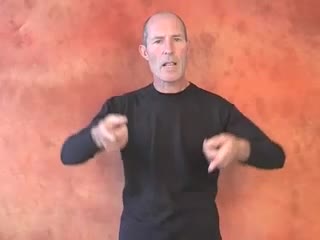
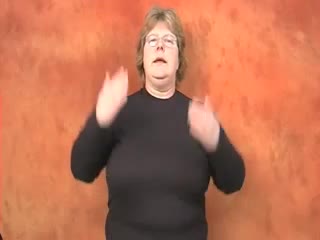
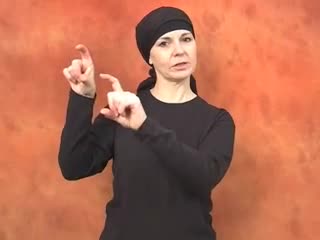
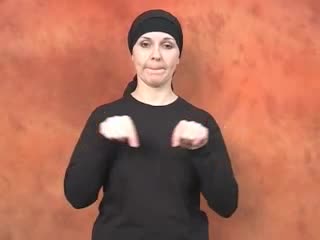
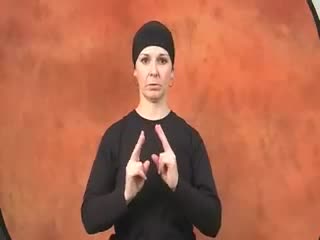
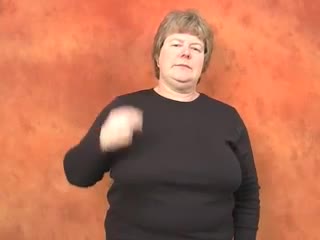
Best practice Use mirror mode, then watch the frame breakdown below to catch the start, movement, and finish cleanly.
Video via SpreadTheSign  - Free educational resource BSL
Updated April 22, 2026
British Sign Language (BSL) 🟢 Beginner 📊 B2 ⚡ Uncommon Noun

reinforcement wire

Wire mesh or bars used to strengthen concrete or other structures

Source-linked video Step-by-step guide Context and safety notes
Synonyms
Rebar reinforcing mesh steel reinforcement
Difficulty
Not rated yet

Create a free account to save this sign, keep your watch history, and unlock a one-note journal preview.

How to sign it
Handshape
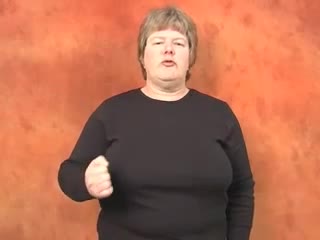
Both hands form G-hand, index fingers extended, other fingers curled
Location
Neutral space in front of the torso
Movement
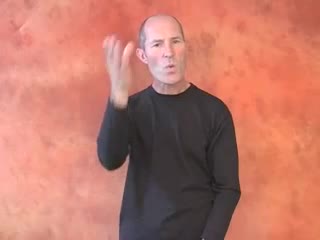
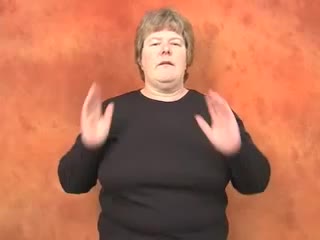
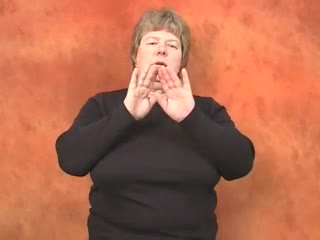
Two G-hands move to cross over each other, then separate slightly, repeating the crossing motion
Palm Orientation
Palms face each other, rotating slightly during crossing
Facial Expression
Neutral facial expression
🔁 Spaced Review Try it free

How well do you know this sign?

REINFORCEMENT WIRE
Your Progress Live
🌱
Level 1 · BSL Beginner +0 XP today
This sign Not learned yet
0 watches
Mastery 0%
Confidence
How well do you know this sign?
0 🔥 Streak
0 Signs seen
0 Learned
0 Watches
📖 Vocabulary health 🔒 Log in to see score
0 Mastered
0 Confident
0 Practicing
0 Just seen

Create a free account to keep your vocabulary score between sessions

7-day activity 0 of 7 active

Register free to sync activity across devices

Watch signs to see your history here

Tracking locally for now. Create a free account to save your progress and sync across devices.
Free gets you started. Paid adds the repeat-learning layer: review queues, deeper notes, compare mode, and better comeback tools.
My Sign Journal
Personal notes, saved to your account forever
Locked

Write memory tricks, usage examples, and cultural reminders beside each sign. Create a free account to unlock your first saved note preview on this page.

Create free account Already have an account? Log in

What This Sign Means in BSL

The BSL sign for reinforcement wire is beautifully illustrative, directly mirroring the function and appearance of its namesake. When you see this sign, you're not just seeing a word; you're seeing the very act of strengthening and interlocking. It’s a clear, purposeful sign that leaves little room for ambiguity, which is common in technical or construction-related vocabulary in BSL. The handshapes, with those strong, extended index fingers, immediately evoke the image of linear elements – the 'wires' themselves – ready to be woven into a structure.

This sign carries a precise, almost engineering-like quality. It’s about more than just a piece of metal; it’s about the purpose of that metal: to add resilience and prevent failure. The repeated crossing motion isn't decorative; it signifies the interwoven nature, the grid or mesh that concrete and other materials rely on for their integrity. This isn't a casual sign; it commands attention and communicates a specific structural component, making it invaluable in contexts where clarity about materials is paramount.

It’s important to appreciate how BSL often uses visual metaphor to convey complex ideas. For "reinforcement wire," the sign isn't an arbitrary movement; it’s a dynamic representation of how these wires are laid and intertwined to create internal strength. It communicates not just the object, but also its role in a larger system, which is a powerful aspect of visual language learning.

When This Sign Feels Natural

You’ll find yourself reaching for the BSL sign for reinforcement wire most naturally in conversations about construction, engineering, architecture, or even specific DIY projects. Imagine discussing the foundations of a new building, the structural elements of a bridge, or planning a concrete slab for a garden shed; this is precisely when this sign fits perfectly. It's a sign that belongs in detailed, practical discussions where the specifics of materials and their functions are critical.

This isn't a sign you'd typically use in a casual chat about your day or gossiping over a cuppa. Its register is quite formal and technical. If you simply need to refer to a generic "wire" without the implication of structural reinforcement, there are other, more general signs you’d use. However, when the reinforcing aspect is the crucial detail – when you need to convey that something is being made stronger from within – then this specific sign is your best choice, offering clarity and precision to your Deaf interlocutors.

Consider your audience. If you're talking to someone involved in a trade or a structural project, they’ll understand and appreciate the exactness of this sign. If you're explaining a complex concept to someone less familiar with construction terminology, you might consider signing "wire" and then adding signs for "strong" or "support" to simplify, but you'd lose the specific nuance that "reinforcement wire" provides. The beauty of this sign is its specificity, so use it when that detail matters most.

What Learners Usually Miss

Many new learners tend to simplify the movement of "reinforcement wire," often just crossing their hands once or in a less deliberate fashion. The key is the repeated crossing motion, where the G-hands move to cross over each other, then separate slightly, before crossing again. It’s not a single intersect; it’s a continuous, woven action. Imagine two strands of wire being laid over and under, creating a mesh. The rhythm should be smooth and consistent, not jerky or rushed, reflecting the careful placement of such materials.

Another common oversight relates to the precise handshape. It's a distinct G-hand, with the index finger extended proudly and the other fingers curled. Sometimes learners might let their other fingers drift or not curl them tightly enough, which can soften the visual impact or even be confused with other signs that use similar but subtly different handshapes. Keep those non-index fingers tucked in and firm; it really helps sell the visual of a rigid wire.

Finally, learners sometimes forget the subtle separation between each crossing. It’s not just a continuous rub or a static overlap. There's a slight pause or retraction before the next crossing, which clearly delineates each "weave" or layer. This small detail ensures the sign accurately conveys the layered, interlocking nature of reinforcement, rather than just a simple "X" shape. Getting this right adds authenticity and clarity to your signing.

A Simple Way to Remember It

To really embed the BSL sign for reinforcement wire in your memory, think about what those wires actually do and how they look when installed. The sign is a direct visual echo of that process, making it wonderfully intuitive once you connect the physical action to the real-world object.

  • The "Woven Strength": Picture the wires being laid down in a grid pattern. Your two G-hands are the individual wires, and the crossing motion is literally them interweaving to create a strong, supportive mesh.
  • Index Fingers as Wires: The extended index fingers are perfect stand-ins for the straight, rigid wires themselves. Keeping them firm and extended helps you visualise the material you're signing about.
  • Repeat for Resilience: The repeated movement isn't just one layer; it signifies multiple layers or continuous application, building up the strength and resilience that reinforcement provides. It's not just one strand, but a continuous network.

Short Practice Situations

  • "We need to check the quality of the reinforcement wire before pouring the concrete."
  • "The engineer specified thicker reinforcement wire for the load-bearing wall."
  • "My dad taught me how to lay the reinforcement wire when we built our patio last summer."
  • "They're using a new type of composite reinforcement wire in that experimental bridge design."

Signs to Learn Next

  • WIRE: As the foundational concept, learning the general sign for "wire" will give you the base vocabulary. "Reinforcement wire" is a specific type of wire, so knowing the broader term is essential.
  • BUILDING / CONSTRUCTION: These signs provide the natural context where reinforcement wire is most often discussed. Understanding the environment helps frame the specific object.
  • CONCRETE: Reinforcement wire is almost synonymous with concrete structures. Learning this sign will allow you to discuss the complete structural system.
  • STRONG / STRENGTH: The very purpose of reinforcement is to add strength. Knowing these signs allows you to explain why reinforcement wire is used, adding depth to your conversations.
  • SUPPORT: Similar to "strong," the sign for "support" explains another crucial function of reinforcement wire – to hold up and stabilize structures. It helps articulate the structural role.

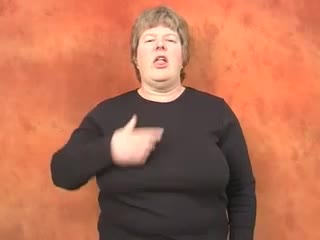
🤖 AI Learning Guide for "reinforcement wire"

This sign visually represents the crisscrossing pattern of reinforcing wires used in construction. The G-hand shape suggests individual strands, and the repeated crossing motion illustrates their interwoven structure

🎯 Practice Challenge

Practice forming the G-hand shape correctly with both hands. Focus on smooth, repeated crossing motion in neutral space

⚠️ Most Common Mistake

Ensure both hands are G-hands and repeat the crossing motion several times, rather than a single cross. Maintain neutral facial expression

👐 How to Sign "reinforcement wire" in British Sign Language (BSL) (Quick Answer)

Follow these steps to sign reinforcement wire correctly in British Sign Language (BSL):

  1. 1 Form G-hand with both hands
  2. 2 Position hands in neutral space, palms facing
  3. 3 Move hands to cross over each other
  4. 4 Separate hands slightly
  5. 5 Repeat crossing motion several times

Tip: Watch the video above while following these steps for best results.

🤚 Sign Profile

🤚
Handshape
Both hands form G-hand, index fingers extended, other fingers curled
🔣
Handshape Code
G
Dominant Hand
Either
🙌
Hand Count
Two-handed
📍
Location
Neutral space in front of the torso
↗️
Movement
Two G-hands move to cross over each other, then separate slightly, repeating the crossing motion
🔄
Movement Type
Repeated, Linear
👆
Contact
Air
👋
Palm Orientation
Palms face each other, rotating slightly during crossing
⚖️
Symmetry
Symmetric

😊 Non-Manual Features

Facial expressions and body language are grammatically essential in British Sign Language (BSL) - not optional!

😊
Facial Expression
Neutral facial expression
🙆
Eyebrows
Neutral
👁️
Eye Gaze
Forward
🙂
Head Movement
None
🕴️
Body Shift
None

📖 Grammar & Linguistics

Part of Speech Noun
Inflection No
Classifier Usage CL:Grid (index fingers representing strands)
Role Shift No

🎓 Learning Context

📌 When to Use: Used in construction, engineering, and architectural discussions
⚠️ Common Mistake: Not repeating the crossing motion; using incorrect handshape
🚫 When NOT to Use: Avoid in general conversation unless context is specific to construction
Context Tags
Construction engineering building materials structural

🧪 Practice Lab

Use these tiny checks right after watching the video. Fast feedback is what turns recognition into recall.

Meaning check

Which word matches the sign you just watched?

Usage check

Where would this sign fit most naturally?

Confidence check

How do you feel about reinforcement wire right now?

Pick one so SignDeaf can shape the rest of your session around how this sign actually feels.

🧭 Scenario Drill

One sign gets remembered faster when you attach it to real situations. Try these quick scene prompts.

Work

Stretch practice

Use this sign in a short workplace sentence or meeting exchange.

Family

Stretch practice

Try signing this while talking about family life or something at home.

School

Stretch practice

Imagine teaching this sign to a classmate or using it in a lesson.

Doctor

Stretch practice

Practise it in a healthcare conversation where clarity matters.

Travel

Stretch practice

Use it in a travel scenario like asking for help or directions.

💬 Example Usage

1.[en] The *reinforcement wire* strengthens the building. / BSL:[note] Sign REINFORCEMENT-WIRE, then STRONG, BUILDING. | 2.[en] We need more *reinforcement wire*. / BSL:[note] Sign WE NEED MORE REINFORCEMENT-WIRE. | 3.[en] Check the *reinforcement wire* before pouring. / BSL:[note] Sign CHECK REINFORCEMENT-WIRE BEFORE POUR

1.[en] The *reinforcement wire* strengthens the building. / BSL:[note] Sign REINFORCEMENT-WIRE, then STRONG, BUILDING. | 2.[en] We need more *reinforcement wire*. / BSL:[note] Sign WE NEED MORE REINFORCEMENT-WIRE. | 3.[en] Check the *reinforcement wire* before pouring. / BSL:[note] Sign CHECK REINFORCEMENT-WIRE BEFORE POUR

When to use it

Used in construction, engineering, and architectural discussions

When not to use it

Avoid in general conversation unless context is specific to construction

Register

Technical

🌍 Cultural Context

🗺️ Regional Variations

Generally consistent across UK BSL

⚖️ Similar Signs - What's the Difference?

This sign reinforcement wire
VS
Similar signs Look closely
The sign for 'reinforcement wire' uses G-hands crossing repeatedly, emphasizing interwoven individual strands. This differs from 'GRID' which typically uses open B-hands or 5-hands in a static or outward movement to show a broader mesh. 'FENCE' often uses flat B-hands to depict a barrier, distinct from the crisscrossing G-hands. 'STEEL' or 'METAL' signs focus on the material's properties (hardness), not its structural form, using different handshapes and movements like tapping or rubbing
chalk sign thumbnail

chalk

Beginner

A stick of soft material used for writing or drawing on surfaces

Compare with chalk

📝 Usage Notes

Emphasizes the interlocking or overlapping nature of the wires

Frequently Asked Questions

Common questions about the British Sign Language (BSL) sign for "reinforcement wire".

🏷️ Tags

Handshape

Keywords

💡
Did you know?
In BSL, non-manual features (facial expressions, mouthing) are as important as the hand movements.

📚 Explore More British Sign Language (BSL) Signs

Keep building your British Sign Language (BSL) vocabulary - explore signs by category or browse the full dictionary.