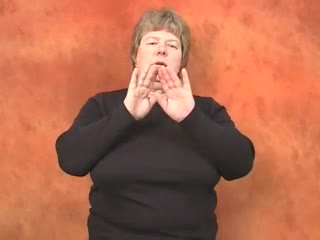
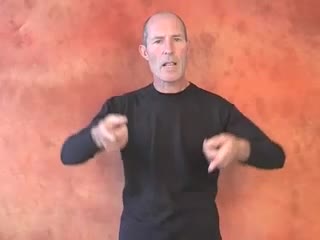
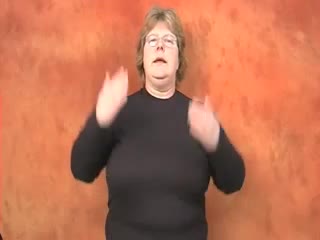
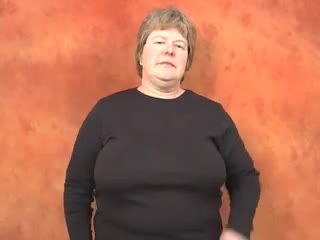
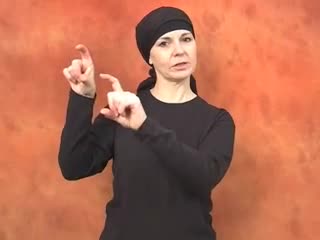
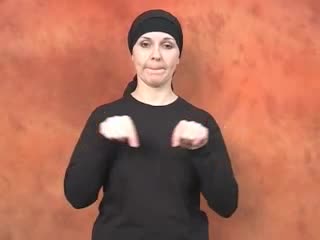
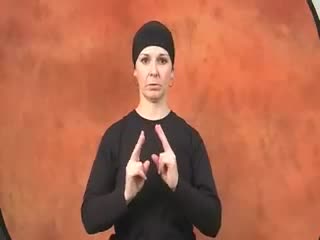
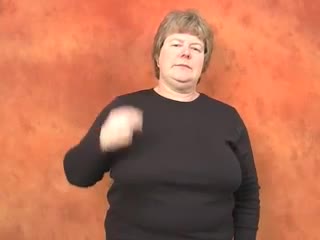
What Is the BSL Sign for "crane"?
Welcome, fellow BSL learners and members of the Deaf community! Today, we're delving into the fascinating world of British Sign Language to explore the BSL sign for "crane." Whether you're referring to the majestic bird with its long neck or the powerful construction machine that lifts heavy loads, understanding how to sign "crane" in BSL is a valuable addition to your vocabulary. This sign allows you to clearly communicate about these distinct concepts, enriching your conversations and helping you connect more effectively. Let's embark on this journey to master the British Sign Language crane sign together!
How to Sign "crane" in British Sign Language - Step-by-Step Guide
Learning how to sign "crane" in BSL is straightforward once you break it down into its core components. Follow these steps precisely to master the BSL crane sign.
Step 1: Handshape
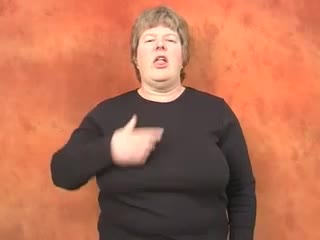
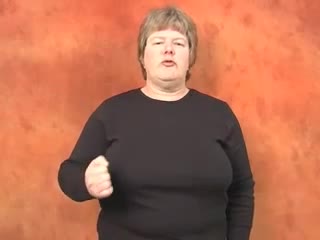
For the BSL sign for "crane" (referring to the machine), you will primarily use your dominant hand. Form a "G" handshape. To do this, extend your index finger straight out, and extend your thumb parallel to your index finger. Curl your middle, ring, and little fingers into your palm, ensuring they are not extended or visible. Imagine your index finger and thumb forming a long, straight line, representing the extended arm or boom of a crane. This precise handshape is crucial for conveying the meaning effectively in British Sign Language crane discussions.
Step 2: Hand Position and Location
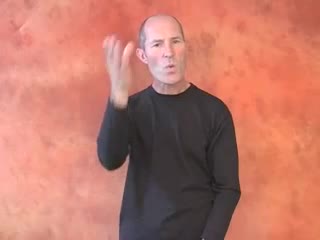
Begin by positioning your dominant hand, already in the "G" handshape, in the neutral signing space directly in front of your body. This space is typically between your chest and your waist, slightly to the side of your dominant shoulder. Your hand should be held at about chest height, with your index finger pointing generally forward or slightly upwards, mimicking the starting position of a crane's arm before it moves into action. Ensure your arm is relaxed, not rigid, and comfortably extended, ready for movement.
Step 3: Movement
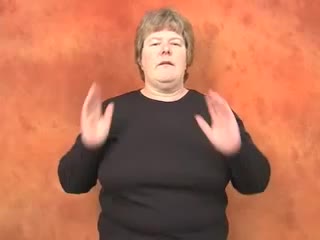
From the initial position, execute a smooth, deliberate movement with your dominant hand. Move your hand upwards and slightly forwards in a gentle, arcing motion. Imagine the crane's arm extending or lifting. The movement should be continuous and controlled, rising from its starting point to a slightly higher position, perhaps ending at eye level or just above. This single, fluid upward and forward arc represents the action or structure of the crane. There is no repetition in this primary movement for the BSL sign for crane.
Step 4: Non-Manual Features (Facial Expression & Mouthing)
Non-manual features are an integral part of BSL grammar and meaning, even for a noun like "crane." For the BSL sign for "crane," a neutral and attentive facial expression is typically appropriate. Your eyes should be focused on the person you are communicating with, or on the space where the sign is being performed if you are demonstrating. It is common and helpful to mouth the word "crane" silently or clearly as you perform the sign. Mouthing aids clarity for both Deaf and hearing signers and is a natural part of British Sign Language communication. Avoid any exaggerated expressions unless you are conveying a specific emotion related to the crane, such as its impressive height or power.
Step 5: Palm Orientation
Throughout the execution of the BSL sign for "crane," your palm orientation should remain consistent. Your palm will generally face forward or slightly towards your non-dominant side. This orientation allows the "G" handshape, representing the crane's arm, to be clearly visible to your interlocutor. The index finger and thumb, forming the 'arm' of the crane, should be directed towards the person you are signing to or towards the conceptual space where the crane is imagined. This stable palm orientation ensures the sign is clear and unambiguous.
Quick Reference: "crane" BSL Sign at a Glance
- Handshape: Dominant hand in a "G" handshape (index finger and thumb extended, parallel).
- Location: Neutral signing space, at chest height.
- Movement: Smooth, upward and slightly forward arc.
- Facial Expression: Neutral, attentive.
- Dominant Hand: Used for the sign.
5 Tips to Learn the BSL Sign for "crane" Quickly
- Visualise the Machine: When learning the BSL sign for "crane," always connect the "G" handshape and upward arcing movement to the image of a large construction crane. Imagine its long arm extending upwards and outwards. This visual link will create a strong mnemonic device, helping you recall the specific handshape and movement for the British Sign Language crane sign.
- Practice Handshape Repetition: Before attempting the full sign, spend time just forming the "G" handshape repeatedly. Focus on ensuring your index finger and thumb are truly parallel and extended, with the other fingers tucked in. Perfecting this foundational element will make the entire "how to sign crane in BSL" process much smoother and more accurate.
- Mimic the Motion: Stand in front of a mirror and practice the upward and forward arcing movement, focusing on its smoothness and trajectory. Pretend you are truly operating the controls of a crane, extending its arm. This physical mimicry helps engrain the movement into your muscle memory, making the BSL crane sign feel natural.
- Integrate Mouthing: As you practice the sign, make a conscious effort to mouth the word "crane." This simultaneous practice reinforces the connection between the sign and its English equivalent, aiding recall and improving your overall communication clarity when you learn crane BSL. It also helps with the non-manual features.
- Contextualise Your Learning: Don't just learn the sign in isolation. Think of sentences where you might use "crane," such as "The crane is very tall" or "They used a crane to build it." Practicing the sign within these imagined sentences will help you internalise its usage and remember the BSL sign for crane long-term.
When and How to Use the BSL Sign for "crane"
The BSL sign for "crane" is versatile and can be used in various everyday contexts, primarily when discussing the heavy machinery. Here are a few scenarios:
- Describing Construction Sites: When pointing out or discussing construction work, you might sign "crane" to specify the type of equipment being used. For example, you could sign "LOOK, NEW BUILDING, CRANE THERE" (BSL structure often places the topic first).
- Explaining Engineering or Architecture: In discussions about how large structures are built, the sign for "crane" is essential. You might explain, "HIGH BUILDING, CRANE LIFT STEEL" to describe the construction process.
- In Casual Conversation: If you see a crane in the distance or read about one in the news, you can use the sign. "YESTERDAY, I SAW BIG CRANE ROAD" could be a simple conversational opener.
- Grammatical Considerations: In BSL, the sign itself doesn't change for tense or number. Instead, you'd use other signs or context to indicate plural (e.g., "many crane") or past/future tense (e.g., "yesterday crane," "tomorrow crane"). The sign for "crane" remains consistent, relying on surrounding signs for grammatical nuance.
Common Mistakes When Signing "crane" in BSL - And How to Fix Them
As with any new sign, beginners sometimes make common errors. Don't worry, these are easily corrected with a little awareness and practice!
- Incorrect Handshape:
The Error: Using a '1' handshape (just index finger extended) or a 'C' handshape instead of the specific 'G' handshape. This can lead to ambiguity or make the sign unclear. A '1' handshape might be confused with 'one' or a simple pointer, while a 'C' handshape might suggest 'cup' or 'car'.
The Fix: Be meticulous with your handshape. Ensure your index finger and thumb are both extended and parallel, forming that distinct 'G' shape. Regularly check your hand in a mirror to confirm accuracy. Remember, the BSL sign for crane relies on this precise formation.
- Vague Movement or Location:
The Error: The movement is too small, too fast, or not clearly arcing upwards and forwards. Sometimes, the sign is performed too low or too close to the body, making it hard to see or understand.
The Fix: Practice making the movement deliberate, smooth, and clear. Imagine the full sweep of a crane's arm. Ensure your sign is performed in the neutral signing space, making it easy for your conversational partner to see. The British Sign Language crane sign needs room to 'breathe' visually.
- Ignoring Non-Manual Features:
The Error: Forgetting to mouth the word "crane" or having a confused/unrelated facial expression. While not always strictly essential for comprehension, neglecting non-manuals can make your signing less natural and harder for others to follow, especially for hearing learners.
The Fix: Consciously practice mouthing "crane" every time you perform the sign. Maintain a neutral, engaged facial expression. Over time, mouthing will become second nature, enhancing your overall BSL fluency and making your BSL crane sign clearer and more authentic.
"crane" in BSL - Fun Facts and History
- Iconic Representation: The BSL sign for "crane" (machine) is highly iconic, meaning it visually represents the object it describes. The "G" handshape extending upwards directly mimics the long, lifting arm of a construction crane, making it intuitive and relatively easy to learn for many.
- Regional Variations: While the core concept of an upward-extending arm is common, minor regional variations might exist in BSL across the UK. Some areas might use a slightly different handshape (e.g., an 'L' handshape) or a slightly different movement trajectory. However, the described sign is widely understood.
- Evolution of Signs: Many signs, especially for modern machinery, have evolved as technology has advanced. Older signs for lifting might have been more generic, but as cranes became a more prominent feature of the landscape, a specific and iconic sign like this emerged to clearly represent "crane" British Sign Language.
- Distinguishing from Birds: When referring to the bird 'crane', BSL users might sign 'BIRD' followed by a classifier describing a long neck or a specific descriptive