What Is the BSL Sign for "hammer"?
Picture a sturdy tool, ready for action, a common sight in any workshop or home. This is precisely the imagery the BSL sign for hammer evokes, a powerful and practical gesture representing both the instrument itself and the action it performs. You'll find this particular British Sign Language hammer sign incredibly intuitive, as it beautifully illustrates its function through a clear, iconic movement. Learning the BSL sign for hammer not only expands your vocabulary but also connects you to the everyday world of construction, repair, and creative projects, making it a truly useful addition to your signing repertoire.
How to Sign "hammer" in British Sign Language - Step-by-Step
Let's get your hands moving and learn how to master the practical and engaging sign for "hammer" in BSL.
Step 1: Handshape
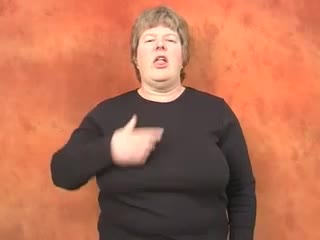
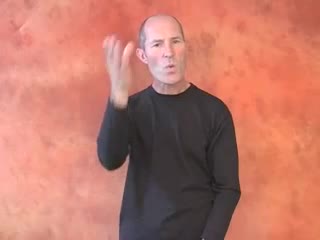
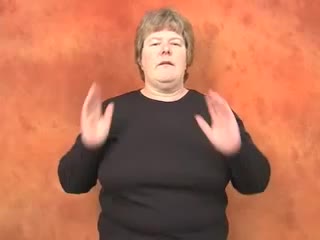
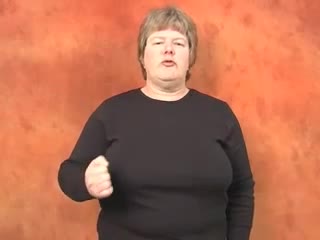
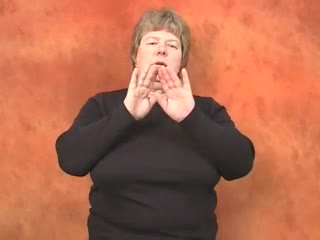
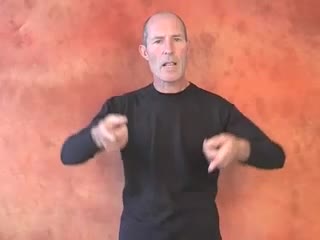
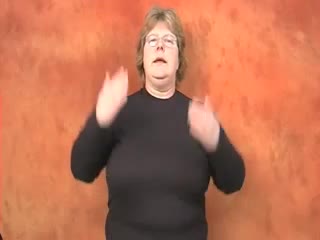
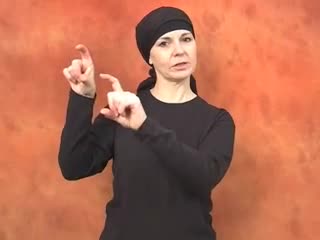
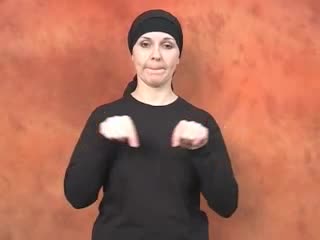
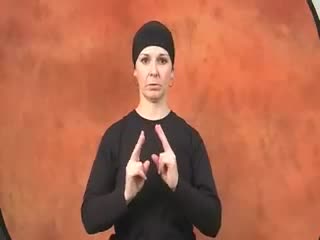
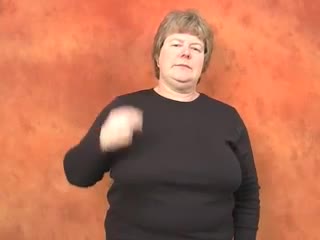
For this sign, you'll begin by forming a very specific handshape with your dominant hand. Close your fingers tightly into a firm fist, ensuring your thumb is tucked securely over the front of your index and middle fingers. Your knuckles should be slightly bent, creating a solid, compact shape that truly represents the heavy head of a hammer ready to strike.
Step 2: Hand Placement and Location
Now, bring your dominant hand, held in that tight fist, up towards the side of your head. Position it just above your ear, near your temple, but without actually touching your head. Imagine you're holding a small hammer with the head poised in this spatial area, ready to drive in a nail or tap something into place.
Step 3: Movement
From this initial position near your temple, execute a distinct, sharp downward striking motion. The movement should be controlled and deliberate, moving your fist downwards approximately 5-10 centimetres, then returning it briefly to the starting point. You'll repeat this precise striking action once or twice, mimicking the repeated blows of hammering.
Step 4: Facial Expression and Mouthing
The non-manual features are often quite subtle for this sign, though no less important. A neutral, focused facial expression usually accompanies the sign, conveying the concentration involved in using such a tool. When discussing the act of hammering with force or effort, a slight tightening of the lips or a determined brow might appear. Simultaneously, you should mouth the English word "hammer" clearly and naturally, as this is a common practice in BSL to provide additional context and aid comprehension.
Step 5: Palm Orientation
Initially, your palm will face inward towards your head, with your knuckles pointing slightly forward. As you perform the downward striking movement, the orientation of your palm will subtly shift, rotating downwards so that your knuckles point more directly to the ground at the end of the stroke. This slight rotation effectively conveys the impact of a hammer head, reinforcing the visual imagery of the tool in action.
"hammer" in BSL - Quick Reference Snapshot
- Handshape: Dominant hand forms a tight fist (S-handshape).
- Location: Side of dominant temple, just above the ear.
- Movement: Repeated downward striking motion, 1-2 times.
- Facial Expression: Neutral or focused; determined for emphasis.
- Dominant Hand: Performs the entire action.
- Palm Orientation: Inward, rotating downward during the strike.
5 Memorisation Tricks for the BSL Sign "hammer"
Here are some creative ways to help that sign for "hammer" really stick in your memory.
- Visual Mnemonic: Picture your dominant fist itself as the heavy, solid head of a hammer, while your wrist acts as the handle. Every time you sign it, visualise your hand *being* the tool, ready to hit something. This direct association between your handshape and the object makes the sign incredibly memorable.
- Muscle-Memory Drill: Close your eyes and perform the sign for "hammer" slowly, really feeling the tension in your fist and the precise downward movement. Focus on the sensation of your hand moving through space, engraving the physical action into your muscle memory without visual distraction. Repeating this drill helps solidify the motor pattern.
- Connection to the Word's Meaning: Think about the core action of a hammer: striking something repeatedly to drive it in. The BSL sign perfectly embodies this repetitive striking motion. Connect the sign's movement directly to the word's function, imagining yourself driving a nail with each downward stroke.
- Common-Confusion Tip: Be mindful not to confuse this sign with the BSL sign for "THINK," which uses a similar handshape but touches the temple and moves differently. The key difference for "hammer" is the clear striking movement *away* from the head, rather than a single touch or circular motion *on* the head, so really exaggerate that downward strike to differentiate.
- Daily-Life Practice Idea: Every time you see a picture of a hammer, walk past a hardware store, or even just notice something that looks like it needs fixing around the house, perform the sign for "hammer." Integrating the sign into these everyday visual cues reinforces its meaning and makes recall much faster.
Real-Life Situations to Use the BSL Sign for "hammer"
The sign for "hammer" comes in handy surprisingly often in everyday conversations.
- Imagine you're at a friend's house, helping them assemble flat-pack furniture, and you realise a crucial tool is missing. You could sign, "NEED HAMMER, YOU HAVE?" using a raised eyebrow and leaning forward slightly for the question, then pointing to the furniture to provide context.
- Perhaps you're explaining a DIY project you completed last weekend to a Deaf friend. You might sign, "LAST WEEKEND, I BUILD SHELF. HAMMER, USE MANY TIMES!" where "LAST WEEKEND" would establish the time topic at the beginning of your sentence, followed by the action.
- You might be describing an incident where something broke. You could sign, "OH NO, GLASS BREAK. I HAMMER (sign with impact) CAREFUL, BUT STILL BREAK," using a slightly more intense facial expression with the hammer sign to convey the force or accident.
- If you're asking about tools in general, you could sign, "YOUR TOOLS? HAMMER, SAW, SCREWDRIVER, YOU HAVE WHICH?" listing the items with slight pauses between each, and ending with an open question face.
Top 3 Mistakes Learners Make Signing "hammer" in BSL
It's natural to make a few errors when learning a new sign, but being aware of these common pitfalls will help you perfect your "hammer" quickly.
- Incorrect Handshape: Many beginners mistakenly use an open hand or a loose fist rather than a tight, closed fist. This happens because they might not fully grasp the iconic representation of the tool's head. The correction is simple: ensure your fingers are curled tightly into a firm 'S' handshape with the thumb secured over the front, making it truly resemble the solid top of a hammer.
- Wrong Location or Movement: Sometimes learners sign too far from their head, or they make a vague, circular motion instead of a precise strike. This often stems from a lack of confidence in the specific spatial parameters of the sign. The precise correction involves bringing the fist close to the temple area, then executing a clear, short, and repeated downward striking motion, emphasising the impact action.
- Missing or Incorrect Repetition: Another common error is performing only one strike or an exaggerated, sweeping motion, rather than the characteristic two distinct, short downward movements. This might occur if the learner focuses more on the 'tool' aspect than the 'action' aspect. The right way is to perform two quick, deliberate downward strikes from the temple, making sure each movement is compact and precise.
Fascinating Facts About the BSL Sign for "hammer"
Let's delve a little deeper into the unique aspects of the sign for "hammer."
- The sign for "hammer" in BSL is highly iconic, meaning it visually represents the object or action it describes. Its form directly mimics the action of hammering, making it incredibly intuitive and easy to remember for new learners.
- While the core movement of "hammer" is quite consistent across the BSL-using community, you might occasionally encounter slight regional variations in the exact placement or the vigour of the strike. Some signers might position it slightly higher or lower, or make a more pronounced movement, reflecting local signing preferences.
- Interestingly, this sign is a one-handed sign, utilising only the dominant hand to convey both the tool and its function. Many tool-related signs in BSL are one-handed, particularly those that represent an action a single hand would perform.
- The specific handshape, the tight 'S' handshape (fist), is a foundational handshape in BSL. It's used in many other signs, which means mastering "hammer" also helps build your general handshape fluency for other vocabulary.
- The sign's movement path, a short, repeated downward motion, linguistically categorises it as a "path movement" sign. This means the meaning is conveyed not just by the handshape and location, but fundamentally by the direction and repetition of the movement through space.
"hammer" in Deaf Culture - Community and Identity
Tools like a hammer hold a special place in the Deaf community, much as they do in the hearing world, often symbolising resourcefulness and the ability to build or fix things. Discussions about home improvements, DIY projects, or even helping a neighbour with a repair are common threads that weave through community life, and the sign for "hammer" becomes a central part of these conversations. You'll find stories shared about community members collaborating on projects, perhaps building a new accessible ramp for a Deaf club or collectively maintaining a shared space, where the simple act of asking for a hammer represents a shared endeavour. This sign, therefore, isn't just about a physical object; it's a gateway to discussing practical skills, self-reliance, and the spirit of mutual support that thrives within Deaf communities.
Example Conversations Using "hammer" in BSL
Here are five different ways you might naturally integrate the sign for "hammer" into BSL conversations.
English: Do you have a hammer I could borrow? - BSL structure: QUESTION (raised eyebrows), TOPIC-COMMENT (HAMMER, YOU HAVE? BORROW, I CAN?)
English: I need a hammer to fix this wobbly chair. - BSL structure: TOPIC-COMMENT (CHAIR, WOBBLY. I NEED HAMMER. FIX.)
English: He hammered the nail in quickly. - BSL structure: TIME-TOPIC (PAST), SUBJECT-VERB-OBJECT (HE, NAIL, HAMMER, QUICKLY).
English: Be careful not to hit your thumb with the hammer! - BSL structure: WARNING, NEGATION (CAREFUL! THUMB, HAMMER, HIT, DON'T!)
English: Where did you put the hammer? I can't find it. - BSL structure: QUESTION, SPATIAL (HAMMER, WHERE? I CAN'T FIND.)
Frequently Asked Questions: The BSL Sign for "hammer"
Is there much regional variation for the BSL sign for "hammer"?
Generally, the core sign for "hammer" is quite consistent across regions where BSL is used, with the dominant hand forming a fist near the temple and performing a downward strike. You might observe very slight differences in the exact height or the vigour of the movement, but the fundamental structure remains widely understood. These minor nuances are usually easy to pick up as you engage with different signers.
Are there any BSL signs easily confused with "hammer"?
Yes, learners sometimes confuse "hammer" with "THINK" because both signs use a fist handshape near the temple area. The crucial distinction lies in the movement: "hammer" involves a clear, repeated downward striking motion *away* from the head, whereas "THINK" typically involves a single touch to the temple or a small circular movement *at* the temple. Pay close attention to the specific movement to avoid mix-ups.
Is the sign for "hammer" suitable for beginner BSL learners?
Absolutely, the sign for "hammer" is an excellent sign for beginners! It's highly iconic, meaning its movement directly reflects its meaning, making it intuitive and easy to grasp. The handshape is common, and the movement is straightforward, so you'll find it's one of those signs you pick up quickly and confidently.
Can children learn the BSL sign for "hammer" easily?
Children typically find the sign for "hammer" very easy and engaging to learn. Its iconic nature, mimicking a common action with a tool, resonates well with how children understand the world around them. Incorporating it into play or describing construction activities can make learning this sign a fun and natural part of their BSL journey.
How does the BSL sign for "hammer" compare to other tool signs in BSL?
The sign for "hammer" is distinct from other tool signs in BSL, even though many are also iconic. For example, "SAW" often involves a two-handed sawing motion, and "SCREWDRIVER" might show a twisting action. Each tool sign in BSL uniquely captures the primary action or characteristic of that specific instrument, making "hammer" stand out with its particular striking movement.
Signs That Pair Naturally with "hammer" in BSL
Building your vocabulary around themes makes learning more efficient and natural. Here are some signs that logically connect with "hammer."
- NAIL: Often signed by placing the non-dominant palm flat and tapping it with the dominant index finger, directly linking to hammering.
- WOOD: Typically a two-handed sign showing the cutting of wood, a common material you'd hammer into.
- BUILD: A two-handed sign where hands stack or construct, frequently requiring a hammer.
- TOOL: A general sign often made by flicking the wrist of the dominant hand, useful for categorising "hammer."
- FIX/REPAIR: Often a two-handed sign showing something being put back together, a common use for a hammer.
- HOUSE: A two-handed sign depicting the roof and walls of a house, which often requires a hammer in its construction or maintenance.
Building Fluency: How to Practise "hammer" in BSL
To truly embed the sign for "hammer" into your BSL repertoire, consistent and varied practice is key. Start by using a mirror to observe your own handshape, placement, and movement; this immediate visual feedback helps you refine your form and ensure your strikes are precise and clear. Try integrating "hammer" into short, imagined BSL conversations about DIY projects or repairs, perhaps describing needing the tool or using it to fix something. Filming yourself performing the sign can offer incredible insights, allowing you to catch any subtle errors you might miss in the mirror and track your progress over time. Most importantly, seek out opportunities to practise with Deaf individuals or experienced BSL signers; their feedback is invaluable for developing natural fluency and ensuring you're understood within the community. Remember, consistent repetition spaced over several days will solidify this sign in your memory far more effectively than cramming. You've got this!