What Is the BSL Sign for "screwdriver"?
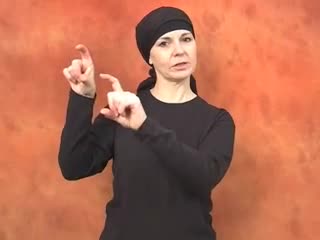
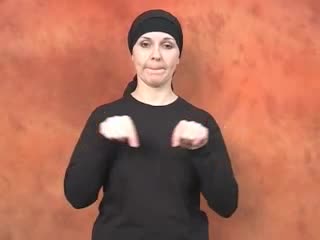
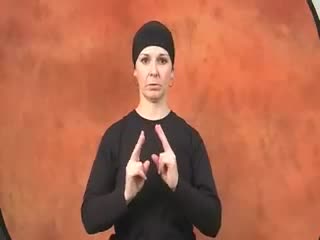
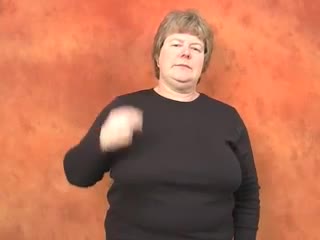
Today, you're going to master the **BSL sign for screwdriver**, a practical and often-used sign within British Sign Language communication. Imagine needing a common tool around the house or in a workshop; this sign quickly conveys that specific item, cutting straight to the point. Understanding the **British Sign Language screwdriver** means you can smoothly discuss repairs, DIY projects, or simply ask for the right implement when you're helping a friend. This particular sign effectively represents the physical action of using the tool, making it quite intuitive for learners.
How to Sign "screwdriver" in British Sign Language - Step-by-Step
Let's break down the mechanics of this fundamental BSL sign, guiding your hands through each precise movement.
Step 1: Handshape
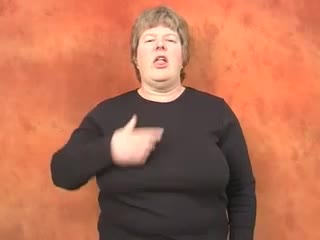
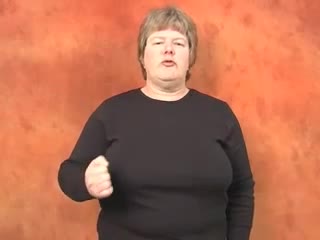
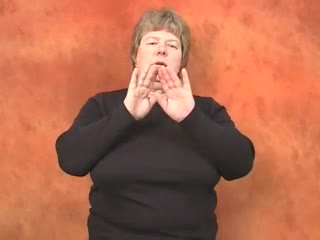
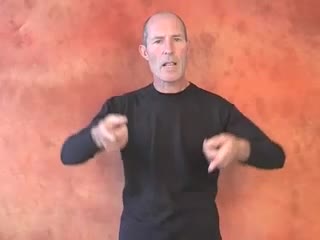
For this sign, form your dominant hand into a strong 'S' handshape. This means you'll make a closed fist, tucking your thumb firmly over the tops of your curled fingers. Picture your hand gripping the handle of a robust screwdriver; your knuckles remain facing forward or slightly upwards, creating a solid, cylindrical form.
Step 2: Hand Placement and Location
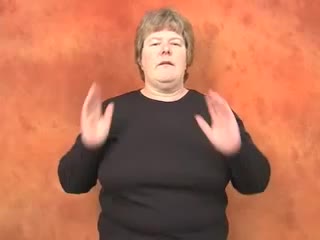
Position your dominant hand in the neutral signing space directly in front of your body. You'll want it approximately at chest height, extended comfortably away from your torso, as if you're holding a tool ready for use. There's no interaction with your non-dominant hand for this specific sign; it acts independently.
Step 3: Movement
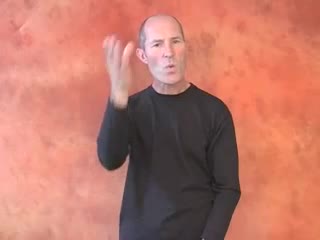
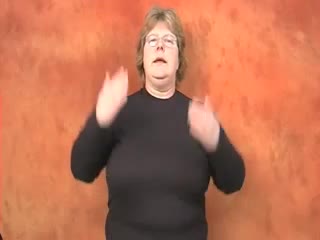
Now, execute a distinct, controlled wrist rotation. You'll rotate your dominant hand's wrist back and forth, turning it clockwise and then anti-clockwise, mimicking the repetitive action of tightening or loosening a screw. Perform this twisting movement two or three times, ensuring the motion is clear and deliberate, not a vague wiggle.
Step 4: Facial Expression and Mouthing
Maintain a neutral facial expression when signing "screwdriver," unless the context of your conversation calls for something different, like concentration or frustration. Many people naturally mouth the word "screwdriver" silently as they sign, which provides an additional layer of clarity and reinforces the lexical item for both the signer and the viewer. Remember, non-manual features like mouthing are integral to BSL, often clarifying meaning or grammatical function, even for simple nouns.
Step 5: Palm Orientation
Your palm orientation will shift dynamically throughout the movement. You'll begin with your palm facing generally towards your non-dominant side or slightly downwards. As you perform the rotational movement, your palm will twist, cycling between facing downwards, towards your body, and then upwards, mirroring the natural turning of the tool itself. This changing orientation is crucial because it visually enhances the iconic representation of the twisting action.
"screwdriver" in BSL - Quick Reference Snapshot
Here’s a concise summary of the **BSL screwdriver sign** for easy recall:
- Handshape: Dominant hand forms an 'S' handshape (closed fist, thumb across fingers).
- Location: Neutral space, in front of the chest.
- Movement: Repeated wrist rotation, mimicking a twisting action.
- Facial Expression: Generally neutral, often accompanied by mouthing "screwdriver."
- Dominant Hand: Only the dominant hand is active for this sign.
- Palm Orientation: Starts facing slightly downwards/non-dominant side, then rotates with the movement.
5 Memorisation Tricks for the BSL Sign "screwdriver"
Making new signs stick in your memory can be a fun challenge; here are five specific tricks for the **British Sign Language screwdriver** sign.
- Visual Mnemonic: Grip and Twist. Picture yourself actually holding a physical screwdriver and performing the action. Your 'S' handshape perfectly represents the comfortable grip on a handle, and the wrist movement directly corresponds to turning a screw. Really visualise the tool in your hand as you practice the sign.
- Muscle-Memory Drill: The "Imaginary Screw." Find an imaginary screw on a wall or a table and practice signing "screwdriver" while looking at it, then simulate using the tool with your hand. Repeat this action rhythmically, focusing on the feeling of the wrist rotation, allowing your muscles to remember the movement rather than just your brain.
- Connection to Meaning: Action-Based Iconicity. This sign is highly iconic, meaning it looks like what it represents. Think about the *function* of a screwdriver-to turn things. The sign directly embodies this turning action, making the connection between the sign and the word incredibly strong and logical.
- Common-Confusion Tip: Differentiate from "Turn." While the sign for "turn" (like turning a key) might involve a similar rotation, the handshape for "screwdriver" is distinctly a closed fist, representing the tool itself. Ensure your handshape is a firm 'S' to avoid any ambiguity, clearly communicating the object rather than just the action.
- Daily-Life Practice: "Spot the Screwdriver." Whenever you see a screwdriver in real life-in a toolbox, on a shelf, or being used in a video-pause and immediately sign "screwdriver." This integrates the sign into your everyday observations, making it a natural part of your visual vocabulary.
Real-Life Situations to Use the BSL Sign for "screwdriver"
Understanding how to integrate the **screwdriver sign language** into practical exchanges will significantly enhance your communication. Here are a few scenarios where you'd naturally use this sign.
- Imagine you're helping a friend with some DIY and need a specific tool; you might sign "YOU HAVE SCREWDRIVER?" (using a raised eyebrow and leaning forward, typical BSL question markers) to ask if they possess one. This illustrates a simple question structure.
- You could be explaining a repair job to someone, saying "I NEED SCREWDRIVER FIX SHELF" (following a topic-comment structure, where the object comes first). Here, you're using the sign in a statement of necessity and purpose.
- Perhaps you're pointing out a problem with an item and need to indicate the solution, signing "THIS BROKEN, NEED SCREWDRIVER" (a clear declarative statement, often with a slight head nod for affirmation). You're identifying a problem and suggesting the solution.
- When discussing different types of tools, you might sign "SCREWDRIVER, BIG, SMALL" to distinguish between sizes, showing how adjectives can modify the sign through either additional signs or by adjusting the movement's scale.
Top 3 Mistakes Learners Make Signing "screwdriver" in BSL
Even experienced learners can occasionally stumble with a new sign; here are three common pitfalls and how to easily correct them when learning the **BSL sign for screwdriver**.
- Mistake 1: Incorrect Handshape. Learners sometimes use an open hand or a 'C' handshape, which doesn't accurately represent gripping a tool handle. This often happens because they're focusing more on the movement than the initial form. The precise correction is to ensure your dominant hand forms a tight 'S' handshape-a closed fist with your thumb wrapped over your fingers-before initiating any movement.
- Mistake 2: Insufficient Wrist Movement. Instead of a distinct wrist rotation, some beginners might move their entire forearm or simply wiggle their fingers. This error usually stems from not understanding that the sign is iconic of the *wrist's* action when turning the tool. The correct approach involves keeping your forearm relatively stable while actively rotating *only* your wrist back and forth, executing two to three clear turns.
- Mistake 3: Omitting Repetition. Occasionally, a learner will perform only a single twist, which can sometimes be confused with other 'turning' actions or appear incomplete. The sign for "screwdriver" typically involves a clear, repeated twisting motion, usually two or three times. Always remember to repeat the wrist rotation for clarity, reinforcing the continuous action of screwing.
Fascinating Facts About the BSL Sign for "screwdriver"
Delve into some intriguing details about the **what is the sign for screwdriver** in BSL, enriching your understanding beyond just the mechanics.
- The sign for "screwdriver" in BSL is highly iconic, meaning its form directly mimics the action it represents. This strong visual connection makes it remarkably intuitive and often one of the easier tool signs for new learners to grasp immediately.
- While the core iconic movement remains consistent, you might observe slight regional variations in the exact handshape or the number of repetitions across the United Kingdom's diverse Deaf community. These minor differences highlight the organic evolution of BSL.
- The specific 'S' handshape used in this sign is quite common in BSL, often representing objects that are gripped or have a cylindrical form. Understanding this pattern helps you recognise how BSL uses a finite set of handshapes creatively to represent countless concepts.
- This sign's emphasis on wrist rotation is a beautiful example of how BSL incorporates body mechanics to convey meaning. Unlike some signs that rely heavily on arm movements, "screwdriver" specifically isolates the wrist, drawing direct attention to the fine motor skill involved in using the tool.
- The clear, distinct action of this sign means it's rarely confused with other BSL signs, even those that involve a turning motion. Its specific handshape and repetitive wrist action uniquely identify it as the tool itself, rather than a general action of 'turning'.
"screwdriver" in Deaf Culture - Community and Identity
Tools like the screwdriver represent independence and self-sufficiency, values deeply cherished within the Deaf community. Many Deaf individuals are incredibly practical and hands-on, often excelling in trades and craftsmanship where tools are indispensable. Discussions about fixing things, building, or repairing are common, fostering a sense of shared experience and mutual aid. Knowing the sign for "screwdriver" allows you to participate in these practical conversations, connecting on a fundamental level about everyday challenges and solutions. It's more than just a word; it's an entry point into a culture that often values resourcefulness and direct, clear communication about tangible needs.
Example Conversations Using "screwdriver" in BSL
Let's see the **learn screwdriver BSL** sign in various conversational contexts, helping you understand its practical application.
English: Do you have a screwdriver I could borrow? - BSL structure: YOU HAVE SCREWDRIVER? (Uses raised eyebrows and a slight lean forward for a yes/no question marker).
English: I need a screwdriver to assemble this furniture. - BSL structure: FURNITURE ASSEMBLE, I NEED SCREWDRIVER. (Follows a topic-comment structure, placing the context first).
English: Where did you put the screwdriver? - BSL structure: SCREWDRIVER WHERE? (A common BSL WH-question structure, often with furrowed brows).
English: This screwdriver is too small for the job. - BSL structure: SCREWDRIVER, THIS SMALL, NOT RIGHT. (Uses a descriptive approach, often with a slight negative headshake on "NOT RIGHT").
English: He used a Phillips head screwdriver. - BSL structure: HE USE SCREWDRIVER, PHILLIPS (FINGERSPELL OR EXPLAIN SHAPE). (Incorporates a specific type, which might be fingerspelled or described if there isn't a dedicated sign).
Frequently Asked Questions: The BSL Sign for "screwdriver"
Is there much regional variation for the BSL sign for screwdriver?
While the fundamental concept of a twisting hand action is consistent across the UK, you might encounter minor regional differences in the precise handshape or the intensity of the wrist movement. These variations are usually subtle and won't hinder understanding, but it's always good to observe local signers.
Are there any similar signs in BSL I should be careful not to confuse with "screwdriver"?
You'll want to differentiate "screwdriver" from signs like "DRILL" (which typically involves a more intense, often forward-thrusting rotation, sometimes with two hands) or "TURN" (which might use an open hand or different handshapes). The key distinction for "screwdriver" lies in its specific 'S' handshape representing the tool handle.
Is the BSL sign for screwdriver considered easy for beginners to learn?
Absolutely, the sign for "screwdriver" is often considered quite beginner-friendly. Its highly iconic nature means it directly mimics the tool's action, making it intuitive and easy to remember. It's a great early vocabulary sign for anyone starting their BSL journey.
Can children easily learn and use the BSL sign for screwdriver?
Yes, children typically pick up the sign for "screwdriver" very quickly. Its strong visual connection to a common household object and its simple, repetitive movement make it engaging and accessible for young learners. They often enjoy mimicking the tool's action.
How does the British Sign Language screwdriver sign compare to other sign languages?
Interestingly, many sign languages around the world, including American Sign Language (ASL), often use an iconic, twisting hand motion to represent "screwdriver." While the exact handshape or palm orientation might differ slightly, the core concept of mimicking the tool's action through a rotational movement is a widespread and logical representation.
Signs That Pair Naturally with "screwdriver" in BSL
To build your vocabulary effectively, it helps to learn signs in clusters; here are some BSL signs that naturally complement "screwdriver."
- HAMMER: Another fundamental tool, often used in similar contexts for building or fixing. Learning "hammer" alongside "screwdriver" helps you expand your toolkit vocabulary.
- SPACNER/WRENCH: This sign, typically involving a twisting motion with a C-handshape, fits perfectly into a discussion about various tools. It builds on the mechanical action theme.
- DRILL: While distinct, "drill" also involves a rotational movement and is part of the "fixing" family. Understanding the subtle differences helps refine your signing.
- FIX/REPAIR: This action sign is almost always relevant when you're talking about needing a "screwdriver." It provides the context for using the tool.
- BUILD: Whether assembling flat-pack furniture or constructing something new, "build" frequently goes hand-in-hand with needing tools like a "screwdriver."
- BROKEN: If something is "broken," you often need a "screwdriver" to fix it. This adjective creates a natural communicative pair for problem-solving.
Building Fluency: How to Practise "screwdriver" in BSL
Consistent, thoughtful practice is the key to mastering any sign, and the **BSL sign for screwdriver** is no exception. Grab a mirror and watch your dominant hand as you form the 'S' handshape and execute the wrist rotation, ensuring your movements are clear and precise. Try integrating "screwdriver" into your daily inner monologue; whenever you think about the tool, mentally sign it. Film yourself signing this word in different contexts, then review the footage to self-correct any handshape or movement inconsistencies. The most effective way to truly build fluency involves finding opportunities to use "screwdriver" in conversation with a Deaf person, gaining real-time feedback and natural exposure. Don't be afraid to repeat the sign throughout the day, spacing your practice sessions to reinforce that muscle memory over time.