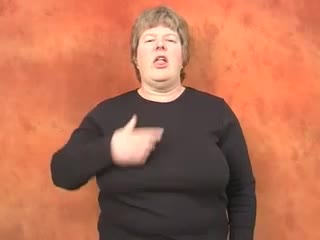
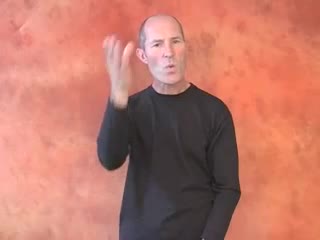
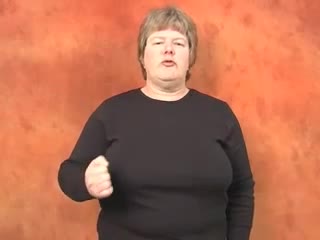
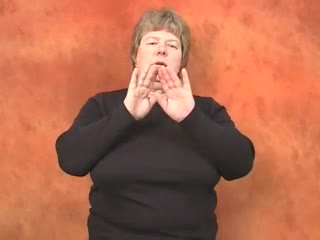
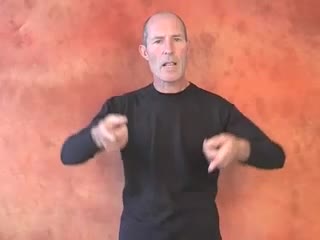
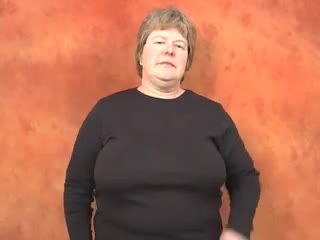
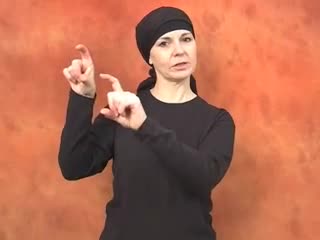
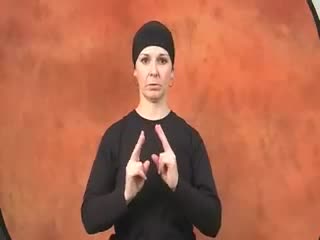
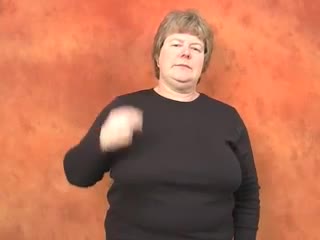
What Is the BSL Sign for "passenger lift"?
Navigating multi-storey buildings in the United Kingdom often involves finding your way up and down with ease, and knowing the BSL sign for passenger lift becomes incredibly useful for countless everyday interactions. This essential sign allows you to discuss vertical transportation, whether you're asking for directions, planning a journey between floors, or simply commenting on your surroundings. You'll find mastering this particular British Sign Language passenger lift sign opens up conversations about accessibility and practical logistics in a very direct way. It's a fundamental vocabulary item that smoothly integrates into many real-life scenarios, proving indispensable for anyone communicating within the Deaf community.
How to Sign "passenger lift" in British Sign Language - Step-by-Step
Learning to properly form the sign for passenger lift in British Sign Language involves careful attention to several distinct components, each crucial for clear communication.
Step 1: Handshape
To begin, you'll want to form a 'C' handshape with your dominant hand, keeping your fingers slightly curved and your thumb extended. Imagine your hand is gently cupping the air, as if holding onto a small, invisible object. Your index finger, middle finger, ring finger, and pinky finger should be held together, forming the curved shape, while your thumb rests close by, not quite touching your fingertips.
Step 2: Hand Placement and Location
Position your dominant hand, already in the 'C' shape, directly in front of your chest, typically around heart level. It should be placed a comfortable distance from your body, allowing for a clear and unimpeded movement. Your non-dominant hand remains passive and is usually kept out of the way, perhaps resting gently by your side or in a neutral position.
Step 3: Movement
Once your hand is correctly positioned, you'll perform a distinct vertical movement. Start with your 'C' handshape at chest level, then smoothly move it upwards a short distance, perhaps 6-8 inches, before bringing it back down to the starting point. This should be a fluid, single up-and-down motion, mimicking the way a lift car ascends and descends. The movement should be deliberate but not rushed, clearly indicating the travel of a passenger lift.
Step 4: Facial Expression and Mouthing
For this particular noun, a neutral facial expression is generally appropriate; you're simply stating a fact or asking a question about a common object. However, mouthing the English words "passenger lift" or simply "lift" while signing is incredibly important in British Sign Language. This non-manual feature helps to clarify the specific meaning of your sign, especially since BSL is a visual language where context often benefits from these additional cues. Neglecting to mouth can lead to misunderstandings, so always remember this crucial element.
Step 5: Palm Orientation
Throughout the entire movement, your palm should consistently face towards your non-dominant side, or slightly inwards towards your body. This consistent orientation reinforces the idea of an enclosed space or a container, much like the interior of a lift. Maintaining this palm direction is important because subtle changes in orientation can sometimes alter the meaning of a sign in BSL, so precision here truly matters.
"passenger lift" in BSL - Quick Reference Snapshot
- Handshape: Dominant hand forms a 'C' shape, fingers curved together, thumb extended.
- Location: Directly in front of your chest, at heart level.
- Movement: Smooth single up-and-down motion, about 6-8 inches vertically.
- Facial Expression: Neutral, unless conveying emotion about the lift.
- Dominant Hand: Used for the signing motion.
- Palm Orientation: Faces towards your non-dominant side or slightly inwards.
5 Memorisation Tricks for the BSL Sign "passenger lift"
Here are some clever ways to help you remember the BSL sign for passenger lift and keep it firmly in your mind.
- Picture your 'C' handshape as the actual lift car itself, with its enclosed sides ready to carry people. The upward and downward movement then becomes a perfect visual representation of the lift's journey between floors, making the sign instantly memorable.
- Engage your muscle memory by practicing the sign every time you actually encounter a lift in your daily life. Before stepping in or as you wait for it to arrive, perform the sign a few times, letting the physical action solidify in your mind.
- Connect the sign directly to its purpose: transporting people vertically. The 'C' handshape can also symbolise a person being carried, moving from one level to another, reinforcing the direct link between the sign's form and its functional meaning.
- A common point of confusion for beginners is mixing this sign with general 'up' or 'down' signs; remember that 'passenger lift' involves a specific 'C' handshape and a contained, repeated vertical movement. This distinct handshape differentiates it from simple directional indicators, so focus on the 'C' to avoid mix-ups.
- Integrate this sign into a short, imaginary BSL sentence whenever you think about going to another floor, even if you don't use a lift. For example, mentally sign "I GO UP (using) LIFT" as you climb stairs, reinforcing the concept in a practical, everyday context.
Real-Life Situations to Use the BSL Sign for "passenger lift"
Knowing how to use the BSL sign for passenger lift in various contexts will significantly enhance your communication in the real world.
- You might ask someone, "WHERE LIFT?" by signing "WHERE" and then "LIFT" with an inquisitive facial expression, perhaps raising your eyebrows, to inquire about its location in a building. This direct question gets straight to the point, utilising BSL's topic-comment structure.
- When planning to move between levels, you could communicate, "ME GO LIFT," signing "ME" then indicating the direction of travel, followed by the "LIFT" sign, clearly stating your intention to use it. This simple statement uses a common subject-verb-object order adapted for BSL.
- If a lift is out of order, you could warn someone by signing "LIFT BROKEN, DON'T USE!" where "BROKEN" and "DON'T USE" would be expressed with appropriate negative non-manual features, perhaps a headshake, conveying the warning effectively. The negative aspect is often shown through both signing and facial expression.
- You could describe a shared experience by signing, "WE GO UP LIFT TOGETHER YESTERDAY," incorporating spatial grammar to show the ascent and a temporal marker for the past. This allows for rich descriptive communication about events.
Top 3 Mistakes Learners Make Signing "passenger lift" in BSL
Even experienced learners sometimes stumble with certain signs, and understanding common pitfalls for "passenger lift" can help you achieve accuracy.
- Incorrect Handshape: Many beginners initially flatten their hand too much or fail to keep their fingers together in the 'C' shape, making it look more like a flat 'B' hand or just a general 'open' hand. This happens because they might not fully grasp the 'enclosed container' concept. The correction involves consciously curving your fingers to form a distinct 'C' shape, ensuring your thumb is alongside your fingers, truly embodying the idea of a lift car.
- Ambiguous Movement: Sometimes learners perform the vertical motion too vaguely, either making it too short, too wide, or repeating it too many times, which can lead to confusion with other signs like 'stairs' or general 'up/down'. This often stems from a lack of precision in mimicking the mechanical action. The proper correction is to execute a clear, single, deliberate up-and-down movement within a consistent, narrow vertical path, precisely representing the controlled movement of a passenger lift.
- Omitting Mouthing: A frequent mistake is signing the movement without mouthing the word "lift" or "passenger lift" alongside it. Beginners sometimes focus so much on the manual components that they overlook the crucial non-manual features. While the manual sign is iconic, mouthing provides vital clarity and reduces ambiguity in BSL. Always remember to mouth "lift" as you perform the sign; it's an integral part of conveying the full meaning and ensures you're understood without guesswork.
Fascinating Facts About the BSL Sign for "passenger lift"
Delving into the specifics of the BSL sign for passenger lift reveals some intriguing insights into its structure and usage.
- The sign for 'passenger lift' is highly iconic, meaning its form directly mimics the object it represents; your hand acts as the lift car, and its vertical movement mirrors the lift's journey up and down. This visual representation makes it quite intuitive for learners to grasp initially.
- Within the diverse BSL-using community across the United Kingdom, you might encounter slight regional variations in the precise height or speed of the vertical movement for this sign, though the core 'C' handshape remains largely consistent. These minor differences highlight the natural evolution of sign language.
- While primarily a noun, the dynamic movement incorporated into the sign carries an inherent verb-like quality, demonstrating the action of the lift's travel. This blend of noun and action within a single sign is a common linguistic feature in many sign languages, including BSL.
- This sign does not have a direct historical origin traceable to the manual alphabet; instead, its creation seems to be driven purely by its iconic representation of the object's function. It's a prime example of how BSL signs often develop from visual mimesis rather than finger-spelling.
"passenger lift" in Deaf Culture - Community and Identity
For Deaf people, clear communication about navigating physical spaces like buildings is incredibly important, and signs like "passenger lift" play a vital role. In a world where spoken announcements might be missed, a universally understood sign for vertical transportation ensures independence and seamless movement. This sign isn't just a word; it's a tool for autonomy, allowing Deaf individuals to confidently ask for directions, discuss travel plans within multi-storey environments, and participate fully in public life. It underscores the community's value for accessibility and clear, visual information, reinforcing that everyone deserves to move through the world without unnecessary barriers.
Example Conversations Using "passenger lift" in BSL
Here are some practical examples demonstrating how the sign for passenger lift fits into different conversational structures in BSL.
English: Where is the passenger lift located? - BSL structure: Question word first, then topic, with raised eyebrows for inquiry. (WHERE LIFT?)
English: Let's take the lift to the third floor. - BSL structure: Suggestion, subject implied, movement, then destination. (WE GO LIFT FLOOR THREE.)
English: Sorry, the passenger lift is out of order. - BSL structure: Apology, topic, then negative status, with headshake. (SORRY LIFT BROKEN.)
English: I saw a large passenger lift in that new building. - BSL structure: Past tense marker, observation, adjective, then object, with spatial reference. (NEW BUILDING THERE, ME SEE LIFT BIG.)
English: Do you prefer to use the stairs or the passenger lift? - BSL structure: Choice question, options presented, non-manual for "or". (YOU PREFER STAIRS OR LIFT?)
Frequently Asked Questions: The BSL Sign for "passenger lift"
Here are answers to some common questions learners often have about signing "passenger lift" in British Sign Language.
Are there any regional variations for the BSL sign for passenger lift?
While the core 'C' handshape and vertical movement remain consistent across the UK, you might notice slight regional nuances in the amplitude or speed of the sign. These variations are usually minor and rarely impede understanding, but being aware of them helps you adapt to different signing styles within the British Deaf community.
What signs are similar to the BSL sign for passenger lift, and how can I avoid confusion?
A common area for confusion might be with the signs for 'up' or 'down', or sometimes even 'escalator' if the movement is too horizontal. To distinguish "passenger lift," always remember the specific 'C' handshape and the clear, contained up-and-down motion, as simple 'up' and 'down' signs use different handshapes and 'escalator' often involves a different, diagonal movement.
Is the BSL sign for passenger lift suitable for beginners to learn early on?
Absolutely, the BSL sign for passenger lift is an excellent sign for beginners to learn quite early in their journey. Its iconic nature makes it relatively easy to remember and execute, and it's a highly practical sign that you'll use often in everyday conversations about navigating environments.
Can children easily learn and use the BSL sign for passenger lift?
Yes, children typically pick up the BSL sign for passenger lift very quickly because of its clear visual representation of the object and its function. It's a fun and easy sign for them to incorporate into play and daily communication when talking about going to different floors.
Is there a different BSL sign for a 'goods lift' compared to a 'passenger lift'?
Generally, the BSL sign for 'passenger lift' is widely used for all types of mechanical lifts that carry people or goods. If you need to specify a 'goods lift', you would typically sign "LIFT" and then add "GOODS" or "CARGO" to provide that additional context, rather than using a completely different primary sign for the lift itself.
Signs That Pair Naturally with "passenger lift" in BSL
Building your vocabulary around related concepts helps you create more fluid and meaningful conversations in BSL.
- STAIRS: Often discussed as an alternative to a lift, this sign helps you talk about different ways to move between floors.
- ESCALATOR: Another mechanical way to go up or down, this sign provides a parallel concept for vertical transport.
- UP / DOWN: These fundamental directional signs are essential for providing context to where the lift is going or coming from.
- FLOOR / LEVEL: Used in conjunction with 'passenger lift' to specify which floor you're going to or from.
- ACCESSIBLE: Important for discussions about lifts as they often provide accessibility for those who cannot use stairs.
- BUILDING: Lifts are found within buildings, so this sign gives the overall context for where the lift exists.
Building Fluency: How to Practise "passenger lift" in BSL
Making the BSL sign for passenger lift truly your own comes down to consistent, thoughtful practice. Try standing in front of a mirror and performing the sign, carefully observing your handshape and movement to ensure it matches the description; this visual feedback is invaluable for refining your technique. Don't be afraid to integrate the sign into your daily BSL conversation, even if it's just practicing short phrases like "WHERE LIFT?" with yourself. Filming yourself signing can provide a fantastic opportunity to review your progress and spot any areas that need a little tweak; you'll be amazed at how quickly you improve when you see your own signing. If you have access to a Deaf conversation partner, ask them for feedback; their insights are gold. Remember, spaced repetition – practicing the sign briefly over several days rather than all at once – will help embed it more deeply into your long-term memory. You've got this!