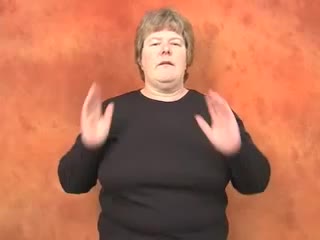
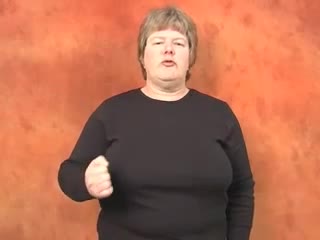
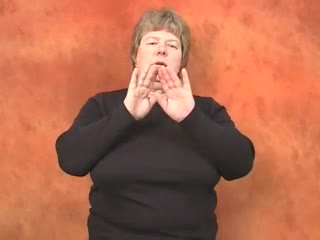
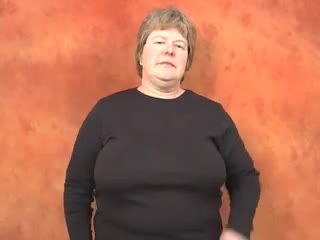
Speed
0
Practice reps times watched

Create a free account to keep your watch history and review plan.

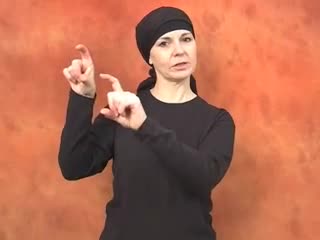
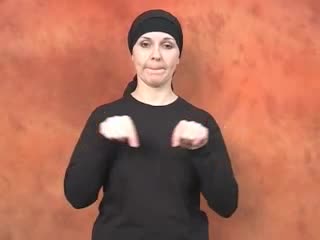
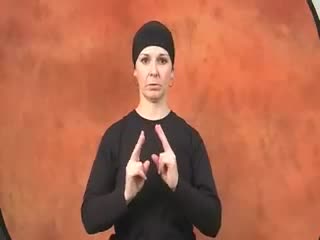
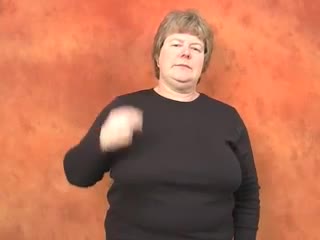
Best practice Use mirror mode, then watch the frame breakdown below to catch the start, movement, and finish cleanly.
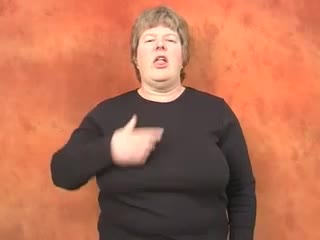
Video via SpreadTheSign  - Free educational resource BSL
Updated April 23, 2026
British Sign Language (BSL) 🟢 Beginner 📊 A1 ⚡ Very Common Noun

Monday

The first day of the standard working week

Source-linked video Step-by-step guide Context and safety notes
Synonyms
Start of week
Antonyms
Difficulty
Not rated yet

Create a free account to save this sign, keep your watch history, and unlock a one-note journal preview.

How to sign it
Handshape
Index finger and thumb extended, other fingers curled
Location
Side of the head (temple area) on the dominant side
Movement
Small twisting or circular motion of the wrist
Palm Orientation
Palm typically faces inward towards the head or slightly forward
Facial Expression
Neutral facial expression
🔁 Spaced Review Try it free

How well do you know this sign?

MONDAY
Your Progress Live
🌱
Level 1 · BSL Beginner +0 XP today
This sign Not learned yet
0 watches
Mastery 0%
Confidence
How well do you know this sign?
0 🔥 Streak
0 Signs seen
0 Learned
0 Watches
📖 Vocabulary health 🔒 Log in to see score
0 Mastered
0 Confident
0 Practicing
0 Just seen

Create a free account to keep your vocabulary score between sessions

7-day activity 0 of 7 active

Register free to sync activity across devices

Watch signs to see your history here

Tracking locally for now. Create a free account to save your progress and sync across devices.
Free gets you started. Paid adds the repeat-learning layer: review queues, deeper notes, compare mode, and better comeback tools.
My Sign Journal
Personal notes, saved to your account forever
Locked

Write memory tricks, usage examples, and cultural reminders beside each sign. Create a free account to unlock your first saved note preview on this page.

Create free account Already have an account? Log in

What This Sign Means in BSL

The BSL sign for Monday is one of the foundational signs for discussing time and schedules in British Sign Language. It’s a beautifully concise and efficient sign that immediately conveys the first day of the working week. You'll notice its distinct G-handshape, where your index finger and thumb extend, while the other fingers curl into your palm.

This sign is performed on the dominant side of your head, specifically around the temple area. The movement is a small, precise twisting or circular motion of the wrist. It’s not a large, sweeping gesture, but a controlled, subtle action that signals the start of the week. Mastering this sign means you’re well on your way to navigating calendar discussions with ease.

Understanding this sign isn't just about the individual components; it's about appreciating its consistent placement among other day signs. It anchors the week, setting the stage for all the activities and plans that follow. Its clarity makes it instantly recognisable within the BSL community, making your communication smooth and natural.

When This Sign Feels Natural

You’ll find yourself using the sign for Monday in countless everyday conversations. It feels most natural when you're discussing plans, recounting past events, or setting future appointments. Imagine signing, "Shall we meet on Monday?" or "What did you do last Monday?" – this sign fits perfectly into these common inquiries and statements.

This sign maintains a neutral register, meaning it's appropriate in almost any context, whether you're chatting informally with friends, discussing work commitments, or making formal arrangements. It’s a standard sign that doesn't carry any particular emotional weight on its own, though your facial expression can, of course, add nuance if you're expressing a feeling about the day, like the dreaded "Monday morning feeling."

While you could finger-spell M-O-N-D-A-Y, using the established BSL sign is almost always preferred for efficiency and fluency in regular conversation. Choosing the BSL sign demonstrates your comfort and proficiency with the language, allowing for a much more natural flow in your dialogue with Deaf signers. It truly is the default and most authentic way to express "Monday" in the UK.

What Learners Usually Miss

One common area where learners sometimes falter with the BSL sign for Monday is in the exact handshape. It's crucial to maintain a clear G-handshape – making sure only your index finger and thumb are extended, and the other three fingers are firmly curled into your palm. Sometimes, learners might relax their other fingers slightly, which can make the sign look less defined or even be mistaken for another sign.

The location and movement are also key. The sign needs to be performed specifically at the temple area, not too far back towards the ear or too far forward on the forehead. The twisting motion is small and controlled. It’s a subtle rotation of the wrist, not a large, sweeping circle or just a static hold. Over-exaggerating the movement can make the sign appear clumsy, while too little movement might make it unclear.

Another subtle point often missed is the typical neutral facial expression that accompanies days of the week. While you can certainly add expression to convey your feelings about a particular Monday, the sign itself doesn't inherently demand a specific expression. Learners sometimes inadvertently adopt a quizzical or over-emphatic look, which can be distracting. Aim for a relaxed, natural face unless you deliberately intend to convey an emotion.

A Simple Way to Remember It

Thinking about the form and function of the BSL sign for Monday can help embed it in your memory. It’s a practical sign, and connecting it to how we start our week can make it stick.

  • The "Start" Pointer: Imagine your extended index finger pointing to the beginning of the week. Monday is the first day, and that G-hand is like a little arrow directing your thoughts to the start.
  • Temporal Thoughts: The sign is at your temple, a place often associated with thinking, planning, and scheduling. It’s like you’re "thinking about" or "planning your week" right from its very first day.
  • The Weekly Turn: The small twisting motion can be visualised as "turning the page" to a new week on a mental calendar, or the subtle but consistent rhythm of the days cycling around.

Short Practice Situations

  • "I’ll see you on Monday for our BSL class."
  • "What exciting things did you get up to last Monday?"
  • "Every Monday, I make sure to plan out my tasks for the week."
  • "The new exhibition opens next Monday at the gallery."
  • "I always feel a bit tired on Monday mornings, don't you?"

Signs to Learn Next

  • Tuesday, Wednesday, Thursday, Friday, Saturday, Sunday: Naturally, once you know Monday, learning the rest of the days of the week is your logical next step. Many share similar handshapes or locations, building on what you’ve learned.
  • Week: This sign connects directly, as Monday is a part of the broader concept of a "week." Understanding "week" allows you to talk about weekly routines or how many Mondays are left until an event.
  • Morning / Afternoon / Evening: To be more specific about when something happens on Monday, these time-of-day signs are invaluable. "Monday morning" is a very common phrase to sign.
  • Next / Last: These directional signs are crucial for specifying "next Monday" or "last Monday." They add essential context to your time references and help you place events accurately.
  • Calendar / Schedule: Learning signs related to organising your time, like "calendar" or "schedule," will help you integrate "Monday" into discussions about planning and appointments even more effectively.

🤖 AI Learning Guide for "Monday"

The BSL sign for 'Monday' uses a G-handshape at the temple, twisting the wrist

🎯 Practice Challenge

Practice forming the G-handshape and twisting your wrist at your temple

⚠️ Most Common Mistake

Ensure your index finger and thumb are extended, not other fingers. Keep the movement small

👐 How to Sign "Monday" in British Sign Language (BSL) (Quick Answer)

Follow these steps to sign Monday correctly in British Sign Language (BSL):

  1. 1 Form a G-handshape (index and thumb extended)
  2. 2 Place dominant hand's G-hand at the temple area
  3. 3 Perform a small twisting or circular wrist motion

Tip: Watch the video above while following these steps for best results.

🤚 Sign Profile

🤚
Handshape
Index finger and thumb extended, other fingers curled
🔣
Handshape Code
G-hand
Dominant Hand
Either
🙌
Hand Count
One-handed
📍
Location
Side of the head (temple area) on the dominant side
↗️
Movement
Small twisting or circular motion of the wrist
🔄
Movement Type
Twist
👆
Contact
Touch
👋
Palm Orientation
Palm typically faces inward towards the head or slightly forward
⚖️
Symmetry
Asymmetric

😊 Non-Manual Features

Facial expressions and body language are grammatically essential in British Sign Language (BSL) - not optional!

😊
Facial Expression
Neutral facial expression
🙆
Eyebrows
Neutral
👁️
Eye Gaze
Forward
🙂
Head Movement
None
👄
Mouth Morpheme
'Mon' or silent mouthing of 'Monday'
🕴️
Body Shift
None

📖 Grammar & Linguistics

Part of Speech Noun
Inflection No
Classifier Usage N/A
Role Shift No

🎓 Learning Context

📌 When to Use: Discussing schedules, events, or general time
⚠️ Common Mistake: Incorrect handshape or location
🚫 When NOT to Use: N/A
Context Tags
Days of week time calendar

🧪 Practice Lab

Use these tiny checks right after watching the video. Fast feedback is what turns recognition into recall.

Meaning check

Which word matches the sign you just watched?

Usage check

Where would this sign fit most naturally?

Confidence check

How do you feel about Monday right now?

Pick one so SignDeaf can shape the rest of your session around how this sign actually feels.

🧭 Scenario Drill

One sign gets remembered faster when you attach it to real situations. Try these quick scene prompts.

Work

Possible fit

Use this sign in a short workplace sentence or meeting exchange.

Family

Stretch practice

Try signing this while talking about family life or something at home.

School

Stretch practice

Imagine teaching this sign to a classmate or using it in a lesson.

Doctor

Stretch practice

Practise it in a healthcare conversation where clarity matters.

Travel

Stretch practice

Use it in a travel scenario like asking for help or directions.

💬 Example Usage

1.[en] See you Monday. / BSL:[Sign MONDAY] | 2.[en] Monday is busy. / BSL:[Sign MONDAY] | 3.[en] What day is Monday? / BSL:[Sign MONDAY]

1.[en] See you Monday. / BSL:[Sign MONDAY] | 2.[en] Monday is busy. / BSL:[Sign MONDAY] | 3.[en] What day is Monday? / BSL:[Sign MONDAY]

When to use it

Discussing schedules, events, or general time

When not to use it

N/A

Register

Neutral

🌍 Cultural Context

Days of week signs are fundamental for daily communication

🗺️ Regional Variations

Minor handshape/movement differences possible, but core sign is standard

⚖️ Similar Signs - What's the Difference?

This sign Monday
VS
Similar signs Look closely
Tuesday: Uses a T-handshape (index extended, thumb between index and middle) at the temple with a similar twisting motion. Monday uses a G-handshape (index and thumb extended). The key difference is the handshape of the extended fingers. Day: Uses a B-hand (flat hand) moving down from the temple. Monday is a G-hand with a twist at the temple. 'Monday' is a specific day, 'Day' is a general time unit
basketball sign thumbnail

basketball

Beginner

Sign representing the sport of basketball, mimicking the action of dribbling a ball

Compare with basketball

📝 Usage Notes

Often accompanied by mouthing 'Monday'

Frequently Asked Questions

Common questions about the British Sign Language (BSL) sign for "Monday".

🏷️ Tags

Handshape

Keywords

💡
Did you know?
In BSL, non-manual features (facial expressions, mouthing) are as important as the hand movements.

📚 Explore More British Sign Language (BSL) Signs

Keep building your British Sign Language (BSL) vocabulary - explore signs by category or browse the full dictionary.