Speed
0
Practice reps times watched

Create a free account to keep your watch history and review plan.

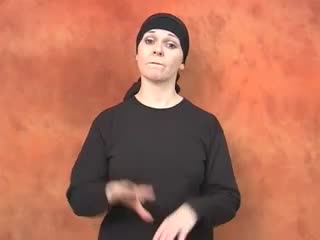
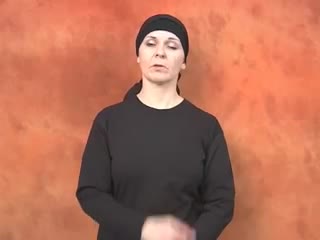
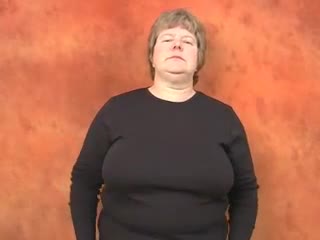
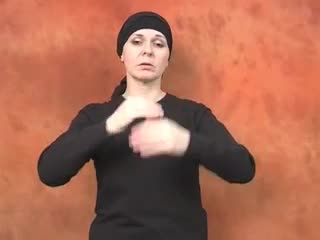
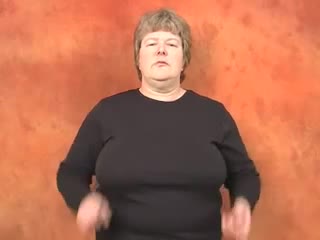
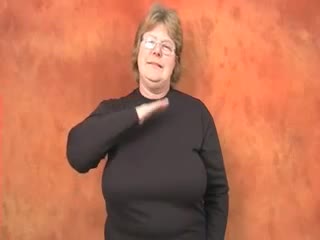
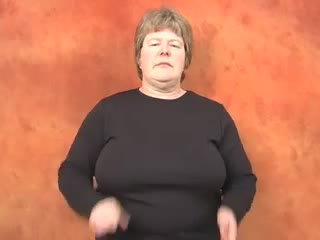
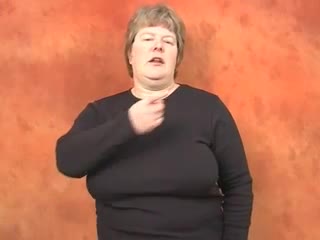
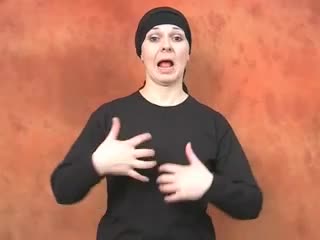
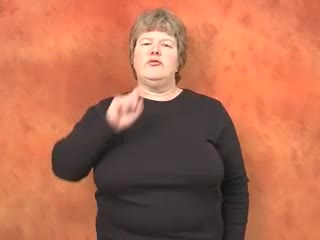
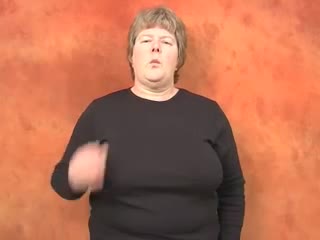
Best practice Use mirror mode, then watch the frame breakdown below to catch the start, movement, and finish cleanly.
Video via SpreadTheSign  - Free educational resource BSL
Updated April 24, 2026
British Sign Language (BSL) 🟢 Beginner 📊 A1 ⚡ Very Common Adjective

black

The colour of least light absorption

Source-linked video Step-by-step guide Context and safety notes
Synonyms
Dark sombre
Antonyms
Difficulty
Not rated yet

Create a free account to save this sign, keep your watch history, and unlock a one-note journal preview.

How to sign it
Handshape
Index finger and thumb touch, forming a small circle, other fingers curled
Location
Cheek, near the mouth
Movement
Brushing forward and slightly downward across the cheek
Palm Orientation
Palm inward/towards face
Facial Expression
Neutral
🔁 Spaced Review Try it free

How well do you know this sign?

BLACK
Your Progress Live
🌱
Level 1 · BSL Beginner +0 XP today
This sign Not learned yet
0 watches
Mastery 0%
Confidence
How well do you know this sign?
0 🔥 Streak
0 Signs seen
0 Learned
0 Watches
📖 Vocabulary health 🔒 Log in to see score
0 Mastered
0 Confident
0 Practicing
0 Just seen

Create a free account to keep your vocabulary score between sessions

7-day activity 0 of 7 active

Register free to sync activity across devices

Watch signs to see your history here

Tracking locally for now. Create a free account to save your progress and sync across devices.
Free gets you started. Paid adds the repeat-learning layer: review queues, deeper notes, compare mode, and better comeback tools.
My Sign Journal
Personal notes, saved to your account forever
Locked

Write memory tricks, usage examples, and cultural reminders beside each sign. Create a free account to unlock your first saved note preview on this page.

Create free account Already have an account? Log in

What This Sign Means in BSL

The BSL sign for black directly refers to the colour itself. It’s a foundational sign in British Sign Language, essential for describing a vast array of objects, clothing, and visual elements around us. When you see this sign, it’s a clear and unambiguous way to communicate the concept of the colour black, whether you’re talking about a raven, a piece of fabric, or the ink in a pen. This sign is straightforward and practical, forming part of the core vocabulary for discussing appearance and attributes. It doesn't typically carry complex hidden meanings or metaphors; its primary function is to denote the absence of colour or the darkest shade on the spectrum. Understanding this basic, literal application is your first step to using it effectively. What’s particularly valuable about this sign is its clarity. Once learned, it’s easily recognised and understood within a signing conversation. It stands out due to its specific handshape and movement on the face, making it a distinct and memorable sign that you’ll find yourself using frequently in everyday BSL communication.

When This Sign Feels Natural

You’ll find the BSL sign for black feels most natural when you're literally describing something that is the colour black. Think about pointing out a black car, detailing the colour of someone's hair, or specifying the shade of a piece of clothing you want to buy. It's the go-to sign when the physical colour is the key piece of information you're conveying. This sign fits perfectly into neutral and descriptive contexts. Whether you're telling a story, giving directions, or just chatting about daily observations, using the sign for black to describe actual black items is appropriate across most social registers. It’s a versatile sign that you can integrate seamlessly into many different conversations. However, it’s crucial to remember that this BSL sign is for the *colour* black. It doesn't generally translate to idiomatic English expressions like "black mood," "black market," or "black sheep." For these concepts, BSL speakers use different signs or descriptive phrases that capture the specific meaning rather than the literal colour. Always consider if you're describing the colour itself or a more abstract, English-specific idea when choosing to use this sign.

What Learners Usually Miss

One common area where learners can sometimes miss the mark with the BSL sign for black is the precision of the handshape. The instruction specifies that the index finger and thumb touch to form a *small circle*, with other fingers curled. It's not a loose 'O' shape, nor is it a pointed finger. Getting this tight, specific circle right is key to forming the sign correctly and making it instantly recognisable to other BSL users. Another subtle but important detail is the movement itself. It’s described as "brushing forward and slightly downward across the cheek." The emphasis here is on the *brushing* action and its trajectory. It’s a gentle, distinct stroke that moves across the skin, not just a static touch or a jab. Some learners might make the movement too small, too forceful, or position it incorrectly, making it less clear. Ensure your hand moves smoothly, tracing a clear path across the designated area. Finally, pay close attention to the exact location on the body: the cheek, near the mouth. It’s easy to accidentally sign too high up on the cheekbone, or too far back towards the ear. The proximity to the mouth helps define the sign's identity. Additionally, for a neutral colour, your facial expression should remain neutral. Don't inadvertently add a surprised or questioning look unless you're signing "Is it black?" – the face works in harmony with the hands in BSL.

A Simple Way to Remember It

To help remember the BSL sign for black, imagine you have a tiny smudge of charcoal or soot on your cheek near your mouth. The handshape, with your index finger and thumb forming a small circle, is like you’re trying to gently pick up or rub away this dark speck. The movement of brushing forward and slightly downward across your cheek then becomes the action of trying to subtly clean that little spot. * Imagine a tiny, dark speck that needs to be gently brushed away from your cheek. * The handshape is like you're holding a miniature, almost invisible piece of soot between your thumb and index finger. * The brushing movement suggests a light wipe, as if you’re smudging the last bit of darkness off your face.

Short Practice Situations

  • Can you hand me that book? The one with the black cover.
  • My new trousers are black, but they’re not very dark.
  • Look at that beautiful black cat sitting on the fence!
  • I prefer my coffee black, please, no milk or sugar.
  • We need a black marker pen for the whiteboard drawing.

Signs to Learn Next

  • COLOUR: Learning this sign is a natural progression as "black" is one of many colours. Understanding how to sign "colour" will help you frame your descriptions.
  • WHITE: Often contrasted with black, "white" is another fundamental colour sign. Practising both together will solidify your understanding of basic colour vocabulary.
  • DARK: While not the same as the colour black, "dark" is conceptually linked, describing a lack of light. This is useful for shades or when describing environments.
  • NIGHT: The concept of "night" is intrinsically tied to darkness and the colour black, making it a logical next step to expand your related vocabulary.
  • CLOTHES: We often describe the colour of our clothes. Learning "clothes" will allow you to combine it with "black" to sign phrases like "black dress" or "black shirt."

🤖 AI Learning Guide for "black"

The BSL sign for 'black' uses a specific handshape and movement on the cheek to denote the colour. It's a foundational colour sign

🎯 Practice Challenge

Practice signing 'black' while mouthing the word clearly

⚠️ Most Common Mistake

Ensure index finger and thumb form a clear small circle. Maintain contact with the cheek

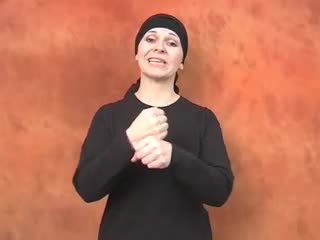
👐 How to Sign "black" in British Sign Language (BSL) (Quick Answer)

Follow these steps to sign black correctly in British Sign Language (BSL):

  1. 1 Form a small circle with index finger and thumb, other fingers curled
  2. 2 Place hand on cheek near mouth
  3. 3 Brush hand forward and slightly downward

Tip: Watch the video above while following these steps for best results.

🤚 Sign Profile

🤚
Handshape
Index finger and thumb touch, forming a small circle, other fingers curled
🔣
Handshape Code
F
Dominant Hand
Right
🙌
Hand Count
One-handed
📍
Location
Cheek, near the mouth
↗️
Movement
Brushing forward and slightly downward across the cheek
🔄
Movement Type
Linear
👆
Contact
Brush
👋
Palm Orientation
Palm inward/towards face
⚖️
Symmetry
Asymmetric

😊 Non-Manual Features

Facial expressions and body language are grammatically essential in British Sign Language (BSL) - not optional!

😊
Facial Expression
Neutral
🙆
Eyebrows
Neutral
👁️
Eye Gaze
Forward
🙂
Head Movement
None
👄
Mouth Morpheme
Mouthing 'black'
🕴️
Body Shift
None

📖 Grammar & Linguistics

Part of Speech Adjective
Inflection No
Classifier Usage N/A
Role Shift No

🎓 Learning Context

📌 When to Use: Describing colour of objects, clothing, hair, skin
⚠️ Common Mistake: Confusing with other facial signs like 'dark' or 'dirty'
🚫 When NOT to Use: When referring to 'darkness' in a non-colour sense (e.g., a dark room) where a different sign might be used
Context Tags
Colours descriptions basic vocabulary

🧪 Practice Lab

Use these tiny checks right after watching the video. Fast feedback is what turns recognition into recall.

Meaning check

Which word matches the sign you just watched?

Usage check

Where would this sign fit most naturally?

Confidence check

How do you feel about black right now?

Pick one so SignDeaf can shape the rest of your session around how this sign actually feels.

🧭 Scenario Drill

One sign gets remembered faster when you attach it to real situations. Try these quick scene prompts.

Work

Stretch practice

Use this sign in a short workplace sentence or meeting exchange.

Family

Stretch practice

Try signing this while talking about family life or something at home.

School

Stretch practice

Imagine teaching this sign to a classmate or using it in a lesson.

Doctor

Stretch practice

Practise it in a healthcare conversation where clarity matters.

Travel

Stretch practice

Use it in a travel scenario like asking for help or directions.

💬 Example Usage

1.[en] The car is black. / BSL:[point to car, sign BLACK] | 2.[en] I like black coffee. / BSL:[sign I LIKE, sign BLACK, sign COFFEE] | 3.[en] My hair is black. / BSL:[sign MY HAIR, sign BLACK]

1.[en] The car is black. / BSL:[point to car, sign BLACK] | 2.[en] I like black coffee. / BSL:[sign I LIKE, sign BLACK, sign COFFEE] | 3.[en] My hair is black. / BSL:[sign MY HAIR, sign BLACK]

When to use it

Describing colour of objects, clothing, hair, skin

When not to use it

When referring to 'darkness' in a non-colour sense (e.g., a dark room) where a different sign might be used

Register

Neutral

🌍 Cultural Context

Basic colour, universally understood

🗺️ Regional Variations

Minor variations in exact placement or movement, but generally consistent across regions

⚖️ Similar Signs - What's the Difference?

This sign black
VS
Similar signs Look closely
The sign for BLACK uses an F-hand (index/thumb circle) brushing the cheek. DIRTY uses a flat hand (B-hand) brushing the cheek, often with a more vigorous movement. DARK (for skin/hair) might involve a flat hand brushing down the cheek, but BLACK is distinct with its circular handshape on the cheek

📝 Usage Notes

Often accompanied by mouthing 'black' for clarity

Frequently Asked Questions

Common questions about the British Sign Language (BSL) sign for "black".

🏷️ Tags

Handshape

Keywords

💡
Did you know?
Watching Deaf signers on YouTube or BSL content online is one of the best ways to improve fluency.

📚 Explore More British Sign Language (BSL) Signs

Keep building your British Sign Language (BSL) vocabulary - explore signs by category or browse the full dictionary.