Speed
0
Practice reps times watched

Create a free account to keep your watch history and review plan.

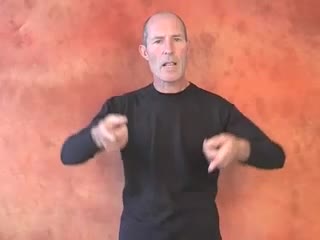
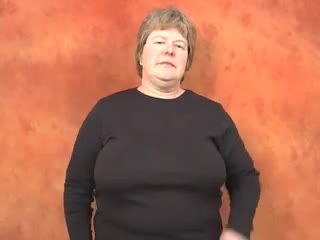
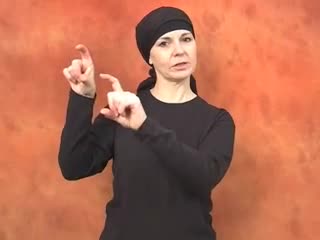
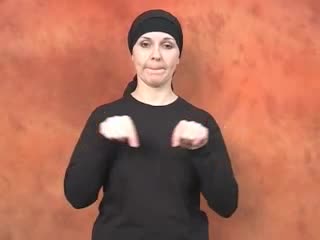
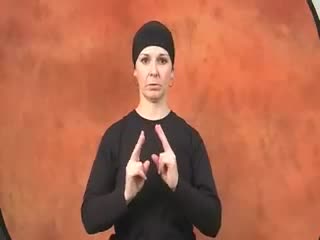
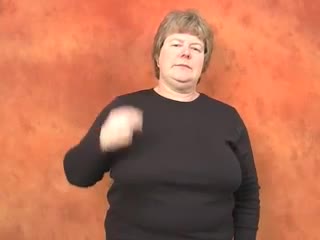
Best practice Use mirror mode, then watch the frame breakdown below to catch the start, movement, and finish cleanly.
Video via SpreadTheSign  - Free educational resource BSL
Updated April 22, 2026
British Sign Language (BSL) 🟢 Beginner 📊 A1 ⚡ Very Common Noun

colour

A property of objects visible to the eye

Source-linked video Step-by-step guide Context and safety notes
Synonyms
Hue shade tone
Antonyms
Monochrome black and white
Difficulty
Not rated yet

Create a free account to save this sign, keep your watch history, and unlock a one-note journal preview.

How to sign it
Handshape
Index finger extended, thumb touching middle finger, other fingers curled
Location
Side of the mouth/cheek
Movement
Wiggle index finger and thumb together repeatedly
Palm Orientation
Towards body/face
Facial Expression
Slightly pursed lips or neutral
🔁 Spaced Review Try it free

How well do you know this sign?

COLOUR
Your Progress Live
🌱
Level 1 · BSL Beginner +0 XP today
This sign Not learned yet
0 watches
Mastery 0%
Confidence
How well do you know this sign?
0 🔥 Streak
0 Signs seen
0 Learned
0 Watches
📖 Vocabulary health 🔒 Log in to see score
0 Mastered
0 Confident
0 Practicing
0 Just seen

Create a free account to keep your vocabulary score between sessions

7-day activity 0 of 7 active

Register free to sync activity across devices

Watch signs to see your history here

Tracking locally for now. Create a free account to save your progress and sync across devices.
Free gets you started. Paid adds the repeat-learning layer: review queues, deeper notes, compare mode, and better comeback tools.
My Sign Journal
Personal notes, saved to your account forever
Locked

Write memory tricks, usage examples, and cultural reminders beside each sign. Create a free account to unlock your first saved note preview on this page.

Create free account Already have an account? Log in

What This Sign Means in BSL

The BSL sign for colour is a foundational and frequently used sign, representing the visual attribute of objects – reds, blues, greens, and all the shades in between. It’s a straightforward noun, ready to be paired with specific colour signs or used generally when discussing the spectrum of hues.

You'll notice its unique placement and movement right away. By forming a precise handshape near the side of your mouth or cheek, you’re creating a sign that is both clear and visually memorable. It's not just about naming a specific shade; it’s about acknowledging the concept of ‘colour’ itself.

This sign serves as your entry point into a vibrant world of description. Mastering it allows you to begin painting pictures with your hands, whether you’re describing a favourite jumper, a piece of art, or simply asking someone about the shade of their new car.

When This Sign Feels Natural

You’ll find yourself reaching for this sign constantly in everyday conversation. It feels most natural when you’re simply identifying a hue, asking about a preferred shade, or describing something visually. Think about situations like picking out clothes, discussing paintings, or even just commenting on the vibrancy of a sunset.

It’s a versatile sign that fits comfortably into both casual chats with friends and more formal discussions where visual descriptions are key. For instance, you might use it to ask, “What colour is your new phone?” or to describe, “The flowers have many different colours.” It's universally understood and carries a neutral, descriptive tone.

While this sign refers to the general concept of visual colour, be mindful that BSL, like any language, has nuanced ways to express related ideas. If you’re talking about something being ‘colourless’ or ‘faded’, you might add other signs to modify the meaning. Similarly, when discussing concepts like 'skin tone' or 'race', specific BSL signs or phrases are often preferred to ensure clarity and cultural sensitivity, rather than relying solely on the general sign for colour.

What Learners Usually Miss

One common area where learners can be a little off with this sign is the precise handshape and movement. It's not just a general wiggle; the key is to have your index finger extended, with your thumb specifically touching the side of your middle finger. Then, the movement is a gentle, repeated wiggling motion between your index finger and thumb, almost like a small, controlled pinch and release.

Another point of focus is the exact location. The sign is made specifically at the side of the mouth or cheek. Some learners might place it too far forward on the lips or too high on the cheekbone. Aim for that sweet spot where the corner of your mouth meets your cheek. This specific placement, combined with the delicate handshape and movement, gives the sign its authentic BSL feel and ensures it’s clearly understood.

Finally, avoid the temptation to over-exaggerate the movement or use an overly expressive facial expression unless you’re deliberately conveying strong emotion related to the colour (e.g., "shocking colour!"). For the basic sign for 'colour', a neutral or slightly inquisitive expression is usually all that’s needed. Maintain a relaxed wrist and arm, letting the small, precise finger movement do the work rather than involving your whole hand or arm in a large, sweeping gesture.

A Simple Way to Remember It

Remembering the BSL sign for colour can be surprisingly intuitive once you connect it to a few simple ideas. Think about how we perceive and describe colours in everyday life; the sign seems to subtly reflect these actions.

  • "Tasting" or "Describing" a Shade: The sign's location near the mouth might make you think of verbally describing a colour, or perhaps even metaphorically "tasting" its quality, like a sommelier describes wine.
  • Picking out a Thread: The precise pincer-like action between your index finger and thumb can be imagined as carefully picking out a single thread of colour from a fabric, or selecting a specific shade from a palette.
  • A Flash of Light: The repeated wiggling motion could represent the shimmering, changing quality of light and how it reveals different colours, or perhaps the quick glance you take at something to register its hue.

Short Practice Situations

  • Try describing your favourite outfit: "My favourite top is a beautiful [BSL sign for colour] red."
  • Ask a friend about their new purchase: "What [BSL sign for colour] is your new car?"
  • Discuss art or decoration: "I love the [BSL sign for colour] scheme in that painting; it's so vibrant!"
  • Point out something in your environment: "Look at the amazing [BSL sign for colour] of those autumn leaves."
  • Imagine planning a party: "We need to decide on the main [BSL sign for colour] for the decorations."

Signs to Learn Next

  • RED, BLUE, GREEN: Once you know the general sign for colour, you’ll naturally want to describe specific ones. These primary colours are excellent starting points to expand your descriptive vocabulary.
  • BRIGHT / DARK: These signs often act as adjectives to modify 'colour', allowing you to describe the intensity or shade of a hue (e.g., 'bright red' or 'dark blue').
  • PAINT / ART: These signs connect directly to the application and appreciation of colour, opening up conversations about creative expression and visual media.
  • RAINBOW: This sign is a natural progression as it inherently represents a collection of many different colours, offering a chance to use your new sign in a broader context.
  • DIFFERENT: Often used when discussing variety, including a variety of colours (e.g., "many different colours"), making it a useful companion sign.


🤖 AI Learning Guide for "colour"

The sign for 'colour' uses a distinct handshape and repeated movement near the mouth/cheek, representing a visual attribute

🎯 Practice Challenge

Sign 'colour' in different contexts. Practice expressing preferences for colours

⚠️ Most Common Mistake

Ensure correct 'G' handshape and distinct wiggle, not a static hold

👐 How to Sign "colour" in British Sign Language (BSL) (Quick Answer)

Follow these steps to sign colour correctly in British Sign Language (BSL):

  1. 1 Form handshape with index extended, thumb touching middle finger
  2. 2 Place fingertips at side of mouth/cheek
  3. 3 Wiggle index finger and thumb together repeatedly
  4. 4 Keep other fingers curled

Tip: Watch the video above while following these steps for best results.

🤚 Sign Profile

🤚
Handshape
Index finger extended, thumb touching middle finger, other fingers curled
🔣
Handshape Code
Index-Thumb-Pinch
Dominant Hand
Right
🙌
Hand Count
One-handed
📍
Location
Side of the mouth/cheek
↗️
Movement
Wiggle index finger and thumb together repeatedly
🔄
Movement Type
Repeated
👆
Contact
Touch
👋
Palm Orientation
Towards body/face
⚖️
Symmetry
Asymmetric

😊 Non-Manual Features

Facial expressions and body language are grammatically essential in British Sign Language (BSL) - not optional!

😊
Facial Expression
Slightly pursed lips or neutral
🙆
Eyebrows
Neutral
👁️
Eye Gaze
Forward
🙂
Head Movement
None
👄
Mouth Morpheme
Pah (slight)
🕴️
Body Shift
None

📖 Grammar & Linguistics

Part of Speech Noun
Inflection No
Classifier Usage N/A
Role Shift No

🎓 Learning Context

📌 When to Use: Describing visual attributes, preferences, or art
⚠️ Common Mistake: Confusing with 'pretty' due to similar location
🚫 When NOT to Use: When referring to 'paint' specifically, use 'paint' sign
Context Tags
Visual appearance descriptive

🧪 Practice Lab

Use these tiny checks right after watching the video. Fast feedback is what turns recognition into recall.

Meaning check

Which word matches the sign you just watched?

Usage check

Where would this sign fit most naturally?

Confidence check

How do you feel about colour right now?

Pick one so SignDeaf can shape the rest of your session around how this sign actually feels.

🧭 Scenario Drill

One sign gets remembered faster when you attach it to real situations. Try these quick scene prompts.

Work

Stretch practice

Use this sign in a short workplace sentence or meeting exchange.

Family

Stretch practice

Try signing this while talking about family life or something at home.

School

Stretch practice

Imagine teaching this sign to a classmate or using it in a lesson.

Doctor

Possible fit

Practise it in a healthcare conversation where clarity matters.

Travel

Stretch practice

Use it in a travel scenario like asking for help or directions.

💬 Example Usage

1.[en] What is your favourite colour? / BSL:[QUESTION-FAVOURITE COLOUR-YOURS] | 2.[en] The sky is blue. / BSL:[SKY BLUE COLOUR] | 3.[en] I like bright colours. / BSL:[I LIKE COLOUR BRIGHT]

1.[en] What is your favourite colour? / BSL:[QUESTION-FAVOURITE COLOUR-YOURS] | 2.[en] The sky is blue. / BSL:[SKY BLUE COLOUR] | 3.[en] I like bright colours. / BSL:[I LIKE COLOUR BRIGHT]

When to use it

Describing visual attributes, preferences, or art

When not to use it

When referring to 'paint' specifically, use 'paint' sign

Register

Neutral

🌍 Cultural Context

Colour perception can vary culturally, but the sign is universal within BSL

🗺️ Regional Variations

Minor variations in handshape or exact location exist

⚖️ Similar Signs - What's the Difference?

This sign colour
VS
Similar signs Look closely
The sign for COLOUR uses a specific index-thumb pinch handshape wiggling at the cheek. This differentiates it from: PRETTY/BEAUTIFUL (often a B-hand or 5-hand brushing the cheek, wider movement); and TASTE (typically an F-hand or G-hand touching the tongue or lips, different movement/location). The handshape and movement are key
joist sign thumbnail

joist

Beginner

A horizontal supporting timber or steel beam, typically one of a series, that supports a floor or ceiling

Compare with joist

📝 Usage Notes

Often followed by specific colour signs like RED, BLUE

Frequently Asked Questions

Common questions about the British Sign Language (BSL) sign for "colour".

🏷️ Tags

Handshape

Keywords

💡
Did you know?
Practising in front of a mirror helps you check your handshape and movement.

📚 Explore More British Sign Language (BSL) Signs

Keep building your British Sign Language (BSL) vocabulary - explore signs by category or browse the full dictionary.