
Daily focus
Archive Replay
Thursday, October 30, 2025
Sign of the Day
weld pass
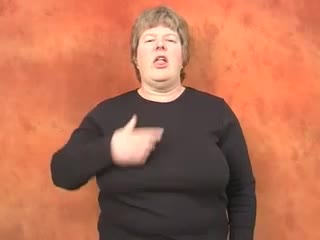
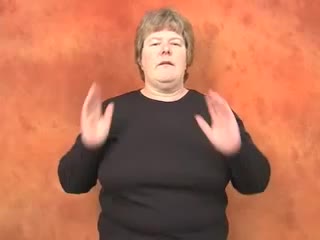
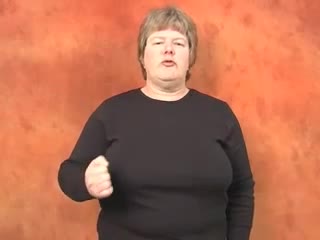
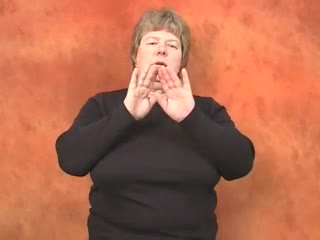
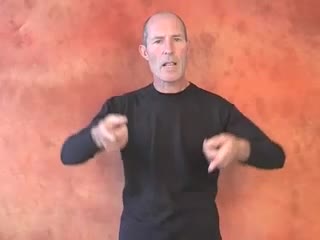
The BSL sign for 'weld pass' uses one hand to represent a welding torch (G-hand) moving along a flat surface (B-hand), simulating the action of laying down a weld bead
B2 Technical Noun British Sign Language (BSL) Technical
Today’s Snapshot
The meta fields are doing real work here
This page turns your sign metadata into a fast, readable fingerprint of how the sign looks, feels, and fits into real conversation.
Dominant G-hand (index finger extended) with palm down; non-dominant flat B-hand (fingers together, straight) with palm up
Dominant G-hand index finger traces linearly across the non-dominant B-hand palm
Discussing specific welding techniques, engineering, or industrial processes
Break It Down
Watch, build, and feel the movement
Use the numbered steps first, then check the sign anatomy cards to clean up the small details that make the sign look fluent instead of approximate.
How to form the sign
- Form non-dominant flat B-hand, palm up, at mid-chest
- Form dominant G-hand, palm down, index finger extended
- Place G-hand index tip near B-hand wrist
- Move G-hand index finger linearly across B-hand palm to fingertips
Coach prompt
Practice forming both handshapes correctly. Focus on a smooth, linear movement, ensuring the G-hand index finger brushes the B-hand palm
Signature details
Handshape
Dominant G-hand (index finger extended) with palm down; non-dominant flat B-hand (fingers together, straight) with palm up · Code G / B-flat
Dominant hand
Either
Symmetry
Asymmetric
Contact
Brush
Palm orientation
Dominant palm down; non-dominant palm up
Eyebrows
Neutral
Eye gaze
Forward
Head movement
None
Mouth morpheme
Mouthing 'weld pass'
Body shift
None
Use It Today
Move from recognition to real-life use
Everything below is designed to make the sign sticky: where it feels natural, what learners miss, and how to use it without sounding robotic.
[en] WE NEED TO CHECK THE WELD PASS. / BSL: WE NEED CHECK WELD PASS
Ensure the dominant G-hand's index finger clearly brushes or traces along the non-dominant palm
Best fit: Discussing specific welding techniques, engineering, or industrial processes
Mirror focus
Practice forming both handshapes correctly. Focus on a smooth, linear movement, ensuring the G-hand index finger brushes the B-hand palm
Catch the slip
Correct by ensuring the G-hand palm faces down and the B-hand palm faces up, with the G-hand index finger brushing the B-hand palm linearly, not in an arc or circle
Use it today
[en] WE NEED TO CHECK THE WELD PASS. / BSL: WE NEED CHECK WELD PASS
Common mistakes: Incorrect handshapes, especially the non-dominant B-hand. Not maintaining correct palm orientations
When not to use it: General conversation unrelated to technical or industrial topics
Regional note: Limited variation due to its technical nature
Cultural note: Primarily used in educational or professional contexts within Deaf communities involved in trades
1.[en] The first weld pass was perfect. / BSL: FIRST WELD PASS PERFECT.
2.[en] Check this weld pass. / BSL: CHECK THIS WELD PASS.
3.[en] Weld pass strength. / BSL: WELD PASS STRONG
When would a learner use the BSL sign for weld pass?
A learner would use this sign when discussing specific technical aspects of welding, fabrication, or construction projects, particularly in an educational or professional setting.
What do beginners often get wrong when signing weld pass in BSL?
Beginners often confuse the palm orientations or the specific movement. They might use an incorrect handshape for the non-dominant hand or make the movement too circular instead of linear.
Does the BSL sign for weld pass change by region or context?
As a technical sign, 'weld pass' has limited regional variation. Its form is quite consistent within British Sign Language, but context might subtly influence speed or emphasis.
Is the BSL sign for weld pass suitable for beginners or children?
This sign is more suitable for intermediate to advanced learners or those with a specific interest in technical subjects, due to its specialized vocabulary. It's not typically taught to young children.
Which sign is most often confused with weld pass in BSL?
Learners might confuse it with signs for general 'line' or 'draw' if handshapes aren't precise, but context usually prevents significant misunderstanding. There isn't a widely known similar technical sign.
Connect the Dots
Turn one sign into a small learning cluster
These links use your relationship fields, related vocabulary, and category context so the daily page becomes a launchpad instead of a dead end.
Word web
Welding bead
weld joint
Unwelded
base metal
Welding
metal
fabrication
engineer
welding
engineer
metal
fabrication
construction
The sign for 'weld pass' differs from a general sign for LINE (often one G-hand drawing in air) by requiring a non-dominant flat B-hand as the surface. It differs from DRAW (picture) which typically implies creating an image and often has a different movement quality or context. The specific handshapes and the brushing motion across the palm are key to 'weld pass,' indicating a precise technical action
Engineering
fabrication
construction
trade
Weld
welding
pass
joint
metalwork
engineering
Construction

Come Back Tomorrow
Build a rhythm around one sign a day
The archive rail lets people revisit recent daily picks, while the teaser card gives a reason to return instead of drifting away after one lesson.
Video credit: The demonstration video on this page is credited to SpreadTheSign. The video remains the property of the original rightholder.
All written explanations, learning notes, examples, comparisons, and page design on this page are SignDeaf educational material.