
Daily focus
Archive Replay
Sunday, January 5, 2025
Sign of the Day
edge
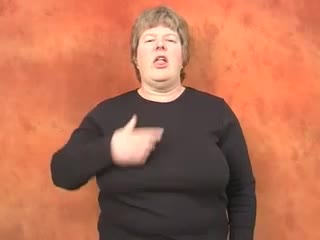
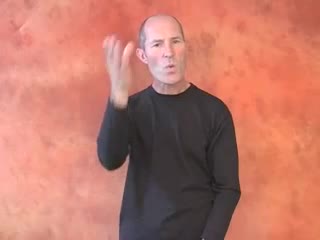
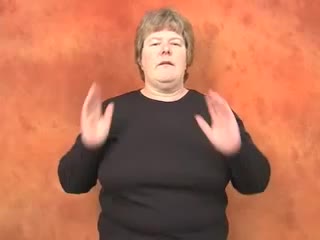
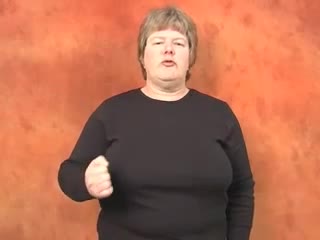
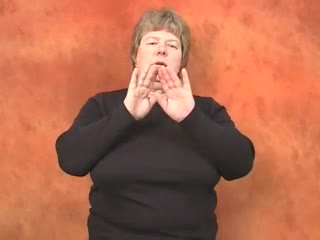
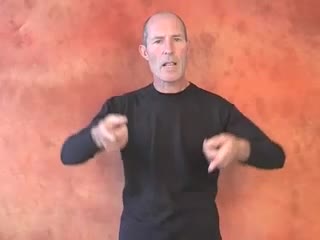
The BSL sign for 'edge' typically involves using the dominant index finger (G-handshape) to trace a straight line in the air, representing a boundary or limit. The movement is linear and precise, often mimicking the contour of an actual edge
A2 Common Noun British Sign Language (BSL) Neutral
Today’s Snapshot
The meta fields are doing real work here
This page turns your sign metadata into a fast, readable fingerprint of how the sign looks, feels, and fits into real conversation.
Dominant hand forms a G-handshape (index finger extended, other fingers and thumb closed)
A linear movement, tracing an imaginary or real line
Used to refer to the physical boundary of an object, a metaphorical limit, or the brink of something
Break It Down
Watch, build, and feel the movement
Use the numbered steps first, then check the sign anatomy cards to clean up the small details that make the sign look fluent instead of approximate.
How to form the sign
- Form G-handshape with dominant hand
- Extend index finger straight
- Palm typically faces down or sideways
- Move index finger in a clear, straight line
- Movement represents the physical boundary
Coach prompt
Practice tracing various imaginary edges, like a table, a book, or a wall. Focus on a clear, straight movement
Signature details
Handshape
Dominant hand forms a G-handshape (index finger extended, other fingers and thumb closed) · Code G-hand
Dominant hand
Right
Symmetry
N/A
Contact
Air
Palm orientation
Typically palm down or sideways, oriented towards the plane of the 'edge'
Eyebrows
Neutral
Eye gaze
Forward
Head movement
None
Mouth morpheme
'mm' or neutral
Body shift
None
Use It Today
Move from recognition to real-life use
Everything below is designed to make the sign sticky: where it feels natural, what learners miss, and how to use it without sounding robotic.
[en] The book fell off the edge of the table
Can be used to describe the edge of a table, a cliff, or the edge of a road. Often accompanied by pointing to the actual edge if present
Best fit: Used to refer to the physical boundary of an object, a metaphorical limit, or the brink of something
Mirror focus
Practice tracing various imaginary edges, like a table, a book, or a wall. Focus on a clear, straight movement
Catch the slip
Ensure your index finger is clearly extended and the movement is linear. Avoid wavy or imprecise movements
Use it today
[en] The book fell off the edge of the table
Common mistakes: Confusing with 'line' or 'border' if context is not clear
When not to use it: Do not use for abstract concepts like 'edgy personality' without modification or alternative signs
Regional note: Minor variations in handshape (e.g., flat B-hand) or specific movement extent may exist
1.[en] Be careful near the edge. / BSL:[Careful, near EDGE]
2.[en] The edge of the paper is torn. / BSL:[Paper, EDGE, torn]
3.[en] He stood at the edge of the cliff. / BSL:[He, stood, cliff, EDGE]
What is the BSL sign for edge?
The BSL sign for 'edge' typically uses the dominant index finger to trace a clear, straight line in the air, representing a boundary or limit.
How do you sign edge in BSL?
Form a G-handshape (index finger extended, other fingers closed) with your dominant hand. With the palm oriented downwards or sideways, move your index finger in a straight line, as if tracing the edge of an object or area.
Is edge one-handed or two-handed in BSL?
The basic and most common sign for 'edge' in BSL is one-handed, performed with the dominant hand.
What handshape is used for edge in BSL?
The G-handshape, where the index finger is extended and all other fingers are closed into the palm, is predominantly used for the sign 'edge'.
How does edge differ from similar signs in BSL?
'Edge' is a precise linear trace. It differs from 'line' (which can be more abstract or two-handed defining width) and 'border' (often a more substantial, broader boundary, sometimes framing an area). 'Corner' involves a distinct change in direction.
Connect the Dots
Turn one sign into a small learning cluster
These links use your relationship fields, related vocabulary, and category context so the daily page becomes a launchpad instead of a dead end.
Word web
boundary
limit
perimeter
fringe
brink
center
middle
interior
corner
line
border
sharp
end
boundary
limit
line
The BSL sign for 'edge' (G-hand tracing a line) is similar to 'LINE' but 'LINE' can be more general or abstract. 'BORDER' often implies a larger or more substantial boundary (e.g., national border), sometimes using two hands to frame an area, whereas 'edge' is typically a precise, singular limit. 'CORNER' involves two intersecting 'edges' and a change in direction, often traced in an 'L' shape. The context and specific movement differentiate these signs
physical
spatial
boundary
limit
edge BSL
sign for edge
boundary sign language
Come Back Tomorrow
Build a rhythm around one sign a day
The archive rail lets people revisit recent daily picks, while the teaser card gives a reason to return instead of drifting away after one lesson.
Video credit: The demonstration video on this page is credited to SpreadTheSign. The video remains the property of the original rightholder.
All written explanations, learning notes, examples, comparisons, and page design on this page are SignDeaf educational material.