What This Sign Means in BSL
The BSL sign for think is a remarkably direct and intuitive way to express mental activity. It's a foundational verb in BSL, indicating the process of cogitation, deliberation, or simply having a thought. When you see this sign, it immediately points to the brain, the seat of our thoughts, making its meaning clear and universally understood within the BSL community.
This sign carries a generally neutral tone, adaptable to various contexts, from casual reflection to intense concentration. It doesn't inherently imply an opinion or a belief, but rather the active engagement of the mind in processing information or forming an idea. Its simplicity belies its importance, serving as a core building block for more complex expressions of mental states.
What makes this sign particularly valuable is its clarity. There's no ambiguity about what you're conveying – you are signalling that a thought process is occurring or being requested. It’s an essential part of everyday conversation, allowing you to pause, consider, and then articulate your internal world externally through BSL.
When This Sign Feels Natural
You'll find the BSL sign for think feels completely natural in a wide array of everyday conversations. Use it when you need to express that you are pondering something, making a decision, or simply taking a moment to process information. For instance, if someone asks you a question and you need a moment before answering, signing "think" with an appropriate facial expression is perfectly natural and polite.
This sign is suitable for nearly all registers, from informal chats with friends to more formal discussions. You might use it when planning an outing, considering a proposal, or even just musing aloud about an idea. It effectively communicates a moment of internal mental activity, inviting the other person to understand that you're engaged in a thought process.
However, it's worth noting that while "think" covers a broad spectrum, there are times you might choose a different sign for more specific mental states. For example, if you're forming an opinion, you might lean towards a sign like "believe" or "opinion." If you're recalling something from memory, "remember" would be more apt. But for the general act of processing thoughts, this sign is your reliable go-to.
What Learners Usually Miss
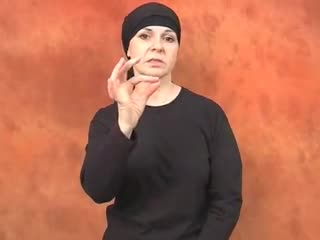
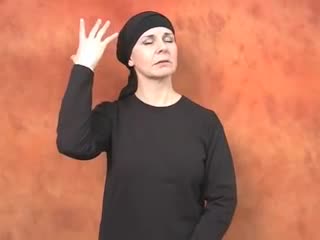
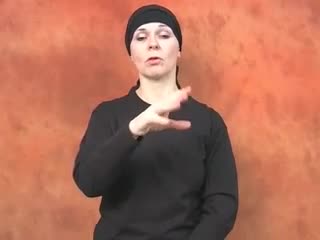
A common subtlety often overlooked by new learners is the precise movement and accompanying facial expression. The sign isn't just about touching your temple; it involves a slight, deliberate forward movement of the index finger away from the head. This subtle shift signifies the "release" or "formation" of a thought. Many learners initially either make the movement too large and sweeping, or too static, missing that gentle forward push that gives the sign its full meaning.
Crucially, facial expression is your most powerful tool for conveying the nuance of "think." A neutral face suggests simple contemplation. A furrowed brow and slightly pursed lips can indicate deep thought or concentration, while a relaxed expression might mean casual consideration. Without the appropriate facial grammar, the sign can appear flat or even ambiguous. Practise mirroring different thinking expressions in front of a mirror to connect the feeling with the sign.
Another area where learners sometimes stumble is overuse or misapplication. Not every internal mental process is "think." For example, if you suddenly understand something, the sign for "understand" is more precise. If you've made a decision, "decide" is better. Resist the temptation to use "think" as a catch-all. Observe how fluent signers use it specifically for the act of cogitation, rather than for outcomes or sudden realisations. Pay attention to the context and ask yourself if "think" truly captures the exact mental state you're trying to convey.
A Simple Way to Remember It
Remembering the sign for "think" can be quite straightforward because its form so clearly mimics its meaning. It’s like you're literally pointing to the source of your thoughts, the brain, and then subtly indicating the thought processing or emerging. This visual connection is a powerful mnemonic aid.
- Point to the Mind: The index finger touching the temple directly signifies the mind or brain, the place where thoughts originate and are processed.
- Thought Emerging: The slight forward movement can be visualised as a thought beginning to form, or an idea "coming out" from your mind.
- "Thinking Cap" Gesture: It's similar to the universal gesture of tapping your head when you're trying to remember or figure something out, making it instinctively relatable.
Short Practice Situations
- Before answering a complex question, pause, sign think, then respond.
- Discussing plans for the weekend, sign think when considering different options for activities.
- When someone asks for your opinion on a new idea, sign think to show you're taking time to process it.
- If you're trying to recall a specific detail, sign think with a concentrated expression as you search your memory.
- Watching a film, sign think to a friend if you're trying to understand a plot twist or character's motivation.
Signs to Learn Next
- Believe: This sign often relates to holding an opinion or conviction, connecting naturally as it's a step beyond simply "thinking" about something, moving towards forming an internal stance.
- Understand: Once you've thought something through, the next step is often to grasp its meaning. This sign follows logically as the outcome of successful thinking.
- Decide: Thinking often leads to making a choice. Learning "decide" next helps you express the resolution of a thought process.
- Wonder: This sign shows curiosity and a desire to think about possibilities, often a precursor to "think" or a different form of mental exploration.
- Remember: While "think" is about current processing, "remember" is about recalling past thoughts or information. Both involve the mind and are essential for coherent conversation.