Speed
0
Practice reps times watched

Create a free account to keep your watch history and review plan.

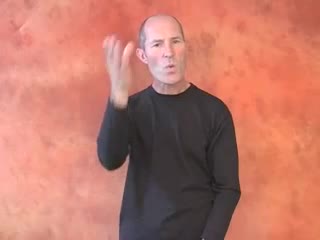
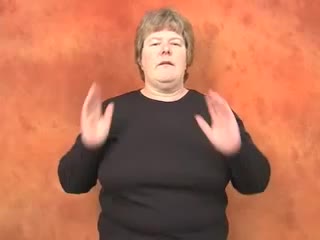
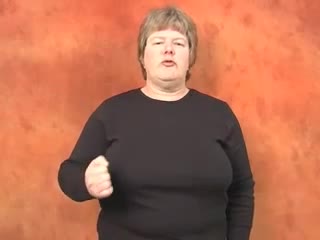
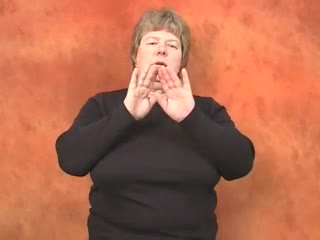
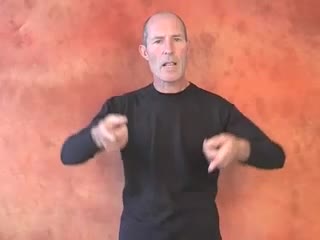
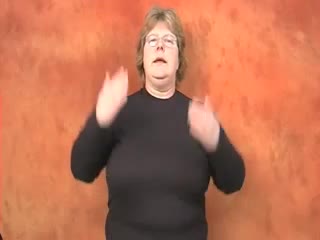
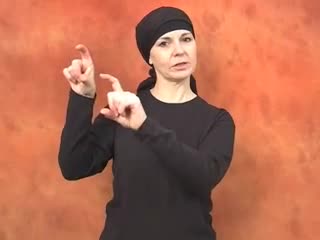
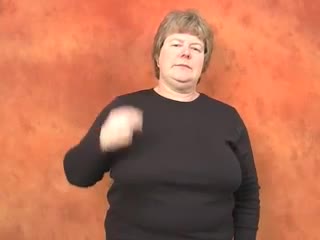
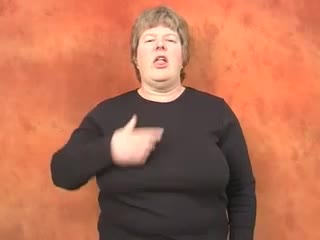
Best practice Use mirror mode, then watch the frame breakdown below to catch the start, movement, and finish cleanly.
Video via SpreadTheSign  - Free educational resource BSL
Updated April 22, 2026
British Sign Language (BSL) 🟢 Beginner 📊 B2 ⚡ Uncommon Noun

chalk string

A tool used to mark straight lines, consisting of a string coated in chalk powder

Source-linked video Step-by-step guide Context and safety notes
Synonyms
Plumb line line marker
Antonyms
N/A
Difficulty
Not rated yet

Create a free account to save this sign, keep your watch history, and unlock a one-note journal preview.

How to sign it
Handshape
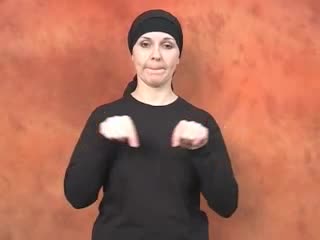
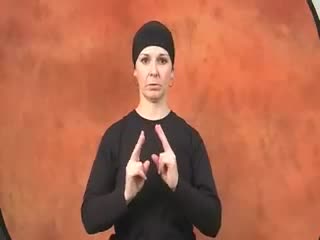
Dominant hand forms a G-hand (index finger and thumb pinched). Non-dominant hand forms an L-hand (index and thumb extended) representing a chalk box
Location
Starts near non-dominant hand, extends outwards/downwards
Movement
Dominant G-hand pulls away from non-dominant L-hand, then snaps down quickly
Palm Orientation
Dominant G-hand palm typically faces down/forward. Non-dominant L-hand palm faces up/forward
Facial Expression
Neutral facial expression
🔁 Spaced Review Try it free

How well do you know this sign?

CHALK STRING
Your Progress Live
🌱
Level 1 · BSL Beginner +0 XP today
This sign Not learned yet
0 watches
Mastery 0%
Confidence
How well do you know this sign?
0 🔥 Streak
0 Signs seen
0 Learned
0 Watches
📖 Vocabulary health 🔒 Log in to see score
0 Mastered
0 Confident
0 Practicing
0 Just seen

Create a free account to keep your vocabulary score between sessions

7-day activity 0 of 7 active

Register free to sync activity across devices

Watch signs to see your history here

Tracking locally for now. Create a free account to save your progress and sync across devices.
Free gets you started. Paid adds the repeat-learning layer: review queues, deeper notes, compare mode, and better comeback tools.
My Sign Journal
Personal notes, saved to your account forever
Locked

Write memory tricks, usage examples, and cultural reminders beside each sign. Create a free account to unlock your first saved note preview on this page.

Create free account Already have an account? Log in

What This Sign Means in BSL

The BSL sign for chalk string isn't just about naming a tool; it's a dynamic representation of its function. This sign beautifully captures the essential action of using a chalk line to mark a surface. You'll see how BSL often distills the core purpose or movement of an object directly into its visual form, making it incredibly intuitive once you understand the underlying concept.

In this sign, your non-dominant hand forms an L-hand, acting as the stable chalk box. Meanwhile, your dominant G-hand, pinching an imaginary string, pulls away from the 'box' and then snaps down decisively. This sequence vividly portrays the process of extending the chalked string, pulling it taut, and then releasing it to leave a clear, straight mark. It’s a very practical and direct sign, leaving little room for misinterpretation.

What's particularly clever is the immediate visual narrative. From the moment you begin the sign, you're not just showing an object; you're illustrating its utility. This makes the sign not only descriptive but also highly memorable, as it directly mirrors the real-world application of the chalk string tool.

When This Sign Feels Natural

This sign feels most natural and appropriate when you're discussing specific tasks that involve precise marking out, particularly in construction, carpentry, DIY projects, or even large-scale art installations. Imagine a builder explaining how they'll mark the foundation for a new wall, or a gardener demonstrating how they'll lay out a perfectly straight path. It's the go-to sign when the act of creating that chalk line is relevant to your conversation.

You’ll find this sign commonly used among tradespeople, craft enthusiasts, and anyone who regularly engages with practical, hands-on work where accuracy is paramount. It’s a well-established and understood sign within these communities, so using it will convey your message clearly and confidently to your audience.

It's important to remember that while this sign is specific and powerful, you wouldn't typically use it for a generic "line" – like a line drawn with a pen on paper, or a queue of people. For those contexts, BSL has other signs for 'line' or 'queue'. This sign is reserved for the particular tool and its distinct method of marking, so make sure your context truly calls for the chalk string itself.

What Learners Usually Miss

One subtle point learners sometimes overlook is the distinct role of each hand. Your non-dominant L-hand isn't just a passive backdrop; it actively embodies the chalk box itself. Ensure this handshape is clear and stable, representing the container from which the chalked string originates. A weak or imprecise L-hand can make the sign less clear about what the dominant hand is interacting with.

The dominant G-hand's movement also needs careful attention. It's not just a simple pull and drop. The movement involves a clear initial pull *away* from the non-dominant hand, simulating the string being extended and tightened. This is then followed by a sharp, decisive *snap down*. This snap is crucial; it replicates the physical action of the chalked string hitting the surface to leave its mark, and a weak or hesitant snap can diminish the sign's clarity and impact.

Finally, pay attention to the starting point and overall direction. The G-hand should begin relatively close to the L-hand, clearly implying the string emerging from the box, before extending outwards. Some learners might start their dominant hand too far away, or not make the extension and subsequent snap distinct enough, which can blur the sign's meaning. Focus on making the full trajectory of the "string" apparent.

A Simple Way to Remember It

To really embed the BSL sign for chalk string in your memory, simply visualise yourself using the actual tool. Your non-dominant hand becomes the chalk box, firmly held, while your dominant hand pinches the 'string', pulls it taut, and then gives it that satisfying snap. It's a direct and functional representation that makes it easy to recall.

  • The L-hand as the box: Think of the "L" shape as the sturdy casing of the chalk string dispenser, holding the chalk.
  • The G-hand pulling the string: Imagine your index finger and thumb actually pinching the chalked string, drawing it out ready for use.
  • The sharp "snap" movement: This is the moment the chalk line is marked, a quick, decisive action that leaves a visible trace.

Short Practice Situations

  • "I need the chalk string to mark where the new partition wall will go."
  • "Can you help me pull the chalk string tight so we can get an accurate measurement across this space?"
  • "The carpenter used a chalk string to ensure the edge of the decking was perfectly straight before cutting."
  • "Before cutting any material, always use a chalk string for a precise and visible guide line."
  • "We used the chalk string to draw out the exact boundaries for our new raised garden bed."

Signs to Learn Next

  • LINE (general): Since "chalk string" creates a line, learning the general sign for 'line' will help you differentiate when you're referring to the specific tool versus just the concept of a line itself.
  • MEASURE: Using a chalk string is frequently part of a broader measuring process. Understanding 'measure' will allow you to discuss the complete cycle of planning and execution in BSL.
  • BUILD / CONSTRUCTION: The chalk string is a fundamental tool in building and construction. These broader signs provide essential context for where this specific tool is most often employed.
  • RULER: Another common tool for making straight lines or taking measurements, 'ruler' offers a useful comparison and expands your vocabulary for similar implements.
  • CUT: After marking a precise line with a chalk string, the next logical step is often to cut along it. This sign connects the marking action to its practical follow-through.

🤖 AI Learning Guide for "chalk string"

This sign depicts pulling a string from a chalk box and snapping it to make a line

🎯 Practice Challenge

Practice the two distinct handshapes and the pull-and-snap movement

⚠️ Most Common Mistake

Ensure the G-hand pulls away clearly before the quick downward snap

👐 How to Sign "chalk string" in British Sign Language (BSL) (Quick Answer)

Follow these steps to sign chalk string correctly in British Sign Language (BSL):

  1. 1 Form non-dominant L-hand, palm up/forward, at waist/chest
  2. 2 Form dominant G-hand, pinch, near non-dominant L-hand
  3. 3 Pull dominant G-hand slightly away from L-hand
  4. 4 Snap dominant G-hand down quickly

Tip: Watch the video above while following these steps for best results.

🤚 Sign Profile

🤚
Handshape
Dominant hand forms a G-hand (index finger and thumb pinched). Non-dominant hand forms an L-hand (index and thumb extended) representing a chalk box
🔣
Handshape Code
G, L
Dominant Hand
Either
🙌
Hand Count
Two-handed
📍
Location
Starts near non-dominant hand, extends outwards/downwards
↗️
Movement
Dominant G-hand pulls away from non-dominant L-hand, then snaps down quickly
🔄
Movement Type
Linear, Snapping
👆
Contact
Near
👋
Palm Orientation
Dominant G-hand palm typically faces down/forward. Non-dominant L-hand palm faces up/forward
⚖️
Symmetry
Asymmetric

😊 Non-Manual Features

Facial expressions and body language are grammatically essential in British Sign Language (BSL) - not optional!

😊
Facial Expression
Neutral facial expression
🙆
Eyebrows
Neutral
👁️
Eye Gaze
Forward
🙂
Head Movement
None
👄
Mouth Morpheme
Neutral
🕴️
Body Shift
None

📖 Grammar & Linguistics

Part of Speech Noun
Inflection No
Classifier Usage N/A
Role Shift No

🎓 Learning Context

📌 When to Use: Used in contexts like construction, DIY, or craft to describe the tool
⚠️ Common Mistake: Confusing with the separate signs for 'chalk' or 'string'. Not executing the distinct snapping movement
🚫 When NOT to Use: Avoid if a simple 'line' or 'mark' is sufficient without specifying the tool
Context Tags
Construction DIY Tools Measurement

🧪 Practice Lab

Use these tiny checks right after watching the video. Fast feedback is what turns recognition into recall.

Meaning check

Which word matches the sign you just watched?

Usage check

Where would this sign fit most naturally?

Confidence check

How do you feel about chalk string right now?

Pick one so SignDeaf can shape the rest of your session around how this sign actually feels.

🧭 Scenario Drill

One sign gets remembered faster when you attach it to real situations. Try these quick scene prompts.

Work

Stretch practice

Use this sign in a short workplace sentence or meeting exchange.

Family

Stretch practice

Try signing this while talking about family life or something at home.

School

Stretch practice

Imagine teaching this sign to a classmate or using it in a lesson.

Doctor

Stretch practice

Practise it in a healthcare conversation where clarity matters.

Travel

Stretch practice

Use it in a travel scenario like asking for help or directions.

💬 Example Usage

1.[en] The builder needed a chalk string. / BSL:[note: BUILDER NEED CHALK STRING] | 2.[en] I will mark the floor with a chalk string. / BSL:[note: I MARK FLOOR CHALK STRING] | 3.[en] Do you have a chalk string? / BSL:[note: YOU HAVE CHALK STRING Q]

1.[en] The builder needed a chalk string. / BSL:[note: BUILDER NEED CHALK STRING] | 2.[en] I will mark the floor with a chalk string. / BSL:[note: I MARK FLOOR CHALK STRING] | 3.[en] Do you have a chalk string? / BSL:[note: YOU HAVE CHALK STRING Q]

When to use it

Used in contexts like construction, DIY, or craft to describe the tool

When not to use it

Avoid if a simple 'line' or 'mark' is sufficient without specifying the tool

Register

Neutral

🌍 Cultural Context

This sign directly depicts the function of the tool

🗺️ Regional Variations

Generally consistent, minor variations in hand placement possible

⚖️ Similar Signs - What's the Difference?

This sign chalk string
VS
Similar signs Look closely
CHALK STRING differs from CHALK (G-hand rubs on palm) by its non-dominant L-hand (representing the box) and the distinct pulling and snapping motion. It differs from STRING (index finger pulling from hand) by using the L-hand as a container and the unique snap. The key difference is the L-hand 'box' and the 'snapping' action
chalk sign thumbnail

chalk

Beginner

A stick of soft material used for writing or drawing on surfaces

Compare with chalk

📝 Usage Notes

The non-dominant L-hand acts as the 'chalk box' from which the 'string' is pulled

Frequently Asked Questions

Common questions about the British Sign Language (BSL) sign for "chalk string".

🏷️ Tags

Handshape

Keywords

💡
Did you know?
Practising in front of a mirror helps you check your handshape and movement.

📚 Explore More British Sign Language (BSL) Signs

Keep building your British Sign Language (BSL) vocabulary - explore signs by category or browse the full dictionary.