What Is the BSL Sign for "string"?
Are you ready to untangle the nuances of British Sign Language? Here's how you depict a simple yet versatile item like "string." This particular BSL sign for string doesn't just represent the object; it elegantly conveys its inherent qualities, like its flexibility and length, making it a truly engaging piece of visual communication. Mastering the British Sign Language string sign opens up numerous conversational pathways, allowing you to discuss everything from crafts to specific household items with clarity and ease.
How to Sign "string" in British Sign Language - Step-by-Step
Let's meticulously break down the precise movements and handshapes that bring the concept of "string" to life in British Sign Language.
Step 1: Handshape
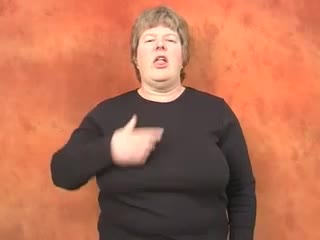
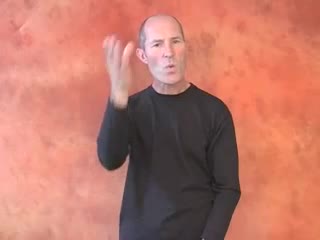
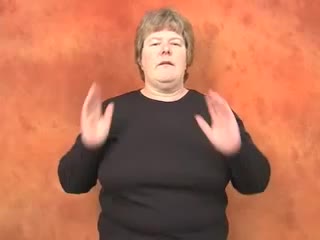
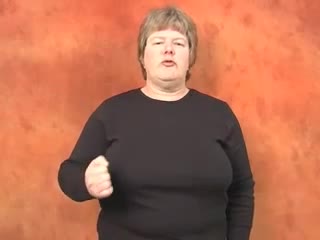
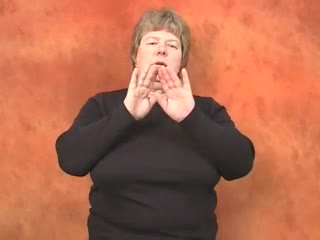
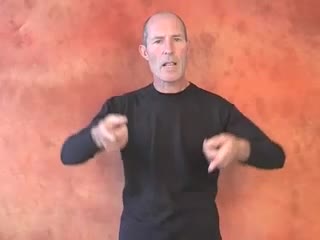
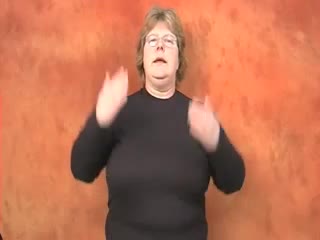
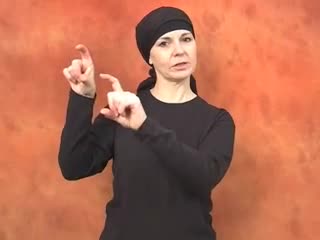
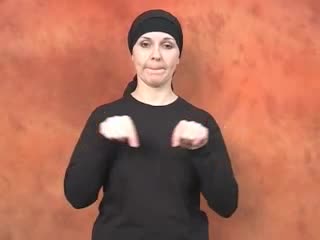
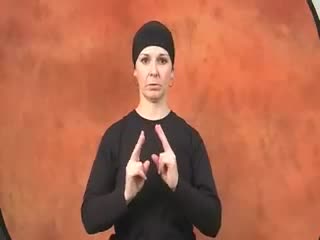
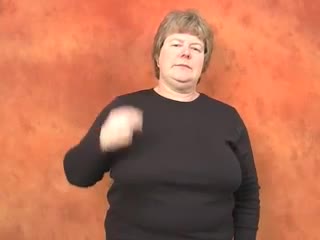
Begin by forming a distinct 'F' handshape with your dominant hand. This means you'll bring the tip of your index finger to meet the tip of your thumb, creating a small, enclosed circle. Meanwhile, the rest of your fingers – your middle, ring, and pinky fingers – should remain comfortably extended outwards, maintaining a slight, natural curve. Imagine your hand delicately grasping the end of a piece of string; this handshape intuitively captures that very action.
Step 2: Hand Placement and Location
Position your dominant hand, now in that precise 'F' handshape, quite close to your body. You'll want it to start around your non-dominant upper chest or shoulder area. Think of this initial placement as though you're about to pull a length of string from a pocket, a dispenser, or even a ball of twine resting nearby. The space in front of your chest is your neutral signing area, and this sign originates from a specific point within it.
Step 3: Movement
From its starting point, move your dominant hand forward and slightly outwards in a smooth, continuous, and controlled arc. As you extend your arm, introduce a gentle, subtle wiggling motion to your hand, depicting the flexible, undulating nature of string as it unwinds or stretches. This movement isn't abrupt; it's a deliberate, flowing action that visually "draws out" the string into the space before you.
Step 4: Facial Expression and Mouthing
Maintaining a neutral and relaxed facial expression is perfectly appropriate for this sign. Crucially, you should mouth the word "string" silently as you perform the sign. Mouthing, a vital non-manual feature in British Sign Language, provides an essential phonetic cue for hearing signers and reinforces the lexical meaning for Deaf signers. It acts as an integral grammatical component, not merely an optional addition, solidifying the sign's identity within a sentence.
Step 5: Palm Orientation
At the commencement of the sign, your dominant hand's palm will generally face inwards, towards your body, or slightly towards your non-dominant side. As you execute the forward and outward movement, your palm will gradually rotate. It finishes with your palm facing forwards or slightly downwards, completing the visual metaphor of the string being pulled out and laid bare. This subtle shift in palm orientation is key to conveying the dynamic quality of the object being represented.
"string" in BSL - Quick Reference Snapshot
- Handshape: Dominant hand forms an 'F' handshape (index finger and thumb tips touching, other fingers extended).
- Location: Begins near your non-dominant upper chest or shoulder.
- Movement: Smooth, arcing motion forward and outward, with a gentle wiggle.
- Facial Expression: Neutral, accompanied by silent mouthing of "string."
- Dominant Hand: One-handed sign, performed with your dominant hand.
- Palm Orientation: Starts inward, rotates to face forward or slightly downward during movement.
5 Memorisation Tricks for the BSL Sign "string"
- Visual Mnemonic: The Thread Holder: Picture your thumb and index finger forming the 'F' handshape as if you're delicately pinching a single strand of string. The extended fingers below it can represent the rest of the string hanging down from your grasp. This mental image directly connects the handshape to the item itself.
- Muscle-Memory Drill: The Unravelling Spool: Repeatedly practice the entire motion, imagining you're pulling string from a giant, invisible spool at your chest. Focus on the smooth, continuous arc and the subtle wiggling action; this builds the motor memory needed for fluid execution.
- Connection to Meaning: Showing Length: Think about the movement's purpose: it's showing the *length* of the string being pulled out. Each time you sign, consciously connect the extended arm motion to the idea of demonstrating something long and flexible. This deepens your understanding beyond just rote memorisation.
- Common-Confusion Tip: Not "Thin": A common beginner error is confusing this sign with "thin" or "fine." Remember, "string" has that distinct 'F' handshape and the specific unravelling movement, whereas "thin" often involves a flatter handshape or a different motion altogether. Pay attention to the initial handshape to differentiate them.
- Daily-Life Practice: The Imaginary String: Throughout your day, whenever you see a piece of string, yarn, or even a shoelace, stop for a moment and sign "string." Integrate this practice into mundane observations; it reinforces the sign in real-world contexts without requiring a conversation partner.
Real-Life Situations to Use the BSL Sign for "string"
You'll discover many practical opportunities to use the BSL sign for "string" in everyday interactions.
- Perhaps you're at a craft store, and you need to ask a Deaf friend, "Do you want blue string or red string?" - in British Sign Language, you'd establish the colours first, then sign "STRING" for each.
- Imagine you're helping someone pack a parcel, and you might comment, "We need string to tie this box." In BSL, this could be structured as "BOX TIE, STRING NEED."
- Perhaps you're playing with a cat, and you want to ask, "Does the cat like to play with string?" You'd use the sign for "CAT," then "PLAY," and finally "STRING," often with a questioning facial expression.
- Suppose you're giving instructions, explaining, "Take this string and measure three feet." Here, the sign for "string" would precede the action of measuring, providing the object for the instruction.
Top 3 Mistakes Learners Make Signing "string" in BSL
Learning a new sign can present unique challenges, and "string" is no exception. Here are some specific pitfalls to avoid.
- Using the wrong handshape: Many beginners might default to a 'G' handshape (index finger extended) or a '1' handshape (just the index finger extended) instead of the correct 'F'. This happens because they're trying to represent something thin, but the 'F' handshape is crucial for specifically denoting the act of *holding* or *pinching* a strand. To correct this, consciously form the circle with your thumb and index finger before initiating any movement, ensuring the other fingers are extended.
- Forgetting the movement's arc and wiggle: Learners sometimes perform a simple straight forward motion without the subtle arc or the gentle wiggling. This makes the sign look stiff and less like a flexible piece of string being drawn out. The correction involves deliberately adding that slight outward curve and the relaxed, undulating motion as your hand moves away from your body, giving the sign its dynamic quality.
- Neglecting the mouthing of the word: A common oversight, especially for hearing learners, is to sign "string" without mouthing the word itself. While the manual sign carries the meaning, the silent mouthing of "string" is an integral non-manual feature in BSL that supports comprehension and forms part of the sign's complete linguistic package. Always remember to clearly mouth "string" as you perform the manual sign, integrating it fully into your communication.
Fascinating Facts About the BSL Sign for "string"
Let's delve into some interesting tidbits surrounding the BSL sign for "string."
- The iconic nature of this sign is quite clear; its form visually mimics the action of pulling a length of string, making it intuitively understandable even to those unfamiliar with British Sign Language.
- While the core sign remains consistent, you might observe subtle regional variations in the speed or emphasis of the 'wiggling' motion across different Deaf communities within the United Kingdom.
- This sign does not appear to have a direct historical link to the two-handed manual alphabet, unlike some other older BSL signs which might trace their origins to finger-spelled components.
- Its construction as a single-handed sign makes it particularly efficient in conversation, allowing the non-dominant hand to remain free for other grammatical functions or to hold an object.
- The sign's dynamism, expressed through its movement and palm orientation change, illustrates how BSL uses more than just static handshapes to convey full meaning and nuance.
"string" in Deaf Culture - Community and Identity
The sign for "string" might seem simple, yet it weaves its way into countless aspects of everyday life and cultural expression within the Deaf community. It's a sign frequently used in conversations about hobbies, such as knitting, crocheting, or crafting, which are often cherished activities for relaxation and connection. Discussions about practical household tasks, like tying things or hanging decorations, also naturally incorporate this sign. Beyond the literal, "string" can appear metaphorically in stories or jokes, perhaps representing connections between people or the delicate threads of a narrative. Its utility reflects how British Sign Language is a living, breathing language, perfectly equipped to handle the full spectrum of human experience, from the mundane to the deeply personal.
Example Conversations Using "string" in BSL
Here are five different contexts where you might encounter the sign for "string."
English: Do you have any string for this parcel? - BSL structure: PARCEL THIS, STRING YOU HAVE? (Question, topic-comment, raised eyebrows)
English: The cat loves to play with a long piece of string. - BSL structure: CAT LOVE PLAY, STRING LONG. (Topic-comment, adjective follows noun)
English: Could you cut me a short length of string, please? - BSL structure: STRING SHORT, CUT FOR ME PLEASE. (Request, object-verb order, polite marker)
English: We used string to hang the lights for the party. - BSL structure: PARTY LIGHTS HANG, STRING USED. (Event-action-tool structure)
English: Be careful, the string is very thin and might break. - BSL structure: STRING THIN, CAREFUL, BREAK MIGHT. (Warning, adjective-noun, conditional verb structure)
Frequently Asked Questions: The BSL Sign for "string"
Is the BSL sign for "string" universal across the UK?
While the core sign for "string" is widely understood and used across the UK, you might encounter minor regional variations in the speed or emphasis of the movement. These slight differences typically don't hinder comprehension and are part of the natural linguistic diversity within the British Deaf community. Familiarity with the standard form will serve you well in most contexts.
Are there any similar signs that I might confuse with "string" in BSL?
Yes, learners sometimes confuse "string" with signs for "thin" or "thread" due to conceptual overlap. The key differentiator for "string" is its specific 'F' handshape and the distinct "pulling out" arcing movement with a gentle wiggle, unlike the flatter handshapes or different movements used for "thin" or "thread." Paying close attention to the handshape is crucial for accurate signing.
Is the BSL sign for "string" suitable for absolute beginners?
Absolutely, the sign for "string" is an excellent sign for absolute beginners to learn early on. Its iconic nature makes it relatively easy to remember, and it introduces fundamental BSL elements like handshape, movement, and mouthing in a straightforward manner. It's a practical sign that you'll quickly find opportunities to use in basic conversations.
How can I teach the BSL sign for "string" to children?
Teaching the sign for "string" to children is wonderfully engaging; use a real piece of string or yarn as a prop! Have them physically pull a piece of string from a ball while mimicking your handshape and movement. You could also incorporate it into craft activities or story time, signing "string" whenever it's mentioned.
How does the BSL sign for "string" compare to the sign in other sign languages?
Comparing the BSL sign for "string" to its equivalents in other sign languages reveals fascinating linguistic differences. While many sign languages might use an iconic representation, the specific handshape, placement, and movement are often unique to each language. For instance, some might use a two-handed sign or a different finger configuration to represent a similar concept.
Signs That Pair Naturally with "string" in BSL
Building vocabulary effectively involves understanding how signs connect. Here are some signs that naturally cluster with "string."
- BALL: Frequently pairs with "string" when discussing a ball of yarn or twine, linking the container with its contents.
- TIE: Often used with "string" when describing the action of fastening something, highlighting the string's function.
- CUT: Essential for specifying an action performed on string, such as shortening a length, connecting it to practical tasks.
- LONG: A natural adjective to modify "string," describing its physical attribute, and helping build descriptive sentences.
- SHORT: Conversely, this adjective also pairs well, allowing you to specify a concise piece of string in conversation.
- KNOT: Directly related to string, as knots are commonly made with it, expanding the vocabulary around its manipulation.
Building Fluency: How to Practise "string" in BSL
To truly embed the BSL sign for "string" into your active vocabulary, consistent and varied practice is key. Position yourself in front of a mirror and meticulously observe your handshape, ensuring your thumb and index finger form that precise 'F' shape, and that your other fingers remain naturally extended. Integrate the sign for "string" into your daily inner monologue or practice conversations, thinking about situations where you'd use it, like "I need string for this." Try filming yourself signing, then watch it back with a critical eye; you'll notice subtle nuances in your movement or facial expression that you can refine. The ultimate goal is to connect with a Deaf conversation partner, as genuine interaction provides invaluable feedback and builds confidence. Remember, consistent repetition, spaced out over several days, will help solidify the sign in your muscle memory and make it feel completely natural.