Speed
0
Practice reps times watched

Create a free account to keep your watch history and review plan.

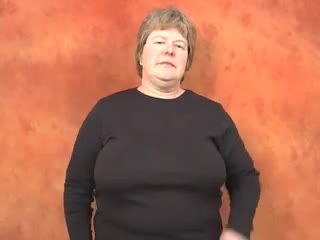
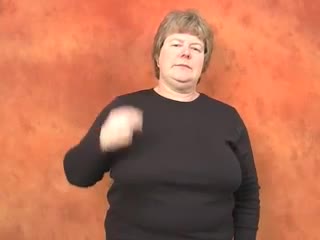
Best practice Use mirror mode, then watch the frame breakdown below to catch the start, movement, and finish cleanly.
Video via SpreadTheSign  - Free educational resource BSL
Updated April 20, 2026
British Sign Language (BSL) 🟢 Beginner 📊 B1 ⚡ Uncommon Noun

dormer window

A window projecting vertically from a sloping roof

Source-linked video Step-by-step guide Context and safety notes
Synonyms
Roof window attic window
Difficulty
Not rated yet

Create a free account to save this sign, keep your watch history, and unlock a one-note journal preview.

How to sign it
Handshape
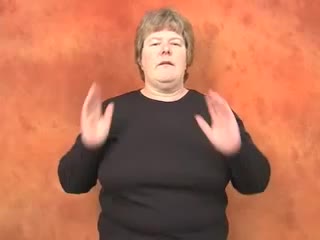
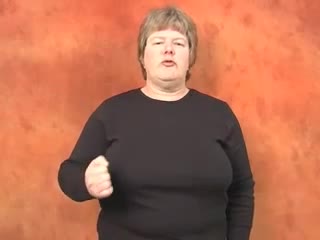
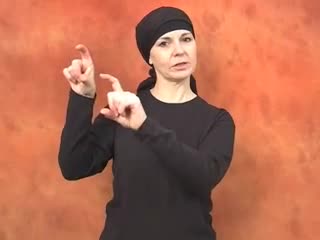
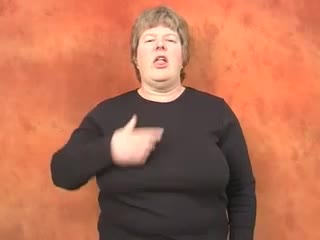
Non-dominant B-hand (flat), palm down, angled downward. Dominant G-hand (index extended), palm forward
Location
Upper chest to head height
Movement
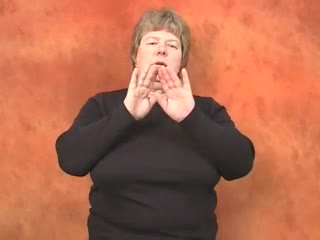
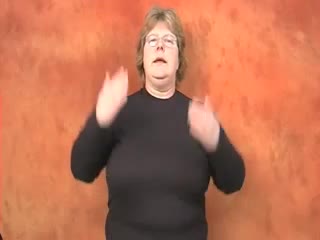
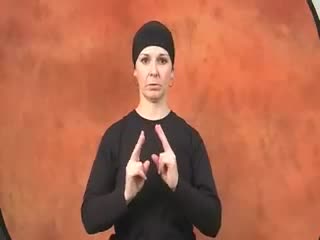
Dominant G-hand outlines a rectangle upwards from the non-dominant hand
Palm Orientation
Non-dominant: Down. Dominant: Forward
Facial Expression
Neutral
🔁 Spaced Review Try it free

How well do you know this sign?

DORMER WINDOW
Your Progress Live
🌱
Level 1 · BSL Beginner +0 XP today
This sign Not learned yet
0 watches
Mastery 0%
Confidence
How well do you know this sign?
0 🔥 Streak
0 Signs seen
0 Learned
0 Watches
📖 Vocabulary health 🔒 Log in to see score
0 Mastered
0 Confident
0 Practicing
0 Just seen

Create a free account to keep your vocabulary score between sessions

7-day activity 0 of 7 active

Register free to sync activity across devices

Watch signs to see your history here

Tracking locally for now. Create a free account to save your progress and sync across devices.
Free gets you started. Paid adds the repeat-learning layer: review queues, deeper notes, compare mode, and better comeback tools.
My Sign Journal
Personal notes, saved to your account forever
Locked

Write memory tricks, usage examples, and cultural reminders beside each sign. Create a free account to unlock your first saved note preview on this page.

Create free account Already have an account? Log in

What This Sign Means in BSL

The BSL sign for dormer window isn't just a simple combination of 'dormer' and 'window'; it's a beautifully descriptive sign that captures the unique architectural feature itself. At its heart, this sign vividly illustrates a window that projects out from the sloping side of a roof. It moves beyond a generic 'window' to communicate a very specific structural element, instantly conveying its form and placement. What makes this sign so effective is its iconic representation. Your non-dominant hand, angled downward, truly becomes the sloped roof, providing the foundational context. Then, your dominant G-hand, with its extended index finger, traces the outline of the window frame as it emerges vertically from that slanting surface. It’s a spatial description in miniature, helping you visualise the window's position relative to the roofline. This isn't a sign you'd use for any old window. Instead, it's reserved for those charming, often characterful windows that add light and space to an attic or loft. Understanding its precise meaning helps you appreciate the nuance in BSL, where specific details are often conveyed through descriptive and visually-driven signs, allowing for clear and efficient communication about the built environment.

When This Sign Feels Natural

You'll find the BSL sign for dormer window feels most natural when you're discussing specific architectural features, describing a house, or perhaps explaining a renovation project. Imagine you're showing someone a picture of a cottage with a distinctive roofline, or pointing out a feature on a building you're passing – this is when the sign shines. It’s perfect for adding detail to your descriptions, making your communication much richer than just saying "house with windows." This sign fits well in conversations ranging from casual observations to more formal discussions about property or design. If you're chatting about where you'd like to live, or describing a dream home, incorporating this sign adds a touch of sophistication and precision. It’s also incredibly useful in contexts like real estate, architecture, or even storytelling, where the specifics of a building’s appearance are important to the narrative. However, remember its specificity. If you simply need to refer to a window in general – perhaps "open the window" or "look out the window" – you'd use the more common, general BSL sign for 'window'. Choosing the dormer window sign specifically tells your audience that this particular type of window is significant to your message, whether it's for its aesthetic appeal, its function, or its unique placement in the building. It’s all about selecting the right tool for the job.

What Learners Usually Miss

One common subtlety learners often miss with the dormer window sign is the precise interaction between the two hands and the continuous flow of the dominant hand's movement. It's not just two separate actions; they work together. The non-dominant B-hand isn't merely a passive base; its downward angle is crucial. Many might hold it too flat or forget to angle it, losing the vital visual cue of the sloping roof. Remember, that angle sets the scene for where the window emerges. Another area where learners can falter is the rhythm and direction of the dominant G-hand. The movement should be a smooth, upward outlining of a rectangle, clearly defining the window's frame as it rises from the 'roof'. Sometimes, learners make the movement too jerky, too small, or they might outline downwards, which completely changes the meaning. The upward motion truly signifies the window projecting *up* from the slope, not sinking into it. Finally, a frequent oversight is failing to distinguish this sign from the general sign for 'window'. Because both involve outlining a shape, learners might mistakenly use "dormer window" when they simply mean "window." The key difference lies in the non-dominant hand setting the 'roof' context and the dominant hand's specific upward movement *from* that context. Pay close attention to these elements, and your sign will be clear, accurate, and instantly understood by other BSL users.

A Simple Way to Remember It

To help this sign stick in your memory, think about breaking down the visual elements into their logical parts, almost like building the window itself. Each hand plays a distinct, meaningful role that makes the sign intuitively descriptive.
  • The Sloping Roof: Your non-dominant B-hand, angled slightly downward, perfectly represents the sloped roof of a house. Visualise rain running off it – that's the angle you're aiming for.
  • The Emerging Window: Your dominant G-hand (index finger extended) then acts like you're drawing or 'building' the window frame. It starts from that 'roof' and outlines the rectangular shape of the window.
  • Standing Tall: The upward movement of your dominant hand signifies the window projecting vertically *out* from the roof. It's not flat against it, but proudly standing up to catch the light.

Short Practice Situations

  • Imagine you're describing your ideal home to a friend: "My dream house has a beautiful dormer window in the master bedroom."
  • You're discussing a new building project: "The architect suggested adding a dormer window to the attic for extra light."
  • Walking past an old cottage: "Look at that lovely dormer window; it really adds character to the roofline."
  • Explaining a room in your house: "The guest room gets so much light thanks to its large dormer window."

Signs to Learn Next

  • Window: This is a natural progression. Once you master the specific "dormer window," learning the general sign for "window" (often outlining a square/rectangle in front of you) will help you distinguish between the two and use them appropriately.
  • Roof: Since a dormer window is fundamentally connected to a roof, learning the sign for "roof" (often using two B-hands to form a peak above your head) will provide essential context and vocabulary for architectural discussions.
  • House / Building: As dormer windows are features of buildings, understanding the core sign for "house" or "building" (often using two B-hands to form the walls and roof of a house) will help you place this specific feature within its larger context.
  • Attic / Loft: Dormer windows are frequently found in these spaces. Learning the sign for "attic" or "loft" (often indicating a space above) will allow you to discuss the functional aspect and common location of dormer windows.
  • Architecture: For those keen on discussing design and structures, the sign for "architecture" (often involving building shapes and plans) provides a broader category under which "dormer window" comfortably sits.

🤖 AI Learning Guide for "dormer window"

This two-handed sign depicts a dormer window's structure: a flat non-dominant hand represents the roof, while the dominant hand outlines the window's rectangular projection

🎯 Practice Challenge

Sign "dormer window" while imagining a house

⚠️ Most Common Mistake

Ensure your non-dominant hand stays stable as the roof, and the dominant G-hand clearly outlines the rectangle

👐 How to Sign "dormer window" in British Sign Language (BSL) (Quick Answer)

Follow these steps to sign dormer window correctly in British Sign Language (BSL):

  1. 1 Form non-dominant B-hand, palm down, angled downward
  2. 2 Place non-dominant hand at upper chest height
  3. 3 Form dominant G-hand, palm forward, index extended
  4. 4 With dominant G-hand, outline a rectangle moving upwards from the non-dominant hand

Tip: Watch the video above while following these steps for best results.

🤚 Sign Profile

🤚
Handshape
Non-dominant B-hand (flat), palm down, angled downward. Dominant G-hand (index extended), palm forward
🔣
Handshape Code
B-hand (ND), G-hand (D)
Dominant Hand
Right
🙌
Hand Count
Two-handed
📍
Location
Upper chest to head height
↗️
Movement
Dominant G-hand outlines a rectangle upwards from the non-dominant hand
🔄
Movement Type
Linear
👆
Contact
Air
👋
Palm Orientation
Non-dominant: Down. Dominant: Forward
⚖️
Symmetry
Asymmetric

😊 Non-Manual Features

Facial expressions and body language are grammatically essential in British Sign Language (BSL) - not optional!

😊
Facial Expression
Neutral
🙆
Eyebrows
Neutral
👁️
Eye Gaze
Forward
🙂
Head Movement
None
👄
Mouth Morpheme
None
🕴️
Body Shift
No

📖 Grammar & Linguistics

Part of Speech Noun
Inflection No
Classifier Usage N/A
Role Shift No

🎓 Learning Context

📌 When to Use: Describing house features, architecture, renovation
⚠️ Common Mistake: Confusing with general 'window' or 'roof'. Incorrect handshapes
🚫 When NOT to Use: When referring to a standard window or skylight
Context Tags
Architecture building house roof window

🧪 Practice Lab

Use these tiny checks right after watching the video. Fast feedback is what turns recognition into recall.

Meaning check

Which word matches the sign you just watched?

Usage check

Where would this sign fit most naturally?

Confidence check

How do you feel about dormer window right now?

Pick one so SignDeaf can shape the rest of your session around how this sign actually feels.

🧭 Scenario Drill

One sign gets remembered faster when you attach it to real situations. Try these quick scene prompts.

Work

Stretch practice

Use this sign in a short workplace sentence or meeting exchange.

Family

Stretch practice

Try signing this while talking about family life or something at home.

School

Stretch practice

Imagine teaching this sign to a classmate or using it in a lesson.

Doctor

Stretch practice

Practise it in a healthcare conversation where clarity matters.

Travel

Stretch practice

Use it in a travel scenario like asking for help or directions.

💬 Example Usage

1.[en] My house has a dormer window. / BSL:[Point to roof, then sign DORMER WINDOW] | 2.[en] We need to repair the dormer window. / BSL:[REPAIR, then DORMER WINDOW] | 3.[en] Look at the dormer window! / BSL:[LOOK, DORMER WINDOW]

1.[en] My house has a dormer window. / BSL:[Point to roof, then sign DORMER WINDOW] | 2.[en] We need to repair the dormer window. / BSL:[REPAIR, then DORMER WINDOW] | 3.[en] Look at the dormer window! / BSL:[LOOK, DORMER WINDOW]

When to use it

Describing house features, architecture, renovation

When not to use it

When referring to a standard window or skylight

Register

Neutral

🌍 Cultural Context

🗺️ Regional Variations

None

⚖️ Similar Signs - What's the Difference?

This sign dormer window
VS
Similar signs Look closely
**WINDOW (general)**: Often a simple square/rectangle outlined in front of the body, or hands moving apart like opening panes. Dormer window specifically adds the non-dominant hand as the 'roof' and outlines upwards from it.
**ROOF**: Typically involves bent hands meeting overhead or drawing a downward sloping line. Dormer window incorporates the roof concept but focuses on the window protruding from it.
**SKYLIGHT**: Usually involves hands outlining a window shape on an imaginary ceiling or sloped surface. Dormer window projects *outward* from a vertical plane, not just on a slope

📝 Usage Notes

The sign visually represents the window's shape projecting from a roof

🏷️ Tags

Handshape

Keywords

💡
Did you know?
BSL is a full, natural language with its own grammar - not just English signed word by word.

📚 Explore More British Sign Language (BSL) Signs

Keep building your British Sign Language (BSL) vocabulary - explore signs by category or browse the full dictionary.