Speed
0
Practice reps times watched

Create a free account to keep your watch history and review plan.

Best practice Use mirror mode, then watch the frame breakdown below to catch the start, movement, and finish cleanly.
Video via SpreadTheSign  - Free educational resource BSL
Updated April 20, 2026
British Sign Language (BSL) 🟢 Beginner 📊 B1 ⚡ Common Noun

system

A set of connected things or parts forming a complex whole

Source-linked video Step-by-step guide Context and safety notes
Synonyms
Structure network framework organisation arrangement
Antonyms
Chaos disarray disorder
Difficulty
Not rated yet

Create a free account to save this sign, keep your watch history, and unlock a one-note journal preview.

How to sign it
Handshape
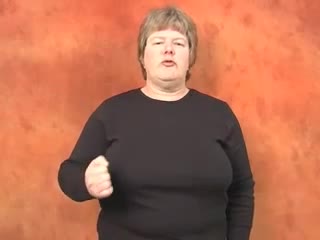
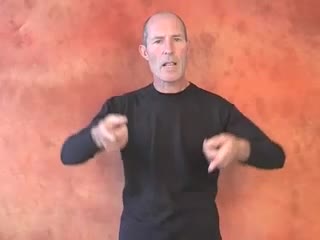
Both hands form S-hands (closed fists), palms facing each other
Location
Mid-chest to abdominal height
Movement
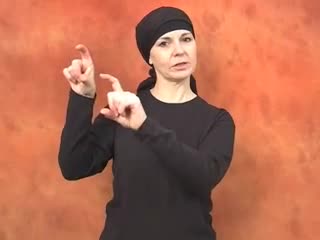
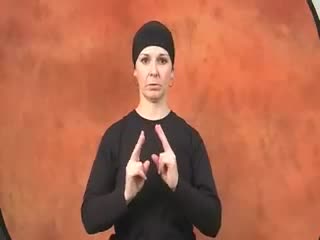
Hands link/interlock, separate, and link again
Palm Orientation
Palms face towards each other, rotating slightly with movement
Facial Expression
Neutral facial expression
🔁 Spaced Review Try it free

How well do you know this sign?

SYSTEM
Your Progress Live
🌱
Level 1 · BSL Beginner +0 XP today
This sign Not learned yet
0 watches
Mastery 0%
Confidence
How well do you know this sign?
0 🔥 Streak
0 Signs seen
0 Learned
0 Watches
📖 Vocabulary health 🔒 Log in to see score
0 Mastered
0 Confident
0 Practicing
0 Just seen

Create a free account to keep your vocabulary score between sessions

7-day activity 0 of 7 active

Register free to sync activity across devices

Watch signs to see your history here

Tracking locally for now. Create a free account to save your progress and sync across devices.
Free gets you started. Paid adds the repeat-learning layer: review queues, deeper notes, compare mode, and better comeback tools.
My Sign Journal
Personal notes, saved to your account forever
Locked

Write memory tricks, usage examples, and cultural reminders beside each sign. Create a free account to unlock your first saved note preview on this page.

Create free account Already have an account? Log in

What This Sign Means in BSL

The BSL sign for system powerfully conveys the idea of interconnected parts working together to form a cohesive whole. It's not just about a collection of items, but about their deliberate arrangement and functional relationship. Think of it as a set of components that rely on each other to achieve a shared purpose or outcome.

This sign inherently carries a sense of structure and organisation. The deliberate linking and separating movement of your hands highlights the individual elements, then brings them together to emphasise their integration. It's a visual representation of how disparate parts can merge into a unified entity, whether that's a mechanical system, a governmental framework, or a biological process.

Because of its clear visual representation of internal connections, this sign is often used when discussing complex entities where understanding the internal workings is important. It helps to differentiate a structured, functioning whole from a mere group or collection, underscoring the purposefulness of its design.

When This Sign Feels Natural

You'll find the BSL sign for system feels most natural in contexts that require precision about how something is organised and operates. It’s perfect when discussing technical subjects, scientific concepts, or formal structures like political systems, computer architecture, or the human body's various systems. Imagine explaining how a particular software works, or describing the UK's healthcare infrastructure – this sign fits perfectly.

It's also highly appropriate when you need to convey stability and a certain level of established order. If you're talking about a well-oiled machine, a reliable network, or a long-standing method of operation, this sign communicates that sense of an enduring, functional setup. It’s generally a more formal sign and doesn't typically appear in very casual, everyday conversations where a simpler sign like "group" or "way" might suffice.

Consider your audience and the register of your communication. When you need to be clear about an organised, functioning entity with defined components and interactions, this is your sign. If you're simply referring to a 'method' or 'procedure' without the emphasis on interconnected parts, you might lean towards other signs. The key is the emphasis on the *interdependence* of elements.

What Learners Usually Miss

One common oversight learners make with the BSL sign for system is the quality of the linking movement. It's not a soft touch or a gentle brush; your S-hands should interlock quite firmly, conveying a strong, almost interlocking connection. This isn't a fragile assembly but a robust one. The initial link, separation, and re-link should be deliberate and controlled, not rushed or sloppy. The strength of the interlock visually reinforces the integrity of the system being described.

Another point that sometimes gets missed is the consistent location. The movement happens primarily between mid-chest and abdominal height. Some learners inadvertently let their hands drift too high or too low, which can make the sign look awkward or less clear. Keeping it within this central visual field ensures it's easily seen and maintains the sign's intended aesthetic and ergonomic flow. Practice keeping your elbows relaxed and your hands centred.

Finally, while the sign itself is quite neutral in facial expression, learners sometimes forget that context matters. If you're discussing a "broken system," your facial expression should naturally convey concern or frustration. For an "efficient system," a small nod or positive expression would be appropriate. The sign for system itself doesn't demand specific facial grammar, but your face should always align with the overall message of your sentence. Don't let your face remain blank when the sentiment calls for expression.

A Simple Way to Remember It

Imagine your two S-hands as distinct, strong components that come together to form a powerful, integrated whole. The linking and unlinking motion perfectly illustrates how parts interact within a structured framework. Think of it like pieces of a puzzle or gears in a machine, fitting together to make something work.

  • S-hands for "System": The closed fists (S-hands) can be a direct mnemonic, reminding you of the letter 'S' for System.
  • Interlocking Gears: Visualise your hands as two gears that mesh together, separate to allow movement, and then re-engage, representing the dynamic interaction within any system.
  • Building Blocks: Picture the hands as sturdy building blocks or modules. They connect, stand apart briefly to show their individuality, and then firmly reconnect, symbolising the construction and function of an organised whole.

Short Practice Situations

  • The company's new booking system is much more efficient than the old one.
  • We need to understand how the system works before we can fix the problem.
  • The human body has many complex systems, like the circulatory and nervous systems.
  • The transport system in London is vast and covers many different areas.
  • Is there a more sustainable system we could implement for waste management?

Signs to Learn Next

  • ORGANISATION: While "system" focuses on interconnected parts, "organisation" often refers to the entity itself, whether a company, a charity, or a structured group. Learning both helps you distinguish between the internal workings and the overall body.
  • STRUCTURE: This sign highlights the framework or arrangement of something, often without the explicit focus on dynamic, functional interconnections that "system" conveys. They're related but distinct in nuance.
  • NETWORK: A network is a specific type of system, often implying widespread connections, like a computer network or a social network. Understanding "network" adds another layer to describing connected entities.
  • PROCESS: Many systems involve a series of steps or actions, which is what "process" refers to. Learning "process" alongside "system" helps you describe how a system operates from beginning to end.
  • CONNECT/JOIN: This sign directly relates to the idea of parts coming together, which is central to the BSL sign for system. Practising "connect" will reinforce the physical linking motion inherent in "system."


🤖 AI Learning Guide for "system"

The sign for 'system' uses two S-hands that interlock, separate, then re-interlock at chest height. This represents interconnected parts forming a functional whole

🎯 Practice Challenge

Practice forming S-hands and smoothly interlocking/separating them

⚠️ Most Common Mistake

Ensure S-hand shape is maintained; hands must fully interlock with fingers

👐 How to Sign "system" in British Sign Language (BSL) (Quick Answer)

Follow these steps to sign system correctly in British Sign Language (BSL):

  1. 1 Form S-hands with both fists
  2. 2 Position hands at mid-chest, palms facing each other
  3. 3 Interlock fingers of both hands, pulling slightly apart
  4. 4 Separate hands briefly
  5. 5 Re-interlock fingers again

Tip: Watch the video above while following these steps for best results.

🤚 Sign Profile

🤚
Handshape
Both hands form S-hands (closed fists), palms facing each other
🔣
Handshape Code
S-hand (both)
Dominant Hand
Either
🙌
Hand Count
Two-handed
📍
Location
Mid-chest to abdominal height
↗️
Movement
Hands link/interlock, separate, and link again
🔄
Movement Type
Repeated
👆
Contact
Touch
👋
Palm Orientation
Palms face towards each other, rotating slightly with movement
⚖️
Symmetry
Symmetric

😊 Non-Manual Features

Facial expressions and body language are grammatically essential in British Sign Language (BSL) - not optional!

😊
Facial Expression
Neutral facial expression
🙆
Eyebrows
Neutral
👁️
Eye Gaze
Forward
🙂
Head Movement
None
👄
Mouth Morpheme
ssst
🕴️
Body Shift
None

📖 Grammar & Linguistics

Part of Speech Noun
Inflection No
Classifier Usage N/A
Role Shift No

🎓 Learning Context

📌 When to Use: Discussing organised structures, processes, technology, or interconnected parts
⚠️ Common Mistake: Incorrect handshape, not fully interlocking hands, wrong location
🚫 When NOT to Use: When referring to a simple plan or procedure, or a single item
Context Tags
Organisation structure technology method process

🧪 Practice Lab

Use these tiny checks right after watching the video. Fast feedback is what turns recognition into recall.

Meaning check

Which word matches the sign you just watched?

Usage check

Where would this sign fit most naturally?

Confidence check

How do you feel about system right now?

Pick one so SignDeaf can shape the rest of your session around how this sign actually feels.

🧭 Scenario Drill

One sign gets remembered faster when you attach it to real situations. Try these quick scene prompts.

Work

Stretch practice

Use this sign in a short workplace sentence or meeting exchange.

Family

Stretch practice

Try signing this while talking about family life or something at home.

School

Stretch practice

Imagine teaching this sign to a classmate or using it in a lesson.

Doctor

Stretch practice

Practise it in a healthcare conversation where clarity matters.

Travel

Stretch practice

Use it in a travel scenario like asking for help or directions.

💬 Example Usage

1.[en] I don't understand the system. / BSL:[DONT-UNDERSTAND SYSTEM] | 2.[en] The public transport system. / BSL:[PUBLIC TRANSPORT SYSTEM] | 3.[en] It's a complex system. / BSL:[COMPLEX SYSTEM]

1.[en] I don't understand the system. / BSL:[DONT-UNDERSTAND SYSTEM] | 2.[en] The public transport system. / BSL:[PUBLIC TRANSPORT SYSTEM] | 3.[en] It's a complex system. / BSL:[COMPLEX SYSTEM]

When to use it

Discussing organised structures, processes, technology, or interconnected parts

When not to use it

When referring to a simple plan or procedure, or a single item

Register

Neutral

🌍 Cultural Context

Conveys the concept of integrated parts working together

🗺️ Regional Variations

Minimal variation across the UK

⚖️ Similar Signs - What's the Difference?

This sign system
VS
Similar signs Look closely
**SYSTEM** (S-hands interlock/separate/interlock) focuses on interconnectedness and structure. **JOIN/CONNECT** (often B-hands or G-hands coming together) typically implies two things coming together once. **ORGANISATION** (often C-hands circling, or variations of 'group') implies a more abstract entity or a process of arranging, distinct from "system's" concrete structure

📝 Usage Notes

Emphasises the interconnectedness and functional complexity of components

🏷️ Tags

Handshape

Keywords

💡
Did you know?
Practising in front of a mirror helps you check your handshape and movement.

📚 Explore More British Sign Language (BSL) Signs

Keep building your British Sign Language (BSL) vocabulary - explore signs by category or browse the full dictionary.