Speed
0
Practice reps times watched

Create a free account to keep your watch history and review plan.

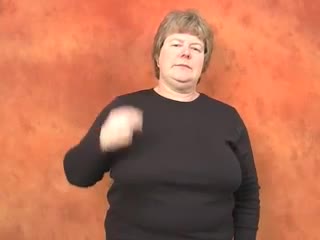
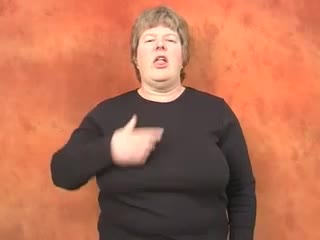
Best practice Use mirror mode, then watch the frame breakdown below to catch the start, movement, and finish cleanly.
Video via SpreadTheSign  - Free educational resource BSL
Updated April 20, 2026
🌱 Level 1 BSL Starter
🔥 0d +0 XP
0 XP 50 XP to Level 2
British Sign Language (BSL) 🟢 Beginner 📊 A2 ⚡ Uncommon Noun

air jet

A strong, fast-moving stream of air

Source-linked video Step-by-step guide Context and safety notes
Synonyms
Blast gush stream puff
Antonyms
Stillness calm
Difficulty
Not rated yet

Create a free account to save this sign, keep your watch history, and unlock a one-note journal preview.

How to sign it
Handshape
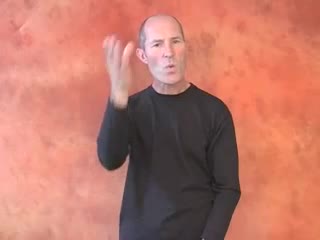
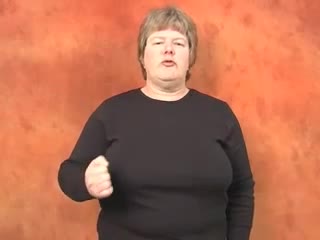
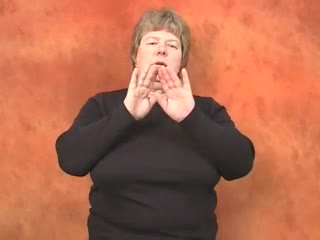
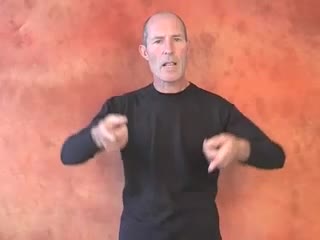
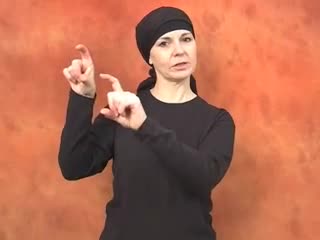
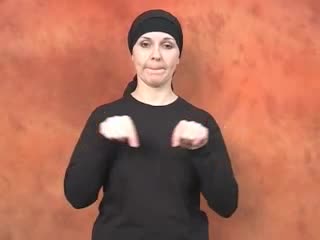
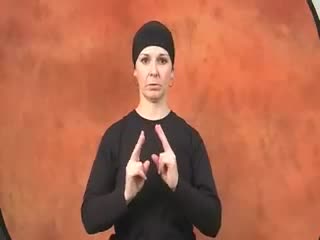
Index finger extended, other fingers curled into palm, thumb tucked
Location
Near dominant shoulder/chest, moving forward
Movement
Quick, forceful linear forward movement
Palm Orientation
Palm faces forward or slightly down, index finger points forward
Facial Expression
Puffed cheeks, pursed lips to show force
Review mode

Remember this sign faster

Free account
0 Queued
0 Due now
0 This week

Create a free account to save this sign and keep your first review preview. Upgrade when you want full spaced repetition, saved notes, and compare mode.

  • Save this sign to a comeback list you can actually revise from.
  • Keep private journal notes and memory tricks beside each sign.
  • Practice hard signs more often and easy ones less often.
  • Compare similar signs side by side instead of guessing.

Membership sits underneath the learning tools, not in front of them. Free gets you started. Paid turns your saved signs into a real long-term revision system.

Your Progress Live tracking
This sign Not learned yet
0 watches
How well do you know this sign?
0 Signs seen
0 Learned
0 All Sign Watches
0 Day streak

Watch signs to see your history here

Tracking locally for now. Create a free account to save your progress, your first journal note, and this sign.
Free gets you started. Paid adds the repeat-learning layer: review queues, deeper notes, compare mode, and better comeback tools.
My Sign Journal
Personal notes, saved to your account forever
Locked

Write memory tricks, usage examples, and cultural reminders beside each sign. Create a free account to unlock your first saved note preview on this page.

Create free account Already have an account? Log in

What This Sign Means in BSL

The BSL sign for air jet vividly captures the action of a focused stream of air being propelled with force. It's a descriptive and intuitive sign, often evoking the physical sensation or visual effect of air being pushed out from a nozzle or opening. Think of the concentrated blast from a hand dryer, the powerful gush from a car wash drying machine, or even the targeted puff of air used in some industrial settings for cleaning or cooling. This sign isn't just about the air itself; it inherently implies a *source* that generates this focused force.

What makes this particular sign stand out is its ability to convey both the direction and the intensity of the air flow. It’s not a gentle breeze; it carries an implication of deliberate, often mechanical, propulsion. When you see this sign, you immediately understand that a significant volume of air is moving quickly and purposefully. It’s a practical sign that covers a range of similar concepts under one clear visual representation, making it highly efficient in everyday BSL communication.

This sign serves as a versatile descriptor, allowing you to specify the nature of air movement without needing to name the precise device creating it every time. It’s a foundational concept for discussing machinery, comfort, or even cleaning processes where a strong, directed air current is key. Mastering this sign means you can articulate a specific type of air flow that goes beyond a simple "blow" or "wind."

When This Sign Feels Natural

This sign feels most natural when you're referring to any device or situation where a distinct, focused blast of air is a primary feature or function. Imagine you’re in a public toilet, and the hand dryer is particularly strong; this sign perfectly describes that experience. Or perhaps you're talking about a detailing service for cars that uses powerful air jets to dry vehicles quickly. It’s ideal when the *source* of the air is an apparatus designed to create such a jet, rather than a natural phenomenon.

You’ll find yourself reaching for the BSL sign for air jet in contexts discussing efficiency, power, or specific technological applications. For instance, if you're explaining a problem with a piece of equipment that uses compressed air, this sign helps convey the specific nature of that air release. It’s a neutral sign in terms of register, fitting comfortably into both casual conversations about everyday experiences and more technical discussions about machinery.

However, it’s important to know when to choose a different sign. If you’re simply talking about the general movement of air, like a gentle breeze through a window or the wind outside, "wind" or "blow" would be more appropriate. If your focus is solely on the *device* itself, such as a "hairdryer," that specific sign might be better, though "air jet" could be used to describe its function. Reserve this sign for when the *action* and *effect* of a focused air stream are the most crucial elements you want to communicate.

What Learners Usually Miss

One common oversight learners make with the BSL sign for air jet is failing to convey the appropriate level of *force* and *direction*. An "air jet" isn't a passive puff; it's an active, propelled stream. Often, learners sign it too softly, with a handshape that’s too loose, or a movement that lacks conviction. The key is to ensure your handshape is firm, representing a nozzle or opening, and the forward motion is sharp and deliberate, as if you're truly pushing air out. This isn’t just about the movement; it’s about the underlying intention of power.

Another subtle but crucial element often missed is the precise timing and follow-through. The sign isn't a prolonged "blowing" action; it’s typically a concise, impactful movement. Think of it as a single, decisive blast. Over-repeating the movement or making it too drawn-out can dilute its meaning, turning a sharp "jet" into a continuous "flow" or a series of gentle "puffs." The sign should have a clear start and a definite, brief end, much like the concentrated burst of air it represents.

Finally, paying attention to your non-manual features can significantly enhance the sign. While not always strictly necessary, a subtle tightening of the lips or a slight forward lean of the head can add emphasis to the force of the air jet, making your communication clearer and more natural. Without these nuances, the sign might look correct in terms of handshape and movement, but it could lack the crucial visual impact that conveys its true meaning of directed power.

A Simple Way to Remember It

To easily recall the BSL sign for air jet, imagine your dominant hand as the nozzle or opening of a device, with the air powerfully shooting out from it. The motion effectively mimics the physical sensation and visual trajectory of that focused air stream, making it highly iconic and memorable.

  • The Nozzle Hand: Think of your hand, especially the index finger and thumb forming a slight circle, as the end of a hose or a machine's vent where air comes out.
  • The Blast of Air: The sharp, forward movement of your hand represents the air itself being forcefully expelled, creating that distinct "jet" effect.
  • Feel the Force: Connect the movement to the sensation of a strong burst of air hitting something – that directed energy is key to the sign's meaning and form.

Short Practice Situations

  • The hand dryer in the public toilet had a really powerful air jet that dried my hands quickly.
  • We need a machine with a stronger air jet to clean the dust out of these intricate parts efficiently.
  • Be careful not to point the high-pressure air jet at your face; it could be dangerous.
  • After washing the car, the automatic system uses a strong air jet to remove all the excess water.

Signs to Learn Next

  • BLOW: While "air jet" is specific to a focused, powerful stream, "blow" is more general, encompassing anything from blowing out a candle to a gentle puff of air. Learning "blow" helps differentiate between general and specific air movement.
  • WIND: This sign refers to natural air currents, like a breezy day. Understanding "wind" alongside "air jet" reinforces the distinction between naturally occurring air movement and mechanically propelled air.
  • FAN: A fan creates a broader, often oscillatory, movement of air for cooling or ventilation. Comparing "fan" to "air jet" highlights the difference between a widespread air flow and a concentrated one.
  • DRY: Often, the purpose of an air jet is to dry something. Learning "dry" helps connect the action of the air jet to its common outcome and usage in various contexts.
  • HAIRDRYER: This specific device inherently involves an air jet. Learning "hairdryer" shows how a general concept like "air jet" can be integrated into signs for specific objects that utilise it.

🤖 AI Learning Guide for "air jet"

The sign for 'air jet' uses a G-handshape to represent the focused stream of air, moving quickly forward, often with puffed cheeks to visually convey the force

🎯 Practice Challenge

Practice signing 'air jet' with appropriate speed and puffed cheeks

⚠️ Most Common Mistake

Ensure your G-hand points directly forward and the movement is quick and forceful, accompanied by puffed cheeks

👐 How to Sign "air jet" in British Sign Language (BSL) (Quick Answer)

Follow these steps to sign air jet correctly in British Sign Language (BSL):

  1. 1 Form G-hand (index finger extended)
  2. 2 Place dominant hand near shoulder, finger pointing forward
  3. 3 Move hand quickly and forcefully forward
  4. 4 Puff cheeks simultaneously

Tip: Watch the video above while following these steps for best results.

🤚 Sign Profile

🤚
Handshape
Index finger extended, other fingers curled into palm, thumb tucked
🔣
Handshape Code
G-hand
Dominant Hand
Either
🙌
Hand Count
One-handed
📍
Location
Near dominant shoulder/chest, moving forward
↗️
Movement
Quick, forceful linear forward movement
🔄
Movement Type
Linear
👆
Contact
Air
👋
Palm Orientation
Palm faces forward or slightly down, index finger points forward

😊 Non-Manual Features

Facial expressions and body language are grammatically essential in British Sign Language (BSL) - not optional!

😊
Facial Expression
Puffed cheeks, pursed lips to show force
🙆
Eyebrows
Neutral
👁️
Eye Gaze
Forward
🙂
Head Movement
None
👄
Mouth Morpheme
'Pah' or 'Poo'
🕴️
Body Shift
None

📖 Grammar & Linguistics

Part of Speech Noun
Inflection No
Classifier Usage CL:1
Role Shift No

🎓 Learning Context

📌 When to Use: Describing mechanical air jets, forced air, or strong gusts
⚠️ Common Mistake: Forgetting non-manual features; confusing with 'wind'
🚫 When NOT to Use: For general breeze or soft air movement
Context Tags
Engineering weather physics

🧪 Practice Lab

Use these tiny checks right after watching the video. Fast feedback is what turns recognition into recall.

Meaning check

Which word matches the sign you just watched?

Usage check

Where would this sign fit most naturally?

Confidence check

How do you feel about air jet right now?

Pick one so SignDeaf can shape the rest of your session around how this sign actually feels.

🧭 Scenario Drill

One sign gets remembered faster when you attach it to real situations. Try these quick scene prompts.

Work

Stretch practice

Use this sign in a short workplace sentence or meeting exchange.

Family

Stretch practice

Try signing this while talking about family life or something at home.

School

Stretch practice

Imagine teaching this sign to a classmate or using it in a lesson.

Doctor

Stretch practice

Practise it in a healthcare conversation where clarity matters.

Travel

Stretch practice

Use it in a travel scenario like asking for help or directions.

💬 Example Usage

1.[en] The air jet was very strong. / BSL:[G-hand moves forward quickly, cheeks puffed] | 2.[en] Be careful of the air jet. / BSL:[G-hand moves forward, NMM intense] | 3.[en] He felt an air jet on his face. / BSL:[G-hand moves towards face, quick]

1.[en] The air jet was very strong. / BSL:[G-hand moves forward quickly, cheeks puffed] | 2.[en] Be careful of the air jet. / BSL:[G-hand moves forward, NMM intense] | 3.[en] He felt an air jet on his face. / BSL:[G-hand moves towards face, quick]

When to use it

Describing mechanical air jets, forced air, or strong gusts

When not to use it

For general breeze or soft air movement

Register

Neutral

🌍 Cultural Context

N/A

🗺️ Regional Variations

Minor variations in speed/intensity

⚖️ Similar Signs - What's the Difference?

Understanding when to use air jet vs. related signs helps avoid common mix-ups.

**AIR JET** (G-hand, forceful linear movement, puffed cheeks) vs. **WIND** (two B-hands sweeping side-to-side, often with mouth 'woosh') vs. **BLOW** (often a single B-hand or S-hand moving away from mouth, less forceful than 'air jet', different NMM). 'Air jet' is more specific and forceful than 'blow' and distinct from the broader 'wind'
stone sign thumbnail

stone

Beginner

Dominant fist taps non-dominant open palm repeatedly, representing a solid object

Compare with stone →

📝 Usage Notes

Non-manual features are crucial for distinguishing from simple pointing

Frequently Asked Questions

Common questions about the British Sign Language (BSL) sign for "air jet".

🏷️ Tags

Handshape

Keywords

💡
Did you know?
SpreadTheSign has 600,000+ sign language videos across 40+ sign languages - all free to view.

📚 Explore More British Sign Language (BSL) Signs

Keep building your British Sign Language (BSL) vocabulary - explore signs by category or browse the full dictionary.