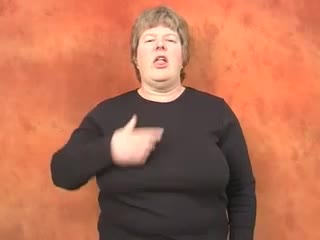
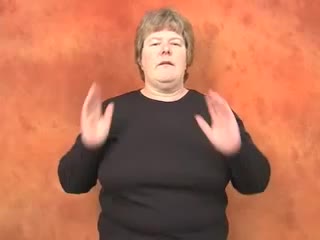
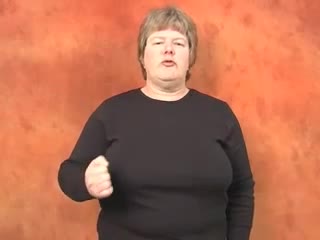
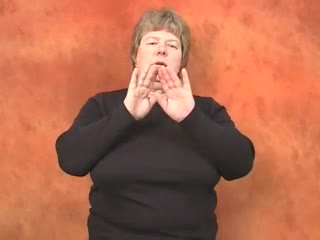
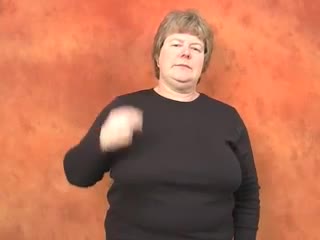
What This Sign Means in BSL
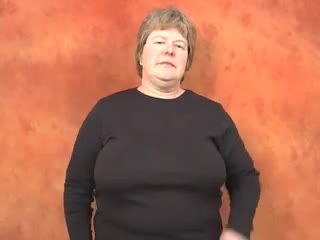
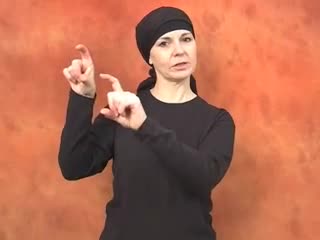
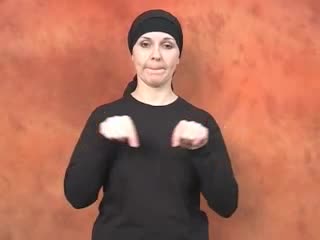
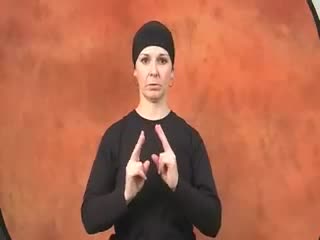
The BSL sign for drawer beautifully captures the essence of the object it represents through direct, iconic movement. When you sign "drawer," your hand doesn't just describe the item; it *becomes* the action of interacting with it. Typically, you'll see a handshape that mimics grasping a handle or the flat front of a drawer, performing a distinct pull-out and push-in motion. This visual mimicry is what makes it such an intuitive and easily understood sign within the British Deaf community.
What's particularly noticeable about this sign is its clarity. There's little room for misinterpretation because the movement is so closely tied to the physical function of a drawer. It's a straightforward noun sign, generally carrying a neutral tone unless the accompanying facial expression or context adds emphasis – perhaps indicating a "stuck drawer" or an "empty drawer." The sign itself is simply about the piece of furniture, or more specifically, the sliding compartment within it.
Think of it as a small, everyday piece of theatre for your hands. You're not just saying "drawer"; you're showing someone the very act of opening and closing one. This inherent action-oriented nature is common in BSL, helping to build a rich visual vocabulary that often makes signs memorable and logical, even for new learners.
When This Sign Feels Natural
This sign feels most natural and is universally appropriate whenever you're referring to the physical compartment found in furniture. Imagine you're in a kitchen, pointing out where the cutlery is kept, or describing your desk at home. "The spoons are in the top drawer," or "I keep my stationery in that drawer" – these are perfect scenarios where the sign for "drawer" fits seamlessly into conversation. It's a fundamental vocabulary item for everyday objects around the home, office, or any setting with furniture.
Its register is entirely neutral, making it suitable for all audiences, from casual chats with friends and family to more formal discussions about furniture design or storage solutions. There's no need to worry about being too informal or overly technical; it simply communicates the object clearly. You'd use it whether you're asking a child to put toys away or discussing an antique chest of drawers with an expert.
While BSL offers a rich tapestry of signs, for the specific physical object we call a "drawer," this sign is consistently the preferred and most natural choice. There aren't really common alternative signs for the item itself that would be used instead. If you were discussing a metaphorical "drawer of ideas," you might adapt the concept or choose a different sign like 'compartment' or 'section' depending on the exact nuance, but for the tangible object, this is your go-to sign.
What Learners Usually Miss
One common area where learners sometimes falter with the BSL sign for drawer is in the precision of the movement and direction. The movement should be a clear, horizontal pull *away from* your body, followed by an equally clear push *back towards* it. Some learners might make the movement too small, too jerky, or even slightly diagonal, which can make the sign less clear. Imagine the smooth, purposeful glide of a well-maintained drawer on its runners – that's the feeling you want to convey with your hand.
Another subtle point often missed is the consistency of the handshape and the wrist. Your hand should maintain a firm, stable shape throughout the pull and push, representing either a handle you're grasping or the flat front panel of the drawer itself. A floppy wrist or a handshape that changes mid-sign can dilute the visual impact and make the sign appear less confident or less defined. Keep your wrist steady and your handshape consistent to truly embody the solid nature of a drawer.
Finally, learners occasionally over-repeat the sign, especially when first practising. The sign for a single drawer typically involves one distinct pull-and-push cycle. Repeating the action multiple times can inadvertently imply "many drawers" or "repeatedly opening a drawer," rather than simply "a drawer." If you mean several drawers, BSL has other ways to indicate plurality or quantity. Focus on one clear, well-executed movement for a singular "drawer" unless your intention is explicitly different.
A Simple Way to Remember It
This sign is wonderfully intuitive because it directly mirrors the action of opening and closing a real drawer. To cement it in your memory, try to feel the imaginary weight and movement as your hand acts out the process. Imagine your hand isn't just signing, but it's physically interacting with a piece of furniture, bringing something out from a hidden space and then tucking it away again. It’s all about the motion and the physical interaction.
- The Handle Grab: Visualise your handshape as if it's firmly gripping a drawer handle, ready to pull.
- The Glide: Focus on the smooth, controlled movement – the pulling out and pushing back in – just like a drawer sliding on its runners.
- Reveal and Conceal: Connect the movement to the idea of revealing something hidden inside the drawer and then concealing it again.
Short Practice Situations
- Could you please check the bottom drawer of the filing cabinet for those documents?
- I always keep my spare keys hidden away in the top drawer of my bedside table.
- The cutlery drawer in the kitchen often gets stuck, it needs some oil.
- We need to thoroughly clean out every single drawer in the living room cabinet this weekend.
- Did you find the remote control in the main drawer of the TV unit?
Signs to Learn Next
- CUPBOARD: Similar to a drawer, a cupboard is another common piece of furniture for storage, often found in the same contexts and involving opening and closing actions.
- SHELF: Drawers often exist alongside shelves in units like bookcases or dressers, making 'shelf' a natural companion sign for furniture vocabulary.
- TABLE: Many tables, especially desks and bedside tables, incorporate drawers, so learning 'table' helps put 'drawer' into a broader furniture context.
- OPEN / CLOSE (general): The action of opening and closing is central to the 'drawer' sign. Mastering general 'open' and 'close' signs will enhance your understanding of how BSL depicts interaction with objects.
- FURNITURE: As 'drawer' is a component of many furniture items, learning the general sign for 'furniture' helps categorise and discuss collections of objects.