Speed
0
Practice reps times watched

Create a free account to keep your watch history and review plan.

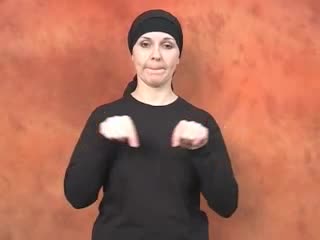
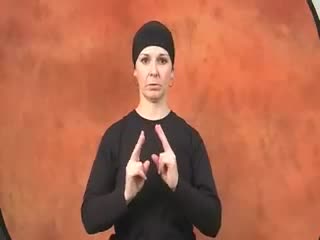
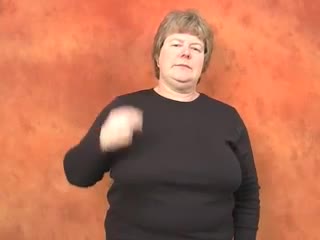
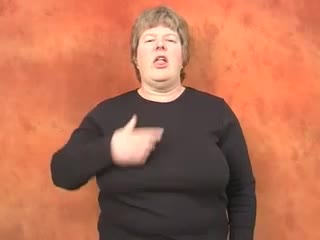
Best practice Use mirror mode, then watch the frame breakdown below to catch the start, movement, and finish cleanly.
Video via SpreadTheSign  - Free educational resource BSL
Updated April 20, 2026
🌱 Level 1 BSL Starter
🔥 0d +0 XP
0 XP 50 XP to Level 2
British Sign Language (BSL) 🟢 Beginner 📊 A2 ⚡ Common Noun

low-rise building

A building with few stories or floors, typically under four

Source-linked video Step-by-step guide Context and safety notes
Synonyms
short building small block few floors
Antonyms
skyscraper high-rise tall building
Difficulty
Not rated yet

Create a free account to save this sign, keep your watch history, and unlock a one-note journal preview.

How to sign it
Handshape
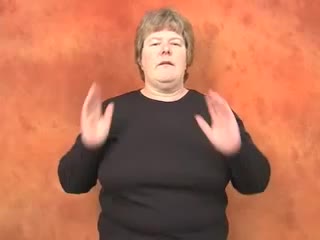
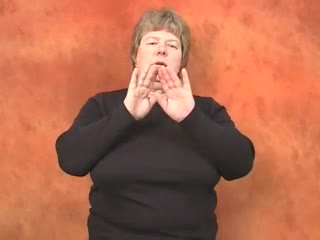
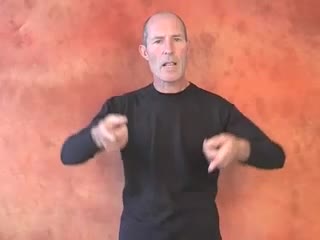
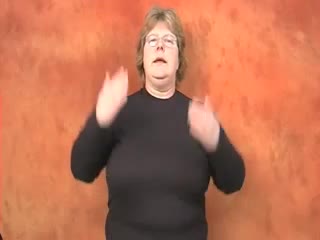
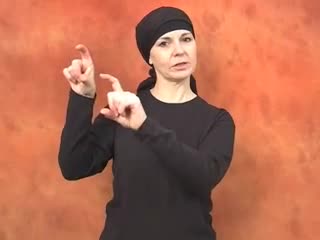
Two flat hands, fingers together, thumb tucked alongside
Location
Neutral space in front of the body, at chest height
Movement
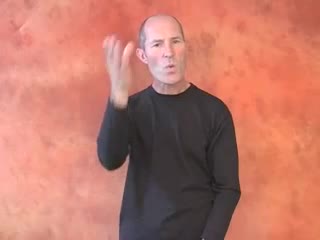
Outline a short, wide structure, indicating limited height
Palm Orientation
Palms face each other, then outward
Facial Expression
Neutral facial expression, slight 'mm' for small/short if desired
Review mode

Remember this sign faster

Free account
0 Queued
0 Due now
0 This week

Create a free account to save this sign and keep your first review preview. Upgrade when you want full spaced repetition, saved notes, and compare mode.

  • Save this sign to a comeback list you can actually revise from.
  • Keep private journal notes and memory tricks beside each sign.
  • Practice hard signs more often and easy ones less often.
  • Compare similar signs side by side instead of guessing.

Membership sits underneath the learning tools, not in front of them. Free gets you started. Paid turns your saved signs into a real long-term revision system.

Your Progress Live tracking
This sign Not learned yet
0 watches
How well do you know this sign?
0 Signs seen
0 Learned
0 All Sign Watches
0 Day streak

Watch signs to see your history here

Tracking locally for now. Create a free account to save your progress, your first journal note, and this sign.
Free gets you started. Paid adds the repeat-learning layer: review queues, deeper notes, compare mode, and better comeback tools.
My Sign Journal
Personal notes, saved to your account forever
Locked

Write memory tricks, usage examples, and cultural reminders beside each sign. Create a free account to unlock your first saved note preview on this page.

Create free account Already have an account? Log in

What This Sign Means in BSL

The BSL sign for low-rise building is wonderfully descriptive, immediately conveying both the structure and its limited height. It’s more specific than simply signing "building" and then adding "short" – the very form of this sign is designed to represent a structure that doesn't reach great heights. This means you’re communicating the full concept in one fluid movement, making your communication clear and efficient.

This sign typically uses both hands, establishing the sides or outline of a structure, then clearly indicating its modest elevation. It’s a very visual sign, much like many in BSL, which helps to paint a picture for your audience. When you use it, you’re not just conveying an architectural fact, but also the characteristic scale of the building in question, which is crucial for distinguishing it from other types of constructions.

You’ll find this sign particularly useful when you need to specify the kind of building you’re referring to, perhaps in contrast to a towering skyscraper or a detached house. It occupies a distinct niche in BSL vocabulary, allowing for precision in descriptions of urban and suburban landscapes. Mastering this sign adds a layer of detail to your signing, enabling you to express nuances that might otherwise require more elaborate explanations.

When This Sign Feels Natural

This sign feels most natural when you're describing residential areas, smaller office blocks, or certain public buildings like libraries or community centres that aren't designed to be towering. Imagine you’re giving directions, discussing local architecture, or simply narrating an experience – if the building you’re talking about fits the "low-rise" description, this sign is your go-to. It carries a sense of everyday structure rather than grand monuments or massive complexes.

You’d choose this sign over a general "building" sign when the height is a relevant feature. For instance, if you’re comparing different types of housing, or explaining why a certain area feels less imposing than a city centre, this sign precisely communicates that architectural characteristic. It’s particularly effective in conversations about urban planning, property, or simply sharing observations about your surroundings.

Conversely, you wouldn't use this sign for a detached house, a bungalow, or a very tall skyscraper. It specifically refers to multi-story structures that are *not* high-rise. For a single-family home, you’d likely use the sign for "house". For very tall buildings, you’d use the sign for "skyscraper" or "tall building." Understanding these distinctions helps you use the BSL sign for low-rise building with accuracy and confidence, ensuring your meaning is always perfectly clear to your audience.

What Learners Usually Miss

One common oversight with the BSL sign for low-rise building is not fully capturing the "rise" aspect of the sign. Learners sometimes make the sign for a general building and then try to indicate "short" separately, or they might just gesture broadly. The key here is the specific movement that shows the structure ascending to a modest height, rather than just being a short object. It’s a subtle but important distinction that truly defines the building’s scale within the sign itself.

Another area where learners can falter is the handshape consistency. Both hands should maintain a consistent "B" or flat-hand shape, representing the flat sides or walls of the building. Sometimes, one hand might relax or change shape slightly, which can break the visual integrity of the sign. Pay close attention to keeping both hands firm and parallel, moving upwards together to form the conceptual walls of the low-rise structure.

Finally, remember that facial expression for this sign is usually neutral unless you’re adding an emotional layer to your description (e.g., "Oh, it's *only* a low-rise building"). Over-exaggerating a "short" expression when the sign itself already conveys "low-rise" can be redundant. Trust the sign to do the work; let your hands clearly show the low-rise building, and keep your face natural unless you’re intentionally conveying an opinion or feeling about it.

A Simple Way to Remember It

Think of the sign for low-rise building as literally drawing the outline of a building that isn't very tall, right there in front of you. Your hands are the walls, and their upward movement defines its modest stature. It’s like you’re visually measuring out the space a low-rise occupies, solid and grounded but not reaching for the sky.

  • The "Walls" Handshape: Imagine your flat hands are the solid, flat sides of a building. This helps remember the correct ‘B’ or flat-hand shape.
  • The "Rise" Movement: The upward movement directly shows the building ‘rising’ from the ground, but only a little, clearly indicating its "low" aspect.
  • Grounded Foundation: The sign often starts low, near your body or waist, reinforcing the idea of a structure built from the ground up, but without excessive height.

Short Practice Situations

  • My friend lives in a modern low-rise building right by the river, it has great views of the water.
  • They’re planning to build several new low-rise buildings in the old industrial estate for new businesses.
  • I prefer working in a low-rise building because it feels less claustrophobic than a towering skyscraper.
  • The hotel we stayed in last year was a charming low-rise building with only three floors.
  • The new school campus will consist of several interconnected low-rise buildings to blend into the landscape.

Signs to Learn Next

  • BUILDING: This general sign is essential for broader conversations about structures and provides a good contrast to the more specific "low-rise building."
  • HOUSE: Understanding the sign for "house" helps distinguish single-family dwellings from multi-story low-rise structures, particularly in residential contexts.
  • FLAT/APARTMENT: Many low-rise buildings contain flats or apartments, so learning this sign will allow you to specify the type of living space within such a structure.
  • TALL/HIGH: Learning the opposite concept of "tall" or "high" is excellent for comparison and discussing different scales of buildings.
  • CITY/TOWN: These signs provide the broader context where various types of buildings, including low-rise ones, are typically found and discussed.

🤖 AI Learning Guide for "low-rise building"

The BSL sign for 'low-rise building' uses two flat hands to outline a structure, emphasizing its limited vertical height. It combines the concept of 'building' with an indicator for 'short' or 'low'

🎯 Practice Challenge

Practice outlining a short, wide building structure with two B-hands, focusing on limited height

⚠️ Most Common Mistake

Ensure your hands clearly indicate a short vertical extent before moving horizontally for width. Avoid extending too high

👐 How to Sign "low-rise building" in British Sign Language (BSL) (Quick Answer)

Follow these steps to sign low-rise building correctly in British Sign Language (BSL):

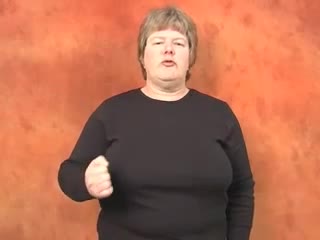
  1. 1 Form two B-hands, palms facing each other
  2. 2 Position hands at chest height, close together
  3. 3 Move hands downwards a short distance
  4. 4 Then move hands outwards horizontally
  5. 5 Slightly raise hands to complete the structure

Tip: Watch the video above while following these steps for best results.

🤚 Sign Profile

🤚
Handshape
Two flat hands, fingers together, thumb tucked alongside
🔣
Handshape Code
B
Dominant Hand
N/A
🙌
Hand Count
Two-handed
📍
Location
Neutral space in front of the body, at chest height
↗️
Movement
Outline a short, wide structure, indicating limited height
🔄
Movement Type
Linear
👆
Contact
Air
👋
Palm Orientation
Palms face each other, then outward
⚖️
Symmetry
Symmetric

😊 Non-Manual Features

Facial expressions and body language are grammatically essential in British Sign Language (BSL) - not optional!

😊
Facial Expression
Neutral facial expression, slight 'mm' for small/short if desired
🙆
Eyebrows
Neutral
👁️
Eye Gaze
Forward
🙂
Head Movement
None
👄
Mouth Morpheme
None
🕴️
Body Shift
None

📖 Grammar & Linguistics

Part of Speech N/A
Inflection No
Classifier Usage SCL: building, DCL: flat-structure
Role Shift No

🎓 Learning Context

📌 When to Use: Describing residential areas, city planning, or architectural types
⚠️ Common Mistake: Confusing it with general 'building' or 'house' without height emphasis
🚫 When NOT to Use: When referring to a very tall building like a skyscraper or a single detached home
Context Tags
Architecture urban planning housing

🧪 Practice Lab

Use these tiny checks right after watching the video. Fast feedback is what turns recognition into recall.

Meaning check

Which word matches the sign you just watched?

Usage check

Where would this sign fit most naturally?

Confidence check

How do you feel about low-rise building right now?

Pick one so SignDeaf can shape the rest of your session around how this sign actually feels.

🧭 Scenario Drill

One sign gets remembered faster when you attach it to real situations. Try these quick scene prompts.

Work

Possible fit

Use this sign in a short workplace sentence or meeting exchange.

Family

Stretch practice

Try signing this while talking about family life or something at home.

School

Stretch practice

Imagine teaching this sign to a classmate or using it in a lesson.

Doctor

Stretch practice

Practise it in a healthcare conversation where clarity matters.

Travel

Stretch practice

Use it in a travel scenario like asking for help or directions.

💬 Example Usage

1.[en] They live in a low-rise building. / BSL:[LIVE THEY LOW-RISE BUILDING]| 2.[en] That area has many low-rise buildings. / BSL:[AREA THERE MANY LOW-RISE BUILDING]| 3.[en] Developers plan low-rise buildings. / BSL:[DEVELOPERS PLAN LOW-RISE]

1.[en] They live in a low-rise building. / BSL:[LIVE THEY LOW-RISE BUILDING]| 2.[en] That area has many low-rise buildings. / BSL:[AREA THERE MANY LOW-RISE BUILDING]| 3.[en] Developers plan low-rise buildings. / BSL:[DEVELOPERS PLAN LOW-RISE]

When to use it

Describing residential areas, city planning, or architectural types

When not to use it

When referring to a very tall building like a skyscraper or a single detached home

Register

Neutral

🌍 Cultural Context

N/A

🗺️ Regional Variations

Minor regional BSL variations for 'building'; 'low-rise' concept remains clear

⚖️ Similar Signs - What's the Difference?

Understanding when to use low-rise building vs. related signs helps avoid common mix-ups.

The sign for 'low-rise building' is distinct from 'BUILDING' (general) by specifically emphasizing limited vertical height. 'SKYSCRAPER' uses similar B-hands but moves significantly upwards, often with a 'tall' NMM. 'HOUSE' typically forms a roof shape or is a distinct sign, focusing on a single dwelling rather than a multi-story, low-height structure
stone sign thumbnail

stone

Beginner

Dominant fist taps non-dominant open palm repeatedly, representing a solid object

Compare with stone →

📝 Usage Notes

The key is to clearly show the limited height, distinguishing it from tall buildings

Frequently Asked Questions

Common questions about the British Sign Language (BSL) sign for "low-rise building".

🏷️ Tags

Handshape

Keywords

💡
Did you know?
BSL uses a two-handed manual alphabet - different from ASL which is one-handed.

📚 Explore More British Sign Language (BSL) Signs

Keep building your British Sign Language (BSL) vocabulary - explore signs by category or browse the full dictionary.