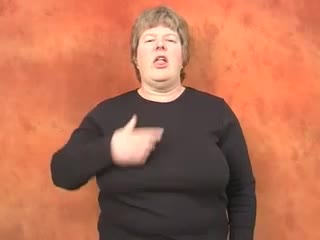
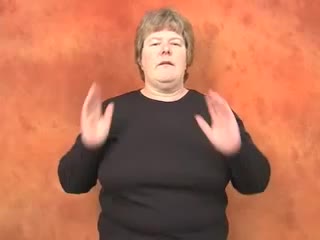
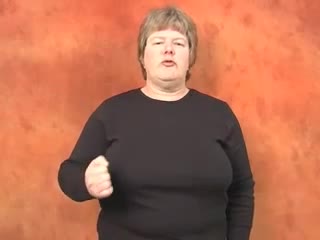
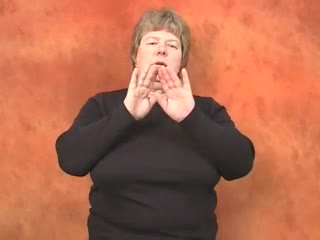
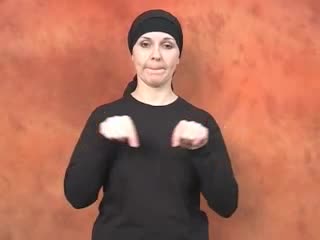
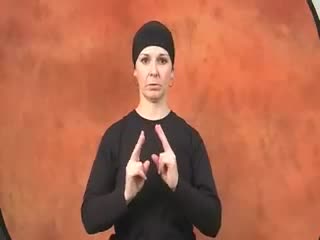
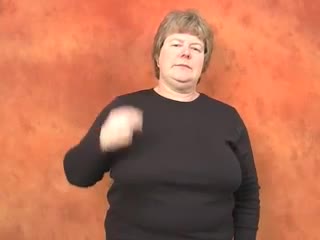
What Is the BSL Sign for "beech"?
Stepping into the vibrant world of British Sign Language, you'll discover how we encapsulate the natural world with evocative movements. Today, we're focusing on one of Britain's most beloved native trees. Understanding the BSL sign for beech truly enriches your botanical vocabulary within the Deaf community. This particular sign elegantly captures a distinct characteristic of the majestic British Sign Language beech tree, making it both memorable and meaningful.
How to Sign "beech" in British Sign Language - Step-by-Step
Let's break down the sign for this wonderful tree, ensuring you master each subtle detail to communicate effectively.
Step 1: Handshape
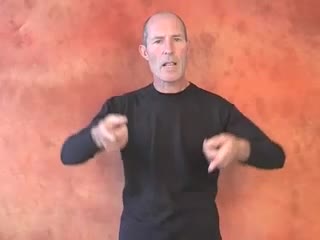
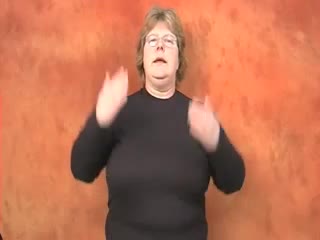
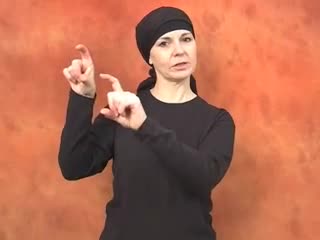
Begin by forming a precise "G" handshape with your dominant hand. This means you'll extend your index finger straight out, while your thumb rests securely along the side of your middle finger. The remaining fingers (ring and pinky) will be gently curled inwards towards your palm. Picture holding a tiny, distinct object between your thumb and index finger; that's the feeling you're aiming for.
Step 2: Hand Placement and Location
Now, bring your dominant hand, maintaining that "G" handshape, up to your face. Position the very tip of your extended index finger so it lightly touches the corner of your mouth. It's not *in* your mouth, but rather just at the outer edge, where your lips meet. This specific location often suggests something edible or a characteristic taste in BSL.
Step 3: Movement
From this starting position, execute a small, quick, and subtle outward flick of your wrist. Your index finger will momentarily move just a short distance away from your mouth, perhaps an inch or two, and then return to its initial contact point at the corner of your mouth. Perform this movement only once, with a crisp, definite action, almost like a tiny bounce.
Step 4: Facial Expression and Mouthing
While executing the sign, it's customary to maintain a neutral yet attentive facial expression. Crucially, you'll mouth the word "beech" silently but clearly. This non-manual feature plays a vital role in BSL grammar, serving as a lip pattern that helps distinguish homophonous signs and adds clarity, ensuring your conversational partner immediately grasps the specific tree you're discussing, rather than a similar-looking sign.
Step 5: Palm Orientation
Initially, as your index finger touches the corner of your mouth, your palm should be facing inwards towards your face. As you perform the quick outward flick, your palm will briefly rotate slightly outwards, away from your face, before returning to its inward-facing position. This slight shift in palm orientation is integral to the sign's dynamic and contributes to its distinct visual identity.
"beech" in BSL - Quick Reference Snapshot
- Handshape: Dominant "G" handshape (index extended, thumb alongside middle finger)
- Location: Index finger tip touches corner of mouth
- Movement: Small, quick outward flick from mouth, then return
- Facial Expression: Neutral, mouthing "beech"
- Dominant Hand: Used alone
- Palm Orientation: Initially inwards, slight outward rotation during movement
5 Memorisation Tricks for the BSL Sign "beech"
- Visual Mnemonic: Picture the small, pointed tip of a beech nut, which is known for its distinct shape. Your extended index finger, touching the corner of your mouth, can represent this tiny, edible kernel, subtly pointing out its unique characteristic.
- Muscle-Memory Drill: Practice the movement with deliberate slowness at first, feeling the exact contact point at your mouth and the precise, small flick of your wrist. Repeat this sequence ten times daily, gradually increasing speed, until the motion feels completely natural and effortless.
- Connection to Meaning: Think about the taste of a fresh beech nut, which has a distinct, slightly bitter flavour. The sign's placement at the mouth directly links to consumption, helping you recall that this specific sign refers to the tree known for these edible nuts.
- Common-Confusion Tip: Be mindful of the movement's size; a common error is making the flick too large or too slow, which can alter the sign's meaning or make it unclear. Remember, it's a very short, crisp, singular action, not a sweeping gesture.
- Daily-Life Practice Idea: Whenever you see a beech tree or even a photograph of one, mentally (or physically, if appropriate) execute the sign. This constant association in relevant contexts will solidify the sign in your long-term memory.
Real-Life Situations to Use the BSL Sign for "beech"
You'll find plenty of opportunities to use this sign as you discuss the natural world or specific types of wood.
- When describing a beautiful forest walk: "Yesterday I went FOREST, SAW many BEECH TREE, very TALL." (BSL structure: Time-Topic-Comment, with spatial referencing for "many" and "tall").
- If you're identifying a piece of furniture made from a particular timber: "This TABLE, WOOD BEECH, you LIKE?" (BSL structure: Topic-Comment-Question, using a raised eyebrow for the question).
- When asking a friend about a specific type of tree: "THAT TREE, IS-IT BEECH?" (BSL structure: Pointing, then Topic-Question with body lean and facial expression).
- During a conversation about tree planting or conservation: "WE NEED PLANT MORE BEECH, GOOD for WILDLIFE." (BSL structure: Subject-Verb-Object-Purpose, with emphasis on "more" for quantity).
Top 3 Mistakes Learners Make Signing "beech" in BSL
Learning a new sign sometimes involves navigating common pitfalls; here are the key ones to avoid with "beech."
-
Incorrect Handshape: Many beginners inadvertently use a "C" handshape or a relaxed "F" instead of the precise "G." This can make the sign ambiguous or appear as a different word entirely. The correct approach is to ensure your index finger is extended straight and firm, with the thumb correctly placed alongside the middle finger.
-
Wrong Location: Placing the sign too far from the mouth, perhaps on the cheek or chin, is another frequent error. The sign's meaning is highly dependent on its specific contact point at the corner of the mouth. Always aim for that precise spot, as it's crucial for correct identification of the tree.
-
Exaggerated or Repeated Movement: Some learners tend to make the flicking movement too large, too slow, or repeat it multiple times. The sign for "beech" requires a single, small, and quick outward flick. Practising the sharp, singular action ensures you convey the sign with native-like fluency and accuracy.
Fascinating Facts About the BSL Sign for "beech"
Delving into the background of a sign often reveals layers of cultural and linguistic richness.
- The iconic motivation behind this particular sign is often considered to represent the distinct, small, triangular shape of a beech nut, with the index finger at the mouth possibly alluding to its edible nature.
- Within the diverse BSL-using community, you might encounter slight regional variations in the exact speed or emphasis of the flicking movement, though the core handshape and location remain remarkably consistent across the UK.
- Interestingly, the use of the "G" handshape at the mouth is a common feature in BSL for signs related to small, distinct items, or sometimes even characteristics of taste, reinforcing its iconic link to the beech nut.
- Unlike some signs directly derived from the manual alphabet, the sign for "beech" is primarily iconic, meaning its form directly resembles a feature of the object it represents, rather than spelling out its initial letter.
- Linguistically, the precise and singular movement, coupled with the mouthing of the English word, highlights how BSL efficiently combines manual and non-manual components to create unambiguous meaning.
"beech" in Deaf Culture - Community and Identity
Trees like the beech, with their enduring presence and beauty, hold a special place in everyone's experience, including the Deaf community. Discussing natural landscapes, parks, and woodlands is a common and joyful aspect of Deaf cultural life, fostering conversations about shared outdoor experiences and environmental appreciation. The sign for "beech" therefore becomes a valuable tool for sharing stories of forest walks, identifying trees during group outings, or even planning community events in green spaces. It connects individuals through a shared appreciation for the environment, reinforcing a sense of collective identity within the Deaf community through accessible communication about the world around us.
Example Conversations Using "beech" in BSL
Here are some practical examples to illustrate how "beech" fits into everyday BSL communication.
English: I saw a beautiful beech tree in the park today. - BSL structure: TODAY PARK I SEE BEAUTIFUL BEECH TREE. (Topic-Comment order, with "beautiful" preceding "beech tree" for emphasis).
English: Is this wood from a beech tree? - BSL structure: THIS WOOD, BEECH TREE FROM? (Question uses raised eyebrows and a slight head tilt, with "from" indicating origin).
English: My favourite tree is the beech. - BSL structure: MY FAVOURITE TREE, BEECH. (Simple topic-comment structure, with "favourite" often signed with emotion).
English: We should plant more beech trees. - BSL structure: WE SHOULD PLANT BEECH TREE MORE. (Emphasis on "more" at the end of the phrase, indicating increased quantity).
English: The autumn leaves of the beech are stunning. - BSL structure: AUTUMN BEECH LEAVES, BEAUTIFUL. (Topic-Comment, describing the leaves of the beech in the autumn season).
Frequently Asked Questions: The BSL Sign for "beech"
Is the BSL sign for "beech" suitable for beginners?
Absolutely, new learners can certainly pick up the sign for "beech." It's a relatively straightforward single-handed sign with a clear, iconic meaning, making it an excellent addition to your early BSL vocabulary. Focusing on the precise handshape and location will build a strong foundation for more complex signs later.
Are there any regional variations for the BSL sign for "beech"?
While the core handshape and location for "beech" remain consistent across the UK, you might observe minor regional nuances in the exact speed or intensity of the flicking movement. These are usually subtle differences, and the sign remains widely understood within the BSL-using community regardless of these slight regional inflections.
What other BSL signs are often confused with "beech"?
A common point of confusion for "beech" can be signs that also use a "G" handshape near the mouth, or other tree signs. It's crucial to remember the specific *flicking* movement and the mouthing of "beech" to distinguish it from similar-looking signs, preventing any miscommunication about the type of tree you mean.
Can children easily learn and use the BSL sign for "beech"?
Yes, children typically grasp the sign for "beech" very quickly. Its connection to a familiar natural object and its distinct, simple movement make it appealing and easy for young learners to replicate and incorporate into their vocabulary, especially when learning about nature.
How might another sign language express the concept of "beech" compared to BSL?
Other sign languages around the world might represent "beech" through entirely different iconic gestures, perhaps focusing on the bark texture, leaf shape, or even spelling the word if a direct iconic sign doesn't exist. Each sign language develops its own unique visual vocabulary, reflecting its cultural context and linguistic principles, so direct sign-for-sign equivalents are not always the norm.
Signs That Pair Naturally with "beech" in BSL
Building your vocabulary systematically helps you connect ideas and concepts more smoothly.
- TREE: This foundational sign is essential for any discussion of forests or individual trees, naturally preceding or following "beech" to specify the type.
- FOREST: When talking about larger groups of trees, "forest" provides the context in which you'd often find many beech trees.
- LEAF: Discussing the characteristics of a beech tree often involves mentioning its leaves, especially in autumn.
- WOOD: If you're talking about timber or materials, "wood" is a crucial sign that pairs well with specific tree types like "beech."
- NATURE: This broader concept encompasses all elements of the natural world, including beech trees, linking "beech" to a wider environmental context.
- ACORN/NUT: While "beech" specifically refers to the tree, discussing its fruit might lead to a generic sign for "nut" or "acorn," depending on the context.
Building Fluency: How to Practise "beech" in BSL
To truly embed the sign for "beech" into your BSL repertoire, consistent and thoughtful practice is key. Try standing in front of a mirror and carefully observing your handshape and movement; make sure your index finger consistently touches the corner of your mouth and that your flick is sharp and singular. Challenge yourself to integrate "beech" into short, simple sentences about nature or wood types whenever you're thinking in BSL, even if just to yourself. Consider filming yourself signing the word, then watching it back to identify any areas for refinement in your hand placement or movement. The most effective way to build genuine fluency is to find a Deaf conversation partner or join a local BSL group; using the sign in real-time conversation will solidify your understanding and recall. Remember, spaced repetition over several days, rather than intense cramming, will help you master this and many other signs. Keep practising, and soon "beech" will flow effortlessly from your hands!