What Is the BSL Sign for "footway"?
Are you ready to explore an essential sign for navigating our world? When you're out and about, the BSL sign for footway is absolutely crucial for talking about paths where people walk. This sign represents a specific area designed for pedestrians, distinct from the main road where vehicles travel. Learning the British Sign Language footway sign opens up conversations about everything from city planning to simply giving directions, helping you communicate clearly and effectively within the Deaf community.
How to Sign "footway" in British Sign Language - Step-by-Step
Crafting this sign in British Sign Language involves a clear two-handed action that visually represents its meaning, making it quite intuitive once you understand the components.
Step 1: Handshape
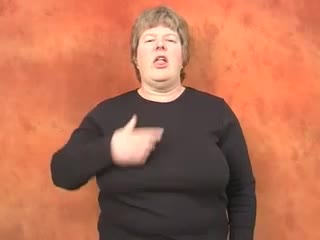
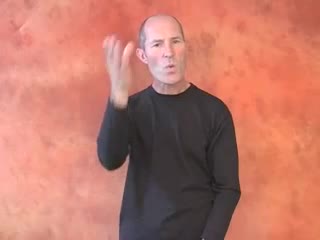
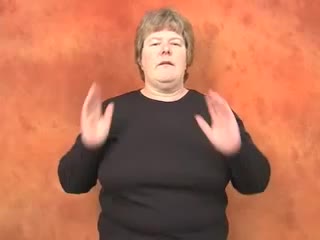
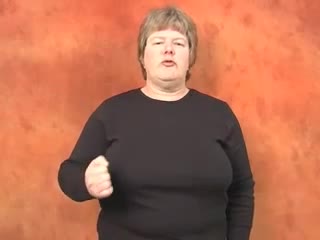
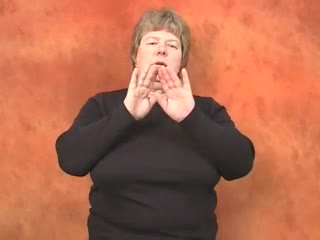
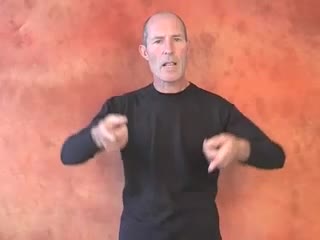
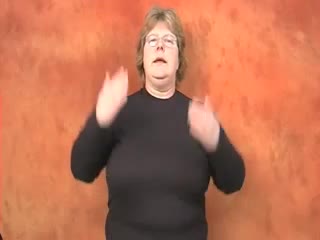
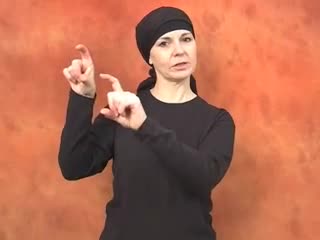
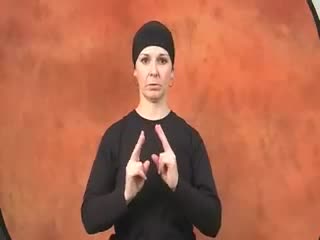
For your dominant hand, you'll form a 'V' handshape, extending your index and middle fingers upwards while keeping your thumb tucked against your palm and your ring and little fingers curled down. Think of these two extended fingers as representing legs or feet. Your non-dominant hand will adopt a flat, open palm handshape, with all fingers extended and held together, while the thumb is tucked or rests naturally alongside the palm. This flat hand serves as the 'surface' or 'path' for the 'feet' to travel on.
Step 2: Hand Placement and Location
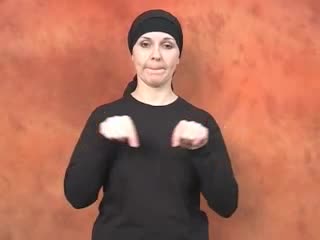
Begin by extending your non-dominant arm slightly forward from your body, maintaining a comfortable bend at the elbow, with your palm facing upwards. This hand establishes the ground or the pathway. Next, position your dominant 'V' hand a few inches above the centre of your non-dominant palm, ensuring your dominant palm faces downwards towards the 'path'. Your dominant hand effectively hovers over the designated footway, ready to commence movement.
Step 3: Movement
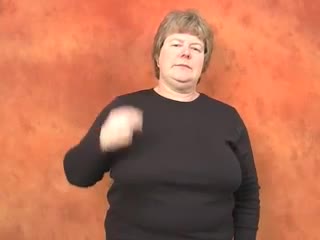
The movement for this sign is wonderfully descriptive; your dominant 'V' hand, representing feet, performs a gentle 'walking' motion across your non-dominant palm. You'll move the dominant hand forward, away from your body, in a series of two to three small, deliberate 'steps' or arcs, touching the non-dominant palm lightly with your fingertips each time. Each 'step' should be clear and distinct, conveying the idea of progression along a defined route. The movement concludes naturally as your dominant hand reaches the far edge of your non-dominant palm, signifying the journey's extent.
Step 4: Facial Expression and Mouthing
A neutral facial expression typically accompanies the footway sign language, reflecting the straightforward nature of the concept. However, clarity is significantly enhanced by mouthing the word "footway" as you sign. Mouthing, which involves shaping your lips to form the English word without necessarily vocalising, acts as a crucial non-manual feature in British Sign Language. This feature not only aids understanding for both hearing and Deaf signers but also helps distinguish the sign from any potentially similar movements, adding a layer of precision to your communication.
Step 5: Palm Orientation
Throughout the sign for "footway," your dominant hand maintains a palm-down orientation, directly reflecting the natural position of feet on a surface. This consistent orientation reinforces the iconic representation of walking on the ground. Meanwhile, your non-dominant hand's palm remains facing upwards, providing the stable, flat surface of the path. The specific interplay of these palm orientations is vital; it clearly establishes the relationship between the 'walker' and the 'way,' making the sign instantly understandable within the context of movement and location.
"footway" in BSL - Quick Reference Snapshot
- Handshape: Dominant hand 'V' (index and middle fingers extended), non-dominant hand flat open palm.
- Location: Dominant hand above and moving along the non-dominant palm, which is extended forward.
- Movement: Dominant 'V' hand 'walks' or 'steps' forward along the non-dominant palm 2-3 times.
- Facial Expression: Neutral, accompanied by mouthing "footway".
- Dominant Hand: Performs the 'walking' movement.
- Palm Orientation: Dominant palm down, non-dominant palm up.
5 Memorisation Tricks for the BSL Sign "footway"
- Picture your two fingers as a pair of legs taking tiny steps. Imagine those legs walking directly along a flat surface, like a miniature person strolling down a pavement. This vivid visual mnemonic instantly connects the handshapes and movement to the concept of someone walking on a path.
- Engage your muscle memory by practising the gentle 'stepping' motion repeatedly, focusing on the rhythm and light touch of your dominant fingers on your non-dominant palm. The more your muscles remember the specific interaction between the two hands, the more naturally the sign will flow when you need to recall it.
- Connect the sign directly to the word's meaning: 'foot' for the 'V' hand (representing feet) and 'way' for the flat non-dominant hand (representing the path or surface). This clear, direct association reinforces that you're signing specifically about a pedestrian route, not just generic walking.
- A lot of people miss the crucial role of the non-dominant hand, mistakenly performing just the 'walking' motion in the air. Remember, the flat hand provides the essential 'way' component, distinguishing this sign from a general 'walk' and ensuring you're signing "footway" correctly.
- Integrate this sign into your daily observations; every time you see a real footway outside, pause for a moment and mentally (or physically, if appropriate!) sign "footway." This constant reinforcement in actual contexts will solidify your understanding and recall of the sign.
Real-Life Situations to Use the BSL Sign for "footway"
- Imagine you're giving directions to a friend: "Turn right here, then the footway British Sign Language sign will come in handy as you indicate, 'The footway continues straight ahead for a long distance.'" Here, the sign provides clear spatial information within a directional narrative.
- You might be discussing local council plans with a Deaf person, asking: "Are they planning to widen the what is the sign for footway near the park?" In this question, the sign takes on a grammatical role as the object of inquiry, allowing for discussion of infrastructure improvements.
- Perhaps you're warning someone about potential hazards: "Be careful, the BSL footway sign looks really slippery after the rain." The sign functions descriptively in this sentence, conveying important safety information about a specific area.
- During a stroll, you might comment, "This learn footway BSL is much safer for children than walking on the road." The sign is used here to compare and contrast safety aspects of different pedestrian areas, expressing an opinion or observation.
Top 3 Mistakes Learners Make Signing "footway" in BSL
-
Missing the 'Path' Hand: A common error involves only performing the dominant 'V' hand's walking motion in the air, forgetting the crucial non-dominant flat hand. This often happens because learners focus solely on the 'foot' aspect. The correction is simple: always remember to provide the 'way' or 'path' for the 'feet' to walk on, ensuring your non-dominant hand is extended forward, palm up, as the base.
-
Incorrect Dominant Handshape: Sometimes, learners use a flat hand or a 'G' handshape for the dominant hand, rather than the specific 'V'. This changes the iconic representation and can lead to confusion with other signs. To correct this, consciously form the 'V' handshape, extending only your index and middle fingers, as this precisely depicts the two 'legs' or 'feet' moving along the path.
-
Ambiguous or Rushed Movement: The 'walking' motion can sometimes be too fast, too small, or lack the distinct 'stepping' action. A rushed movement loses its clarity and visual impact. The solution lies in deliberate practice: slow down the movement, making each 'step' of your dominant 'V' hand clear and distinct as it gently touches and lifts from your non-dominant palm, ensuring the sign conveys a smooth, rhythmic progression.
Fascinating Facts About the BSL Sign for "footway"
- The how to sign footway in BSL is a highly iconic sign; its form directly mimics the action of feet walking along a surface, making it one of those signs that often clicks instantly for new learners. This visual transparency is a hallmark of many foundational BSL vocabulary items.
- While the core structure of the sign remains consistent, you might observe subtle regional variations within the BSL-using community, such as a slightly different arc in the 'walking' motion or a variation in the exact distance covered by the dominant hand. These minor stylistic differences contribute to the rich tapestry of regional signing accents.
- This sign stands out as a beautiful example of BSL's use of classifiers; the 'V' handshape functions as a classifier for 'legs' or 'feet,' while the non-dominant hand acts as a surface classifier. This combined approach allows for a highly detailed and specific representation of the concept.
- Interestingly, the sign for "footway" often serves as the primary sign for related concepts like "pavement" or "sidewalk" in BSL, indicating the efficiency of the language where one clear, iconic sign can cover several synonymous terms in English. There's often no need for separate signs for each slight lexical variation.
- The clear two-handed distinction between the 'walker' and the 'path' in this sign is a powerful linguistic feature. It's not just "walking," nor is it just "a way"; it's the specific interaction of a pedestrian moving on a designated route, highlighting BSL's capacity for conveying nuanced spatial relationships.
"footway" in Deaf Culture - Community and Identity
Understanding the sign for "footway" goes beyond mere vocabulary; it connects directly to the lived experiences of Deaf people navigating public spaces. For many in the Deaf community, safe and accessible footways are crucial for independence and social connection, particularly in urban environments where visual awareness of surroundings is paramount. Discussing whether a British Sign Language footway is well-maintained or safely lit allows for vital conversations about community infrastructure and accessibility, reflecting shared concerns. When Deaf individuals interact, signs like this facilitate discussions about personal experiences, local planning, and the importance of pedestrian-friendly areas. It underscores a collective identity rooted in shared practicalities and the joy of unimpeded movement through the world.
Example Conversations Using "footway" in BSL
English: Is this the footway to the library? - BSL structure: Question marker (raised eyebrows), topic-comment order ("LIBRARY, FOOTWAY, THIS?").
English: The footway is very narrow there, be careful. - BSL structure: Descriptive comment, spatial grammar ("FOOTWAY, THERE, NARROW, BE-CAREFUL!").
English: Let's walk on the footway, it's safer. - BSL structure: Suggestion, reason provided ("FOOTWAY, WE-WALK, SAFER!").
English: They're planning to build a new footway next year. - BSL structure: Future tense marker, subject-object-verb ("NEXT YEAR, NEW FOOTWAY, BUILD, THEY-PLAN").
English: I saw a lost dog wandering on the footway yesterday. - BSL structure: Past tense, object-subject-verb ("YESTERDAY, DOG, LOST, FOOTWAY, WANDER, I-SEE").
Frequently Asked Questions: The BSL Sign for "footway"
Is there a different BSL sign for "footway" in various regions of the UK?
While the core structure of the BSL sign for footway is widely understood and used across the UK, you might encounter minor stylistic variations depending on the region. These differences are usually subtle, perhaps in the speed or arc of the 'walking' motion, but the fundamental handshapes and general movement remain consistent, ensuring clear communication.
How do I avoid confusing the BSL sign for "footway" with "path" or "walk"?
The key to distinguishing "footway" lies in its specific two-handed iconic representation. Unlike a general sign for "walk" (which often uses just the dominant 'V' hand moving forward without a base), the footway sign language explicitly shows the 'feet' moving on a 'path' (the non-dominant hand). The combination of the 'V' hand on a flat hand is unique to 'footway' and similar concepts like 'pavement'.
Is the BSL sign for "footway" suitable for beginners to learn early?
Absolutely, the learn footway BSL sign is an excellent one for beginners. Its iconic nature and clear visual representation make it relatively easy to grasp and remember. It's a practical sign that you'll use often when discussing everyday travel and environments, providing a solid foundation for building your vocabulary.
Can children easily learn and use the BSL sign for "footway"?
Yes, children typically pick up the what is the sign for footway very quickly. The visual depiction of feet walking on a path is quite intuitive for young learners. It's a useful sign for them to communicate about safe places to play or walk, making it a valuable addition to their early BSL vocabulary.
How does the BSL sign for "footway" compare to signs for "pavement" or "sidewalk"?
In British Sign Language, the sign described for "footway" is commonly used to cover the concepts of "pavement" and "sidewalk" as well. There isn't typically a distinct, separate sign for each of these English synonyms. The community understands that the sign for "footway" broadly refers to any designated pedestrian path alongside a road, streamlining communication.
Signs That Pair Naturally with "footway" in BSL
- WALK: This is a natural pairing; the action of walking is what happens on a footway. Understanding how the sign for "walk" differs (often just the dominant 'V' hand moving forward) highlights the specificity of "footway."
- ROAD: The concept of a "footway" is often understood in contrast to a "road," where vehicles travel. Learning these two together helps learners distinguish between pedestrian and vehicular routes.
- PATH: While "footway" implies a specific type of path, learning the more general sign for "path" helps build a semantic cluster around routes and navigation. "Path" might be a simpler, single-handed sign, for example.
- PEDESTRIAN: This sign represents the person who uses the footway. Connecting the user with the infrastructure creates a more complete picture for conversations about urban environments.
- SAFE: Footways are often associated with safety for pedestrians. Pairing this sign allows for discussions about the security and protection offered by designated walking areas.
- DIRECTION: When you're talking about footways, you're often giving or receiving directions. Signs like "LEFT," "RIGHT," "STRAIGHT," and "TURN" naturally complement discussions involving footways.
Building Fluency: How to Practise "footway" in BSL
To truly embed the BSL sign for footway into your signing repertoire, consistent and varied practice is key. Start by using a mirror; observe your dominant 'V' hand and non-dominant flat palm, ensuring the handshapes are precise and the 'walking' movement is clear and smooth. Actively integrate this sign into your daily conversations about your surroundings, perhaps by narrating your walks or pointing out features of your local area. Consider filming yourself signing "footway" in different contexts, then watch it back critically to refine your technique and facial expression. The ultimate step is to seek out opportunities to use the sign with Deaf friends or conversation partners, as their feedback and interaction are invaluable for building natural fluency. Remember, spaced repetition over several days will help solidify this sign in your long-term memory, making you a confident communicator about all things pedestrian!