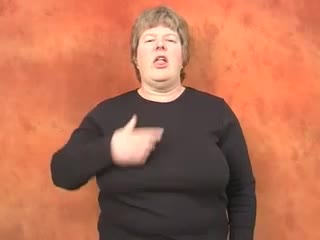
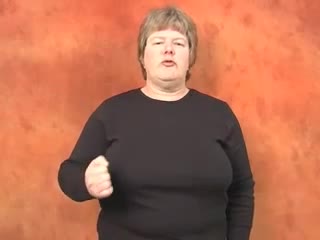
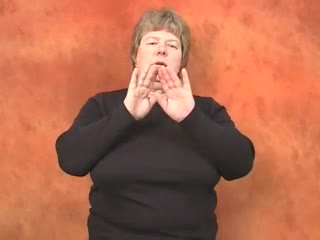
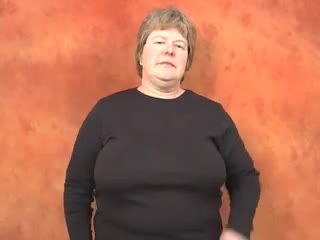
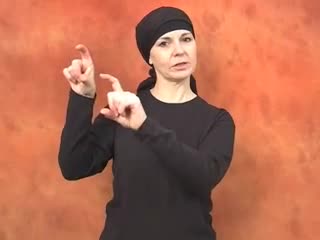
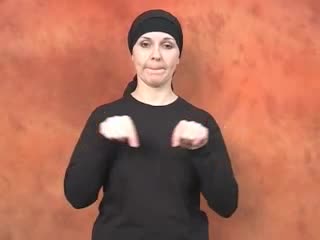
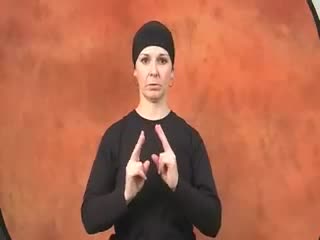
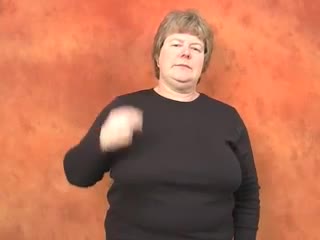
What Is the BSL Sign for "spruce"?
Picture a majestic evergreen, its distinctive conical shape rising proudly against the British sky – that's precisely the image we're capturing with the BSL sign for spruce. This particular sign brings to life the natural beauty of the tree itself, making it instantly recognisable for those familiar with British Sign Language spruce. When you learn spruce BSL, you're not just memorising a movement; you're connecting with a visual representation that resonates with the physical characteristics of this beloved plant. It forms a vital part of your everyday vocabulary, enabling you to communicate about nature, gardening, or even the festive season.
How to Sign "spruce" in British Sign Language - Step-by-Step
Let's break down the elegant motion that forms the sign for "spruce," guiding your hands through its graceful execution.
Step 1: Handshape
Begin by forming your dominant hand into a 'C' handshape; imagine you're gently holding a small, invisible cone. Your thumb will rest against the side of your index finger, with all your fingers slightly curved and held together, pointing upwards towards the ceiling. The shape isn't rigid, but rather softly rounded, much like the beginning of a tree trunk before it branches out.
Step 2: Hand Placement and Location
Position this 'C' handshape directly in front of your body, starting just below your chest level. Keep it centred, maintaining a comfortable distance from your torso, allowing ample space for the upcoming movement. There's no involvement from your non-dominant hand for this particular sign; it remains relaxed at your side.
Step 3: Movement
From its starting point, move your dominant hand slowly and deliberately upwards. As your hand ascends, gently broaden the 'C' shape by gradually spreading your fingers outwards, culminating in a more open handshape, almost a soft '5', by the time it reaches roughly your shoulder height. Throughout this upward journey, subtly wiggle your fingertips, creating a visual metaphor for the numerous needles and branches of a spruce tree.
Step 4: Facial Expression and Mouthing
Accompanying this sign, you'll adopt a calm, thoughtful facial expression; nothing overly dramatic, just a neutral acknowledgment of the tree. Crucially, mouth the word "spruce" clearly and naturally as you sign. In BSL, mouthing provides an essential layer of clarity and linguistic information, often distinguishing between homonyms or adding grammatical nuance, so make sure your lips are articulating the word distinctively.
Step 5: Palm Orientation
At the commencement of the sign, your palm should face primarily towards your body, or slightly inwards. As your hand travels upwards and your fingers spread, you'll naturally rotate your palm so it ends facing more forward or outward. This transition in palm orientation powerfully reinforces the imagery of a tree expanding as it grows, reaching out towards the sky.
"spruce" in BSL - Quick Reference Snapshot
- Handshape: Dominant hand forms a gentle 'C', expanding to a soft '5'.
- Location: Begins central, below chest, moves upwards to shoulder height.
- Movement: Slow upward arc, fingers spreading and wiggling.
- Facial Expression: Neutral, thoughtful.
- Dominant Hand: The hand you write with.
- Palm Orientation: Starts inward, transitions to outward/forward.
5 Memorisation Tricks for the BSL Sign "spruce"
Here are some helpful strategies to really embed the BSL spruce sign into your memory, making it second nature.
- Visual Mnemonic: The Growing Cone: Picture your hand starting as a tight little evergreen cone, perhaps like the top of a seedling. As you move it upwards, visualise that cone opening and expanding into the full, magnificent shape of a mature spruce tree, its branches reaching out. This visual link directly connects the sign's handshape and movement to the very object it represents, making it easy to recall.
- Muscle-Memory Drill: Slow and Deliberate Repetition: Dedicate a few minutes each day to performing the sign for "spruce" very slowly, focusing on each tiny muscle engagement. Pay close attention to the subtle transition from the 'C' handshape to the spreading fingers, and the gentle upward arc; this deliberate practice will imprint the movement into your muscle memory, ensuring fluidity and accuracy when you need to use it in conversation.
- Meaning Connection: Feel the Needles: As you perform the finger-wiggling movement, imagine the sensation of gently brushing against the sharp needles of a spruce tree. This tactile connection helps deepen your understanding of why that specific movement is part of the sign, making the how to sign spruce in BSL more intuitive rather than just a rote action.
- Common-Confusion Tip: Not Just "Tree": Remember, while "spruce" is a type of tree, its sign is distinct from the general BSL sign for "TREE," which often involves both hands representing a trunk and canopy. The specific upward movement and finger spread of "spruce" highlight its unique conical form and needle-like branches, so focus on these details to avoid miscommunication and ensure you're signing the exact type of tree.
- Daily-Life Practice: Point and Sign: Whenever you see a spruce tree in real life – perhaps in a park, a garden, or even a picture – immediately perform the BSL sign for spruce. This instant association in context helps cement the sign in your mind, linking the visual cue from the real world directly to the signed equivalent, making learning spruce BSL much more effective.
Real-Life Situations to Use the BSL Sign for "spruce"
Knowing how to sign "spruce" opens up several real-world communication opportunities, allowing you to discuss nature with precision.
- You might use it when describing a walk in the woods, signing, "YESTERDAY, ME WALK FOREST, SEE MANY SPRUCE" (BSL structure: Time-Topic-Comment, establishing the forest first, then the quantity of spruce).
- Imagine planning for Christmas; you could ask, "YOU WANT SPRUCE TREE FOR CHRISTMAS?" (BSL grammar uses topic-comment, so "CHRISTMAS TREE YOU WANT SPRUCE?" or a raised eyebrow for the question).
- Perhaps you're discussing gardening or landscaping ideas with a friend, mentioning specific plants, "WE PLANT NEW SPRUCE GARDEN" (The sign would be clearly articulated, followed by the context of planting).
- When talking about materials, one might describe a wooden object, explaining, "THIS TABLE MADE SPRUCE WOOD" (The sign for "spruce" would precede "wood" to specify the type, illustrating the descriptive power of BSL).
Top 3 Mistakes Learners Make Signing "spruce" in BSL
Even experienced learners can sometimes stumble, so let's clarify some common pitfalls with the BSL spruce sign.
- Confusing it with the general "TREE" sign: Many beginners inadvertently use the broader BSL sign for "TREE" (often involving both hands representing a trunk and canopy) when they specifically mean "spruce." The correction here involves remembering the unique conical growth and needle imagery: ensure your dominant hand starts in a 'C' and specifically spreads its wiggling fingers upwards, not the two-handed movement of a general tree.
- Omitting or Rushing the Upward Movement: Learners sometimes perform the handshape correctly but either keep the hand static or rush the upward, spreading motion, missing the essence of growth and form. To fix this, consciously slow down the sign, allowing the hand to ascend smoothly from chest to shoulder height, with the deliberate, gradual spreading and wiggling of the fingertips, ensuring the full "what is the sign for spruce" meaning is conveyed.
- Incorrect Palm Orientation Transition: A frequent error involves keeping the palm facing entirely inward throughout the sign, or starting it completely outward. The correct form requires a subtle, natural rotation from an inward-facing palm at the start to a more forward/outward orientation as the hand rises. Practise this gentle twist, as it adds a crucial layer of visual depth to the sign, representing the tree's expansion.
Fascinating Facts About the BSL Sign for "spruce"
The world of BSL is rich with nuance and history, and even a single sign like "spruce" offers intriguing insights.
- The iconic motivation behind the BSL sign for "spruce" is very strong; its visual form directly mimics the characteristic upward growth and spreading branches of the tree, making it highly descriptive and memorable.
- Like many signs for natural objects, the British Sign Language spruce sign benefits from being highly transparent, meaning its meaning is often guessable even by those new to BSL because of its direct visual representation.
- While the core elements of the sign remain consistent across the UK, subtle regional variations might appear in the exact speed or amplitude of the movement, reflecting local signing styles within the BSL-using community.
- Unlike some signs which might derive from finger-spelling (parts of the manual alphabet), the sign for "spruce" is a fully lexical sign, meaning it's a direct conceptual representation rather than an abbreviation or initialism.
- This sign's emphasis on upward movement and finger articulation highlights BSL's reliance on non-manual features and spatial grammar to convey detailed information about an object's form and growth.
"spruce" in Deaf Culture - Community and Identity
For many in the Deaf community, signs for natural elements like "spruce" are more than just vocabulary; they are part of a shared language that connects individuals to their environment and each other. Being able to effortlessly sign about the natural world, from forests to specific trees, enriches conversations within Deaf gatherings and outdoor activities. It fosters a deeper appreciation for shared experiences and observations, cementing bonds over common interests like hiking or gardening. The clarity and descriptive power of signs like "spruce" allow for detailed communication about the environment, ensuring everyone can participate fully in discussions about the beauty of the British countryside or planning community green spaces. This contributes to a robust sense of shared identity and mutual understanding within the Deaf community, celebrating their unique linguistic and cultural heritage.
Example Conversations Using "spruce" in BSL
Let's see how the BSL sign for "spruce" fits into everyday interactions.
English: We decided to plant a spruce tree in our garden this year. - BSL structure: Time-Topic-Comment with spatial grammar: THIS YEAR, OUR GARDEN, WE PLANT SPRUCE TREE.
English: Do you prefer spruce or pine for Christmas decorations? - BSL structure: Question formation with options: CHRISTMAS DECORATION, YOU PREFER SPRUCE OR PINE? (with raised eyebrows for question).
English: Look at that tall spruce over there! - BSL structure: Using pointing and emphasis: LOOK, THAT SPRUCE, TALL, THERE! (with directional pointing).
English: The cabin was built using sturdy spruce wood. - BSL structure: Descriptive sentence: CABIN BUILD, WOOD SPRUCE, STRONG.
English: My favourite essential oil smells like spruce. - BSL structure: Possessive and descriptive: MY FAVOURITE ESSENTIAL OIL, SMELL LIKE SPRUCE.
Frequently Asked Questions: The BSL Sign for "spruce"
We know you'll have questions as you learn, so let's address some common queries about the BSL sign for spruce.
Is the BSL sign for "spruce" difficult for beginners?
Not at all! The sign for "spruce" is quite iconic, meaning its form visually resembles the tree itself, which often makes it easier to remember for new learners. The movements are natural and not overly complex, making it a very accessible sign to pick up early in your BSL journey.
Are there regional variations for the BSL spruce sign?
While the core elements of how to sign spruce in BSL remain consistent across the UK, you might encounter slight regional differences in the exact amplitude of the movement or the speed of the finger spread. These are usually minor stylistic variations and generally won't impede understanding within the wider BSL community.
How does the BSL sign for "spruce" compare to "pine"?
Both "spruce" and "pine" are types of coniferous trees, but their BSL signs are distinct. While "spruce" emphasises the upward conical growth and fine needles, the sign for "pine" might incorporate a different handshape or movement, perhaps referencing its longer needles or broader branches. Each sign carefully captures specific characteristics of the tree it represents.
Can children easily learn the BSL spruce sign?
Absolutely! Children often find iconic signs like "spruce" particularly engaging because of their visual nature. The action of the hand growing upwards and fingers spreading is intuitive and fun to replicate, making learn spruce BSL an enjoyable experience for younger learners.
What if I confuse the sign for "spruce" with a general "tree" sign?
Don't worry, it's a common initial confusion! The key distinction for "spruce" lies in its specific upward, spreading 'C' to '5' handshape with wiggling fingertips, representing the conical shape and needles. The general BSL sign for "TREE" typically involves both hands, mimicking a trunk and a broader canopy, so focusing on these unique details for "spruce" will help clarify your communication.
Signs That Pair Naturally with "spruce" in BSL
Building vocabulary around related concepts helps you create richer BSL conversations. Here are some signs that naturally complement "spruce."
- TREE: This general sign for "tree" (often two hands, one representing the trunk, the other the canopy) is a broader category that "spruce" falls into, making it a natural pairing.
- FOREST: When discussing a "forest," you'll often be referring to collections of trees, including spruce, creating a natural contextual link.
- WOOD: As spruce wood is a common material, the sign for "wood" (often tapping knuckles) frequently follows "spruce" to specify the type of timber.
- NATURE: This overarching concept sign (often a sweeping movement indicating the natural world) provides a broad context for discussions involving "spruce" and other plants.
- CHRISTMAS: Given its popular use as a Christmas tree, the sign for "Christmas" naturally connects with "spruce" during festive conversations.
- PLANT: If you're talking about putting a spruce in the ground, the sign for "plant" (often showing a seed growing) is an obvious next step.
Building Fluency: How to Practise "spruce" in BSL
Getting truly fluent with any sign, including the BSL sign for spruce, comes down to consistent, thoughtful practice. Grab a mirror and use it as your personal BSL coach; watching your own handshape, movement, and facial expression as you sign "spruce" lets you instantly correct any inaccuracies, ensuring you're nailing the precise form. Next, try to integrate "spruce" into your daily BSL conversations by thinking about what you encounter – if you see a Christmas tree or a picture of a forest, make a point to sign "spruce" aloud. Filming yourself performing the sign provides invaluable feedback, allowing you to review your technique with fresh eyes and spot subtle areas for improvement in your how to sign spruce in BSL. The most enriching practice comes from finding a Deaf conversation partner; they'll offer real-time feedback and allow you to use the sign naturally in a meaningful context. Remember to space out your repetition over several days rather than cramming, as this approach helps embed the sign into your long-term memory for confident, fluid communication.