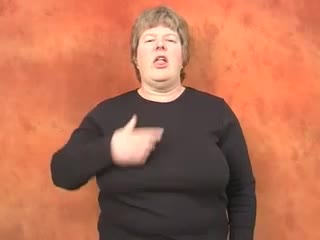
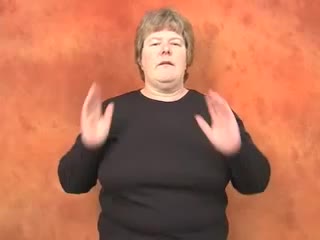
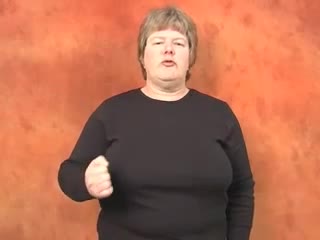
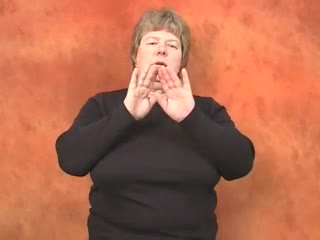
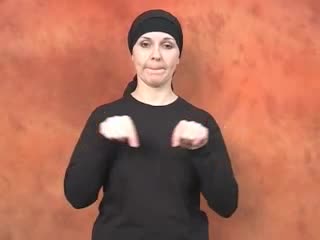
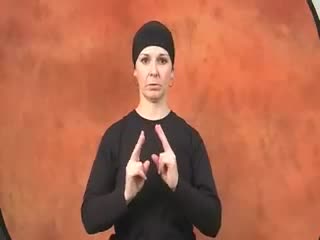
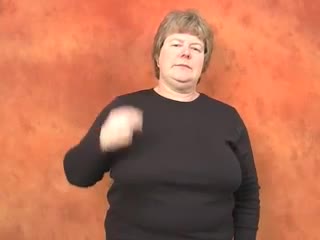
What Is the BSL Sign for "cable"?
You're looking to connect, aren't you? Whether it's power to your phone, data to your TV, or just understanding the physical links around us, the BSL sign for cable is incredibly versatile and useful. This fundamental noun sign represents those essential conductors that run through our lives, making sure everything stays linked up. Learning the British Sign Language cable is a fantastic step in expanding your vocabulary, particularly for discussing technology, home improvements, or even just the everyday items you encounter. Understanding this sign helps you describe a crucial element of our modern world within your BSL conversations.
How to Sign "cable" in British Sign Language - Step-by-Step
Let's get your hands moving to master this practical BSL sign for cable, which cleverly mimics the object's form and function.
Step 1: Handshape
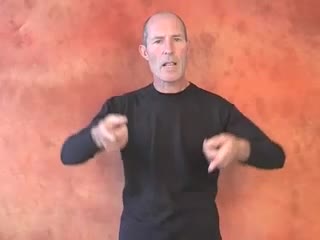
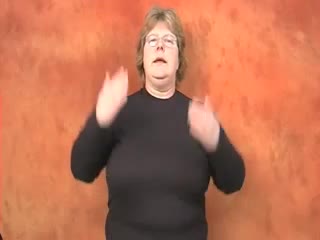
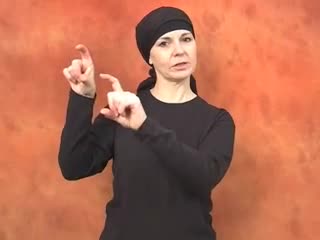
For this sign, you'll primarily use your dominant hand. Form a 'G' handshape, which means extending your index finger and thumb, keeping them slightly apart as if you're gently pinching something thin but firm. Your remaining fingers, the middle, ring, and pinky fingers, should curl down into your palm. Picture yourself holding the end of a physical cable.
Step 2: Hand Placement and Location
Begin with your dominant 'G' hand positioned in the neutral signing space directly in front of your chest or slightly to your side, at about shoulder height. There's no specific contact point with your body; you're creating the shape and movement in the air. This initial placement gives you ample room to execute the upcoming movement clearly.
Step 3: Movement
From your starting position, move your dominant 'G' hand straight forward and slightly outward, away from your body. Imagine drawing a short, straight line in the air. This motion should be smooth and deliberate, representing the length and direction of a cable extending. You might feel a subtle, almost imperceptible wiggle or slight flex of the wrist during this forward movement, which subtly suggests the cable's inherent flexibility.
Step 4: Facial Expression and Mouthing
A neutral facial expression is perfectly suitable for signing "cable"; there's no inherent emotion tied to the word itself. However, for clarity and grammatical completeness in British Sign Language, you should mouth the word "cable" as you perform the sign. Mouthing provides crucial phonetic information, aids in distinguishing similar signs, and helps your conversational partner understand the specific English word you're conveying.
Step 5: Palm Orientation
Your palm orientation starts with your index finger pointing forward and your thumb pointing generally upwards, as if you're looking down the length of the cable you're holding. As you execute the forward movement, your palm might naturally rotate slightly so that the side of your index finger faces more towards the ground, but the primary orientation remains forward-facing. This orientation helps to visually represent the linear quality of a cable.
"cable" in BSL - Quick Reference Snapshot
- Handshape: Dominant 'G' hand (index finger and thumb extended, others curled).
- Location: Neutral signing space in front of the chest.
- Movement: Straight forward and slightly outward linear motion.
- Facial Expression: Neutral.
- Dominant Hand: Used exclusively for the sign.
- Palm Orientation: Index finger points forward, thumb upwards, rotating slightly downward during movement.
5 Memorisation Tricks for the BSL Sign "cable"
Here are some clever ways to really make the BSL sign for cable stick in your memory.
- Visual Mnemonic: Picture your 'G' handshape as if you're literally pinching a segment of a thin cable between your thumb and index finger. The extended, slightly separated digits mirror how you might inspect or hold a wire, making the handshape instantly recognisable.
- Muscle-Memory Drill: Grab an actual cable, perhaps a charging cord, and physically trace its length with your 'G' handshape as you sign the word. This tactile and kinesthetic connection helps embed the movement and handshape into your muscle memory, making the sign feel more natural.
- Connection to Meaning: Think about what a cable does: it connects things and carries something along its length. The forward linear movement of the sign visually represents this flow and connection, making the abstract concept of 'cable' tangible through your hands.
- Common-Confusion Tip: Don't confuse this sign with "wire" (which often uses a finer, more delicate 'G' handshape or just an index finger with a slightly more intricate movement) or "rope" (which typically involves a two-handed, thicker, twisting motion). Focus on the distinct, strong, linear movement for "cable."
- Daily-Life Practice Idea: Every time you see a cable around your home or office, whether it's for your computer, TV, or phone, consciously perform the BSL sign for cable. This constant visual cue and immediate practice will solidify the sign in your mind without needing formal study sessions.
Real-Life Situations to Use the BSL Sign for "cable"
Knowing how to sign "cable" is incredibly practical in many everyday contexts within the Deaf community. Here are some scenarios where you'd readily employ this sign.
- Imagine you're at a friend's house and need to charge your phone; you might sign, "MY PHONE FLAT, CHARGE CABLE WHERE?" (BSL structure: MY PHONE FLAT, CHARGE CABLE WHERE? - This uses topic-comment structure and spatial question.)
- Perhaps you're describing a home theatre setup, and you'd sign, "TOO MANY CABLE BEHIND TV, MESSY!" (BSL structure: TOO MANY CABLE BEHIND TV, MESSY! - Here you're using simple descriptive grammar with spatial reference.)
- When troubleshooting an internet issue, you could sign, "INTERNET NO WORK, MAYBE CABLE BROKEN?" (BSL structure: INTERNET NO WORK, MAYBE CABLE BROKEN? - This demonstrates a causal question and implies a potential problem with the connection.)
- If you're asking someone to hand you a specific item, you might sign, "PLEASE PASS ME THAT LONG CABLE, THERE." (BSL structure: PLEASE PASS ME THAT LONG CABLE, THERE. - Incorporating an adjective and a spatial deictic.)
Top 3 Mistakes Learners Make Signing "cable" in BSL
It's completely normal to make a few errors when learning a new sign, but being aware of common pitfalls helps you refine your technique.
- Incorrect Handshape: Many beginners might use a flat hand or an open '5' handshape instead of the specific 'G' hand. This changes the sign's meaning entirely, potentially making it look like you're signing "line" or "path." The precise correction involves ensuring only your index finger and thumb are extended, creating that distinct pinching or gripping action.
- Lacking a Clear Linear Movement: Sometimes, learners might make a vague, wobbly, or circular movement rather than a distinct straight line. This can obscure the sign's meaning, making it unclear whether you're referring to a cable or something else entirely, like "snake" or "worm." The key is to execute a clear, purposeful forward and slightly outward linear motion, representing the cable's extension.
- Forgetting to Mouth the Word: Because "cable" is a noun, mouthing the English word is an essential non-manual feature in BSL. Omitting the mouthing can make your sign less clear, especially when context alone isn't enough to disambiguate it from similar signs. Make a conscious effort to articulate "cable" with your mouth as your hands perform the sign; it significantly enhances comprehension.
Fascinating Facts About the BSL Sign for "cable"
Delving into the background of a sign can often illuminate its deeper meaning and cultural context.
- The BSL sign for cable is largely iconic, meaning its form visually represents the object it describes. Your handshape and movement vividly mimic the act of holding or tracing a physical cable.
- While the core sign is widely understood, some regional variations exist within the UK Deaf community; for instance, certain areas might incorporate a two-handed sign to emphasise the cable's thickness or connection points.
- This sign's simplicity and directness reflect the functionality of cables themselves: they are straightforward connections. This iconic motivation makes the sign easy to guess for those unfamiliar with it, a hallmark of many effective BSL signs.
- Its relationship to other 'linear' signs, like "wire" or "rope," highlights how BSL differentiates similar concepts through nuanced handshape modifications and movement qualities, often based on the object's thickness or flexibility.
- As technology evolves, BSL signs for related concepts like "USB" or "HDMI" often build upon or are influenced by the foundational sign for "cable," demonstrating how the language adapts to new vocabulary.
"cable" in Deaf Culture - Community and Identity
Cables, in a broader sense of connection and communication, hold a practical significance within Deaf culture. For many years, the ability to connect electronically was vital, especially through devices like minicomms or TTYs, which depended on phone cables to transmit text. Today, while technology has advanced to wireless, the underlying need for reliable connections remains paramount for video calls and online interactions, which are essential for many Deaf individuals to communicate visually. This sign, therefore, represents not just an object, but a conduit for maintaining social ties and ensuring access to information, which is central to a vibrant and connected Deaf community.
Example Conversations Using "cable" in BSL
Seeing a sign in context really helps you understand its practical application. Here are five different ways you might use the sign for "cable" in BSL.
English: Do you have a spare charging cable for my phone? - BSL structure: CHARGE CABLE, SPARE, YOU HAVE? (Question structure with implied 'for my phone' through context or pointing.)
English: The television cable is disconnected, that's why there's no picture. - BSL structure: TV CABLE, DISCONNECT, NO PICTURE, THAT'S WHY. (Topic-comment structure explaining a cause and effect.)
English: We need a longer network cable to reach the router. - BSL structure: ROUTER, REACH, NEED LONG CABLE. (Spatial grammar indicating the need for a specific length to connect two points.)
English: Be careful, there's a loose cable on the floor. - BSL structure: CAREFUL, FLOOR CABLE LOOSE, THERE. (Warning with spatial reference and adjective placement.)
English: I bought a new audio cable for my speakers. - BSL structure: SPEAKER, AUDIO CABLE, NEW, I BUY. (Clear topic-comment structure with description of the item purchased.)
Frequently Asked Questions: The BSL Sign for "cable"
Let's address some common queries that often pop up when learners tackle this particular sign.
Is there much regional variation for the BSL sign for "cable"?
Generally, the core sign for "cable" as described is widely understood across the UK. However, slight regional nuances might exist in the exact handshape or the extent of the movement, but these are usually minor and won't hinder comprehension. It's always beneficial to observe local signers if you have the opportunity.
How does the BSL sign for "cable" differ from the sign for "wire"?
The BSL sign for "wire" typically uses a slightly more delicate 'G' handshape or sometimes just an extended index finger, often with a finer, more precise movement to suggest the thinner, more pliable nature of a wire. The sign for "cable" often implies a thicker, more substantial conductor with a broader, more direct linear motion.
Is this a beginner-friendly BSL sign for new learners?
Absolutely, the sign for "cable" is very accessible for beginners. Its iconic nature means it's relatively intuitive to grasp, and the handshape and movement are straightforward, making it an excellent addition to your initial BSL vocabulary. You'll find it useful almost immediately.
Is the BSL sign for "cable" used for all types of cables, like internet, electrical, and TV?
Yes, this versatile sign serves as the general term for all types of cables. When you need to specify, you'll pair it with other signs like "INTERNET," "TV," or "ELECTRICITY" to create compounds like "INTERNET CABLE" or "TV CABLE." The base sign remains consistent.
How does the BSL sign for "cable" compare to the sign in American Sign Language (ASL)?
In American Sign Language (ASL), the concept of "cable" is often expressed with an 'F' handshape (index finger and thumb touching, forming a circle, other fingers extended) moving in a line, or sometimes using a 'C' handshape. While both BSL and ASL signs are iconic in their own ways, their handshapes and specific movements are distinct, highlighting the differences between the two separate languages.
Signs That Pair Naturally with "cable" in BSL
Building your vocabulary means understanding how signs connect and form conceptual clusters. Here are some signs that naturally go hand-in-hand with "cable."
- PLUG: This sign, often a dominant 'A' hand (fist with thumb alongside) pushing into a non-dominant 'C' hand (cup shape), directly relates to the end of a cable.
- ELECTRICITY: Represented by wiggling '5' hands (open palms, fingers spread) from wrists, links to what many cables carry.
- INTERNET: Often signed with two 'I' handshapes (pinky fingers extended) intertwining, connects to modern data cables.
- CHARGE: Typically a dominant 'C' hand moving towards a non-dominant palm, is what you do with many device cables.
- WIRE: As discussed, this related sign uses a finer 'G' hand or index finger, representing a thinner version of a cable.
- ROPE: Often a two-handed sign with 'S' handshapes twisting or pulling, denotes a much thicker, non-electrical cable.
Building Fluency: How to Practise "cable" in BSL
Consistency is key when you're aiming for fluency; here's how you can effectively practice the BSL sign for cable and make it a natural part of your signing repertoire. Start by using a mirror to observe your own handshape and movement; make sure your 'G' hand is precise and your linear motion is clear, just as if you're pulling a real cable. Next, actively integrate this sign into your daily BSL conversations by pointing out and naming cables whenever you see them around you. Consider filming yourself signing "cable" in various sentences; watching playback helps you spot any inconsistencies and refine your technique, ensuring your sign is always crisp. The most effective way to solidify your learning is finding a Deaf conversation partner; they can offer invaluable feedback and provide real-world context for using the sign naturally. Finally, remember to revisit this sign over several days, spacing out your practice sessions to reinforce the muscle memory and ensure long-term retention.